Where to stay in Champagne for a luxury suite experience
Reims and the urban core
Reims is the regional capital and the most architecturally significant city in Champagne. Its Gothic cathedral, where French kings were crowned for centuries, anchors a city that balances historic grandeur with a genuinely contemporary cultural life. Luxury hotels here tend to occupy either renovated historic buildings or purpose-designed modern structures. Suites in Reims offer immediate access to the major champagne houses, many of which maintain historic cellars directly beneath the city streets. For travelers who prefer to walk between appointments and cultural sites, this is the logical base.
The Montagne de Reims and Vallée de la Marne
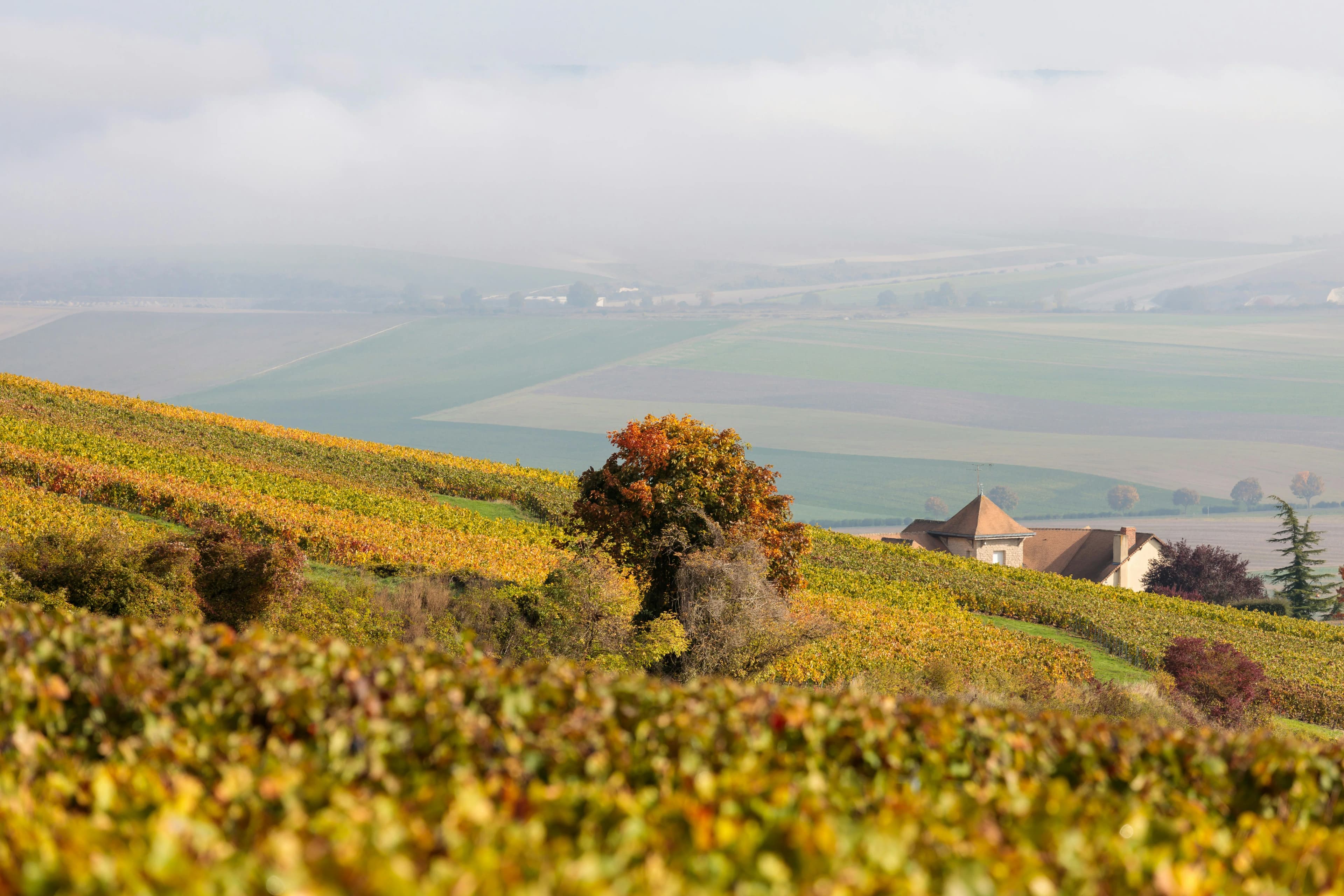
These two designated wine routes are where the agricultural heart of Champagne becomes visible. The Montagne de Reims is a forested plateau flanked by vineyards, offering a quieter, more rural setting than the city. Properties here tend to be smaller, often converted manor houses or domain estates, with suites that prioritize garden access and vineyard views. The Vallée de la Marne follows the river westward toward Épernay, through villages where some of the region's most respected independent growers operate. Stays along this corridor reward guests who want proximity to the land itself.
Épernay and the Avenue de Champagne
Épernay is the operational center of the champagne trade. The Avenue de Champagne, recognized as a UNESCO World Heritage site as part of the broader Champagne hillsides nomination, is lined with the headquarters and cellars of the most recognized champagne houses in the world. Luxury accommodation options in and around Épernay range from intimate boutique properties to grander estates just outside the town. Suites here are positioned for travelers who want champagne at its most concentrated: tastings, cellar visits, and direct contact with the production culture that defines the appellation.
When to visit Champagne
The Champagne region has a continental climate with cold winters and warm summers. Each season has a distinct logic for the luxury traveler.
Late spring, from April through June, offers mild temperatures, fully leafed vineyards, and relatively manageable visitor numbers. This is an ideal period for outdoor dining, estate visits, and cycling the wine routes without the full-season pressure on room availability.
The harvest period, running from mid-September through October, is the most intensely atmospheric time to visit. The vineyards are in active production, the estates are operating at full intensity, and the landscape has a particular quality of light in the early autumn. Suite demand peaks during harvest, and availability at the most sought-after properties narrows significantly. Advance planning is essential.
Winter, from November through February, is the quietest season. The region takes on a stark, chalk-pale quality that appeals to a specific kind of traveler. Some properties reduce their programming, but the major champagne houses continue operations, and rates across most luxury hotels are more accessible during this period.
Understanding luxury standards in Champagne
France maintains a national distinction for its very finest hotels: the Palace designation, awarded by Atout France, the country's tourism development agency. Palace hotels represent the highest tier of French hospitality, assessed against criteria covering architecture, service, amenities, and cultural contribution. Champagne does not have the same concentration of Palace-designated properties as Paris or the Côte d'Azur, but the region's luxury hotels are held to demanding standards informed by the prestige of the surrounding wine culture.
What distinguishes a top-tier suite in Champagne is often spatial quality and material specificity rather than visual spectacle. The best suites in the region are characterized by considered proportions, the use of regional stone or oak, curated wine programs, and service cultures that emphasize discretion over performance. Many of the finest properties maintain direct relationships with champagne producers, giving guests access to tastings and experiences that are not available through conventional tourism channels.
At the higher end, suite amenities frequently include private terraces with vineyard orientation, dedicated sommelier access, and the option to arrange private cellar visits with major and independent houses alike. The architecture of the best properties tends to reference the region's heritage without being constrained by it: historic facades and contemporary interior logic are not uncommon.
How to choose the best suite in Champagne
The primary decision in Champagne is between an urban base and a rural one. Reims and Épernay offer convenience, cultural programming, and immediate access to major champagne houses. The vineyard countryside offers privacy, silence, and a more direct sensory connection to the agricultural reality of champagne production.
Travelers arriving for a short stay of two or three nights will generally benefit from a city base, with day excursions into the vineyard routes. Those with a week or more should consider splitting the stay: a few nights in Reims for the cathedral, the art museum, and the major house visits, followed by a move to a smaller estate property for the final days.
Architecture is worth considering explicitly. Champagne's hotel stock includes medieval buildings adapted into contemporary use, 18th- and 19th-century bourgeois properties, and a small number of purpose-built modern structures. The historic properties offer a particular material quality: thick walls, deep window reveals, and rooms that hold temperature differently across seasons. Modern suites in the region tend to prioritize light and minimalist finishes.
Practical considerations include transport. The region is well connected to Paris by high-speed rail: Reims is under 50 minutes from the Gare de l'Est. Having a car available, even for part of the stay, significantly expands access to the smaller vineyard villages and producer estates.
Why curated selection matters in Champagne
Champagne's reputation is so closely associated with its wine that the hotel landscape can feel secondary in conventional travel planning. This often leads travelers to choose accommodation on proximity to a single champagne house rather than on the intrinsic quality of the suite or property. The result is a stay that serves logistics but does not fully inhabit the region.
La Suite approaches Champagne as a destination with a distinct luxury identity that extends well beyond its appellation. The curated selection on lasuite.com identifies properties where the quality of space, the depth of local knowledge among the team, and the standard of the suite itself justify the choice on their own terms. Each listed property has been assessed against criteria relevant to the region: vineyard access, architectural coherence, service specificity, and the capacity to arrange genuinely exclusive producer experiences. For travelers who want Champagne at its full register, the curated selection by La Suite is the appropriate starting point.