Where to stay around Mont Saint-Michel
The island itself is compact and heavily visited during the day. A small number of hotels operate within the ramparts, occupying medieval stone structures that have been adapted over centuries. Staying on the island means proximity to the abbey and direct access to the causeway at dawn, when the monument belongs almost entirely to those who slept there. Suites in these properties tend to be architecturally constrained by the historic fabric of the buildings, which makes the quality of interior design and material choices especially consequential.
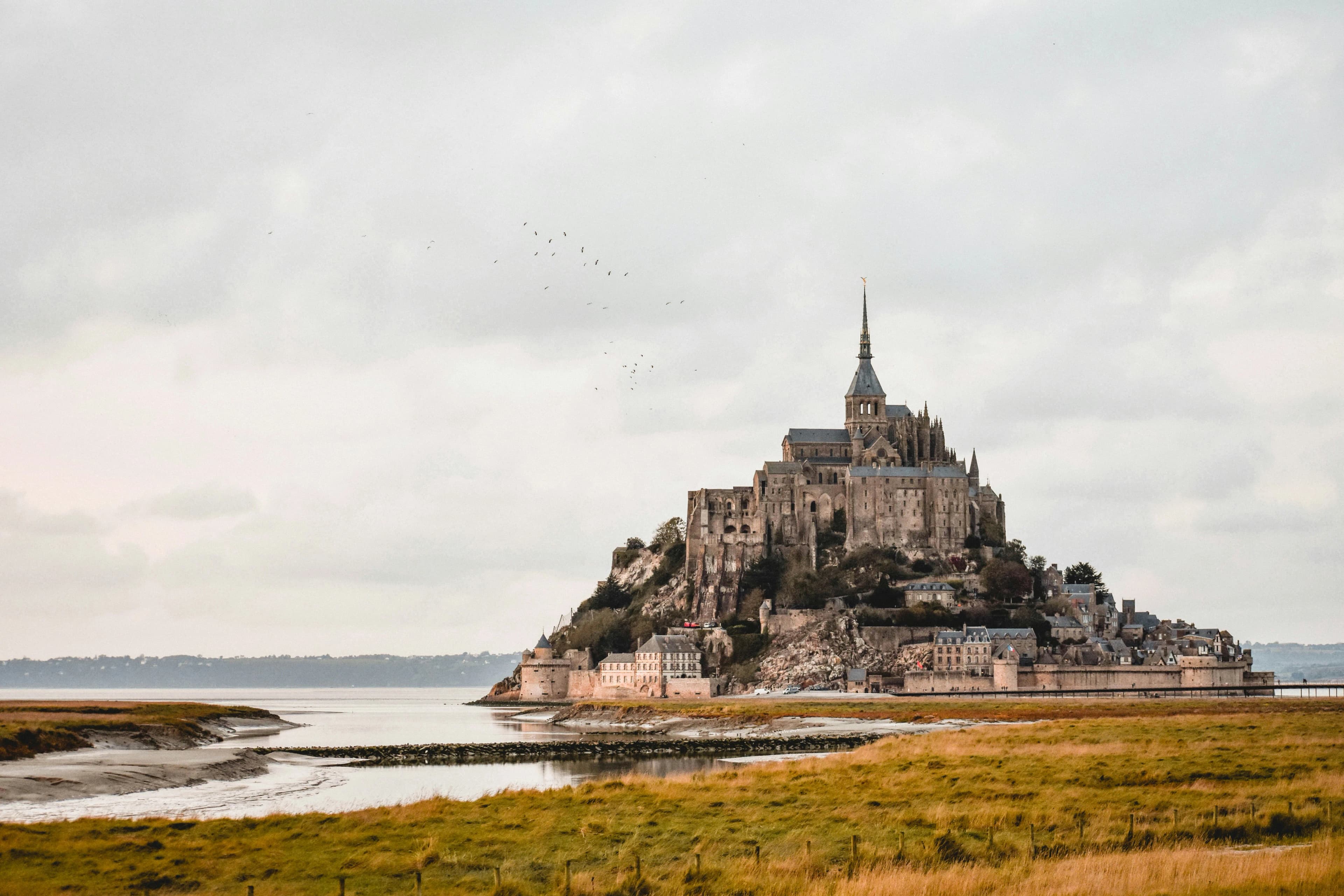
The mainland perimeter, including the villages and countryside of the bay area in Normandy and the Breton border zone, offers a different proposition. Properties here are typically manors, converted farmhouses, or contemporary hotels positioned to frame views of the island across the bay. Distance becomes an asset: the view of Mont Saint-Michel from across the water at low tide, with the island suspended above the sand flats, is arguably more composed than any view from within the ramparts. Suites in these properties often offer more space, private terraces, and access to grounds, while maintaining a direct visual connection to the monument.
When to visit Mont Saint-Michel
Mont Saint-Michel receives approximately three million visitors per year, and the distribution is highly seasonal. The summer months from July through August bring the largest crowds, with the causeway and the island's main street becoming difficult to navigate during peak hours. For travelers seeking a more measured experience, late spring (April to June) and early autumn (September to October) offer optimal conditions: the light over the bay is sharp and low, the tidal movements remain dramatic, and visitor density drops significantly.
The tidal range in the bay of Mont Saint-Michel is among the largest in Europe, reaching up to 14 metres at spring tides. The timing of arrival and departure around tidal cycles is a practical consideration that rewards planning. The highest tides, known locally as grandes marées, occur several times a year and represent a specific event worth coordinating a visit around. The equinoctial tides of March and September are particularly significant.
Winter visits (November to February) are unusual but not without merit for the deliberate traveler. The monument is less frequented, the light is severe, and the atmosphere carries a quality that warmer months do not replicate. Availability in high-quality properties is easier to secure, and rates reflect the reduction in demand.
Local luxury standards and what to expect from top suites
France operates a formal classification system for its highest-tier hotels: the Palace designation, awarded by Atout France (the national tourism development agency), sits above the five-star category and recognises properties that meet exceptional criteria for architecture, service, historical or cultural significance, and culinary standards. As of recent years, fewer than thirty properties in France hold this designation, and none are currently located within the immediate Mont Saint-Michel area. This does not diminish the quality available in the region; it contextualises it accurately.
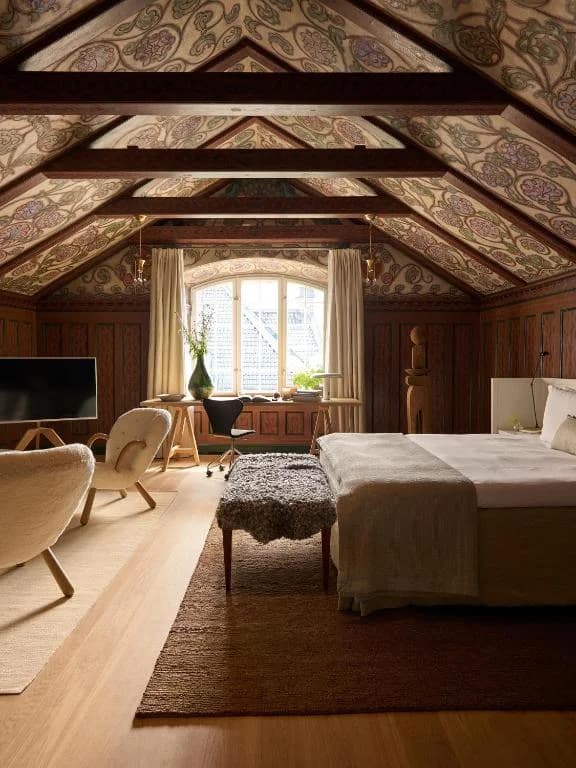
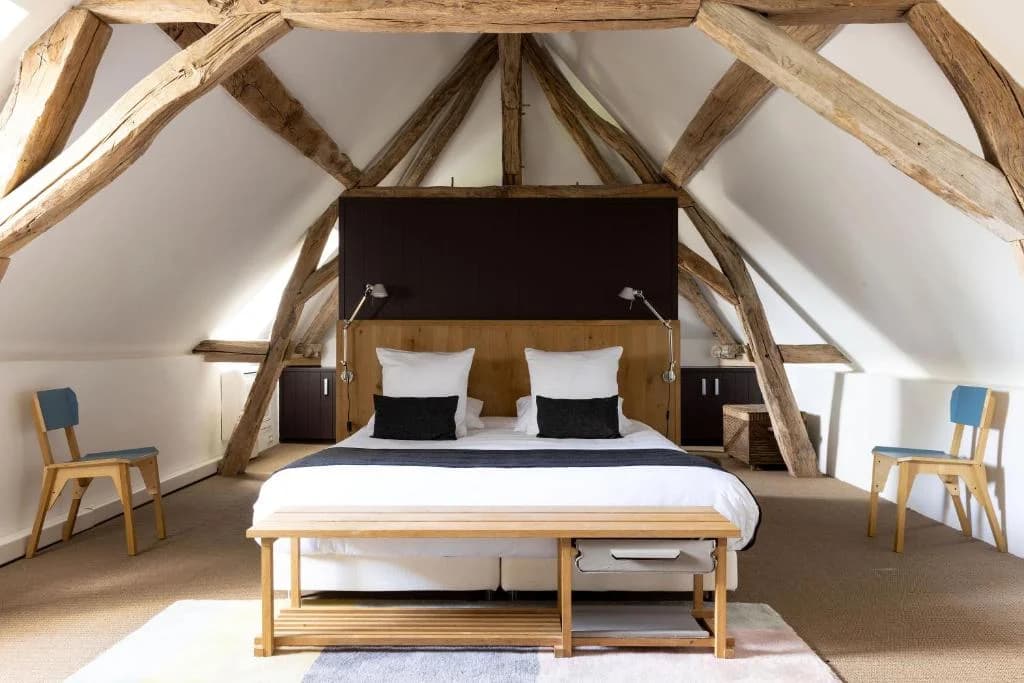
The luxury standard in this part of Normandy and the Breton border draws heavily on the Norman heritage of hospitality: stone architecture, heavy linen, produce-driven cuisine, and an orientation toward the landscape rather than decorative excess. The finest suites in the region tend to prioritise materiality, with exposed stone walls, oak beams, and views calibrated to the bay or the countryside. Service tends toward discretion rather than performative formality, which aligns closely with what an informed traveler to this destination is seeking.
Gastronomy is a relevant marker of quality in this region. The bay produces exceptional seafood, including the pre-salé lamb raised on the salt marshes, oysters from the Cancale beds on the Breton side of the bay, and dairy products characteristic of Norman agriculture. A suite experience that integrates access to serious cooking, whether through an on-site restaurant or through arrangements with local producers, reflects the full dimension of what this territory offers.
How to choose the right suite in the Mont Saint-Michel area
The first decision is geographic: on the island or on the mainland. This is not a question of prestige but of travel intention. If the objective is to experience the monument at its most unmediated, including early morning access to the abbey before it opens, and the particular silence that settles over the island after the last ferries have run, then a property within the ramparts makes a coherent argument. If the priority is space, comfort, and a panoramic relationship with the bay, mainland properties deliver more reliably.
The second consideration is architectural. Historic properties in this part of France carry the character of the Norman built environment: thick walls, small windows, irregular floor plans. These are not constraints to be compensated for but qualities to be selected intentionally. A suite in a medieval building will have different proportions and light conditions than a suite in a converted manor or a contemporary hotel. Travelers with strong preferences about natural light or ceiling height should factor this into their selection process.
Access and logistics matter more here than in urban destinations. The causeway to the island is subject to tidal schedules, and driving or walking it requires coordination. Parking is located on the mainland, and a shuttle service operates between the car parks and the island entrance. Suites on the island eliminate the shuttle question but introduce the reality that all luggage must be carried on foot up narrow medieval streets.
Why a curated selection by La Suite matters here
Mont Saint-Michel is one of the most photographed monuments in France, and its fame generates a wide spectrum of accommodation options at every price point. The signal-to-noise ratio for the traveler seeking a genuinely exceptional suite is low. Many properties market proximity to the monument without delivering a stay that justifies the designation of a luxury hotel suite experience.
La Suite applies consistent criteria across properties in the region: architectural integrity, the quality of the suite itself (proportions, materials, light, outlook), service standards, and the coherence between the property's offer and the specific character of the destination. The result is a selection that removes the research burden and focuses attention on properties where the suite itself is the point, not merely a room category on a booking platform.
For a destination as singular as Mont Saint-Michel, where the experience is defined by timing, atmosphere, and a specific relationship to a landscape, the quality of where you stay determines what you actually encounter. The curated selection by La Suite is built around that premise.