Understanding Arcachon as a luxury destination
Best areas to stay in Arcachon
The Ville d'Hiver
The Ville d'Hiver, or Winter Town, occupies the southern hillside above the seafront. It was designed in the 1860s as a sheltered residential quarter protected from Atlantic winds by the pine canopy. The architecture here is theatrical: Gothic Revival, Moorish, and Swiss chalet influences sit side by side on steep, sandy lanes. Staying in or near this district places you within a living museum of Second Empire taste, where the pace of movement is slow and the visual environment is consistently singular.
The Ville d'Été and the seafront
The Ville d'Été, the Summer Town, runs along the seafront promenade and represents the more conventional face of Arcachon: the casino, the covered market, the beach. Properties positioned here offer direct access to the bay and its light, which changes dramatically across the day as the tide moves in and out across kilometres of sand flat. For guests who prioritise the sensory experience of water proximity, this corridor is the logical choice.
The Bassin d'Arcachon and the Cap Ferret peninsula
The bay itself is a destination within a destination. The Bassin d'Arcachon covers roughly 150 square kilometres and contains oyster beds, bird reserves, and the Île aux Oiseaux with its iconic wooden cabins on stilts. The Cap Ferret peninsula closes the bay to the north and offers a markedly different register: lower-key, more local in character, with pine-lined cycle paths and oyster shacks that serve directly from the water. Guests choosing properties on Cap Ferret gain a sense of remove from Arcachon proper that suits those seeking privacy over convenience.
La Dune du Pilat
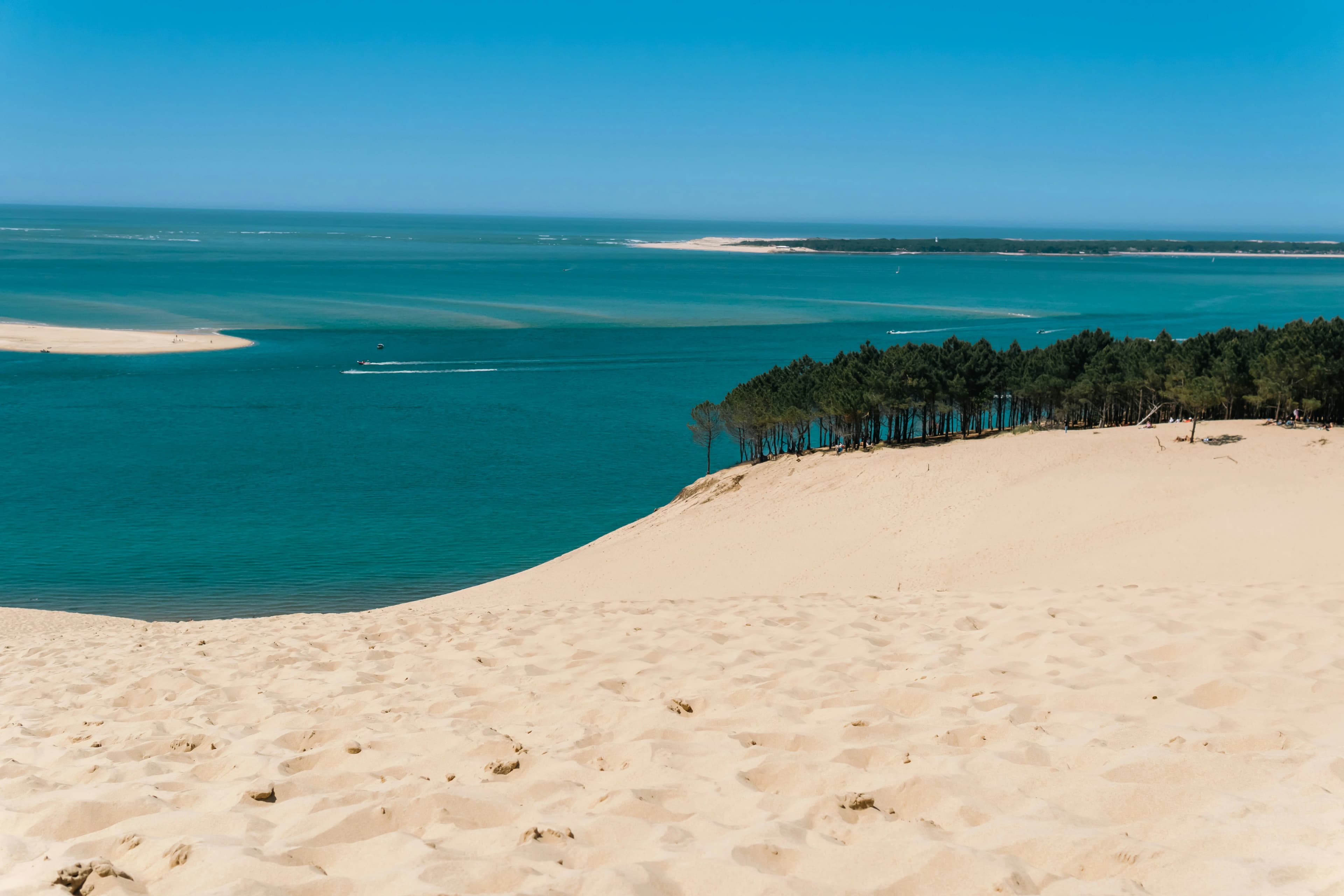
The Dune du Pilat rises to over 100 metres and stretches for nearly three kilometres along the coast south of Arcachon, making it the largest sand dune in Europe by volume. Properties in its immediate vicinity occupy a landscape of almost abstract scale. The dune is best experienced at first light or at dusk, when visitor numbers are low and the quality of Atlantic light on the sand reaches a particular intensity. A luxury suite within reach of the dune allows the guest to engage with this landscape on their own terms rather than within the constraints of a day-trip schedule.
When to visit Arcachon
Arcachon operates on a clearly seasonal calendar. July and August represent the peak of French domestic tourism, when the town reaches its full social register and the bay is active with sailing, oyster tours, and open-air markets. Suite availability contracts sharply during these weeks, and advance planning of several months is standard practice for the best properties.
September and early October are widely regarded as the most precise moment to visit. The light shifts to a lower, more golden angle, the crowds diminish, and the oyster season enters a productive phase. Temperatures remain mild enough for outdoor dining and water activity. This window is particularly valued by design-literate travellers who prioritise atmosphere over animation.
The winter months carry their own logic. The Ville d'Hiver was built for exactly this season, and the combination of pine forest, low tides, and the relative solitude of the bay has a specific appeal for guests seeking genuine withdrawal. Several properties maintain elevated standards year-round, and rates reflect the reduced demand.
Local luxury standards: what to expect from top properties in Arcachon
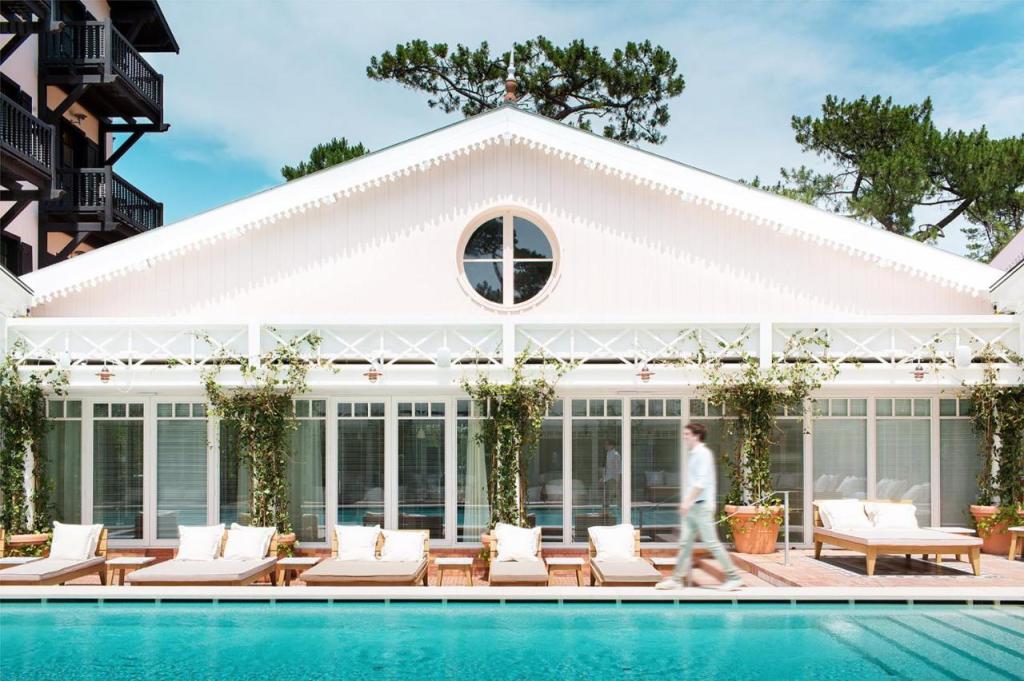
Arcachon does not operate within the same palace hotel tradition as Paris or the French Riviera. The luxury register here is defined less by formal classification and more by the quality of spatial experience, architectural coherence, and access to the natural environment. The most considered properties in the area tend to be smaller in scale, often occupying converted Belle Époque villas or purpose-built structures that respond to the pine and sand landscape rather than imposing upon it.
The French hotel classification system awards between one and five stars, with the Palace distinction reserved for a small number of properties that exceed the five-star criteria across multiple dimensions including heritage, service ratio, and amenity depth. Arcachon and its immediate surroundings have not historically concentrated Palace hotels, which means the discerning guest must read beyond category labels and focus on the specific qualities of each suite: ceiling height, terrace orientation, quality of natural light, and relationship to the surrounding landscape.
Oyster culture is central to the local food experience, and the finest suites in the region will often have a direct relationship with the oyster producers of the Bassin, either through in-suite service or through proximity to the port markets at Gujan-Mestras and Cap Ferret. This is a concrete, traceable form of local luxury rather than a generic claim to regional produce.
How to choose the right suite in Arcachon
The primary decision in Arcachon is one of orientation: bay-facing or forest-facing. These are not equivalent experiences. A suite with a direct view across the Bassin d'Arcachon will offer tidal light, boat movement, and a sense of horizontal scale. A suite embedded in the pine forest will deliver olfactory intensity, acoustic insulation, and a more enclosed, contemplative atmosphere. Neither is superior; they serve different intentions.
The second consideration is architectural period. The Belle Époque and Second Empire buildings of Arcachon carry a specific material richness, including carved woodwork, coloured glass, and layered roof profiles, that modern construction rarely replicates. Guests with a strong preference for historical interiors should prioritise properties occupying original structures, while those who prefer contemporary spatial logic will find that the best modern properties in the area tend to work with timber and natural materials in a way that references the local vernacular without reproducing it literally.
Terrace access is a practical and experiential priority. The Atlantic climate is variable, and the value of a suite is materially enhanced by the presence of a covered or sheltered outdoor space that remains usable in light rain or wind. This is a specific consideration that general hotel rating systems do not adequately capture.
Why a curated selection matters in Arcachon
The Arcachon market is uneven. The presence of seasonal demand, a strong second-home culture, and the absence of a dominant luxury hotel brand means that the gap between the best and the merely adequate is wider than in more saturated luxury destinations. A property that performs well as a boutique hotel may offer a suite that does not meet the spatial or experiential standards that the category implies.
La Suite applies a consistent set of criteria across every property in its selection: suite dimension, light quality, terrace provision, service depth, and contextual integrity. In a destination like Arcachon, where the landscape itself is the primary luxury asset, this last criterion carries particular weight. The curated selection by La Suite identifies the properties that have understood the bay, the forest, and the architectural heritage of this coast and translated that understanding into the suite experience itself.