Hôtel Burdigala by Inwood Hotels, Bordeaux
Welcome to the Burdigala Hotel, a 5-star Lifestyle hotel of the Inwood Hotels collection. Located at 115 rue Georges Bonnac in the Mériadeck district of Bordeaux, our unique establishment opens its d

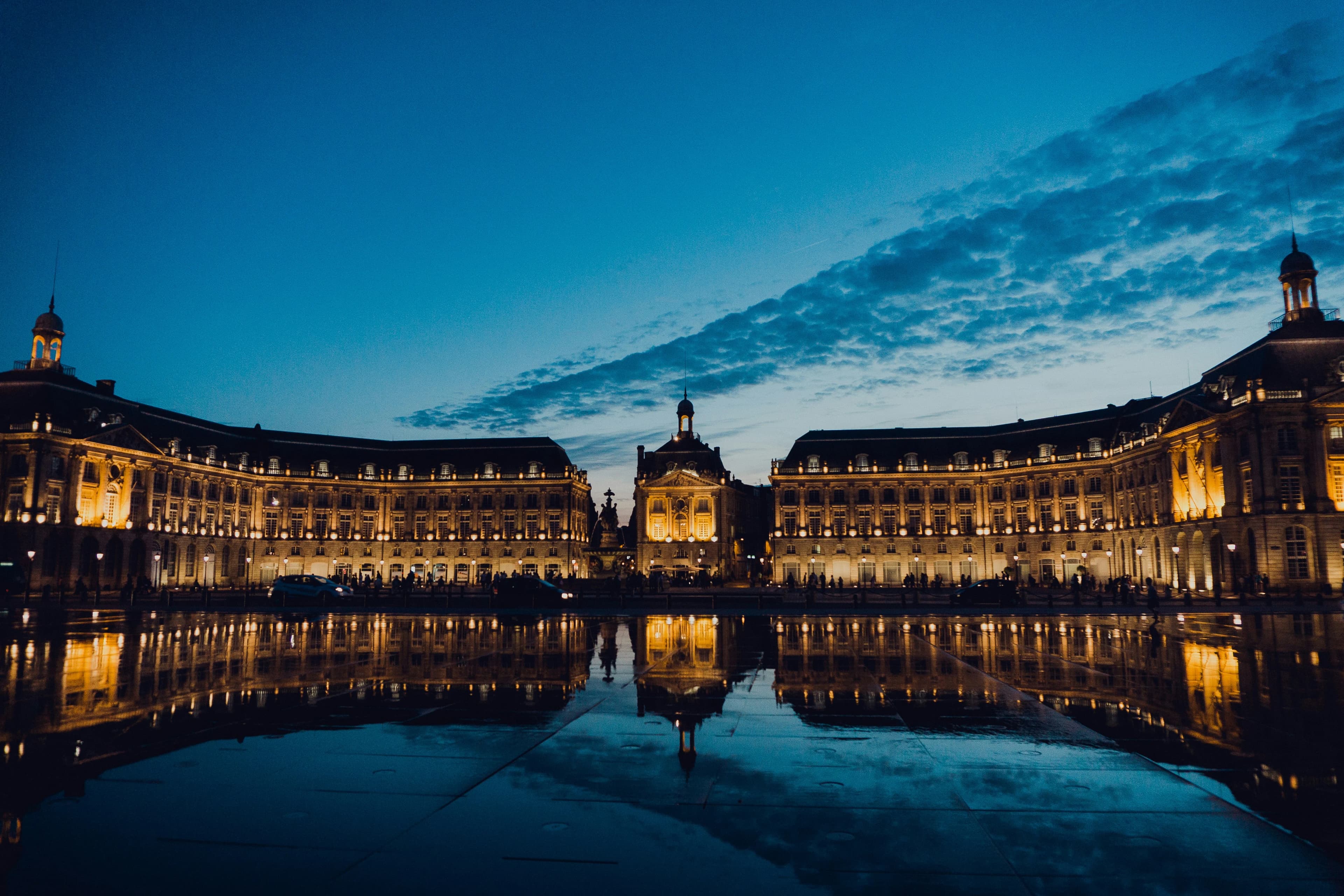
Bordeaux is classified as a UNESCO World Heritage Site for its urban ensemble, one of the largest in Europe. The city's luxury identity is rooted in the coherence of its built environment rather than spectacle. The Golden Triangle, formed by the allées de Tourny, the cours de l'Intendance and the cours Georges Clemenceau, concentrates the city's most refined retail, dining and hotel addresses. The Chartrons district, historically home to the wine trade, has evolved into a considered cultural quarter with galleries, antique dealers and intimate hospitality. The Quinconces esplanade and the waterfront offer a sense of civic scale that sets Bordeaux apart from more compact French cities.
10 hotels available

Welcome to the Burdigala Hotel, a 5-star Lifestyle hotel of the Inwood Hotels collection. Located at 115 rue Georges Bonnac in the Mériadeck district of Bordeaux, our unique establishment opens its d

Hôtel de Sèze is located a 5-minute walk from the Grand Théâtre in Bordeaux city center and features air-conditioned rooms with an LCD TV, a restaurant and a spa center, which guests can access upon r

Hotel Indigo Bordeaux Center Chartrons is located in the charming Chartrons district of Bordeaux. It features a panoramic terrace, with a view over the River Garonne, Pont de Pierre and quayside area.

Featuring a spa & wellness center, Hôtel Singulier Bordeaux - Boutique Hôtel & Spa Anne Semonin is located in the center of Bordeaux, a 10-minute walk from Museum of Aquitaine. Featuring a terrace, th

Directly opposite the Grand Théâtre, this 5-star hotel is in the heart of the historic center of Bordeaux. It offers a concierge service, a babysitting service upon request, gourmet restaurants and a

Located at the heart of Bordeaux’s historic center, Le Boutique Hotel is an 18th-century town house surrounding a lush, green courtyard. It offers a 459 ft² terrace shaded by a 100-year-old chestnut t

Located in Bordeaux, a 12-minute walk from Esplanade des Quinconces, Le Palais Gallien Hôtel & Spa has accommodations with a seasonal outdoor swimming pool, private parking, a garden and a terrace. Th

Elegant Accommodations Mondrian Bordeaux Les Carmes in Bordeaux offers a 5-star experience with spa facilities, a sauna, fitness center, indoor swimming pool, sun terrace, and a lush garden. Guest

Elegant Accommodations Villas Foch Boutique Hotel & Spa Bordeaux in Bordeaux offers a 5-star experience with a spa and wellness center, sauna, fitness center, indoor swimming pool, and free WiFi.

A luxury hotel set in a 19th-century private mansion in the heart of Bordeaux's historic center, Yndo Hôtel features a fragrance garden and a shaded terrace, where guests can enjoy a chic yet restful
The surrounding Gironde department extends the luxury geography considerably. The Médoc peninsula, running north along the estuary, is structured around the classified châteaux of Pauillac, Saint-Julien and Margaux. Saint-Émilion, a medieval limestone town on the right bank, carries its own UNESCO designation and a dense concentration of grand cru estates. These territories are not peripheral to the Bordeaux experience. For most high-end travelers, they form the primary reason for the visit.
Bordeaux operates on a seasonal rhythm largely tied to the wine calendar. The harvest period, running from early September through October, brings the Gironde estates to life with controlled access visits, négociant events and private cellar dinners. This is the period of highest demand for luxury hotel suites in Bordeaux, and availability requires significant advance planning.
Late spring, particularly May and June, offers a second optimal window. Temperatures are measured, the city is active without summer saturation, and the wine trade organises Primeurs, the annual en primeur tastings that draw buyers and collectors from across the world. July and August see the city quieter, with many local establishments on reduced schedules, though the Atlantic coast at Arcachon and the Cap Ferret peninsula absorbs significant luxury travel during this period.
The Bordeaux Wine Festival, held in even-numbered years along the riverfront, and the VINEXPO trade event attract international clienteles and place significant pressure on available rooms. For travelers whose agenda is independent of these events, early October or late April represent the most balanced entry points.
France operates a formal distinction for its most exceptional hotels through the Palace designation, awarded by Atout France to properties that exceed the five-star standard across a defined matrix of criteria. These criteria include architectural significance, suite surface area, the ratio of staff to guests, food and beverage quality, and concierge depth. A Palace-designated property in Bordeaux represents the uppermost tier of the French hotel offer.
Beyond the Palace category, Bordeaux has a specific typology worth understanding. Several luxury hotels in the city occupy classified historic buildings, former private mansions or institutional structures repurposed with contemporary interior programmes. This architectural layering is characteristic of the Bordeaux offer and distinguishes it from resort destinations. Suites in these properties typically feature original ceiling heights, period stonework and bespoke furniture commissions rather than standardised fit-outs.
The wine estates themselves have developed a separate hospitality category. Château hotels on the Médoc and in Saint-Émilion offer suite accommodation within operating vineyard properties, with access to barrel cellars, harvest participation and private guided tastings that are structurally unavailable to non-resident guests. This estate hospitality model operates at very limited scale and commands considerable lead time for reservations.
The first decision is whether the visit is centred on the city itself or on the wine territories. A traveler focused on Bordeaux's urban architecture, its dining scene and its cultural institutions, including the CAPC contemporary art museum, the Musée des Beaux-Arts and the Cité du Vin, will prioritise a suite within the city's historic perimeter, ideally within walking distance of the Triangle d'Or.
A traveler whose primary interest is vineyard access should consider whether a city-based luxury hotel suite with a well-connected concierge serves them better than an estate hotel. City suites offer greater flexibility for multi-château itineraries, while estate properties offer depth at a single address. The two approaches are not equivalent and the choice reflects the nature of the wine engagement.
Practical considerations include transportation: Bordeaux city centre is compact and navigable on foot or by tram, but the wine routes require a car or a private transfer. Suites that offer dedicated parking or maintained partnerships with private driver services carry a practical premium. Suite orientation also matters in a city defined by its river. Garonne-facing rooms in the right properties deliver an architectural reading of the city that interior-facing accommodations cannot replicate.
For families or groups, the distinction between a junior suite, a senior suite and a true apartment-format suite becomes significant in a city where properties are often constrained by heritage preservation requirements. La Suite's curation specifies floor area, room configuration and service inclusions to make this distinction transparent before any commitment is made.
The Bordeaux hotel market has expanded significantly since the city's 2007 UNESCO inscription accelerated investment in the tourism infrastructure. This expansion has produced considerable variation in quality within the five-star category. Properties carrying the same star rating may differ substantially in suite size, architectural integrity, service consistency and access to the estate network.
La Suite applies a consistent evaluation framework across all listed properties, focusing on the criteria that matter to high-end travelers: documented suite surface area, architectural and design quality, the depth of the concierge relationship with local wine estates, and the reliability of the guest experience across seasons. The curated selection by La Suite removes the research burden and replaces it with a precise, honest mapping of what Bordeaux's best hotel suites actually deliver.

The Triangle d'Or, formed by the cours de l'Intendance and surrounding streets in central Bordeaux, concentrates the city's most refined hotel addresses within walking distance of key cultural and dining institutions. The Chartrons district offers a quieter, more residential character for travelers seeking discretion over centrality. Suite availability in both areas requires advance planning, particularly during harvest season and the Primeurs tasting period.
The harvest period from September through October and the Primeurs en primeur tastings in late April are the two peak demand windows for luxury hotel suites in Bordeaux. Booking three to six months in advance is standard practice during these periods. Late spring and early October offer the best balance of mild weather, cultural activity and suite availability.
The Palace designation is a formal French classification awarded by Atout France to hotels that exceed the five-star standard across criteria including architectural significance, suite size, staff ratios and service depth. It represents the uppermost tier of the French luxury hotel offer. Travelers should verify current Palace holders directly, as the designation is subject to periodic review.
Several classified wine estates in the Médoc and Saint-Émilion territories operate private hotel suites within their vineyard properties. These estate hotels offer direct cellar access, harvest participation and exclusive tasting programmes unavailable to non-resident guests. Availability is very limited and reservations typically require significant lead time, often six months or more for peak season dates.
The Médoc appellations, including Margaux, Pauillac and Saint-Julien, are located between 40 and 60 kilometres north of central Bordeaux along the left bank of the Gironde estuary, roughly 45 minutes by car. Saint-Émilion is approximately 40 kilometres to the east, accessible in under an hour. Pomerol and Fronsac are similarly positioned on the right bank. Private transfers from city-based luxury hotels are the standard mode of access for high-end visitors.
Key differentiators include documented suite floor area, original architectural features such as period stonework and ceiling height, the quality of the concierge's relationships with wine estates, and whether the property holds a current Palace designation. Garonne-facing orientation is a premium consideration for city-centre suites. La Suite specifies these criteria transparently across its curated selection to allow informed comparison.
Bordeaux functions effectively as a luxury city break destination throughout the year. The city's UNESCO-classified architecture, its concentrated dining offer, and institutions including the Cité du Vin, the CAPC and the Musée des Beaux-Arts provide a coherent cultural programme independent of the wine calendar. July and August see reduced local activity, but the proximity of the Arcachon basin and Cap Ferret extends the luxury geography for summer visits.
A château hotel is located within an operating wine estate outside the city, offering immersive access to the production environment, private tastings and a rural setting. A city luxury hotel provides urban convenience, proximity to restaurants and cultural sites, and a concierge network that can arrange vineyard visits across multiple estates. The two models serve different travel objectives and the choice depends on whether depth at one estate or flexibility across the appellation is the priority.
Bordeaux suites typically offer greater spatial generosity relative to price point than comparable Paris properties, reflecting lower real estate pressure and a different hospitality market. The architectural register is distinct, with 18th-century Girondine stone construction rather than Haussmannian typology. Service culture in Bordeaux tends toward a more measured, less formalised register, which many travelers in the 35 to 65 age range consider a preference rather than a compromise.
La Suite curates properties across Bordeaux's luxury hotel offer, including city-centre addresses and, where available, estate properties with direct vineyard access. The curation specifies the nature of each property's wine-related services, from concierge-arranged estate visits to on-site cellar experiences, so travelers can identify the level of wine engagement that corresponds to their itinerary. The curated selection by La Suite is the reference point for this specific type of informed decision.