Understanding the Champs-Élysées as a luxury address
The area is not exclusively monumental. Side streets off the avenue, particularly those heading north toward the Plaine Monceau and south toward the Seine, open into residential blocks of Haussmann-era stone that frame a quieter, more domestic version of Parisian luxury. A well-positioned suite here provides both immediate access to the avenue's scale and easy retreat into the neighbourhood's residential character.
Areas to consider when choosing where to stay
The Golden Triangle
The triangle formed by the Avenue des Champs-Élysées, the Avenue Montaigne, and the Avenue George V is the most concentrated luxury corridor in Paris. This is where several of the city's most prestigious hotel properties are located, alongside the flagship ateliers of the major French fashion houses. A suite in this zone places the traveller at the centre of the city's commercial luxury ecosystem, with direct walking access to the couture boutiques of Avenue Montaigne and the institutions of the 8th arrondissement.
Toward the Place de la Concorde
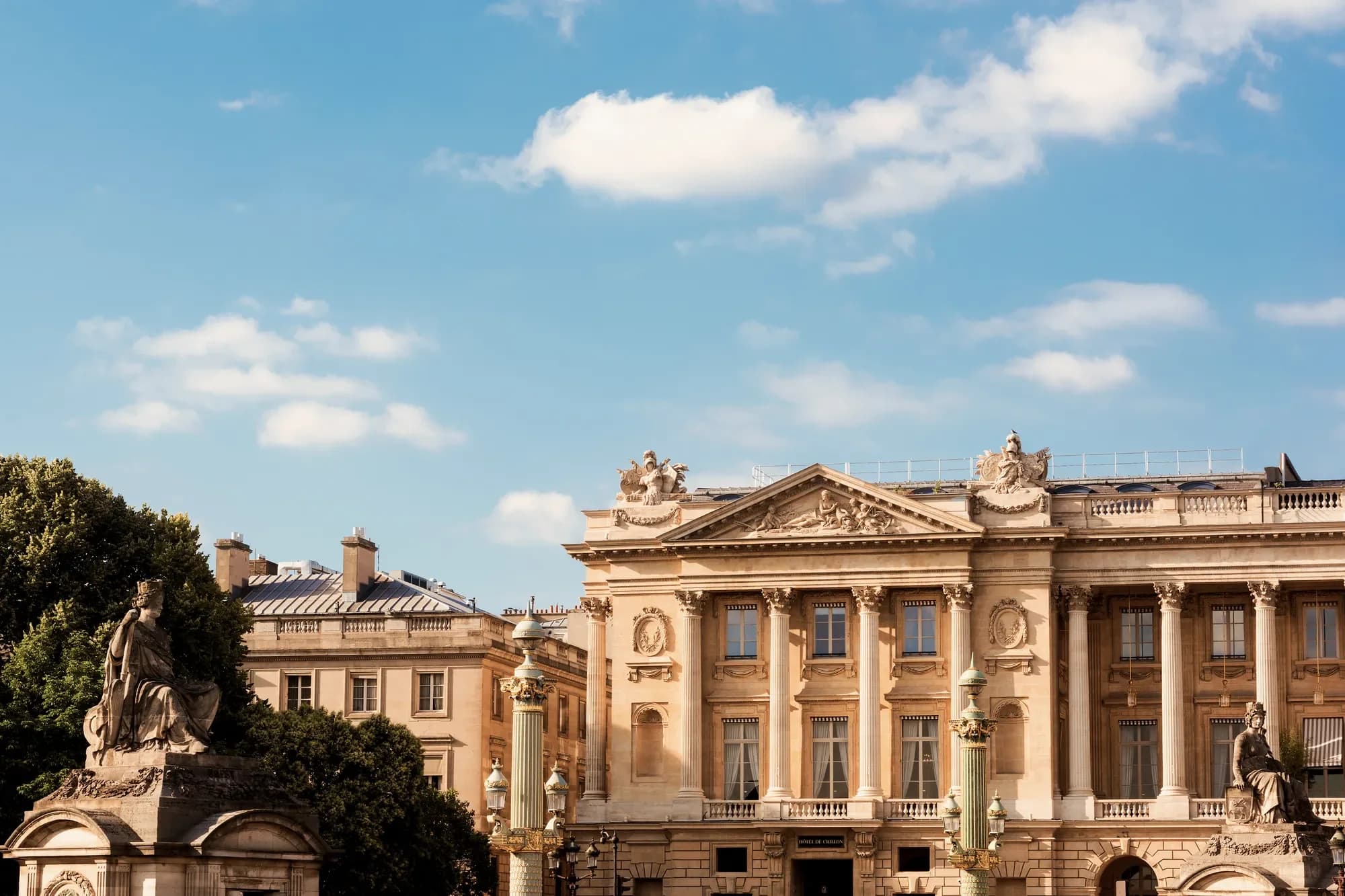
The lower section of the avenue, approaching the Place de la Concorde, offers a different register. The proximity to the Tuileries Garden and the Louvre introduces a more cultural dimension. Properties in this zone tend to draw from a guest profile oriented toward art, antiques, and the institutions of the 1st arrondissement across the river. Suites in this part of the district often command views over formal French gardens or the Seine, adding an architectural layer to the experience of the room itself.
The Arc de Triomphe end
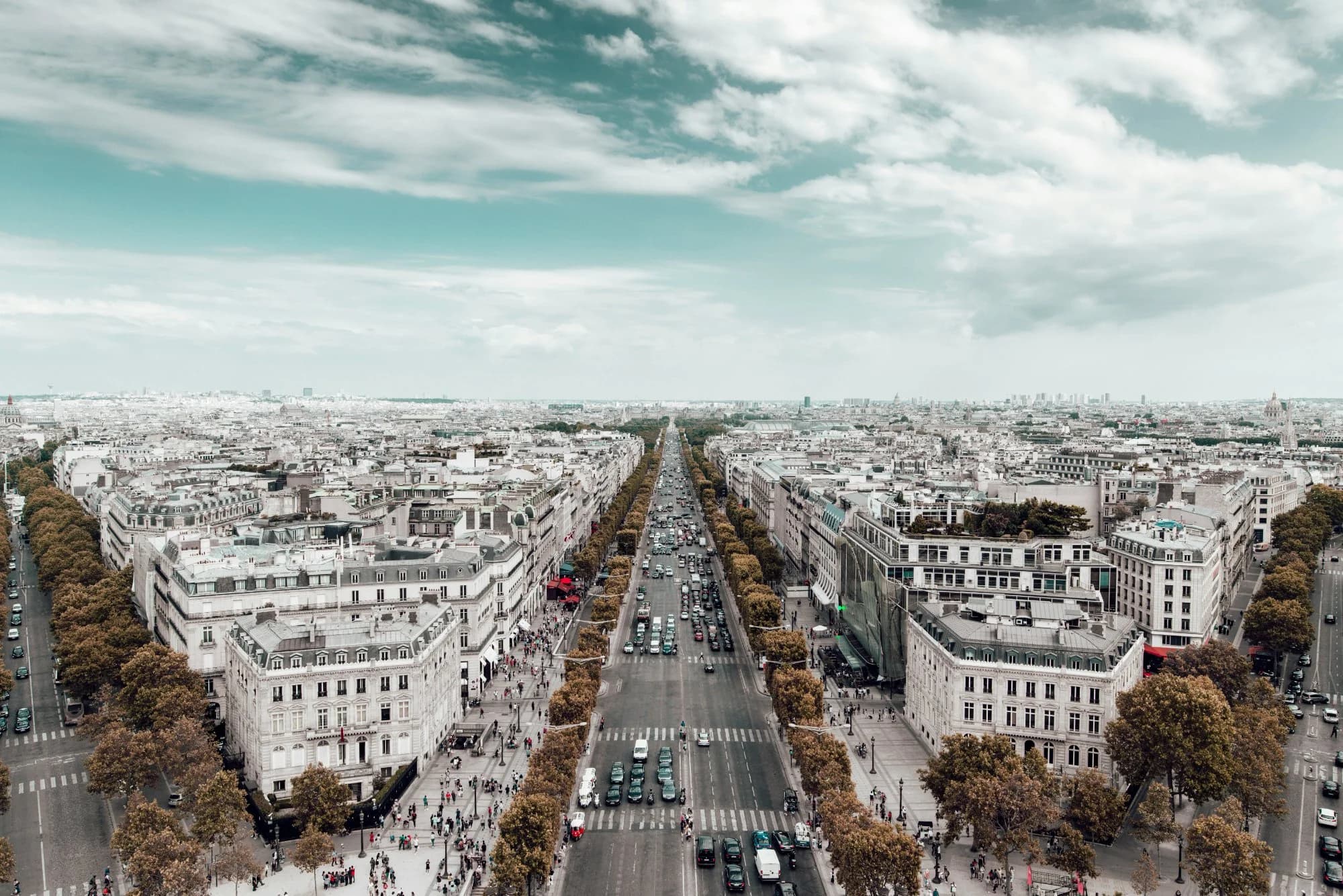
The upper section of the avenue, converging on the Place Charles de Gaulle, is more transient in character. The area functions as a transport and commercial hub, but several hotel properties here compensate through elevation and scale, offering suite-level rooms with direct views of the Arc de Triomphe and the twelve radiating avenues of the étoile. For a traveller arriving or departing via Charles de Gaulle Airport, this end of the avenue has a practical logic as well.
When to visit the Champs-Élysées
Paris does not have a single optimal season, but the Champs-Élysées has rhythms worth understanding. The high-fashion calendar concentrates activity in the district during Paris Fashion Week, held twice yearly in late February and early March for women's ready-to-wear, and again in September and October. Hotel suites in the Golden Triangle area are in high demand during these periods, and rates reflect that pressure.
July 14th, France's national holiday, brings the military parade down the avenue in the morning and significant crowds for the remainder of the day. The Christmas period transforms the avenue into one of Europe's most photographed seasonal displays, with illuminations and a market running from late November into January. This is a period of heavy tourist saturation, and travellers seeking the quieter, more residential quality of the district should consider early November or late January as alternatives.
Late spring, specifically April through June, is generally considered the most balanced period. Light is good, temperatures are moderate, and the city operates at a pace that allows the kind of unhurried engagement with galleries, restaurants, and tailors that defines luxury travel in this district.
The French Palace hotel classification
France operates a specific designation above the standard five-star category: the Palace label. Administered by Atout France, the national tourism development agency, the Palace classification is awarded to properties that meet criteria across service standards, architecture, heritage, and cultural contribution. The assessment is renewed periodically, and properties must sustain their standards to retain the designation. In the Champs-Élysées district, several of the most historic hotel properties carry this classification, which functions as a reliable marker of the highest tier of French hospitality.
For a traveller selecting a luxury hotel suite in this district, the Palace designation signals a specific expectation: butlered suite service, in-house dining of reference quality, and a physical environment that has been maintained or restored to a level that treats the building as an artifact in its own right. The difference between a Palace suite and a standard luxury suite in this district is not merely financial. It is architectural, spatial, and experiential in ways that take time to register but define the memory of the stay.
How to choose the right suite in the Champs-Élysées district
Several considerations are specific to this part of Paris. First, orientation matters more here than in almost any other urban district. A suite facing the avenue itself offers one of the city's most legible visual experiences but also accepts the acoustic conditions of one of its busiest roads. A suite facing an interior courtyard or a lateral side street trades the visual drama for genuine quiet. Neither choice is objectively superior; they reflect different priorities.
Second, floor level is consequential in Haussmann-era buildings. The piano nobile, typically the second floor in French convention, carries the highest ceilings and the most elaborate plasterwork. Higher floors in the same building may offer better views but less architectural detail. In a purpose-built hotel of the early twentieth century, the inverse can apply, with upper-floor suites having been designed specifically for panoramic outlook.
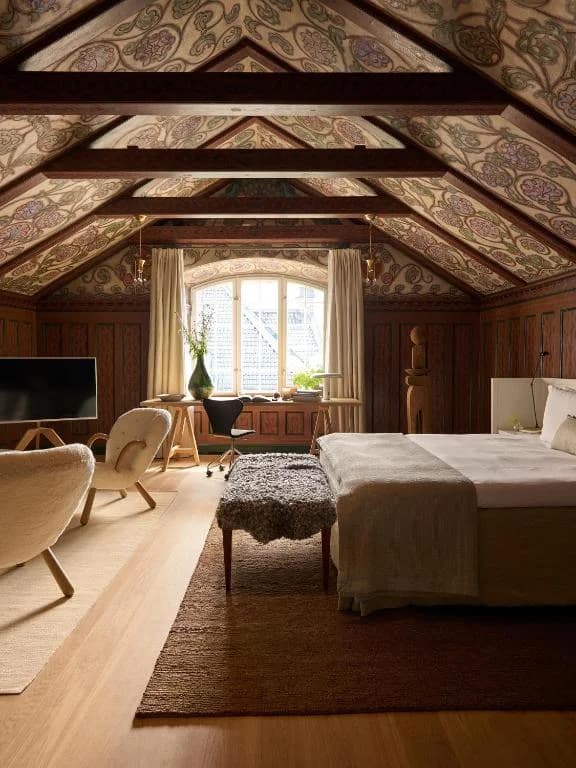
Third, the distinction between suites that are merely large and suites that are genuinely composed is worth attention. Size alone, measured in square metres, does not determine the quality of a suite stay. Proportion, natural light, the arrangement of living and sleeping areas, and the relationship between interior and exterior space are all factors that vary significantly between properties and cannot be assessed from floor plans alone.
Why curation matters in this specific district
The Champs-Élysées district has a high density of internationally recognised hotel names, and the volume of available information about each property is substantial. The challenge for a discerning traveller is not access to information but the quality of the filter applied to it. Marketing language is uniform at the top end of the market, and properties with genuinely different characters are often described in nearly identical terms.
La Suite approaches this district through a curation framework that prioritises verified experiential quality over brand recognition. The selection on this platform reflects an editorial perspective on which properties, and which specific suite categories within those properties, best serve the distinct requirements of travellers who choose a suite as the primary purpose of their stay rather than as an upgrade. For the Champs-Élysées, that means attending to architectural integrity, service specificity, and the relationship between the suite and the neighbourhood it occupies.