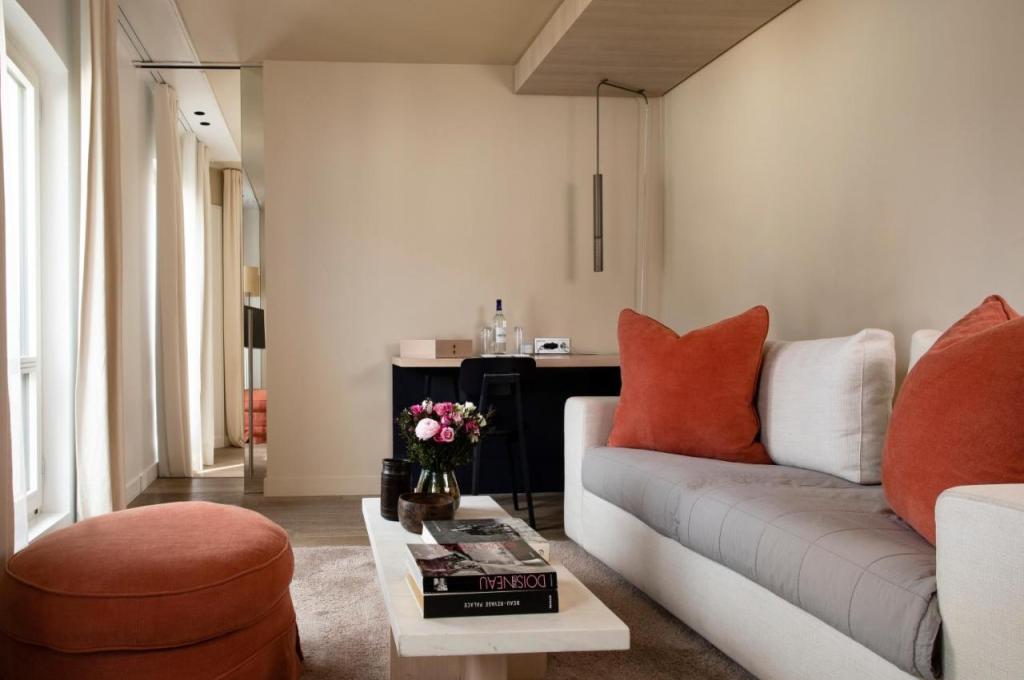
Why Grands Boulevards is a considered choice for suite travelers
This is also one of the more active dining corridors in central Paris. The area has historically attracted a mix of brasserie culture, newer natural wine bars, and destination restaurants. A suite with genuine space, a proper sitting room, and room service calibrated to Parisian hours matters here because the rhythm of the neighborhood encourages long evenings and late returns.
The distinct character of each part of the district
The 9th arrondissement: cultural infrastructure and quiet residential streets
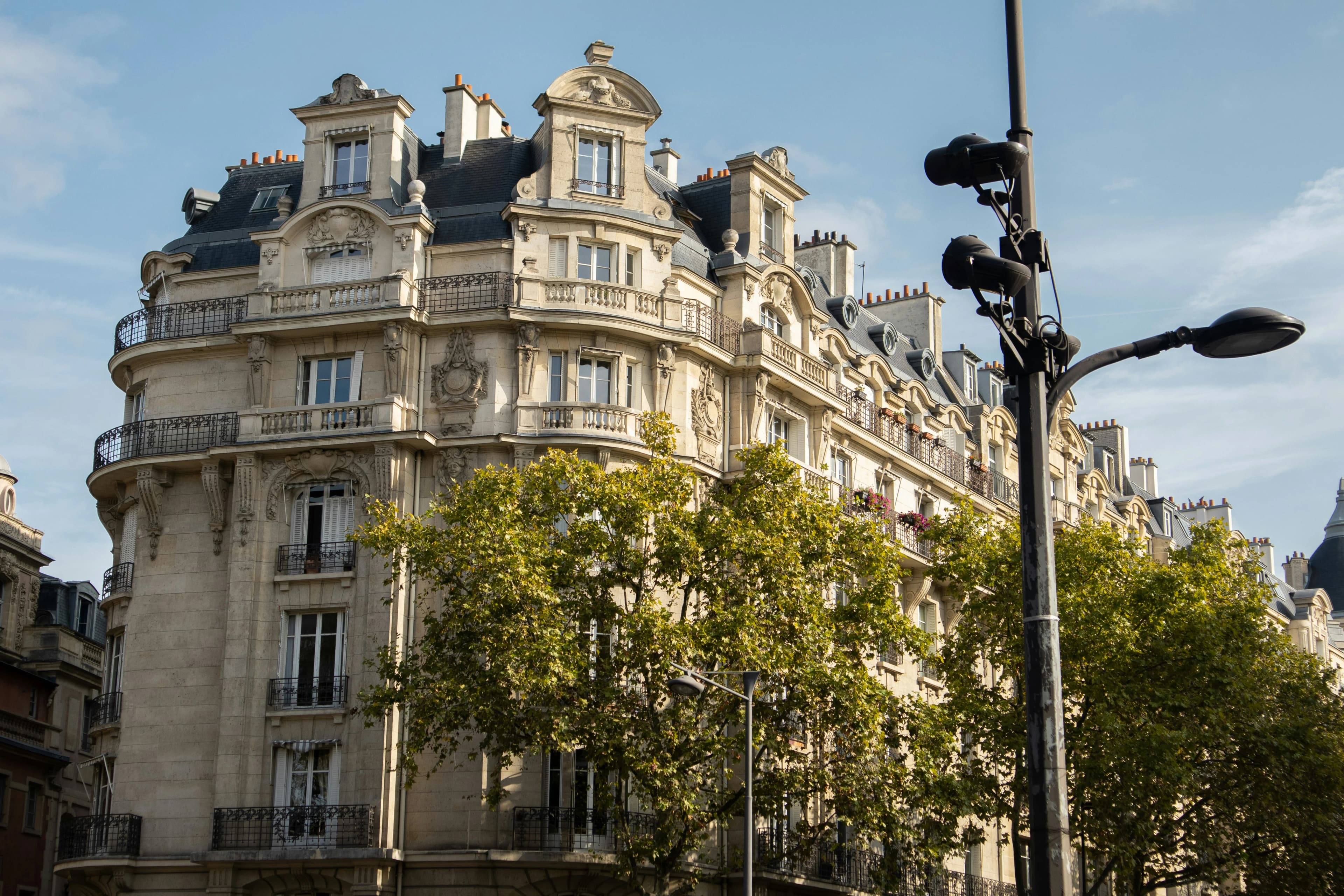
The upper section of Grands Boulevards bleeds into the 9th arrondissement, one of Paris's most architecturally coherent neighborhoods. The streets behind the Opera Garnier are dense with galleries, auction houses, and the kind of antique dealers who do not need window displays. The residential fabric here is intact: wide internal courtyards, carved stone entryways, long corridors that suggest a city built for privacy. Luxury hotel suites in this part of Paris tend to occupy either purpose-built Belle Époque structures or sensitively converted private mansions. The atmosphere rewards travelers who move slowly and notice detail.
The 2nd arrondissement: commerce, passages, and the press district
The lower section of Grands Boulevards sits in the 2nd arrondissement, historically the center of Parisian newspaper and publishing activity. The streets around Rue Montmartre and Rue du Sentier have shifted over the past decade toward a younger creative and tech economy, without losing the covered passages that remain among the most intact examples of 19th-century commercial architecture in Europe. Passage des Panoramas, opened in 1799, is the oldest in Paris. For suite travelers, this zone offers a density of experience within a compact radius: design bookshops, specialist food merchants, and restaurants operating at a consistently high level without the pricing distortion of the 1st or 8th arrondissements.
When to visit Grands Boulevards
Paris does not have a bad season for high-end travel, but the rhythm of Grands Boulevards shifts meaningfully across the year. Spring, from late March through May, brings consistent light and a return to terrace life. The cultural calendar accelerates: the Paris Opera season reaches its peak programming, galleries open new cycles, and the city's restaurant scene sharpens for the influx of informed visitors. Autumn, September through November, is arguably the most considered time to visit. Fashion Week activity concentrates in the 1st and 3rd arrondissements, but its effects are felt across the city. Hotel suite availability in Grands Boulevards can tighten during these weeks, and pricing reflects demand.
Summer in Paris carries a particular quality that is easy to underestimate. July and August see a significant portion of the resident population leave, which quiets the city in ways that suit the independent traveler. Lines at cultural institutions shorten. Tables at serious restaurants become available on shorter notice. The architecture reads differently without the compression of the working week. Winter, from December through February, is the season of the covered passages: the glass-roofed arcades trap warmth and create an interior world that is genuinely atmospheric. Suite travelers arriving in January or February will find the city operating at its most local register.
Understanding luxury standards in Parisian hotels
France operates a formal classification system for its highest-tier hotels, with the Palace designation sitting above the standard five-star category. A Palace hotel must demonstrate exceptional architectural character, a high ratio of staff to guests, at least one food and beverage offer of genuine culinary distinction, and a suite offering that meaningfully exceeds the standard room in terms of spatial quality and service access. Paris holds the largest concentration of Palace-designated properties in the world. Grands Boulevards and its immediate surroundings include properties that either carry this designation or operate at standards comparable to it.
Beyond the Palace classification, the relevant markers for suite travelers in this district include ceiling height (Haussmannian buildings typically offer 3.2 to 4 meters in principal rooms), natural light exposure (corner suites on upper floors access direct southern or western light across the boulevard), and acoustic separation from street-level activity. The covered passages below, while not loud by urban standards, generate a particular ambient sound that varies by time of day. Suite travelers sensitive to acoustic environment should request upper-floor rooms or those facing internal courtyards.
How to choose the right luxury suite in Grands Boulevards
Historical architecture versus contemporary design
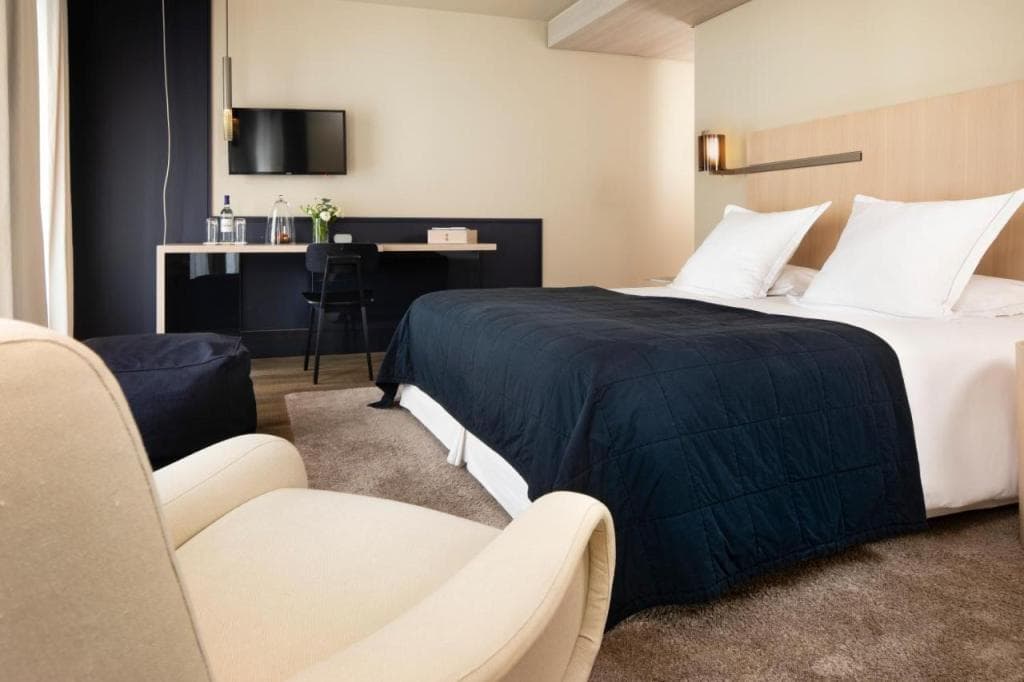
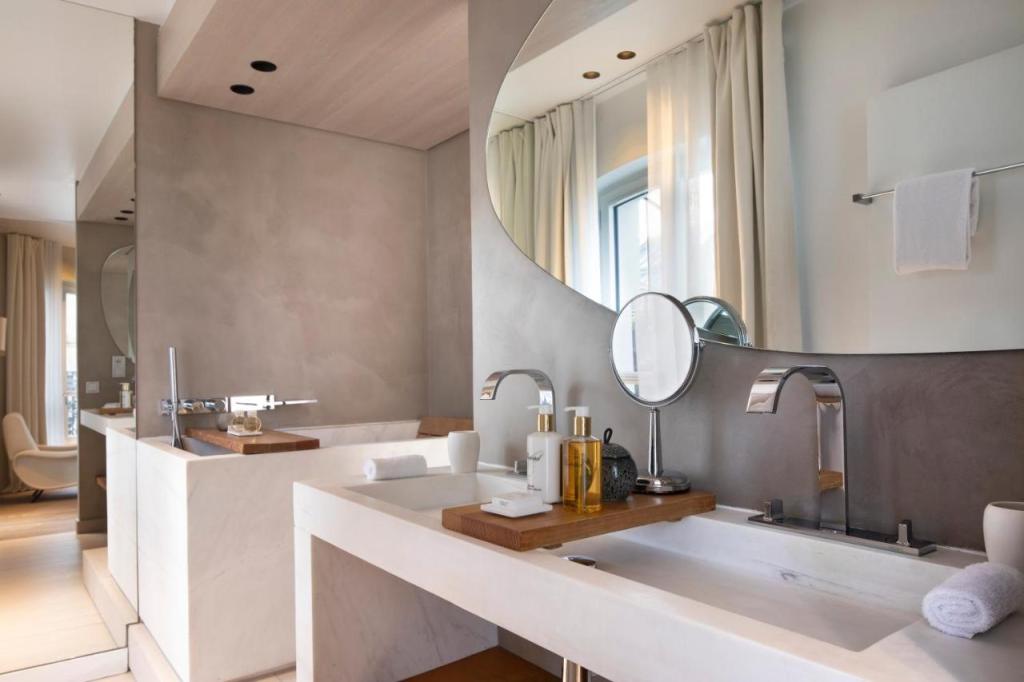
Grands Boulevards presents two distinct categories of luxury hotel experience. The first is the Haussmannian property: high ceilings, parquet floors, ornamental moldings, and a spatial logic that reflects 19th-century ideas of comfort and hierarchy. These buildings convert well into luxury hotels when the intervention respects the original proportions. The second category is the contemporary insertion: properties that occupy older structures but have been stripped and redesigned with a current architectural sensibility. Both approaches can produce exceptional suites, but the experiential quality differs fundamentally. Travelers who value material continuity and historical resonance should prioritize the former. Those who prefer a cleaner, more controlled sensory environment tend to respond better to the latter.
Proximity to transport and cultural anchors
Grands Boulevards is served by the metro line 8 and 9 interchange, placing travelers within direct reach of the Champs-Elysees to the west and Nation to the east. The RER network connects from nearby Auber station to Charles de Gaulle Airport in approximately 35 minutes. Suite travelers arriving with substantial luggage, or those managing business schedules that require airport access, should factor this connectivity into their choice. Properties within a five-minute walk of the Grands Boulevards metro station offer the most efficient base for a composite itinerary that includes both cultural and commercial activity.
The value of a curated selection by La Suite
Grands Boulevards does not have the same density of luxury hotel supply as the 1st or 8th arrondissements, which means the selection process requires more precision. Not every property marketed as a boutique luxury hotel in this district meets the spatial, service, and design criteria that define a genuine suite experience. La Suite applies consistent editorial standards across every property listed: minimum suite dimensions, service protocols, design coherence, and the kind of contextual detail that only comes from direct familiarity with the properties. For travelers who value their time and expect their accommodation to function as a considered extension of the trip rather than a logistical necessity, the curated selection by La Suite removes the noise and presents only properties that have earned their position.