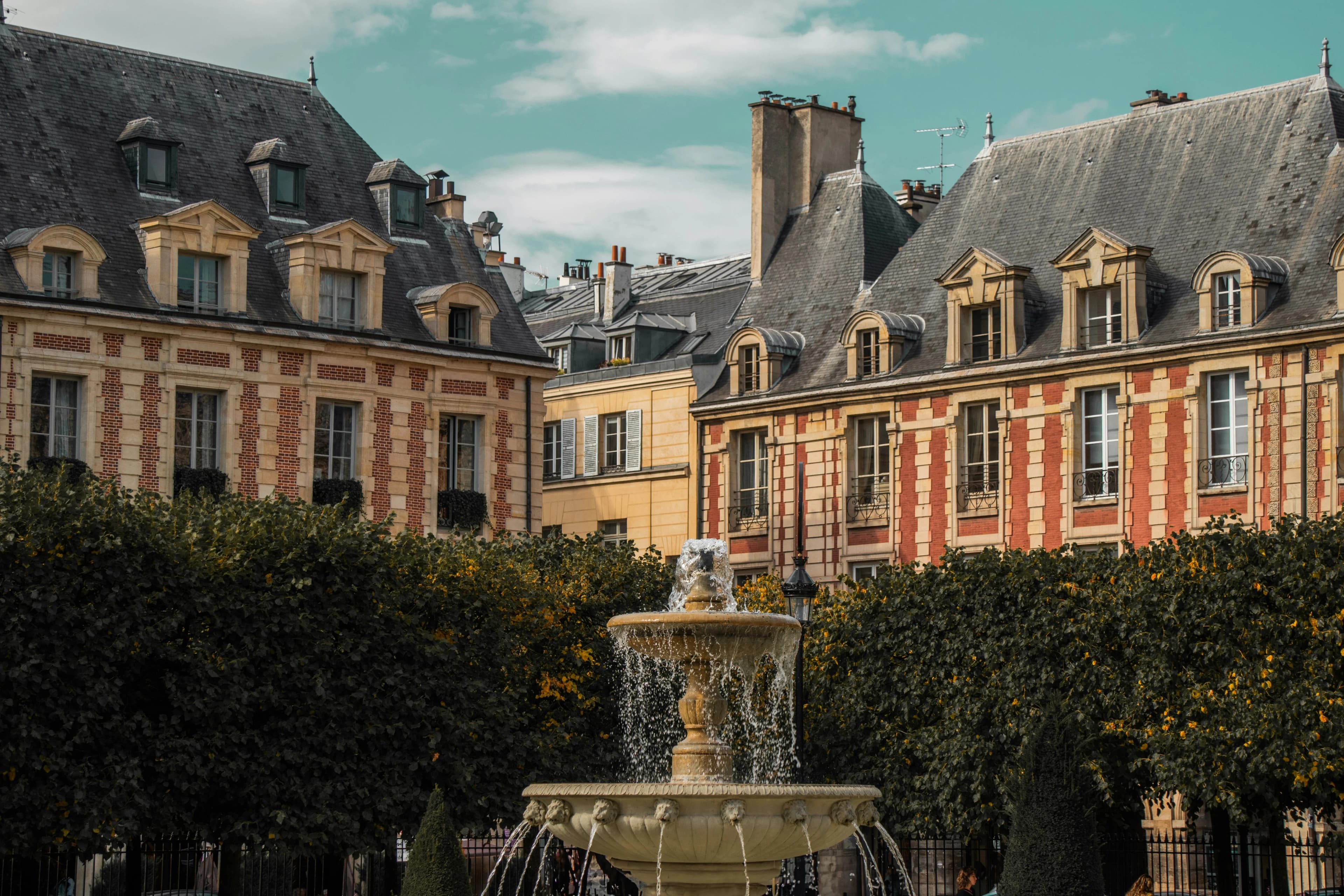
Why Le Marais occupies a distinct position in Paris luxury travel
The neighborhood divides into legible micro-territories. The southern section, anchored by the Place des Vosges (completed in 1612 and Paris's oldest planned square), carries a quieter, more residential weight. The northern section, around the Rue de Bretagne and the Carreau du Temple, moves at a faster cultural tempo, with a concentration of independent concept stores, natural wine bars, and studios that have attracted a younger creative class without fully displacing the older Jewish quarter along the Rue des Rosiers. Understanding this internal geography is useful when selecting a suite's precise address.
The best areas within Le Marais for a luxury suite stay
Around the Place des Vosges
The immediate vicinity of the Place des Vosges offers the highest degree of architectural coherence in the neighborhood. The arcaded red-brick facades of the square itself set a visual standard that the surrounding streets maintain. Hotels positioned here benefit from direct access to one of Paris's most composed public spaces, while remaining within walking distance of the Musée Carnavalet (devoted to the history of Paris) and the Musée Picasso. Suite guests in this zone tend to prioritize quiet and historical depth over proximity to nightlife.
Haut Marais
The upper Marais, roughly north of the Rue de Bretagne, has consolidated its identity as Paris's primary address for contemporary design culture. Gallery density is high, and the retail offer skews toward independent, internationally recognized labels. For travelers whose luxury framework includes access to the contemporary art market and design-forward dining, this section rewards deliberate exploration on foot. A suite here places the guest at the operational center of a particular Parisian creative economy.
Saint-Paul and the Jewish quarter
The Saint-Paul sector retains the most uninterrupted domestic scale of the Marais. Its courtyards, known locally as cours, are often accessible during the day and offer a form of urban privacy that is genuinely rare in central Paris. The Rue des Rosiers and surrounding streets preserve one of Europe's historically significant Jewish communities, with institutions, bakeries, and bookshops that have maintained continuity across generations. For travelers seeking cultural specificity alongside comfort, this pocket of the Marais offers both.
When to visit Le Marais for a luxury hotel experience
Paris functions year-round as a luxury destination, and Le Marais specifically does not have an off-season in any meaningful sense. That said, certain periods concentrate cultural activity in ways that reward advance planning. The Paris+ par Art Basel fair (held in October at the Grand Palais Éphémère) draws the international art market directly into proximity with the Marais's gallery circuit. January and March bring the men's and women's ready-to-wear collections respectively, reconfiguring the city's social tempo. The Nuit Blanche contemporary art event, typically held in early October, activates institutions across the arrondissement.
Spring (April through early June) and autumn (September through November) represent the most temperate and culturally active windows. Summer concentrates tourist density in the public spaces around the Place des Vosges and along the main shopping axes, though the neighborhood's residential core retains relative calm. December brings a particular quality of light to the stone facades and covered passages of the Marais that architects and photographers have documented for good reason.
Understanding luxury standards in Le Marais
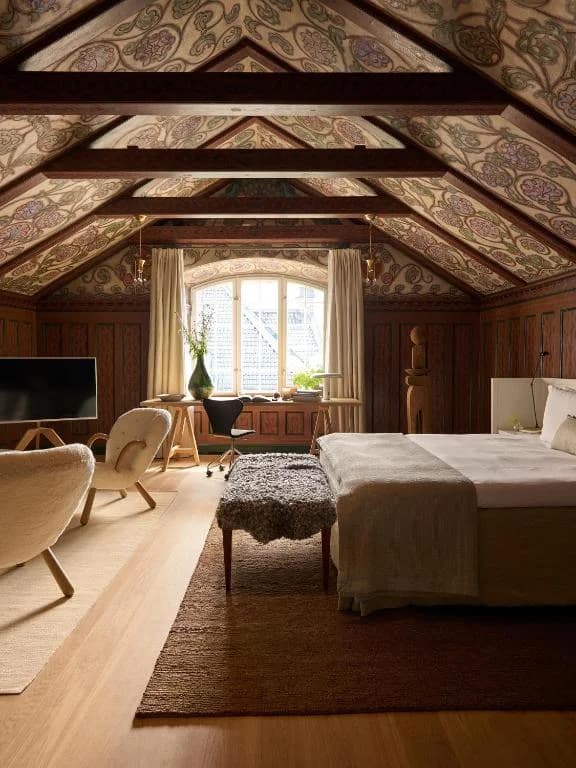
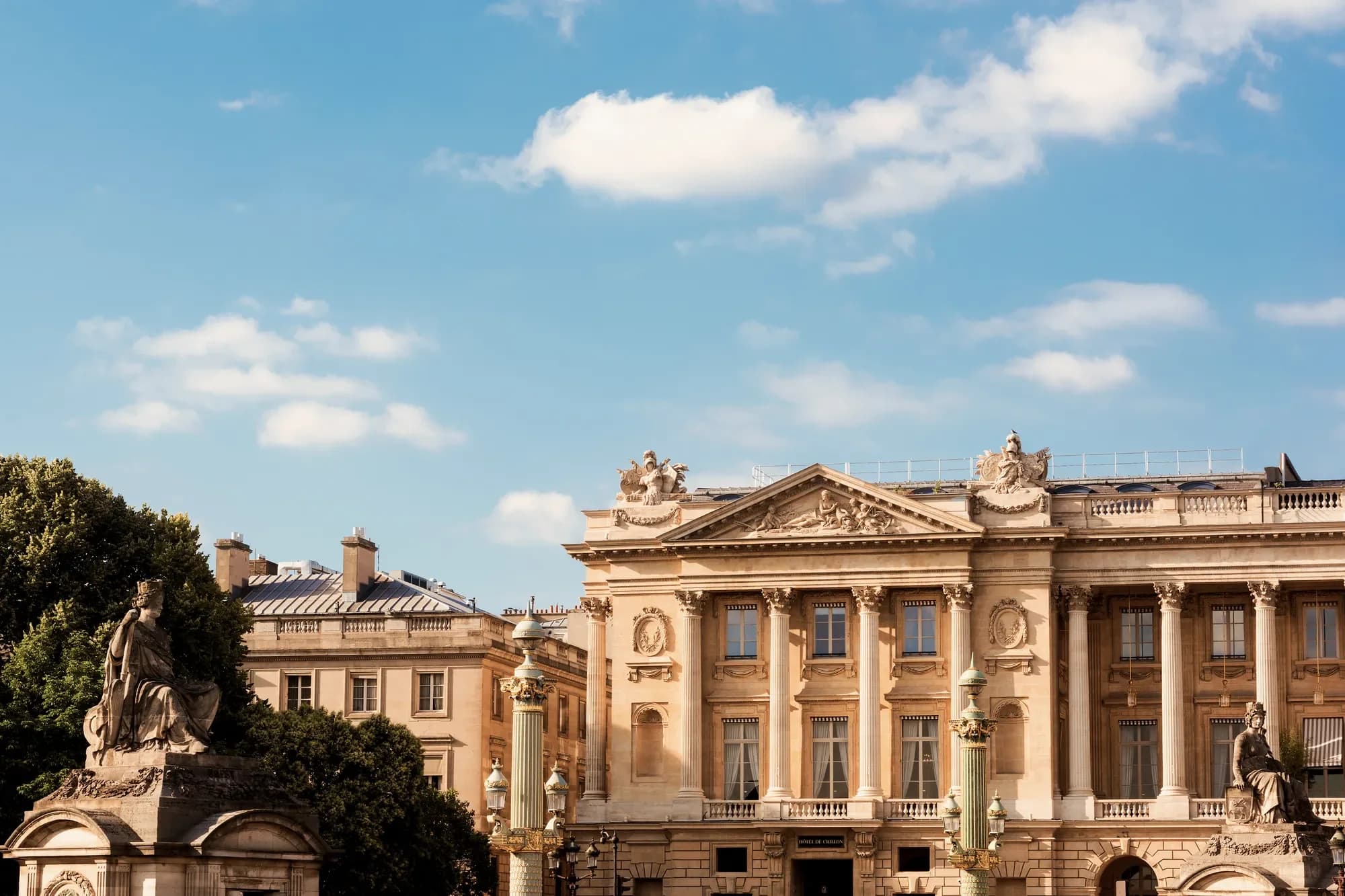
France's official hotel classification includes the Palace designation, awarded by Atout France to properties demonstrating exceptional architectural, cultural, and service criteria beyond the five-star standard. Le Marais hosts properties that operate at the upper tier of five-star classification, several of which are situated within converted hôtels particuliers: the private aristocratic mansions that define the neighborhood's domestic architecture. These conversions present specific suite typologies that differ from purpose-built luxury hotels. Ceiling heights, original boiserie, interior courtyards, and the irregularity of historic floor plans contribute to a spatial experience that no contemporary build can replicate.
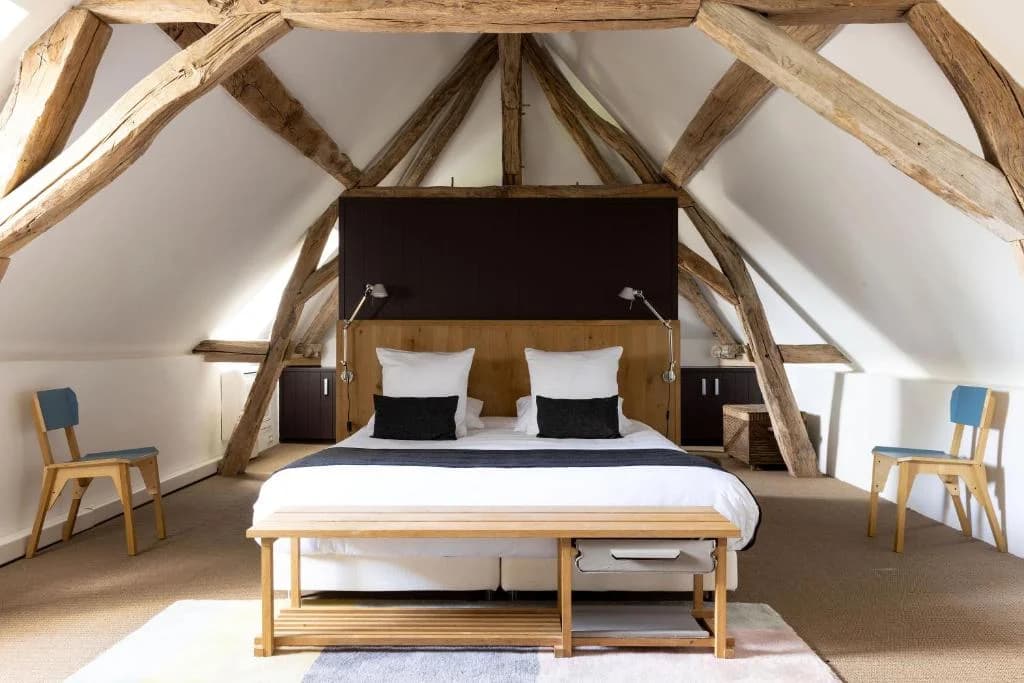
Suite travelers in Le Marais should expect rooms that reward architectural attention: coffered ceilings, stone fireplaces retained as decorative elements, and the acoustic quality of thick masonry. The tradeoff, as with all historic conversions, is that standardization is reduced. Two suites within the same property may differ significantly in proportion and orientation. This variability is not a flaw; it is a structural feature of the building type, and for travelers with a developed sense of spatial preference, it makes selection more rather than less interesting.
How to choose the right suite in Le Marais
Several variables distinguish suites within the neighborhood and deserve consideration before any booking decision. Courtyard-facing rooms offer privacy and reduced street noise; street-facing suites in pedestrianized sections can provide direct visual connection to the architectural fabric of the Marais without meaningful acoustic disruption. Floor level matters here more than in purpose-built hotels: higher floors in converted mansions often have lower ceiling heights than the principal floors (the piano nobile), which in French domestic architecture is typically the second level above ground.
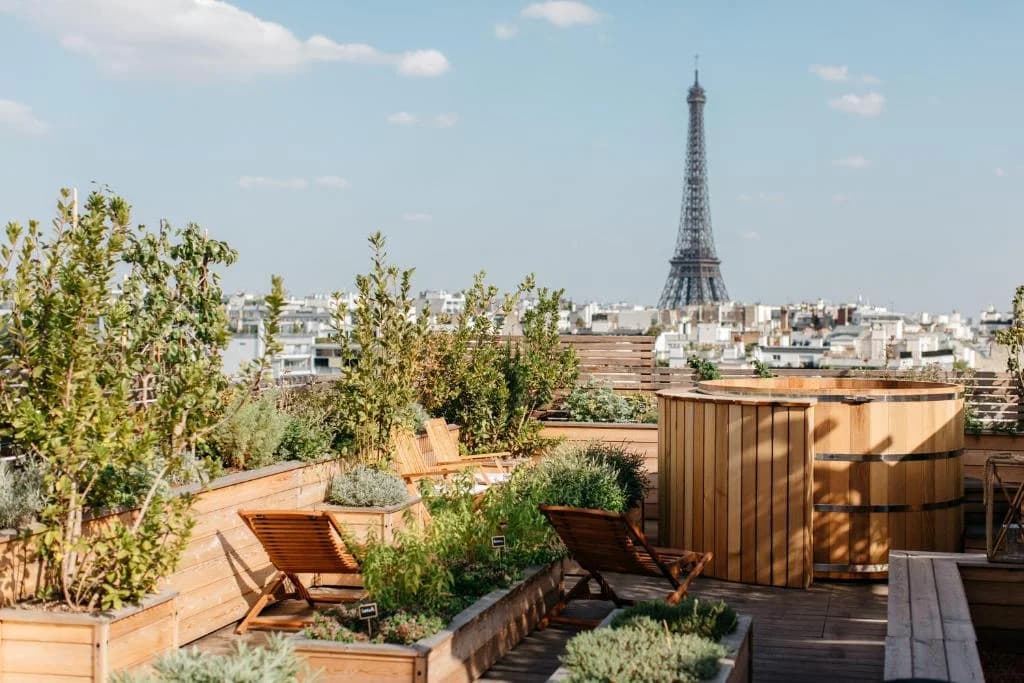
Access to outdoor space is a genuine differentiator in central Paris. Suites with private terraces, access to interior gardens, or upper-floor views across the Marais roofline command a real premium and justify it. For longer stays, proximity to the Marché des Enfants Rouges (Paris's oldest covered market, operating since 1615) or to the green spaces of the Square du Temple adds a practical dimension to the location calculus. Connectivity to the rest of Paris is strong: the Saint-Paul and Arts et Métiers metro stations anchor the neighborhood without dominating it.
Why curated selection matters in Le Marais
Le Marais does not have the highest concentration of large luxury hotels in Paris. Its inventory is specific, smaller in scale, and often less visible in mainstream booking channels than the properties clustered around the Champs-Elysées or the Left Bank. This makes curation not a convenience but a functional necessity for travelers who want to match their accommodation to their actual priorities, whether those are architectural character, gallery proximity, neighborhood quiet, or suite scale.
La Suite approaches this inventory with the same discipline applied across every destination on the platform: direct knowledge of the properties, clarity about what each suite type offers, and no commercial incentive to favor one address over another. For a neighborhood as internally differentiated as Le Marais, that editorial precision translates directly into a better stay. The curated selection by La Suite covers the Marais's most considered luxury hotel suites, aligned to the preferences of travelers who treat accommodation as part of the cultural experience rather than a logistical baseline.