Where to stay in Crillon-le-Brave and the surrounding Vaucluse
The broader Vaucluse plateau extends north and east, connecting Crillon-le-Brave to villages such as Bédoin, Mormoiron, and Mazan. Each sits within reach of the Ventoux cycling routes and the truffle markets of the Tricastin. For travelers who want the village as a base rather than a destination in itself, this geography rewards exploration by car across roads lined with dry-stone walls and cherry orchards.
When to visit Crillon-le-Brave for a luxury suite stay
The Vaucluse operates on a clear seasonal logic. Spring, from late April through June, brings the lowest temperatures for walking and cycling, along with the cherry harvest in the Comtat and the first lavender growth at altitude. This is the period when the landscape is most actively in transition, and suite availability tends to be more flexible before the summer peak.
July and August mark the high season, when lavender reaches full bloom across the Luberon and the Vaucluse plateau and when thermal conditions on Mont Ventoux become most demanding for cyclists. Accommodation fills quickly during these months, and advance planning is essential for securing the best suites.
September and October represent the most complete travel window. The vendanges (grape harvest) animate the surrounding vineyards, truffle season begins in November, and the light over Ventoux takes on the low-angle quality that painters have documented for two centuries. Winter in Crillon-le-Brave is austere and quiet; some properties reduce their offer significantly, but for travelers seeking solitude and the specific atmosphere of a Provençal village in dormancy, it remains a considered option.
Understanding luxury hotel standards in Provence
France operates a formal prestige classification for its highest-tier urban hotels: the Palace designation, awarded by Atout France to properties meeting criteria across architecture, service, cultural contribution, and suite provision. Crillon-le-Brave is not a Palace destination in the institutional sense, but the village has long hosted a property that set a benchmark for rural Provençal hospitality at the luxury level, demonstrating that classification is not the only measure of quality.
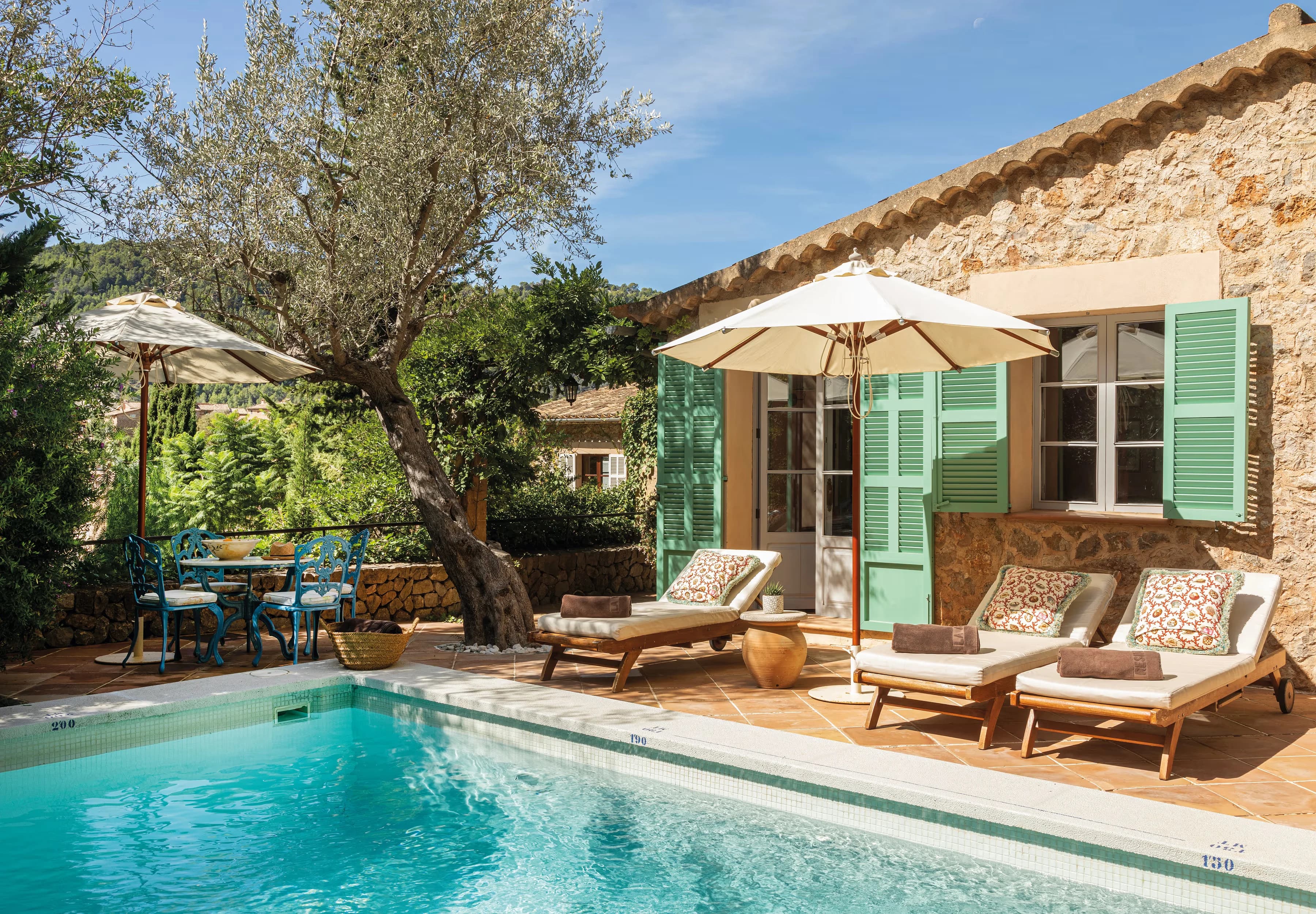
In Provence more broadly, the relevant luxury vocabulary includes the mas (a traditional farmhouse converted or purpose-built as a high-end retreat), the bastide (a larger, often formally symmetrical country house), and the hôtel particulier (a private urban mansion). Each carries a distinct spatial logic. A mas tends toward intimacy and agricultural integration. A bastide implies a grander scale, formal gardens, and a more theatrical relationship with the landscape. Understanding which typology suits a traveler's preference is central to choosing the right suite in this region.
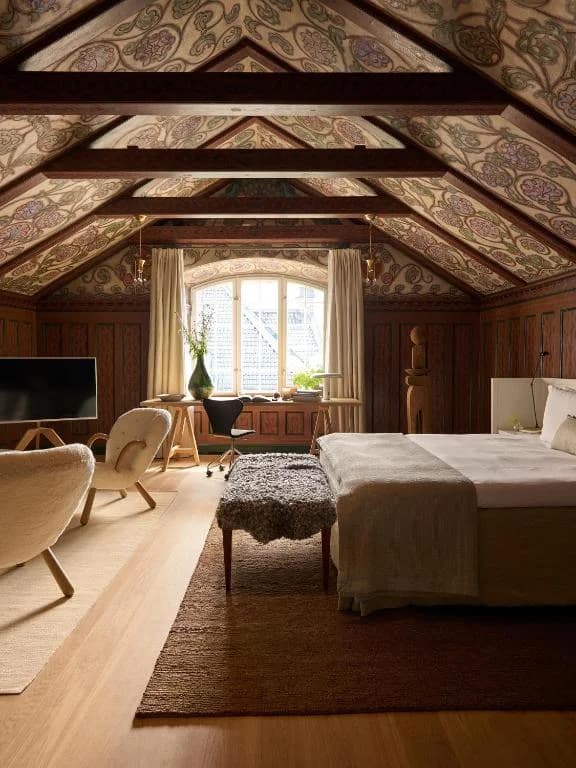
Suite quality in Provence's finest properties is typically defined by ceiling height, the materiality of floors and walls (stone, terracotta, plaster), the proportion of private outdoor space, and the quality of views. Climate control, soundproofing, and bath specification have improved significantly across the region's top tier over the past decade.
How to choose the best luxury suite in Crillon-le-Brave
Given the village's scale, the number of relevant properties is deliberately limited. This is not a destination where volume of choice is the challenge; selectivity is built into the geography. The primary considerations for suite selection here are: the orientation of the room relative to Mont Ventoux or the valley, the degree of privacy available within the property's shared spaces, and the relationship between indoor and outdoor living that the suite's terrace or garden allows.
Historical architecture in Crillon-le-Brave means thick stone walls, irregular room proportions, and staircases that were not designed for contemporary luggage. Travelers who prioritise seamless modern comfort above spatial character may find that the village's physical constraints require a degree of adjustment. Conversely, those who specifically seek the sensory texture of aged Provençal construction will find it here in an unusually intact form.
Practical advice for suite travelers: confirm terrace orientation before booking, as east-facing terraces lose afternoon sun early. Enquire specifically about proximity to the church bell, which marks the hours audibly. Request information on pool access and privacy, as smaller Provençal properties often share facilities across a limited number of suites.
Seasonal considerations for suite selection
In summer, suite selection should prioritise natural ventilation and shade provision. Thick-walled stone construction offers passive cooling that modern builds cannot replicate, but rooms on upper floors can accumulate heat in July and August. Spring and autumn stays allow greater flexibility and often access to suites that sell out immediately during peak season.
Why a curated selection by La Suite matters in Crillon-le-Brave
In a village of this scale, the margin between a well-chosen suite and a poorly matched one is considerable. Crillon-le-Brave does not offer the density of options found in a major Provençal city, which means each property choice carries greater individual weight. A curated selection by La Suite removes the uncertainty inherent in navigating a small but exacting market.
La Suite's editorial process applies consistent criteria across architecture, suite specification, privacy provision, and the coherence between a property's identity and the landscape it occupies. In a destination as specific as Crillon-le-Brave, where the village's own character is a defining element of the experience, this alignment between setting and suite quality is the difference between a stay that feels accidental and one that feels deliberate.
For travelers approaching Provence as a design-literate destination rather than a generic holiday backdrop, the curated selection by La Suite provides the analytical framework that the market itself does not always make transparent.