Understanding Lyon as a luxury destination
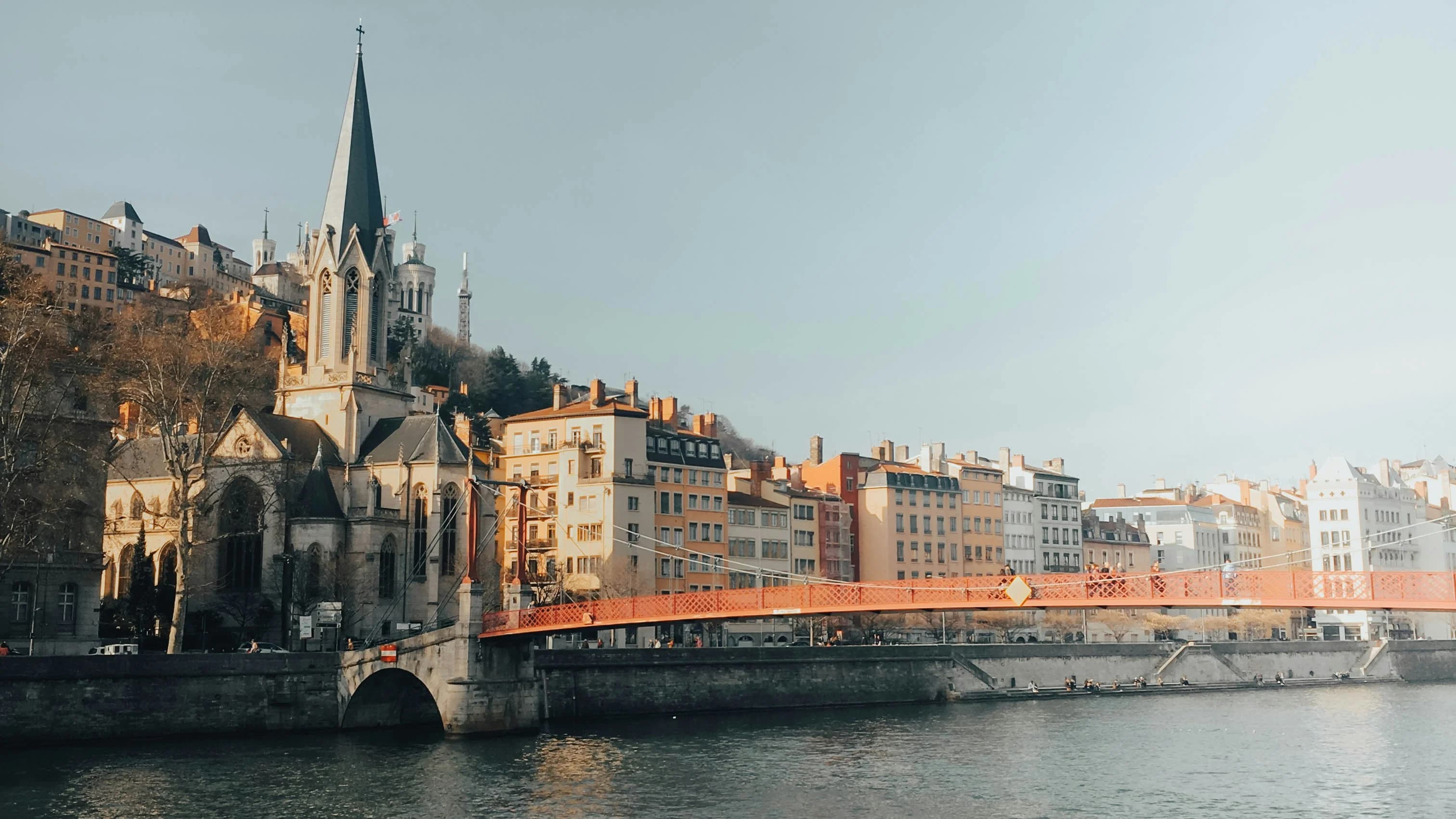
The architecture alone warrants serious attention. Vieux Lyon, classified as a UNESCO World Heritage Site, preserves one of Europe's most intact Renaissance urban fabrics. The Presqu'île district, positioned between the two rivers, holds the city's institutional buildings, covered markets, and the majority of its refined hotel stock. Fourvière hill, accessible by funicular, carries Roman amphitheatres and panoramic perspectives over the urban grid below. Each of these zones creates a different relationship between the visitor and the city.
Best areas to stay in Lyon for a luxury suite
The Presqu'île
The Presqu'île remains the primary address for high-end accommodation in Lyon. Its central position, walkability, and proximity to the city's best restaurants, cultural institutions, and the Halles de Lyon Paul Bocuse market make it the most practical and prestigious choice. Suites here tend to occupy Haussmann-era buildings or early twentieth-century structures, offering ceiling heights and facade proportions that smaller boutique properties elsewhere in the city cannot match.
Vieux Lyon and the riverbanks
The historic district on the west bank of the Saône offers a quieter, more atmospheric alternative. Properties here sit within Renaissance architecture, with the particular acoustic and material quality that comes from stone construction and narrow streets. The experience is more contained and more intimate. The riverbanks connecting these districts have been progressively reclaimed as pedestrian and leisure space, creating a circulation that allows guests to move between neighbourhoods on foot with ease.
La Croix-Rousse
The Croix-Rousse plateau, historically the silk-weaving district, has developed a character that combines working-class heritage with a contemporary creative population. Luxury accommodation here is limited but the area rewards those who seek an alternative to conventional hotel geography. The traboules, the hidden passageways that run through the interior of buildings, are more concentrated here than anywhere else in the city.
When to visit Lyon for a luxury hotel experience
Lyon operates across a consistent cultural calendar that makes it a viable destination across most of the year. Spring (April to June) and early autumn (September to October) offer the most balanced conditions: manageable temperatures, full cultural programming, and lower pressure on room availability than peak summer.
The Fête des Lumières, held annually in early December, is Lyon's most internationally recognised event. For four nights, the city's facades, squares, and public spaces become installation sites for large-scale light art. Demand for suites during this period is high and lead times for reservations are substantial. Travellers with specific requirements around suite configuration or floor position should plan well in advance.
The Nuits de Fourvière festival, running through June and July, programmes theatre, music, and dance within the Roman amphitheatres on the hill. It is one of the more architecturally distinctive performance contexts in France. Summer in Lyon can be warm to hot, with temperatures regularly exceeding 30 degrees Celsius, making suite air conditioning and private outdoor space relevant selection criteria.
Local luxury standards: what to expect from top suites in Lyon
France operates a formal hotel classification system that extends to the Palace designation, awarded by Atout France to properties meeting specific criteria across space, service, and cultural relevance. Lyon's hotel market does not currently hold a Palace-designated property, but several establishments operate at a standard that approaches that benchmark. The distinction matters for travellers calibrating expectations against other French cities.
Top-tier suites in Lyon tend to prioritise architectural coherence over decorative excess. The city's aesthetic sensibility leans toward restrained materiality: stone, dark wood, quality textile, and considered lighting rather than ornate gilding or theatrical interior gestures. Service in the best properties is attentive without performance, reflecting a Lyonnais cultural preference for substance over display.
Gastronomic integration is a relevant differentiator. Lyon's density of serious restaurants per capita is exceptional, and several hotel properties maintain dining relationships, whether through in-house restaurants with genuine culinary credibility or through concierge networks with meaningful access to the city's most sought-after tables. For a traveller whose primary motive is gastronomic, the hotel's relationship to the dining landscape is as important as the suite specification itself.
How to choose the best luxury suite in Lyon
Historical versus contemporary properties
Lyon's best suites tend to sit within historical buildings. This creates a specific trade-off: the spatial proportions and material quality of older structures are frequently superior, but the technical infrastructure, including soundproofing, climate control, and connectivity, may require more careful assessment. Contemporary properties offer greater technical consistency but rarely achieve the same architectural character.
River views and orientation
The dual-river geography of Lyon creates meaningful distinctions in suite orientation. A suite facing the Saône or the Rhône provides a visual and acoustic relationship with the city that interior or street-facing rooms cannot replicate. Floor position is also relevant given the city's relatively low-rise urban fabric: upper floors offer perspectives over the terracotta rooflines and toward the hills that lower floors do not.
Proximity to key destinations
Lyon's walkability is one of its underacknowledged assets. A suite positioned on the Presqu'île places the traveller within walking distance of the covered market, the major museums, the theatre district, and a significant proportion of the restaurant options worth considering. For travellers integrating day trips to Beaujolais, the Rhône Valley vineyards, or the Dombes, proximity to the Part-Dieu transport hub or private car access is an additional variable.
Why curated selection matters in Lyon
Lyon's hotel market is smaller and more concentrated than Paris, but navigating it without informed guidance still carries risk. Properties vary considerably in actual suite quality relative to their advertised category, and the gap between a well-positioned, well-configured suite and a nominally equivalent alternative can define whether the stay is memorable or merely adequate.
La Suite approaches Lyon with the same editorial discipline applied to any destination in its catalogue. The selection process prioritises verified quality at the suite level rather than brand recognition at the property level. In a city where the experience is as much about what you eat and how you move through the urban fabric as where you sleep, the accommodation choice is the structural decision that enables or limits everything else. The curated selection by La Suite is designed to remove that variable from the equation.