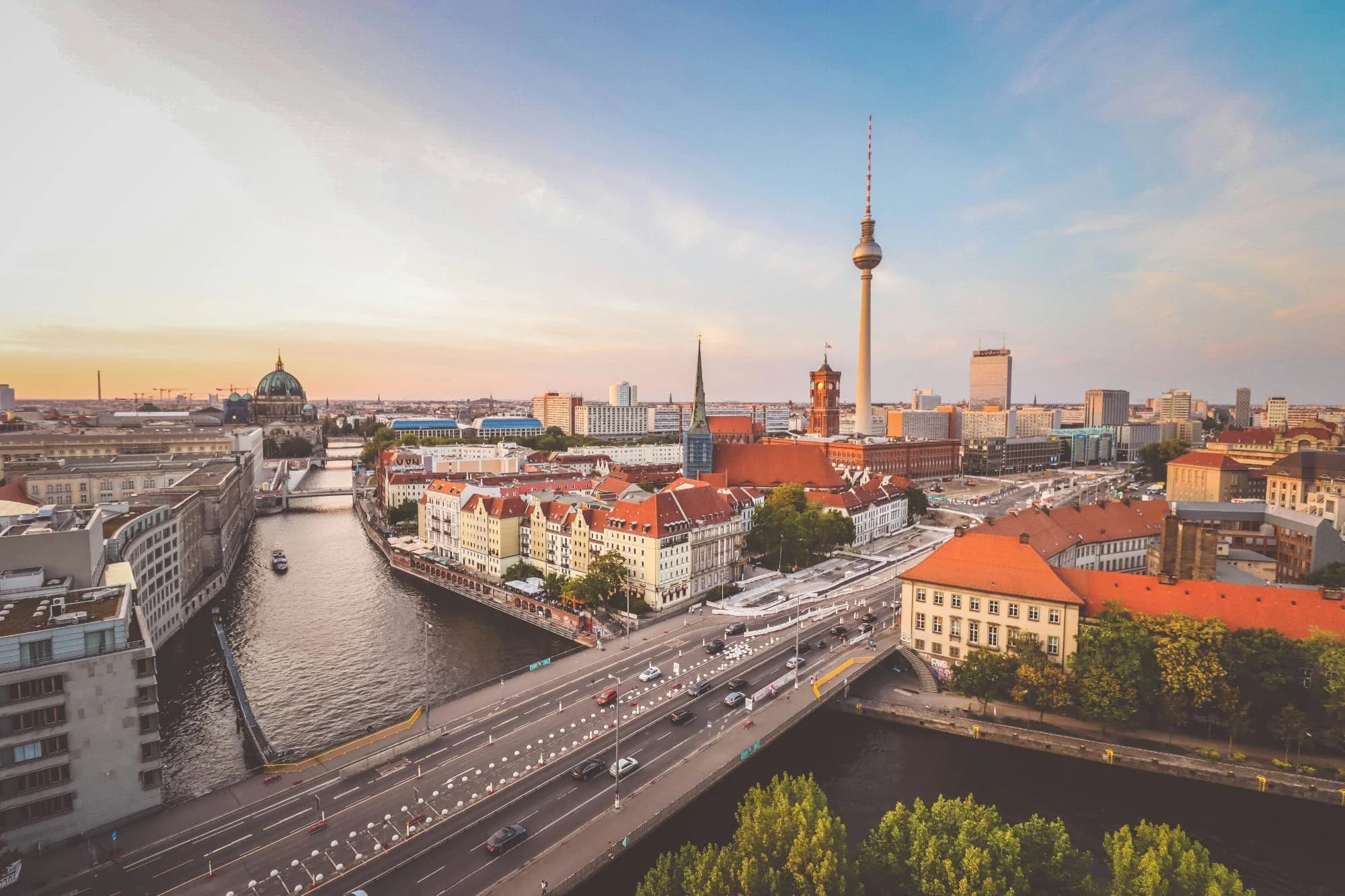
Charlottenburg and the geometry of Berlin luxury
The Kurfürstendamm, or Ku'damm, remains the district's commercial spine: a six-kilometre boulevard lined with flagship boutiques, auction houses, and the kind of mid-century department stores that have survived long enough to acquire cultural authority. Parallel streets such as Fasanenstraße and Bleibtreustraße carry a quieter register, with independent galleries, antique dealers, and restaurants that prioritise precision over spectacle.
Charlottenburg Palace, the largest surviving Hohenzollern residence in Germany, anchors the district's northwestern edge. Its baroque gardens serve as a civic park and provide a spatial counterpoint to the urban fabric. The presence of the palace is not merely historical: it creates a low-density residential zone around it that shapes the noise and light conditions of the surrounding streets, a consideration relevant to suite selection.
Best areas within Charlottenburg for a luxury suite stay
Around the Kurfürstendamm
The immediate Ku'damm axis concentrates the highest density of five-star and four-star superior properties. Suites here benefit from walkable access to commercial luxury and to the Kaiser Wilhelm Memorial Church, the bombed and preserved ruin that functions as the district's most recognisable architectural landmark. The trade-off is ambient noise: this is a working boulevard, and suite selection should prioritise upper floors and interior-facing layouts.
Fasanenstraße and the gallery quarter
Fasanenstraße runs parallel to the Ku'damm and carries a substantially different atmosphere. The street houses the Literaturhaus Berlin, the Käthe Kollwitz Museum, and a concentration of private galleries. Properties in this corridor tend to be smaller, with a more deliberate architectural identity. Suites here suit the traveler whose primary interest is cultural rather than retail.
Around Savignyplatz
Savignyplatz is a tree-lined square with covered S-Bahn arches that have been converted into restaurants and bookshops. The surrounding streets, particularly Carmerstraße and Grolmanstraße, retain a late-nineteenth-century residential character. This sub-district is quieter than the Ku'damm axis and better suited to extended stays where domestic rhythm matters as much as proximity to landmarks.
When to stay in Charlottenburg
Berlin operates as a year-round destination, but Charlottenburg has its own seasonal logic. Late spring, specifically May and June, combines manageable temperatures with the full operational calendar of Berlin's cultural institutions. The Berliner Philharmoniker season extends through June, and the district's outdoor terrace culture becomes active without the July and August compression of tourist volumes.
September is the month of the Berlin Art Week, which draws serious collectors and institutional figures to the city and concentrates activity in gallery districts adjacent to Charlottenburg. Suite demand rises accordingly, and lead times for premium inventory extend.
December carries a different quality: the Christmas markets along the Ku'damm and around the Memorial Church are among the city's most established, and the district's architecture reads differently under winter light. For travelers who prefer low-density cultural access, January and February offer full institutional programming with reduced competition for reservations.
Local luxury standards: what to expect from top-tier suites in Charlottenburg
Germany does not operate a state-administered palace designation equivalent to France's official Palace label. German luxury hospitality is instead regulated through the Deutsche Hotelklassifizierung system, with five-star superior representing the highest formal category. In practice, the properties that matter in Charlottenburg are identifiable by membership in Leading Hotels of the World or Preferred Hotels and Resorts, or by consistent positioning in international ranking systems.
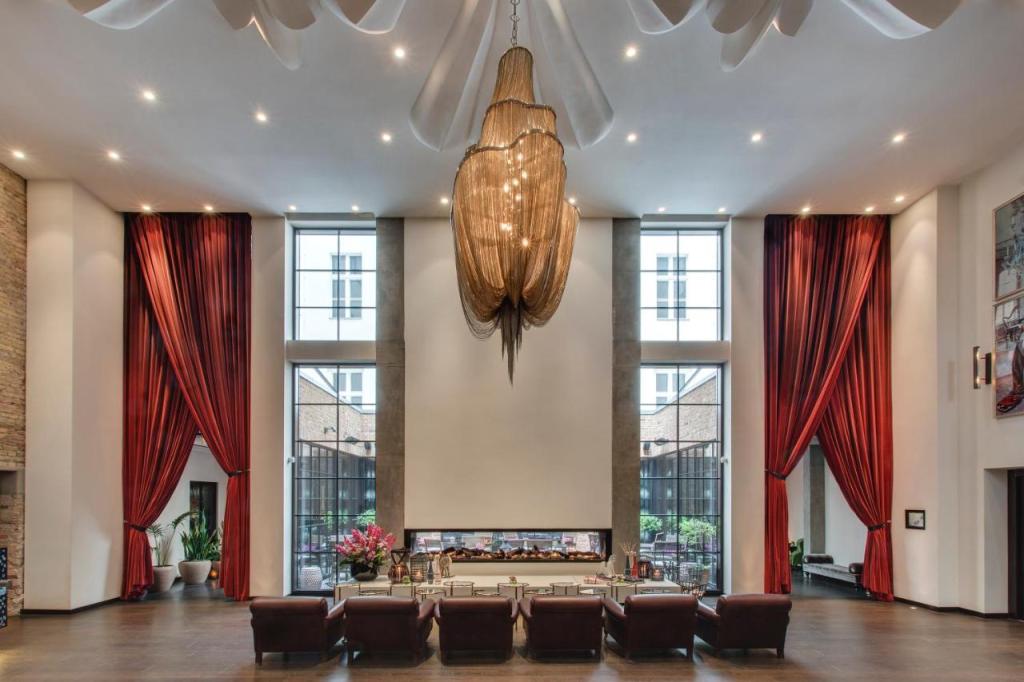
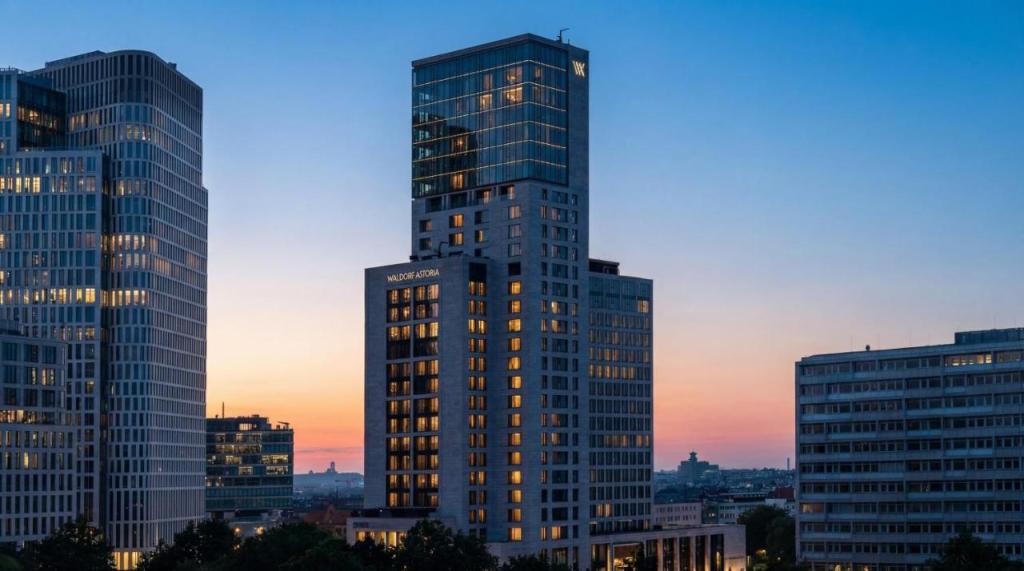
Architecturally, Charlottenburg's finest suites tend to occupy either fully renovated Wilhelminian buildings, where high ceilings, original stucco, and period proportions have been preserved alongside contemporary technical infrastructure, or purpose-built mid-century towers where floor-to-ceiling glazing and urban panoramas are the primary spatial proposition. Both typologies are present in the district, and the choice between them is substantive rather than cosmetic.
Service standards in Charlottenburg's leading properties reflect the city's specific culture: attentive without performance, technically precise, and unlikely to confuse warmth with informality. Concierge teams in the best properties carry genuine institutional knowledge of Berlin's cultural calendar and can navigate gallery access, restaurant reservations, and private event programming at a level that requires local depth.
How to choose the best luxury suite in Charlottenburg
Architectural typology
The decision between a historic building and a modernist tower is the first structural choice. Historic properties offer spatial generosity in ceiling height and room proportion; modernist properties offer views and contemporary systems. Neither is categorically superior, and the correct choice depends on the traveler's primary use case: a suite serving as a private residence during a ten-day stay has different requirements than one used as a base for a four-night cultural visit.
Floor and orientation
In Charlottenburg, upper-floor suites facing interior courtyards or side streets consistently outperform street-facing rooms on the Ku'damm for acoustic quality. The boulevard is active until late, and noise attenuation in older buildings is variable. Properties with double-glazed historic windows and internal courtyard layouts resolve this without sacrificing natural light.
Suite configuration
Charlottenburg attracts a significant proportion of travelers arriving for business combined with cultural activity. Suite configurations with a separated living area and a dedicated workspace are functionally relevant here in a way that differs from purely leisure-oriented destinations. Properties that have invested in this configuration as a design decision rather than an afterthought are identifiable through floor plan review before booking.
Why curation matters in Charlottenburg
Berlin's hotel market is large and heterogeneous. The city's reputation for creative disruption has produced a landscape where marketing vocabulary is often decoupled from spatial reality. A property positioned as a design hotel may deliver genuine architectural quality or may deliver themed decoration applied to standard room proportions. The distinction matters when a suite is the primary space in which several days of work, rest, and private entertainment will take place.
La Suite applies a consistent editorial standard to its selection across Berlin and specifically within Charlottenburg: spatial generosity, service depth, and contextual intelligence are the criteria that determine inclusion. The curated selection by La Suite removes the research burden from the traveler and substitutes a verified editorial judgment for the noise of aggregator platforms. In a district where the difference between a well-marketed property and a genuinely exceptional suite is not legible from standard booking interfaces, that judgment carries practical value.