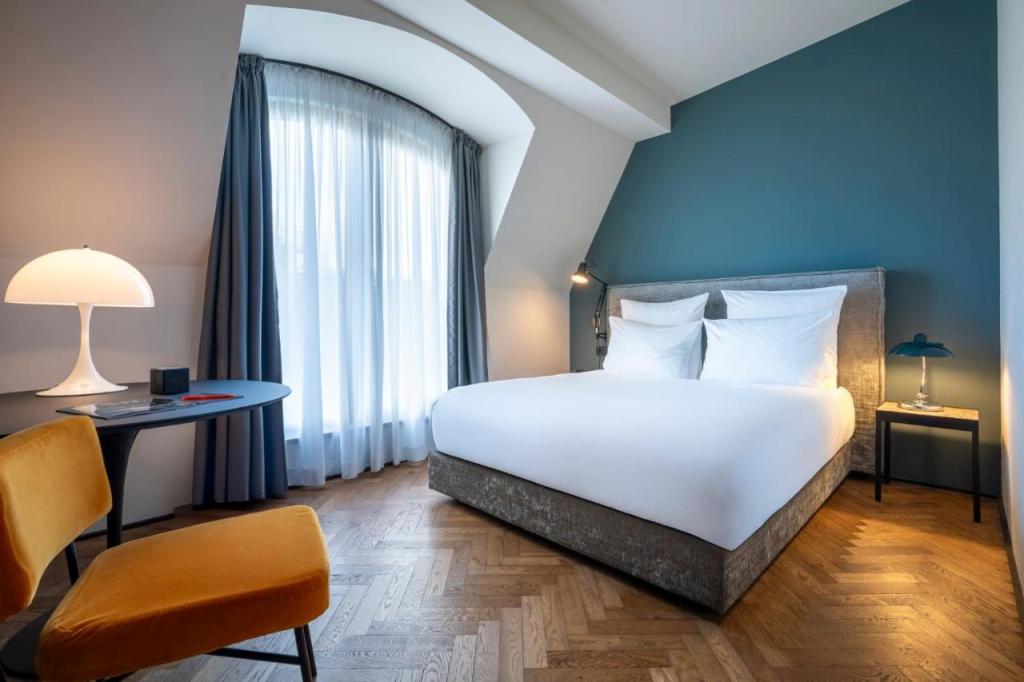
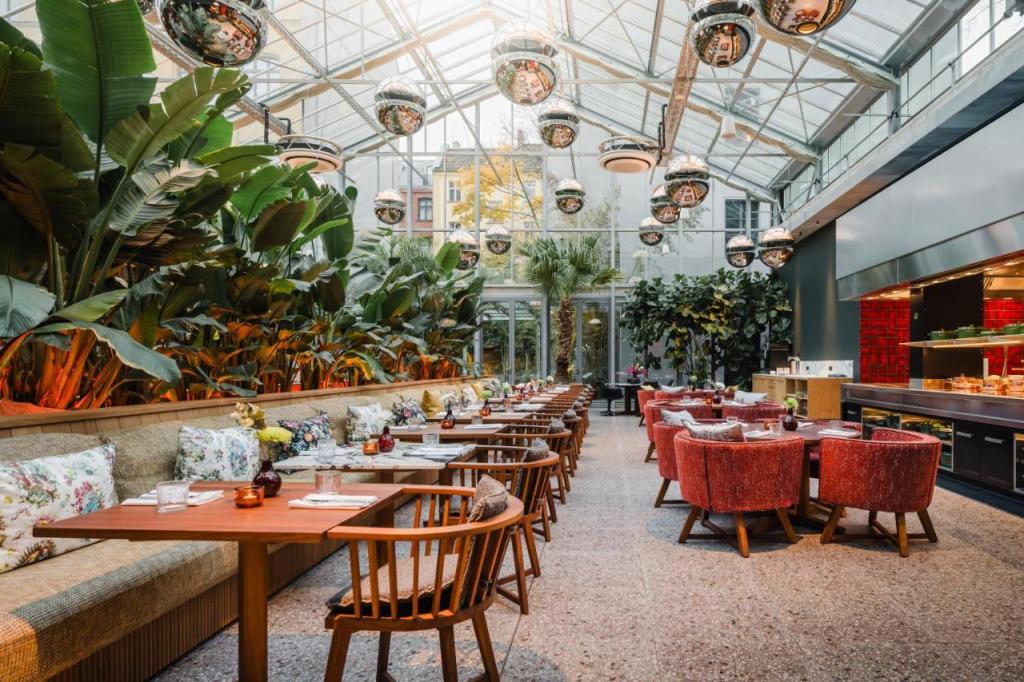
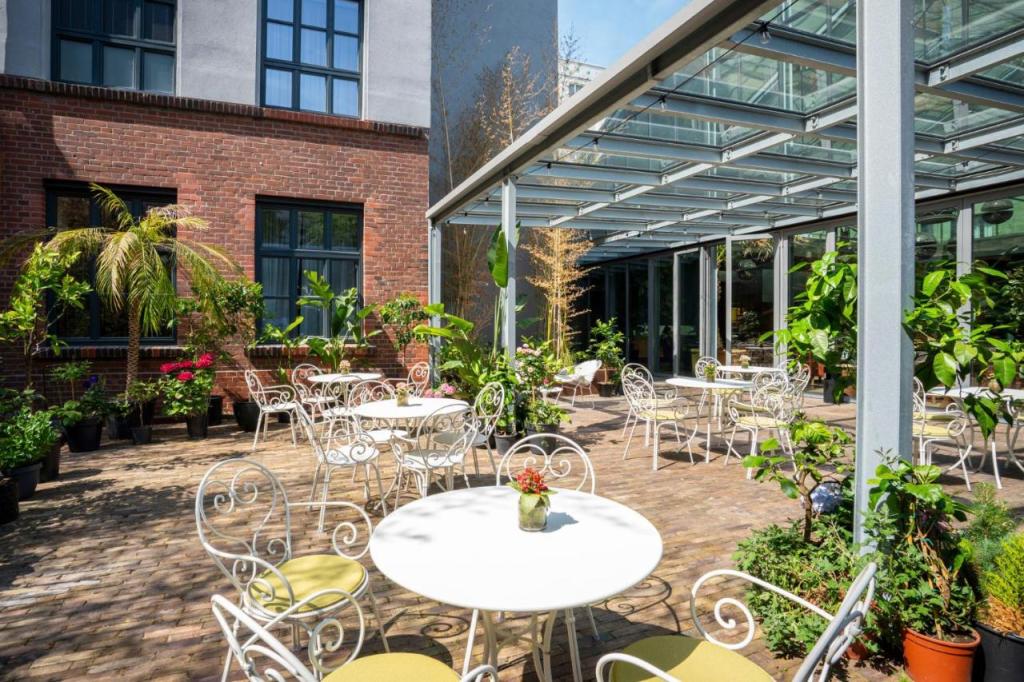
Located on the lively Hackescher Markt Square, this nonsmoking, 4-star hotel in Berlin offers soundproofed apartments, modern spa facilities, and a restaurant serving Australian cuisine. All stylish a

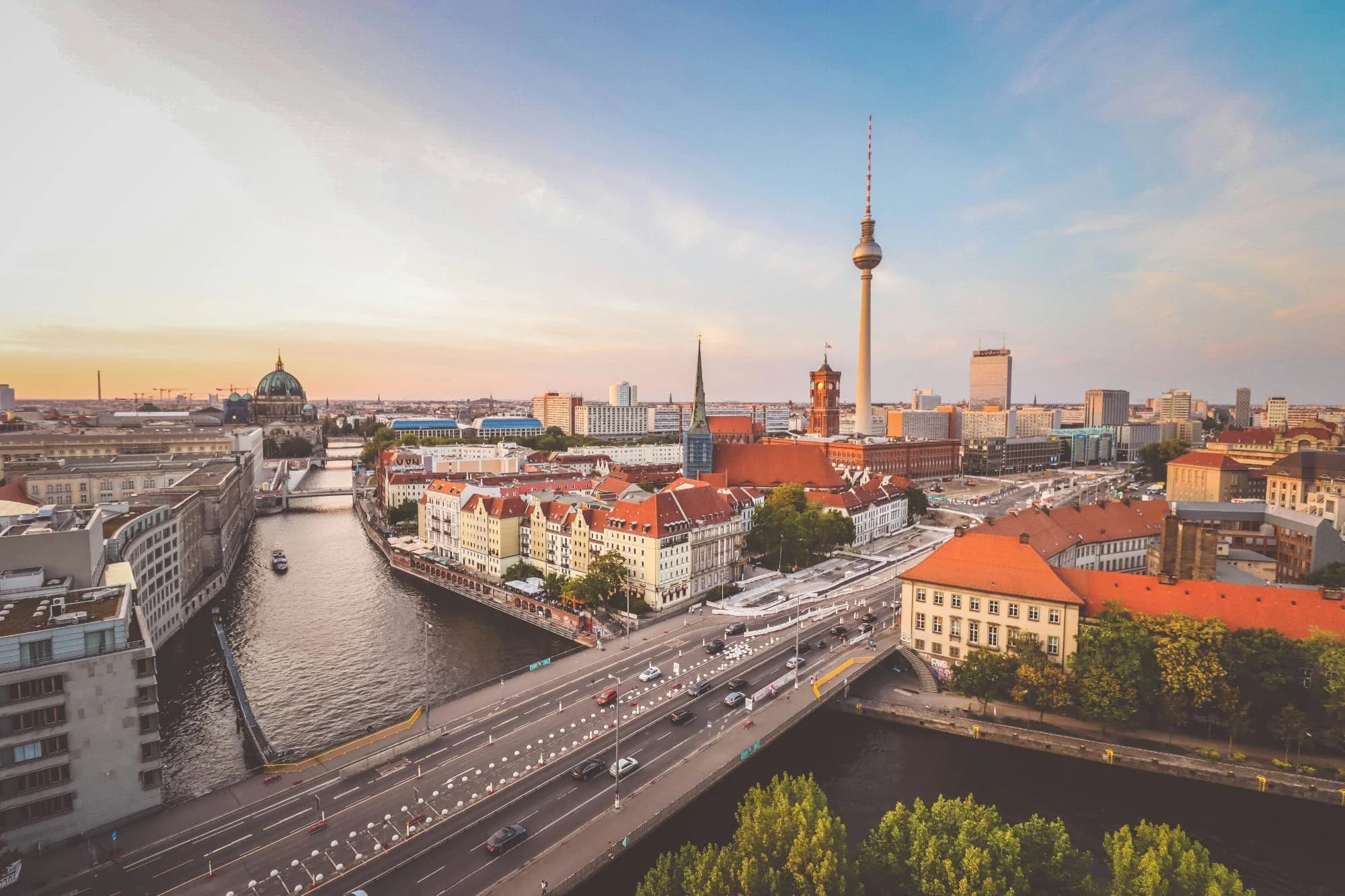
Prenzlauer Berg sits in the Pankow district of former East Berlin. Its survival through the GDR period with much of its Wilhelminian-era building stock intact makes it architecturally singular within the German capital. After reunification in 1990, the neighborhood underwent steady gentrification, attracting a professional, culturally engaged population. Today it presents a coherent urban environment: stucco facades, Hinterhöfe (interior courtyards), and a street-level culture that prioritizes quality over spectacle. For travelers seeking a Berlin experience rooted in daily life rather than tourism infrastructure, Prenzlauer Berg is the correct address.
6 hotels available

Located on the lively Hackescher Markt Square, this nonsmoking, 4-star hotel in Berlin offers soundproofed apartments, modern spa facilities, and a restaurant serving Australian cuisine. All stylish a

This 4-star boutique hotel is in a historic building in the trendy Prenzlauer Berg district of Berlin, within 10 or 15 minutes of the city center by public transport. It offers classical-style rooms,

This 4-star-superior hotel offers 3 restaurants, a spa and air-conditioned rooms with flat-screen TVs. It is Berlin's tallest hotel and is located directly on Alexanderplatz Square. All rooms and suit

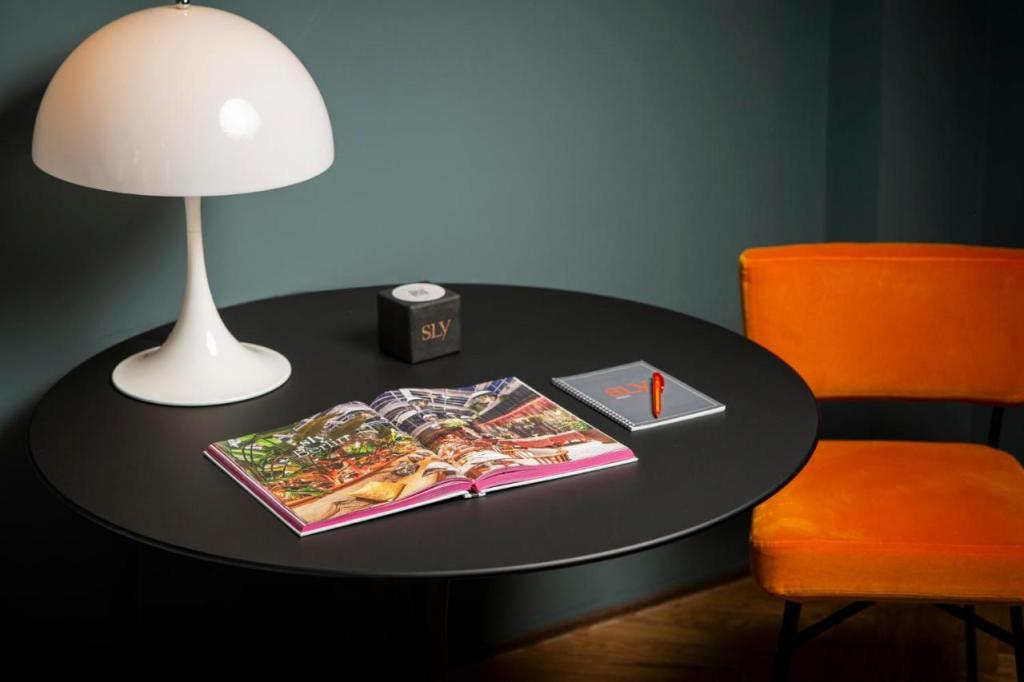
Comfortable Accommodations Sly Berlin in Berlin offers air-conditioned rooms with private bathrooms, bathrobes, and free WiFi. Each room includes a work desk, TV, and soundproofing for a relaxing

The Circus Apartments are fully equipped, provide a Conciergerie service, and are perfectly located 1312 feet from Rosenthaler Platz U-Bahn Train Station. Individually designed, The Circus Apartments

Comfortable Accommodations The Weinert Suites in Berlin offers aparthotel-style accommodations with free WiFi, private check-in and check-out services, and family rooms. Each unit includes a kitchenet

Berlin Mitte is not simply a central location on a map. It is the district where the city's administrative, cultural, and historical weight converges. The Berlin Wall once bisected this neighbourhood, and the physical and conceptual traces of that division remain legible in the urban fabric. For a traveller who reads cities architecturally and historically, Mitte rewards close attention in a way few European districts can match.

Kreuzberg resists easy categorization. It sits at the southern edge of Berlin, bordered by the former course of the Wall to the east and the Landwehr Canal to the south, and its identity has been shaped by successive waves of immigration, political occupation, and creative reinvention. For the high-end traveler, this complexity is precisely the appeal. Unlike the manicured luxury corridors of Paris or Zurich, Kreuzberg offers a textured, unscripted form of prestige, where cultural capital matters more than conventional opulence.

Within Berlin, Charlottenburg functions as the city's most coherent luxury district. It was the independent royal seat of the Hohenzollern dynasty before Berlin's administrative expansion absorbed it in 1920, and that aristocratic origin is still legible in its street widths, its stucco facades, and the disciplined scale of its residential blocks. For travelers arriving from London or New York, the district provides an immediate sense of order that contrasts productively with Berlin's more turbulent eastern quarters.
The square named after the artist Käthe Kollwitz functions as the social and commercial center of Prenzlauer Berg. The streets radiating from it, particularly Husemannstraße and Wörther Straße, contain the highest concentration of restored pre-war buildings. Accommodation in this zone places guests within walking distance of the neighborhood's best independent restaurants and Saturday farmers' market. The atmosphere is residential and unhurried, which is precisely its appeal for travelers accustomed to suite-level privacy.
Kastanienallee, known locally as Casting Alley for its association with the creative professions, connects Prenzlauer Berg to Mitte at its southern end. The street retains a younger, more experimental energy while remaining embedded in the neighborhood's wider architectural coherence. Properties near this axis offer proximity to both the cultural offer of Prenzlauer Berg and the denser urban infrastructure of central Berlin.
Moving north along Prenzlauer Allee, the neighborhood becomes progressively quieter and more residential. Hotels in this zone offer genuine urban calm without sacrificing access to the district's cultural amenities. For travelers whose priority is rest and workspace, the northern reaches of Prenzlauer Berg deliver a Berlin that operates at a considered pace.
Berlin's climate positions late spring (May to June) and early autumn (September to October) as the most rewarding periods for this neighborhood specifically. The tree canopy along streets such as Sredzkistraße and Pappelallee comes into full effect in May, and the light quality in September is consistently good for extended walking. Summer brings the city's festival calendar, including the Musikfest Berlin in September, which draws an international audience with serious programming across the Philharmonie and other venues. Winter in Prenzlauer Berg has its own logic: the Christmas market at Kulturbrauerei, the former brewery complex on Knaackstraße, is among the city's most architecturally interesting seasonal markets. Luxury suite availability in Berlin is generally strong year-round, though major trade fairs (ITB Berlin in March, Berlin Fashion Week in January and July) create concentrated demand across the city's premium accommodation stock.
Germany does not operate the Palace designation system used in France, nor does it have a direct equivalent to Italy's historic relais classification. The German hotel classification system is administered by the DEHOGA (Deutscher Hotel- und Gaststättenverband) and uses a five-star category, with a five-star superior designation for properties that exceed standard criteria. In practice, the most discerning properties in Prenzlauer Berg and across Germany are often identified by their design credentials, chef-driven food programs, and the quality of their suite fitout rather than by official category alone. Boutique properties in Prenzlauer Berg frequently occupy converted historic buildings, meaning suite layouts reflect the original residential architecture: high ceilings, generous room proportions, and the occasional Hinterhof view. This is a fundamentally different spatial experience from the purpose-built hotel tower, and it suits travelers who value architectural context as part of the stay.
Several considerations are specific to this neighborhood. First, the question of courtyard versus street orientation: Hinterhof-facing rooms offer exceptional quiet in a district that, while not loud by Berlin standards, has active street life. Second, the decision between historic building fabric and contemporary interior design. Some properties preserve original details, including Gründerzeit-era plasterwork and parquet, while others have applied a clean, contemporary language to the same shell. Both are defensible choices; the decision reflects the traveler's own aesthetic position. Third, proximity to public transport. Prenzlauer Berg is well connected by U-Bahn (lines U2 and U8 serve its edges) and tram network, but the neighborhood rewards walking above all. Properties within the core residential grid, within reasonable distance of Kollwitzplatz or Helmholtzplatz, offer the most complete access to daily neighborhood life. For travelers visiting Europe on an extended itinerary, Prenzlauer Berg also functions well as a base for day travel: Berlin Brandenburg Airport (BER) is approximately 35 minutes from the neighborhood by public transport or taxi.
Prenzlauer Berg presents a specific curation challenge. The neighborhood's appeal is precisely its resistance to obvious luxury signaling. The properties that perform best here are those that understand the local register: discreet, spatially generous, architecturally coherent, and connected to the neighborhood's cultural life rather than positioned against it. A curated selection by La Suite filters for exactly these criteria. Rather than presenting a broad inventory of available rooms, La Suite identifies the properties in Prenzlauer Berg and across Berlin where the suite offer genuinely justifies the address. This is a distinction that matters particularly in a neighborhood where the difference between a thoughtfully designed boutique property and a generic hotel is most visible to anyone paying attention.

Prenzlauer Berg offers a coherent architectural environment of Wilhelminian-era buildings that survived the GDR period largely intact, creating a residential density and visual consistency rare in central Berlin. For luxury travelers, this translates to a quieter, more considered urban experience compared to the high-footfall areas around Mitte or Potsdamer Platz. The neighborhood's independent restaurant, gallery, and market culture rewards extended stays rather than rapid sightseeing.
Prenzlauer Berg hosts a smaller number of premium properties than central Berlin districts, but those that operate here tend to occupy architecturally significant buildings with suite layouts reflecting original residential proportions: high ceilings and generous floor areas. The boutique scale of most properties in the neighborhood means suite guests typically receive a higher ratio of staff attention than in larger city-center hotels.
Late spring (May to June) and early autumn (September to October) offer the most favorable combination of light, temperature, and cultural programming for stays in Prenzlauer Berg. September coincides with Musikfest Berlin, which draws an international audience for serious classical and contemporary music programming. Availability at premium properties is generally strong year-round, with the exception of periods around major Berlin trade fairs in January, March, and July.
Many properties in Prenzlauer Berg occupy converted Gründerzeit-era buildings, meaning suites often feature original details including high ceilings, substantial room proportions, and courtyard-facing orientations that deliver genuine acoustic privacy. This is a structurally different experience from a purpose-built hotel tower and suits travelers who consider spatial and architectural context as integral to the quality of a stay.
The neighborhood is served by U-Bahn lines U2 and U8 at its edges and by an extensive tram network running through the district. Berlin Brandenburg Airport (BER) is approximately 35 minutes by public transport or taxi. Within Prenzlauer Berg itself, the most rewarding mode of transit is walking: the compact residential grid between Kollwitzplatz and Helmholtzplatz is navigable entirely on foot.
Suites in Prenzlauer Berg's better properties typically offer residential-scale floor areas, courtyard or tree-lined street views, and a design language that responds to the building's original architecture rather than overwriting it. Food and beverage programs at the strongest properties reflect the neighborhood's preference for quality produce and independent sourcing rather than branded hospitality formulas.
Mitte provides denser access to Berlin's major cultural institutions, including the Museumsinsel and the Staatsoper, and hosts the highest concentration of internationally recognized luxury hotel brands. Prenzlauer Berg offers a fundamentally different spatial and social experience: quieter streets, a strongly residential character, and a cultural life organized around independent rather than institutional venues. The choice between the two reflects a traveler's priorities for pace and context rather than a question of relative quality.
The neighborhood contains the Kulturbrauerei, a former brewery complex on Knaackstraße that hosts concerts, markets, cinema, and exhibitions throughout the year. The Zeiss-Großplanetarium on Prenzlauer Allee is one of the most technically advanced planetariums in Europe. Independent galleries are distributed throughout the residential streets, and the Saturday farmers' market at Kollwitzplatz is a reliable indicator of the neighborhood's food culture.
La Suite applies the same editorial criteria across all Berlin neighborhoods, selecting properties where the suite offer, architectural context, and service standard meet the platform's curation threshold. In Prenzlauer Berg, this means prioritizing properties that understand the neighborhood's particular character: discreet, spatially generous, and connected to local culture rather than positioned as a generic luxury product.
Travelers should consider room orientation when booking: courtyard-facing suites offer significantly lower ambient noise than street-facing rooms, particularly during summer when windows remain open. The neighborhood's compact grid means that properties within reasonable walking distance of Kollwitzplatz or Helmholtzplatz provide the most complete access to the district's daily life. For extended Berlin itineraries, Prenzlauer Berg's tram and U-Bahn connections make it a viable base for exploring the wider city without requiring a car.