HighPark Berlin am Potsdamer Platz is located just off Potsdamer Platz in Berlin’s central Mitte district. It is within a 15-minute walk of attractions such as the Brandenburg Gate, Holocaust Memorial

Kreuzberg resists easy categorization. It sits at the southern edge of Berlin, bordered by the former course of the Wall to the east and the Landwehr Canal to the south, and its identity has been shaped by successive waves of immigration, political occupation, and creative reinvention. For the high-end traveler, this complexity is precisely the appeal. Unlike the manicured luxury corridors of Paris or Zurich, Kreuzberg offers a textured, unscripted form of prestige, where cultural capital matters more than conventional opulence.
4 hotels available

HighPark Berlin am Potsdamer Platz is located just off Potsdamer Platz in Berlin’s central Mitte district. It is within a 15-minute walk of attractions such as the Brandenburg Gate, Holocaust Memorial

Located in an historic building famous for hosting artists, Orania.Berlin dates back to 1913 and features a cultural as well as historical legacy. The hotel is located in the Kreuzberg district of Ber

Prime Location Pure Berlin Apartments in Berlin offers a convenient location near Uber Arena. East Side Gallery is a 3-minute walk away, while Alexanderplatz lies 1.7 mi from the property. Berlin Bran

This 5-star design hotel in central Berlin offers stylish studios and suites with kitchen facilities. It is located opposite the Sony Center in Potsdamer Platz and features an elegant spa, free WiFi a

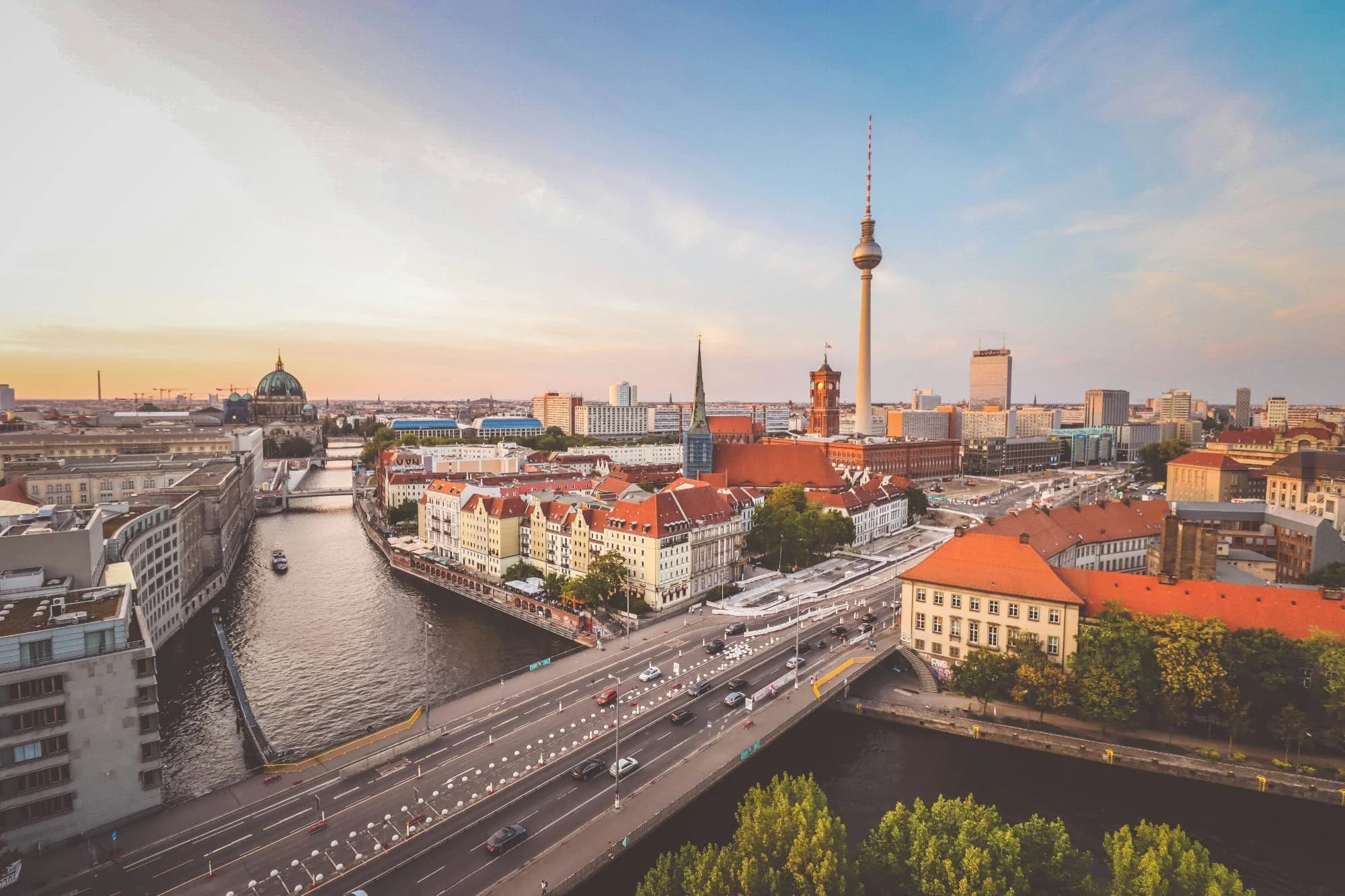
Berlin Mitte is not simply a central location on a map. It is the district where the city's administrative, cultural, and historical weight converges. The Berlin Wall once bisected this neighbourhood, and the physical and conceptual traces of that division remain legible in the urban fabric. For a traveller who reads cities architecturally and historically, Mitte rewards close attention in a way few European districts can match.

Prenzlauer Berg sits in the Pankow district of former East Berlin. Its survival through the GDR period with much of its Wilhelminian-era building stock intact makes it architecturally singular within the German capital. After reunification in 1990, the neighborhood underwent steady gentrification, attracting a professional, culturally engaged population. Today it presents a coherent urban environment: stucco facades, Hinterhöfe (interior courtyards), and a street-level culture that prioritizes quality over spectacle. For travelers seeking a Berlin experience rooted in daily life rather than tourism infrastructure, Prenzlauer Berg is the correct address.

Within Berlin, Charlottenburg functions as the city's most coherent luxury district. It was the independent royal seat of the Hohenzollern dynasty before Berlin's administrative expansion absorbed it in 1920, and that aristocratic origin is still legible in its street widths, its stucco facades, and the disciplined scale of its residential blocks. For travelers arriving from London or New York, the district provides an immediate sense of order that contrasts productively with Berlin's more turbulent eastern quarters.
The neighborhood divides loosely into two distinct characters. SO36, the eastern section around Oranienstrasse, retains a rawer, more politically charged atmosphere, with independent bookshops, radical art spaces, and a nightlife infrastructure that has defined Berlin's global cultural reputation for decades. Western Kreuzberg, centered on Bergmannstrasse and the Victoriapark, is comparatively residential and green, with a slower tempo, farmers markets, and a strong concentration of design studios and architectural practices. A luxury hotel suite in Kreuzberg, depending on its precise location, can deliver either of these registers, or both.
Berlin operates on a year-round basis as a destination, but Kreuzberg rewards visitors differently across the seasons. May through September brings the canal culture fully to life: the Landwehr Canal towpaths fill with locals, the outdoor markets at Maybachufer (one of the largest Turkish markets in Germany) reach full scale, and the rooftop and courtyard culture that defines Berlin summers becomes accessible. This is when the neighborhood's social architecture becomes fully legible.
October and November offer a different quality of attention. The tourist volume drops, the gallery season opens in earnest, and the architectural fabric of the area, including its distinctive Gründerzeit apartment blocks and Bauhaus-influenced social housing, becomes easier to read without distraction. Winter in Kreuzberg is austere in the best sense: the cultural programming intensifies, the restaurant scene operates without reservation scarcity, and the city's indoor life, always sophisticated, takes precedence.
The Berlin Art Week in September draws a concentrated international audience of collectors, curators, and cultural institutions, making it one of the most relevant moments for a design-literate visitor to be present in the city. Suite availability during this period is competitive across Europe's major cultural capitals, and Kreuzberg specifically benefits from its proximity to the gallery infrastructure.
Germany does not operate the French Palace classification system, and Berlin in particular has historically been resistant to conventional luxury hospitality signaling. The city's design hotels tend to favor spatial generosity, material honesty, and architectural coherence over decorative display. In Kreuzberg, this tendency is amplified: the finest luxury hotel suites in the neighborhood are likely to be found within converted factory buildings, restored Gründerzeit structures, or purpose-built contemporary properties that reference the industrial and modernist heritage of the surrounding streets.
What distinguishes a top-tier suite in this context is not the chandelier count but the quality of the spatial sequence: the relationship between the sleeping area and the living volume, the acoustic separation from the street, the calibration of natural light through deep-set windows, and the precision of the kitchen or bar specification for guests who treat the suite as a working and living environment rather than simply a place to sleep. Service in Berlin's better properties tends toward discretion and competence rather than performative hospitality, which aligns closely with the expectations of the La Suite audience.
The primary decision axis in Kreuzberg is between the two neighborhood registers described above. Travelers prioritizing proximity to the gallery circuit, the canal, and the market infrastructure of Maybachufer should orient toward western Kreuzberg and the Bergmannkiez. Those drawn to the denser, more nocturnal cultural life should look toward the Oranienstrasse axis, with the understanding that acoustic conditions and street-level activity will be more present.
Architectural preference is a second significant variable. Kreuzberg contains some of Berlin's most intact nineteenth-century residential fabric alongside significant examples of postwar social housing and contemporary infill architecture. The character of a suite, its ceiling height, window proportion, and material palette, will differ substantially depending on the building type. For guests who treat spatial quality as a primary consideration, clarifying the building's history and construction period before selection is worthwhile.
A third consideration is connectivity. Kreuzberg is well-served by the U-Bahn network, particularly the U1 and U8 lines, which connect it efficiently to Mitte, Prenzlauer Berg, and the airport infrastructure. However, the neighborhood's internal logic rewards walking and cycling; properties with secure bicycle storage and proximity to the canal path offer a materially different daily experience than those oriented primarily toward car access.
Kreuzberg's hotel offer is not yet as legible as that of more established luxury destinations. The neighborhood sits at an interesting juncture: it has the cultural density and architectural quality to support genuinely exceptional suite experiences, but the properties that deliver this are not always the most visible or the most conventionally marketed. Generic booking platforms surface volume; they rarely surface the suite with the Spree-facing terrace, the converted print-works loft with four-meter ceilings, or the property whose food and beverage program is run by a chef of genuine standing in the Berlin culinary conversation.
La Suite's curatorial process applies the same criteria here as in Paris, Tokyo, or New York: spatial quality, service architecture, material specification, and the coherence of the overall guest experience. In a neighborhood where the difference between an interesting boutique property and a genuinely exceptional luxury suite stay is significant, that filter has measurable value. The curated selection by La Suite removes the research friction and presents only the properties that meet the standard the audience expects.
Kreuzberg does not exist in isolation. A considered visit to Berlin will likely move between the neighborhood and the museum infrastructure of the Museumsinsel, the gallery density of Mitte, and the residential quietude of Prenzlauer Berg. Kreuzberg's specific contribution to this itinerary is the ground-level cultural experience: the food markets, the independent cultural spaces, the canal infrastructure, and the architectural density that makes the city's twentieth-century history materially present. A luxury suite in Kreuzberg provides the spatial and logistical base from which to access all of this without the cognitive compression that comes from staying in a conventional hotel room.
For travelers building a Berlin itinerary around cultural and spatial quality rather than convenience alone, Kreuzberg represents one of the most considered choices available in the city.

Kreuzberg offers a distinct combination of architectural density, cultural infrastructure, and spatial quality that differs from Berlin's more conventional luxury corridors. Suites in the neighborhood tend to prioritize material honesty and spatial generosity, often within buildings that carry significant historical or industrial character. The experience is less about decorative opulence and more about genuine immersion in one of Europe's most layered urban environments.
Kreuzberg has historically been associated with countercultural and budget accommodation, but the neighborhood now supports a range of higher-specification properties reflecting its evolution as a design and cultural destination. The finest options deliver spatial quality, precise service, and architectural coherence at a standard comparable to other European cultural neighborhoods. La Suite's curated selection identifies the properties that genuinely meet this standard.
The period from May to September activates Kreuzberg's canal culture, outdoor markets, and social infrastructure most fully, making it the most textured season for a first visit. Berlin Art Week in September creates a specific window of heightened cultural intensity. Autumn and winter offer a quieter, more interior-focused experience with strong access to the city's gallery and restaurant programming.
Kreuzberg contains a layered mix of nineteenth-century Gründerzeit apartment buildings, postwar social housing, and contemporary infill architecture. Top-tier suites may be found within any of these typologies, and the spatial character, including ceiling height, window proportion, and material palette, will vary substantially depending on the building's origin and period of construction.
Western Kreuzberg, centered on Bergmannstrasse and the Landwehr Canal, offers a greener, more residential atmosphere with strong access to markets and design studios. Eastern Kreuzberg around Oranienstrasse is denser, more politically charged, and more closely connected to Berlin's nightlife and contemporary art infrastructure. The choice between these two registers should be calibrated against the traveler's priorities for the stay.
Kreuzberg is served by the U1 and U8 U-Bahn lines, providing direct connections to Mitte, Prenzlauer Berg, and the broader Berlin transport network. The neighborhood's internal scale rewards walking and cycling, and properties with access to the Landwehr Canal towpath offer a particularly coherent daily movement pattern for guests who prefer to explore on foot or by bicycle.
Berlin Art Week in September is the most significant annual cultural event for design-literate visitors, drawing international collectors, curators, and institutions to the city's gallery infrastructure. The Maybachufer Turkish market operates twice weekly throughout the year and represents one of the most authentic food and material culture experiences available in central Berlin. The summer canal season from May to August activates a distinct social and outdoor programming calendar.
Kreuzberg's residential character in its western sections, combined with the green space of Victoriapark and the canal infrastructure, makes it a workable base for families traveling at a high specification. The neighborhood's food culture is genuinely diverse and of consistent quality across price points, and the spatial generosity of a proper luxury suite addresses the practical requirements of family travel that a conventional hotel room cannot. Eastern Kreuzberg is less immediately suited to family stays given its denser, more nocturnal atmosphere.
Germany does not apply a Palace classification equivalent to the French system, and Berlin in particular tends to resist conventional luxury signaling in its hotel culture. The indicators of genuine quality in a Berlin luxury hotel suite include spatial generosity, acoustic specification, material precision, and the coherence of the service architecture. Star ratings provide a baseline reference but are not a reliable guide to the experiential quality that the La Suite audience expects.
Kreuzberg's hotel offer is less legible than that of more established luxury destinations, and the properties delivering genuinely exceptional suite experiences are not always the most prominently marketed. La Suite's curatorial process evaluates spatial quality, service architecture, and material specification systematically, filtering out properties that meet a conventional standard but not the experiential one. For a neighborhood at this stage of its luxury development, that curatorial layer removes significant research friction and identifies options that a volume platform would not surface.