Why Munich commands a different kind of luxury travel
Bavaria's capital holds a rare distinction among German cities: it combines the civic scale of a metropolis with the texture of a smaller, intensely curated cultural center. The density of world-class museums, the proximity of the Alps, and the seriousness of its culinary scene make Munich a destination that rewards longer stays and more deliberate planning. A well-chosen luxury hotel suite becomes the base from which that experience unfolds.
Best areas to stay in Munich for a luxury suite experience
Maxvorstadt and the museum quarter
Maxvorstadt is the intellectual center of Munich, anchored by the Pinakotheken museum complex, the Lenbachhaus, and the Museum Brandhorst. The neighborhood's architecture is predominantly neoclassical, with wide streets and a pedestrian pace that contrasts sharply with the commercial energy of other central districts. Staying here places guests within walking distance of some of the finest permanent art collections in the German-speaking world. Luxury properties in this zone tend toward restraint and proportion.
Altstadt and the historic core
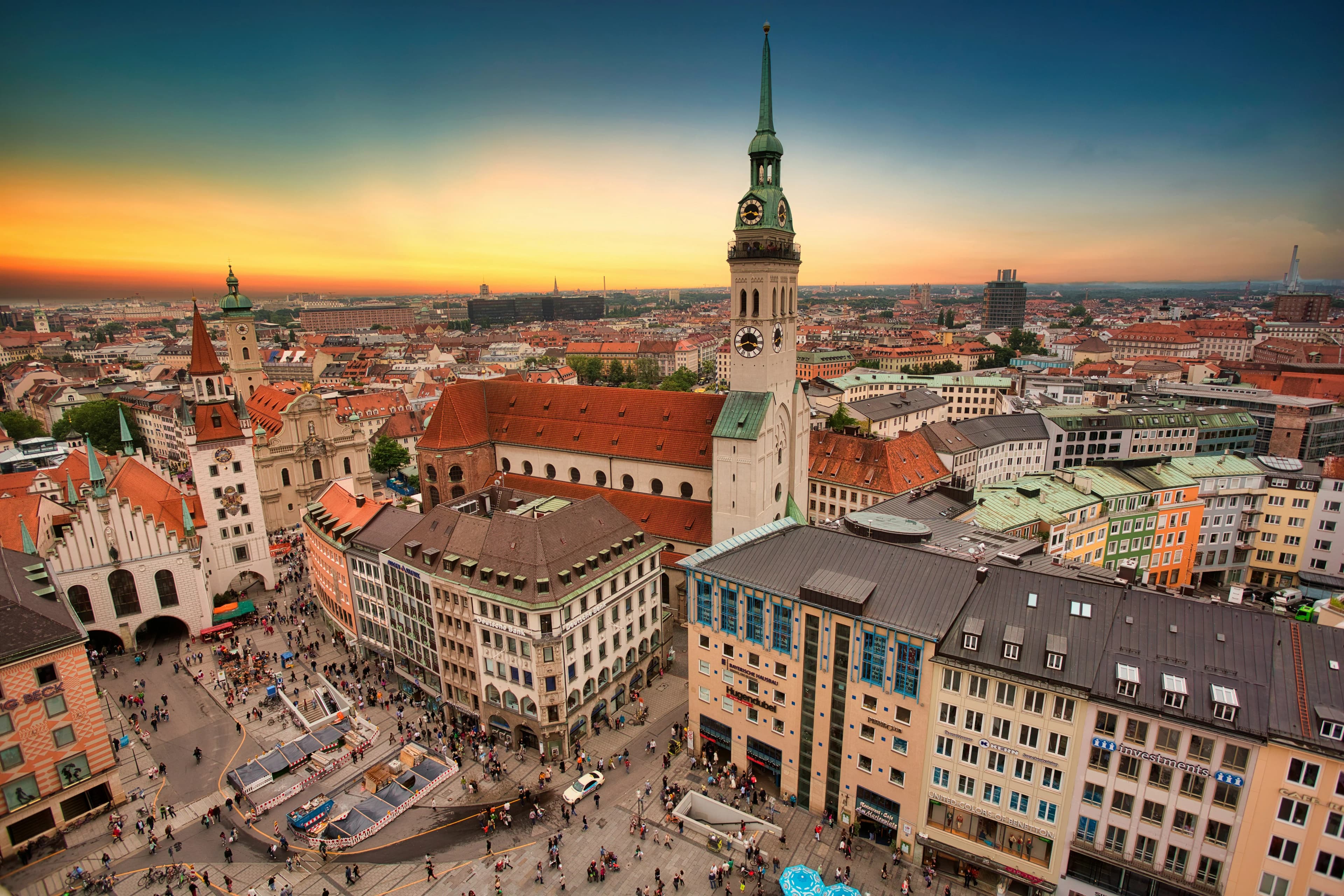
The Altstadt, Munich's historic center, encompasses the Marienplatz, the Residenz palace complex, and the Viktualienmarkt. It is the most concentrated area of the city's cultural and civic life. Properties here benefit from immediate access to Munich's most defining spaces, and suites with views over the historic roofline or toward the Frauenkirche towers offer a particular relationship with the city's geography. The area is dense and walkable, suited to travelers who prefer to move through the city on foot.
Bogenhausen and the eastern residential districts
Bogenhausen is among Munich's most discreet residential addresses, favored by diplomats and long-term international residents. The area sits east of the Isar river and maintains a quieter, more withdrawn character than the center. Luxury hotels positioned here offer genuine urban privacy, a commodity that is increasingly rare in European city travel. The proximity to the Isar and the Villa Stuck museum adds a cultural dimension that is understated but significant.
Schwabing and the northern quarters
Schwabing was Munich's bohemian district at the turn of the twentieth century, home to writers, artists, and intellectuals before the First World War. Today it retains a particular architectural elegance, with Jugendstil facades and generous apartment proportions that influence the aesthetic of boutique properties in the area. It borders the Englischer Garten, one of the largest urban parks in the world, and suites positioned along this edge offer both green views and immediate access to one of the city's defining spaces.
When to visit Munich for the optimal suite experience
Munich operates on a clear seasonal logic. The winter months, from November through February, see the city at its most local and least performative. Suite rates are generally more favorable, and the city's cultural institutions, concert halls, and restaurants operate at full capacity without the volume of summer tourism. The Bavarian State Opera season runs from autumn through spring, making this period particularly attractive for culturally motivated travelers.
Spring, from late March through May, offers the best combination of mild weather, cultural programming, and manageable visitor numbers. The beer gardens begin to open in April, and the city transitions into its outdoor season with a particular energy.
The Oktoberfest period, running from mid-September to early October, is Munich's most internationally recognized event. Suite availability during this window requires planning well in advance, often twelve months or more for preferred properties. The city's hotel market operates under significant pressure during Oktoberfest, and rates reflect that demand. For travelers specifically motivated by the festival, early reservation is not optional. For those who prefer Munich without that particular concentration of visitors, late October through November offers an immediate alternative.
The Christmas market season in December transforms the Altstadt and several surrounding districts into one of Germany's most atmospheric seasonal environments. This period draws significant European and international travel and, again, suite availability at premium properties should be secured early.
Understanding luxury standards in Munich's hotel market
Germany does not operate the Palace designation system used in France, nor does it have an equivalent to the Italian gran lusso classification. Instead, Munich's luxury hotel market is organized around a combination of the official German hotel star rating system and the market positioning of individual properties within internationally recognized luxury collections.
The five-star superior category, used by some German classification bodies, indicates properties that exceed the baseline five-star criteria. Within Munich, the concentration of internationally operated luxury hotels is significant relative to the city's size, and the standards maintained at the upper end of the market are consistently high by European benchmarks.
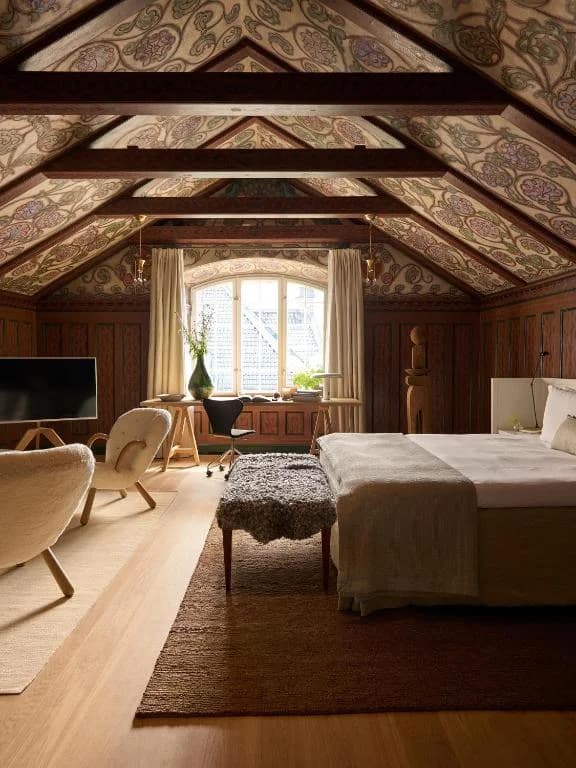
Suites in Munich's leading hotels tend to prioritize spatial generosity, acoustic separation, and material quality. Bavarian craft traditions, particularly in woodwork and textile production, occasionally inform interior choices at properties with a regional design sensibility. Contemporary Munich luxury also engages with the city's design culture, which has historical connections to the Bauhaus movement and remains an active part of the city's creative identity.
How to choose the right luxury suite in Munich
The primary axis of choice in Munich is between historic properties embedded in or adjacent to landmark architecture and contemporary hotels built or extensively renovated to current luxury hospitality standards. Both categories offer strong suite products, but they deliver different experiences of the city.
Historic properties often carry a spatial irregularity that contemporary builds do not. Ceiling heights, window proportions, and room configurations may vary within a single property in ways that reward careful suite selection. Requesting specific floors or orientations is standard practice and generally accommodated at this level of the market.
For travelers arriving with cultural priorities, proximity to the museum quarter or the opera house will influence the logic of where to stay. For those focused on business travel with leisure extensions, properties within the inner ring or close to major transport nodes offer a different functional calculus. Munich's public transport infrastructure is precise and comprehensive, which means that geographic centrality is less critical here than in some other European capitals.
The Englischer Garten is a meaningful variable for many suite travelers. Suites with direct park access or green views represent a particular category within the Munich market, combining the density of a major city with a quality of light and openness that is unusual at this urban scale.
The value of a curated selection in Munich's luxury suite market
Munich's luxury hotel offer is sophisticated but concentrated. The number of properties operating at genuine suite level is finite, and the differences between them are precise enough to matter. A curated selection by La Suite removes the noise of aggregated booking platforms and focuses the decision on the variables that actually shape the experience: suite architecture, service model, location relative to specific cultural priorities, and the cumulative quality of the stay.
For a city that rewards deliberate choices, the process of selecting where to stay should reflect the same attention brought to every other dimension of the trip. La Suite's editorial process applies the same criteria across every property in its selection, ensuring that what is presented reflects a consistent and verifiable standard of quality.