Understanding Kefalonia's distinct luxury landscape
Best areas to stay in Kefalonia for a luxury suite
Fiscardo and the northern peninsula
Fiscardo is the only village on Kefalonia that survived the 1953 earthquake largely intact, and its preserved Venetian architecture gives it a coherence that is rare on the island. The harbour is small and considered, attracting sailing yachts throughout the summer. Properties in this area tend toward boutique scale, with an emphasis on architectural character and proximity to the water. For travellers who prioritise atmosphere over amenities volume, the north offers something the rest of the island does not: a visible historical continuum.
Assos and the central west coast
The village of Assos sits at the base of a peninsula crowned by a Venetian fortress, connected to the mainland of the island by a narrow causeway. The geometry of the bay is precise and contained. Stays in this area are suited to travellers who want a view that functions as the primary experience, with the surrounding landscape at a remove. Suites with private terraces facing the bay are the most sought-after configuration here.
Lixouri and the Paliki peninsula
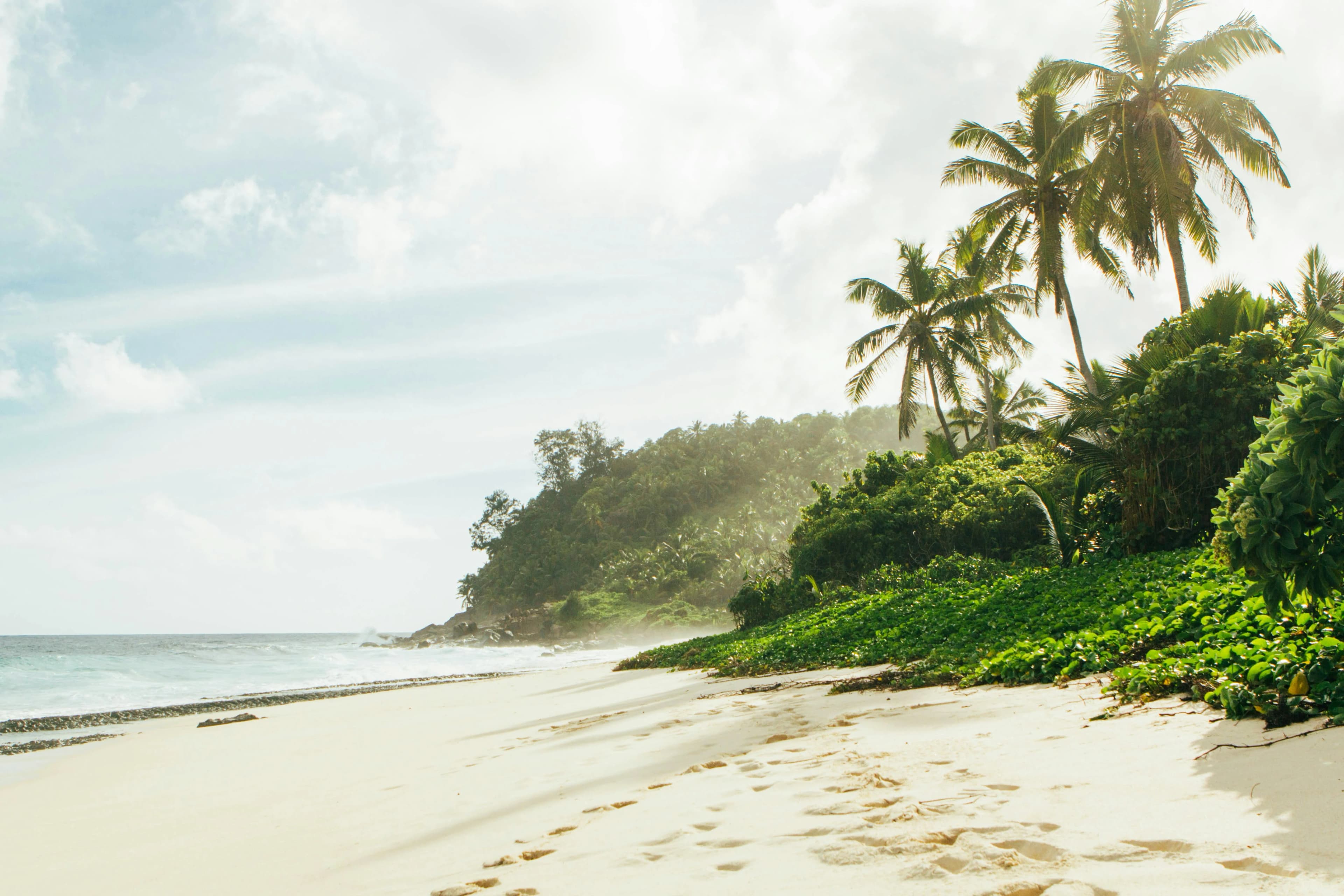
The Paliki peninsula, reached by a short ferry crossing from Argostoli, offers a quieter alternative to the island's more visited western coastline. The beaches here, including Xi Beach with its distinctive red sand, draw fewer visitors than Myrtos, and the absence of the main tourist infrastructure creates conditions for a more private stay. Properties on this side of the island tend to attract guests returning to Kefalonia for a second or third visit, choosing deliberate seclusion over convenience.
The Lassi and Argostoli area
Argostoli, the island's capital, is a working town rebuilt after 1953 in a functional modern style. The surrounding Lassi peninsula offers the highest concentration of accommodation on the island and is practical for those who want easy access to restaurants, car hire, and the ferry connections. Luxury hotel suites in this area are typically found in larger resort properties with full-service amenities, pools, and organised beach access. The trade-off is density: this part of Kefalonia is the most visited and the least secluded.
When to visit Kefalonia for a high-end suite stay
The Ionian Islands receive their rainfall primarily in winter and early spring, which means the landscape in May and early June retains a depth of colour that the Aegean islands, drier by climate, rarely show in summer. This window, from mid-May through June, is widely regarded as the most considered moment to visit: the light is clear, the water temperature is already acceptable for swimming, and the island has not yet reached peak occupancy. Suite availability is at its widest in this period, and properties that close waitlists by July can often accommodate direct enquiries in late May.
July and August bring the full weight of the high season. Kefalonia receives significant numbers of British and Italian visitors during these months, and properties at the preferred northern and western locations command their highest rates. For travellers with flexibility, the first two weeks of September offer a compelling alternative: sea temperatures peak in late August and remain warm well into September, visitor numbers begin to fall after the first week, and the afternoon light shifts into a register that is noticeably different from midsummer.
The island effectively closes between November and March. A small number of year-round properties exist, but the operational assumption for most luxury hotels is an April-to-October season.
Greek hospitality standards and what to expect from top-tier suites in Kefalonia
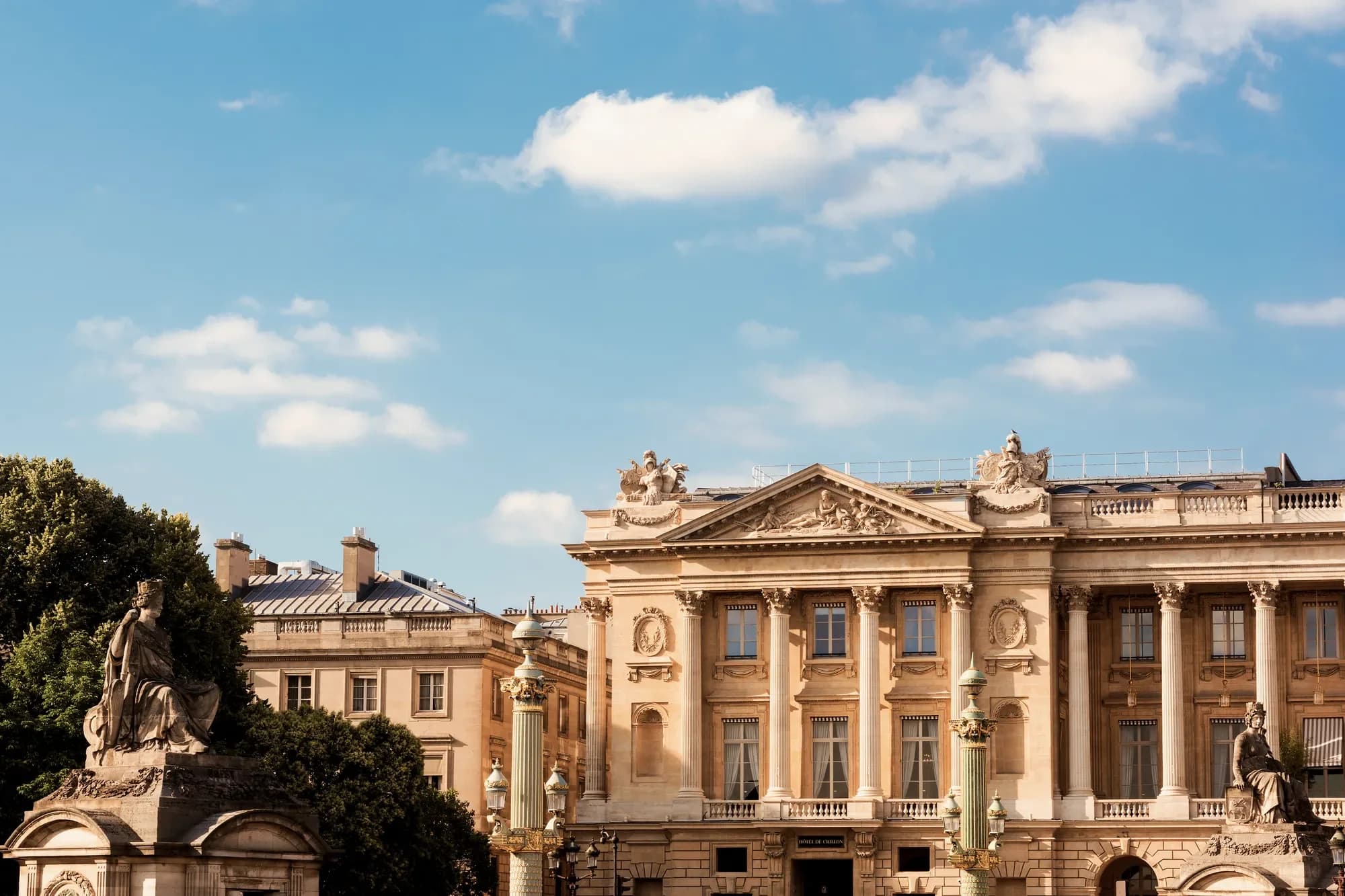
Greece does not operate the same official classification system as France, where the Palace designation sits above the five-star category as a state-awarded distinction. Greek hotels are rated on a government scale from one to five stars, but the five-star category is broad, and the operational gap between the lower and upper ends of that category is significant. For travellers accustomed to Palace-standard hotels in Paris or leading Relais and Chateaux properties, it is worth calibrating expectations: the finest suites in Kefalonia deliver on space, view, and privacy, but the service infrastructure is typically smaller in scale than what equivalent spend would produce in a major European city.
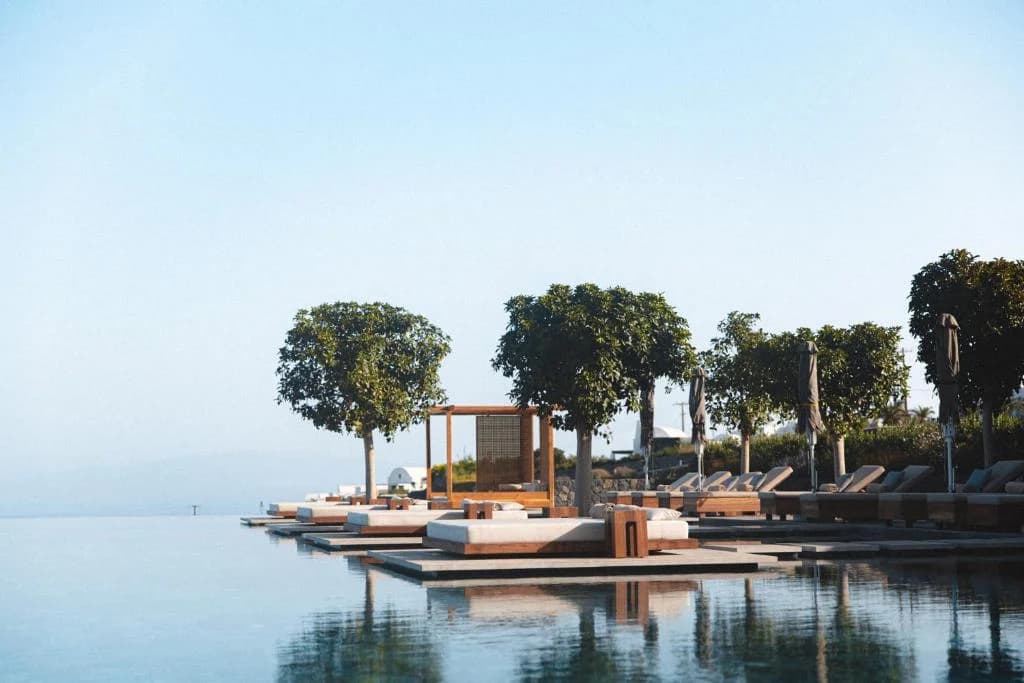
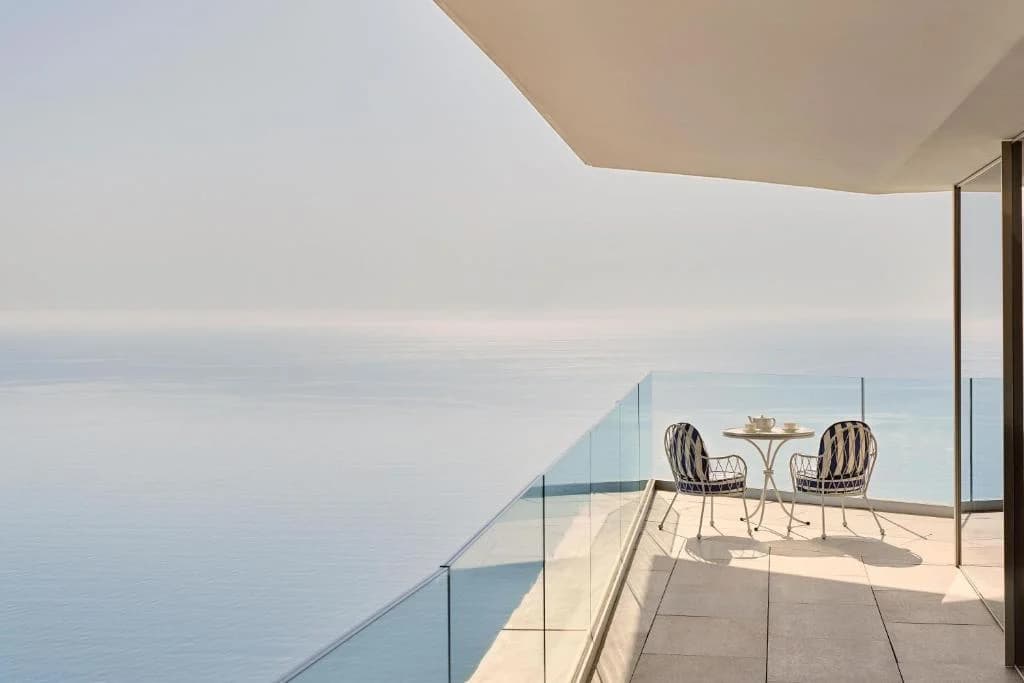
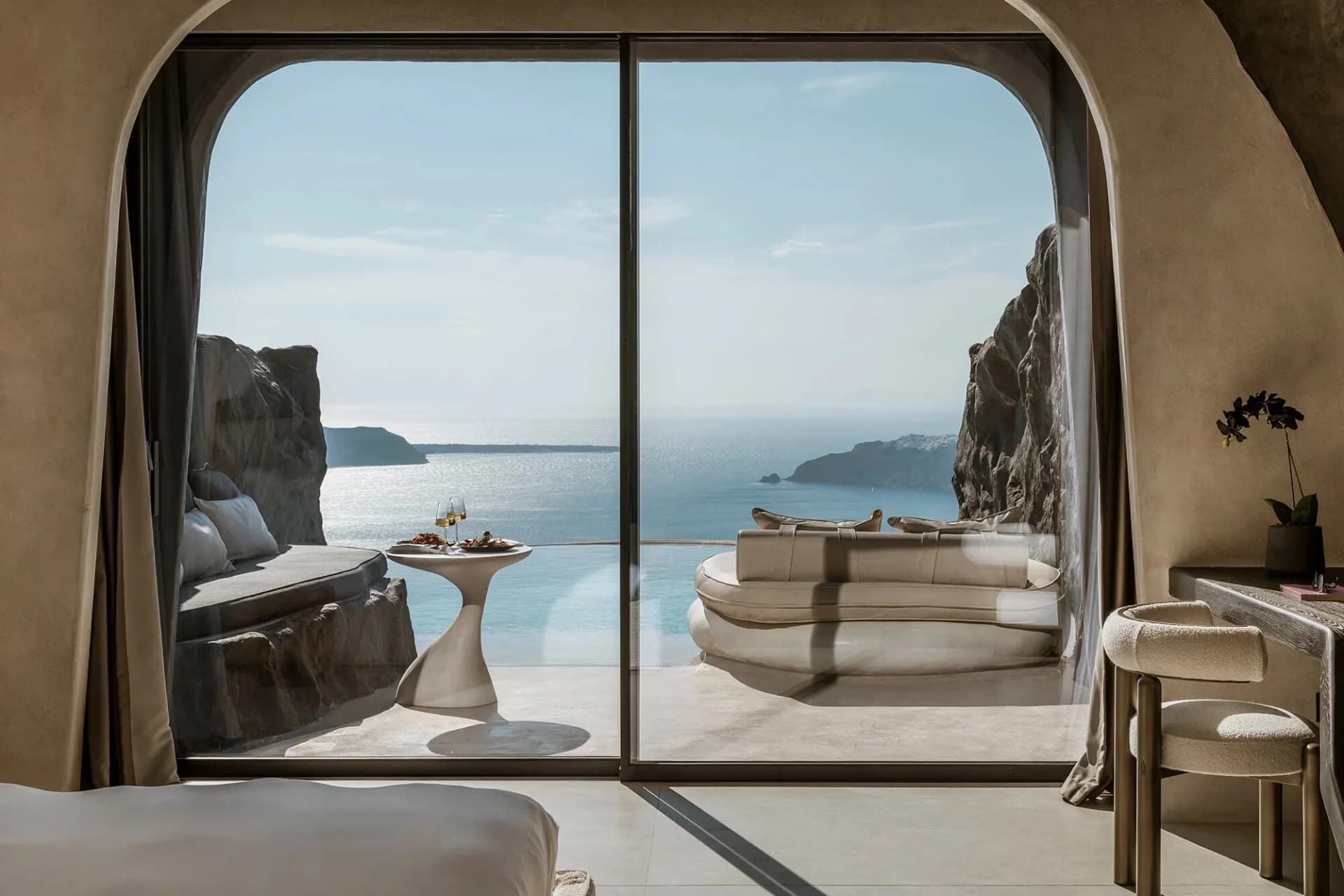
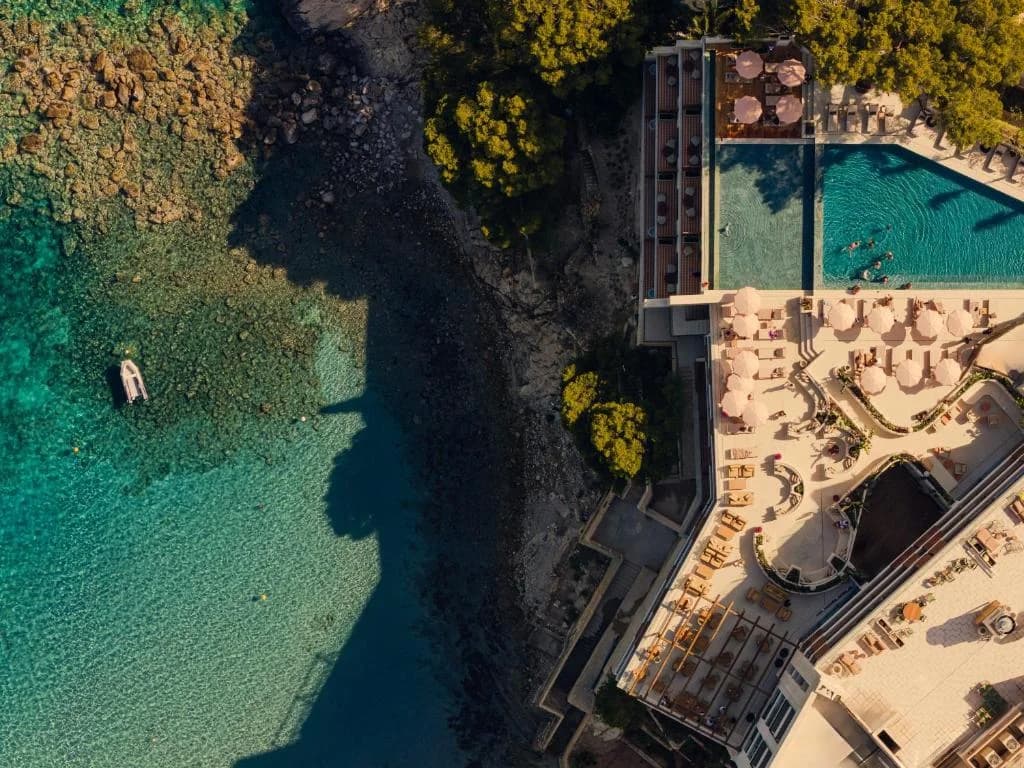
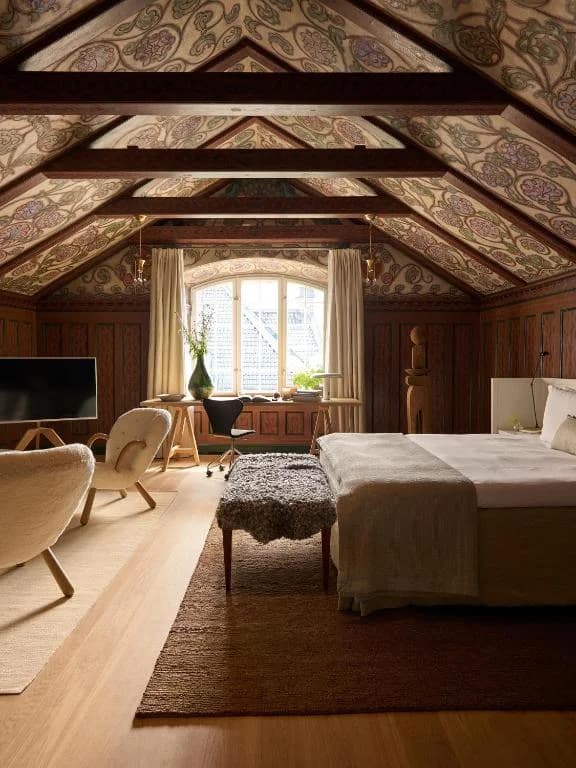
What distinguishes the leading properties in Kefalonia is the quality of the physical setting and the architectural integration of the suites into the landscape. Infinity pools positioned above a bay, terraces from which the Ionian Sea is the only visible horizon, and interiors that reference the local palette of limestone, olive wood, and Venetian blue: these are the material qualities that define the island's best offerings. The focus is sensory and spatial rather than service-volume.
How to choose the right luxury suite in Kefalonia
The single most important variable in Kefalonia is orientation. Suites with direct sea views on the west coast face the open Ionian and receive the full afternoon sun, which makes evening terraces particularly usable. East-facing suites may offer views toward the mainland mountains of the Peloponnese, which is a different but equally considered prospect. Interior or garden suites, while often larger in floor area, sacrifice the primary draw of the island's geography.
A second consideration is access. Kefalonia's road network is functional but winding, and properties perched on cliffs or at the end of rural tracks require a car. Travellers who prefer to walk between accommodation and restaurants should weight their search toward Fiscardo or the Lassi area. Those for whom privacy is the priority should accept, and indeed choose, the distance.
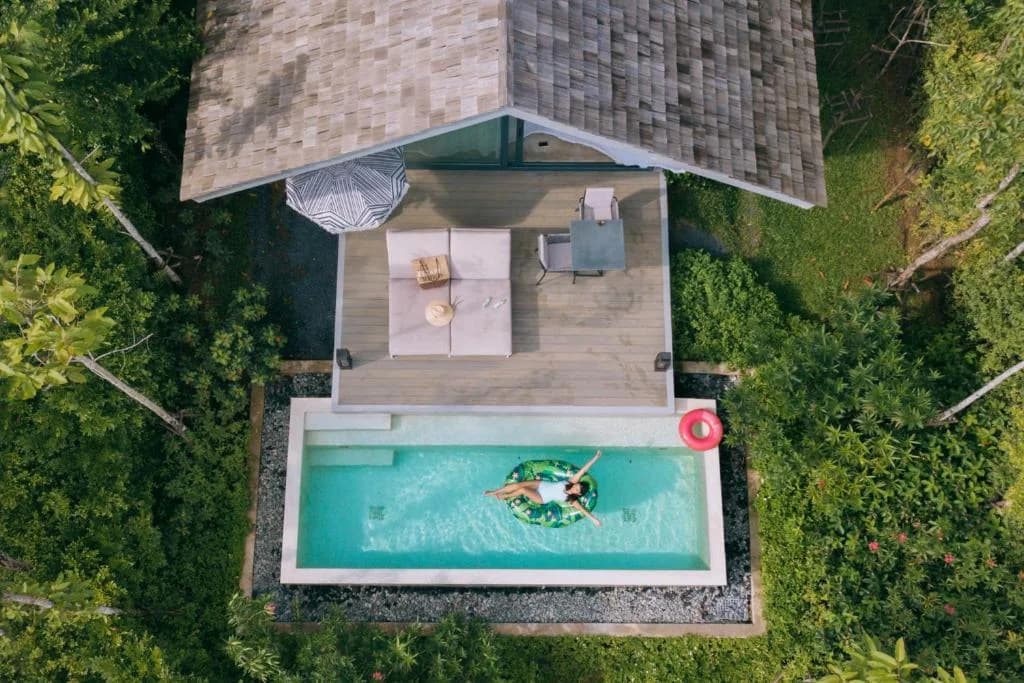
Finally, pool configuration matters more here than in urban hotel stays. A shared pool at a Kefalonian property can mean significant crowds in August. Suites with private plunge pools or exclusive-use pool arrangements represent a meaningful upgrade in the high season, and the premium for this configuration is generally justified by the difference in experience.
Why a curated selection by La Suite matters in Kefalonia
The accommodation market in Kefalonia ranges from large resort complexes to private villas rented through aggregator platforms, with genuine luxury hotel suites representing a smaller subset that requires active identification. The island's growth in popularity over the past decade has produced a corresponding growth in properties marketed as luxury that do not meet a serious threshold of design, privacy, or service. La Suite applies consistent editorial criteria across this market, selecting only properties where the suite product is a genuine architectural and experiential offer, not a marketing category. For travellers arriving in Kefalonia for the first time, or returning with higher expectations than a previous visit produced, the curated selection removes the research burden and the risk of a misaligned stay.