Best areas to stay in Kos for a luxury suite experience
Kos Town and the northeast coast
The island's capital concentrates its most historically dense fabric: a Crusader-era castle, Ottoman mosques, Roman excavations, and a claimed site of the ancient plane tree under which Hippocrates is said to have taught. Staying in or near Kos Town places you within walking distance of that layered urban texture. Luxury hotel properties here tend to occupy converted neoclassical buildings or purpose-built structures that frame views across the harbour toward the Bodrum peninsula. The scale is intimate; the orientation is cultural rather than resort-driven.
The southern and western coasts
Kefalos and the southwestern tip of the island offer a more arid, quieter character. Cliffs drop toward clear water, and the density of development falls sharply. Properties here, often low-rise and architecturally considered, appeal to travellers prioritising seclusion over proximity to restaurants and nightlife. The light at this end of the island in late afternoon is particularly precise, and the absence of crowds is structural rather than seasonal.
Psalidi and the thermal coast
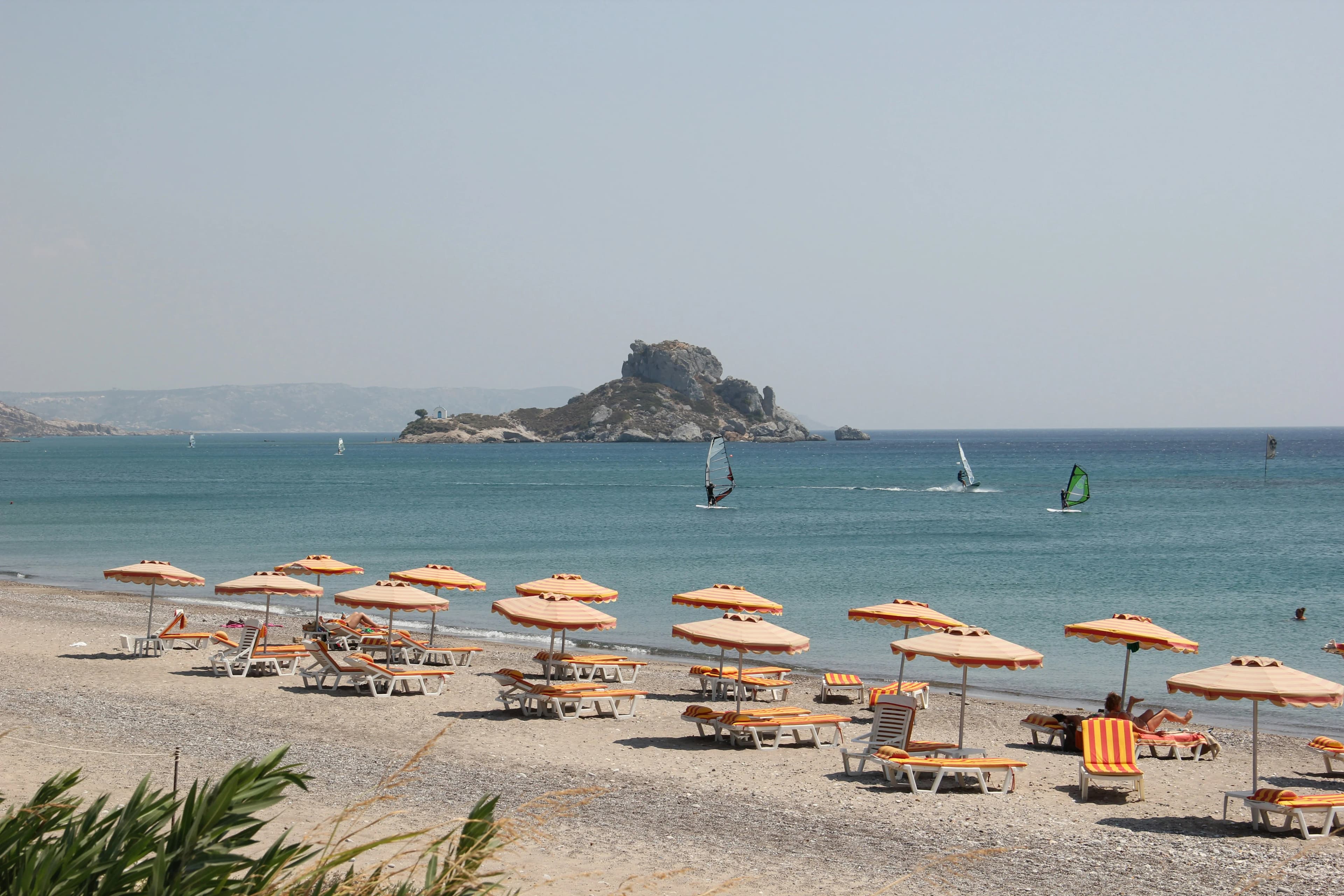
The coastline stretching east of Kos Town through Psalidi toward Agios Fokas is notable for its thermal springs, which emerge directly into the sea. A handful of larger resort properties occupy this stretch, some with genuine spa infrastructure built around the geothermal character of the shoreline. Suites in this area tend toward the panoramic, with direct sea access and the distinct quality of warm mineral water available as a daily amenity.
When to visit Kos for a high-end suite stay
The Aegean season on Kos runs from late April through October, but the internal logic of that window matters for luxury travellers.
May and June offer the most controlled conditions: temperatures are warm but not oppressive, the island has emerged from winter closure, and the volume of mass-market tourism has not yet peaked. Properties are operating at full standard, and availability in the better suites is still realistic without the extreme pricing pressure of high summer.
July and August are the peak months. Temperatures regularly exceed 35 degrees Celsius. The island is at its most active commercially and socially, which some travellers find energising and others find intrusive. Suite rates are at their highest, and last-minute availability at top-tier properties is effectively zero. For this window, advance planning of several months is standard practice.
September is frequently cited by experienced Aegean travellers as the optimal month. Sea temperatures remain at their warmest, crowds reduce perceptibly, and the quality of the afternoon light shifts in a way that is difficult to describe clinically but is immediately apparent to anyone who has experienced it. October remains viable for the southern and western parts of the island, where temperatures stay moderate and the atmosphere becomes genuinely quiet.
There are no internationally prominent luxury cultural events anchored to Kos specifically, but the broader Dodecanese context, including proximity to Rhodes and the ease of island-hopping by ferry or private transfer, means that a stay on Kos can be structured as part of a larger Greek island circuit.
Local luxury standards: what to expect from top-tier suites in Kos
Greece does not operate a formal national grading system equivalent to the French Palace designation. The practical proxy is the five-star hotel category, administered under Greek national tourism organisation standards, but the variance within that category is significant. A five-star designation on Kos can describe properties of genuinely different calibre.
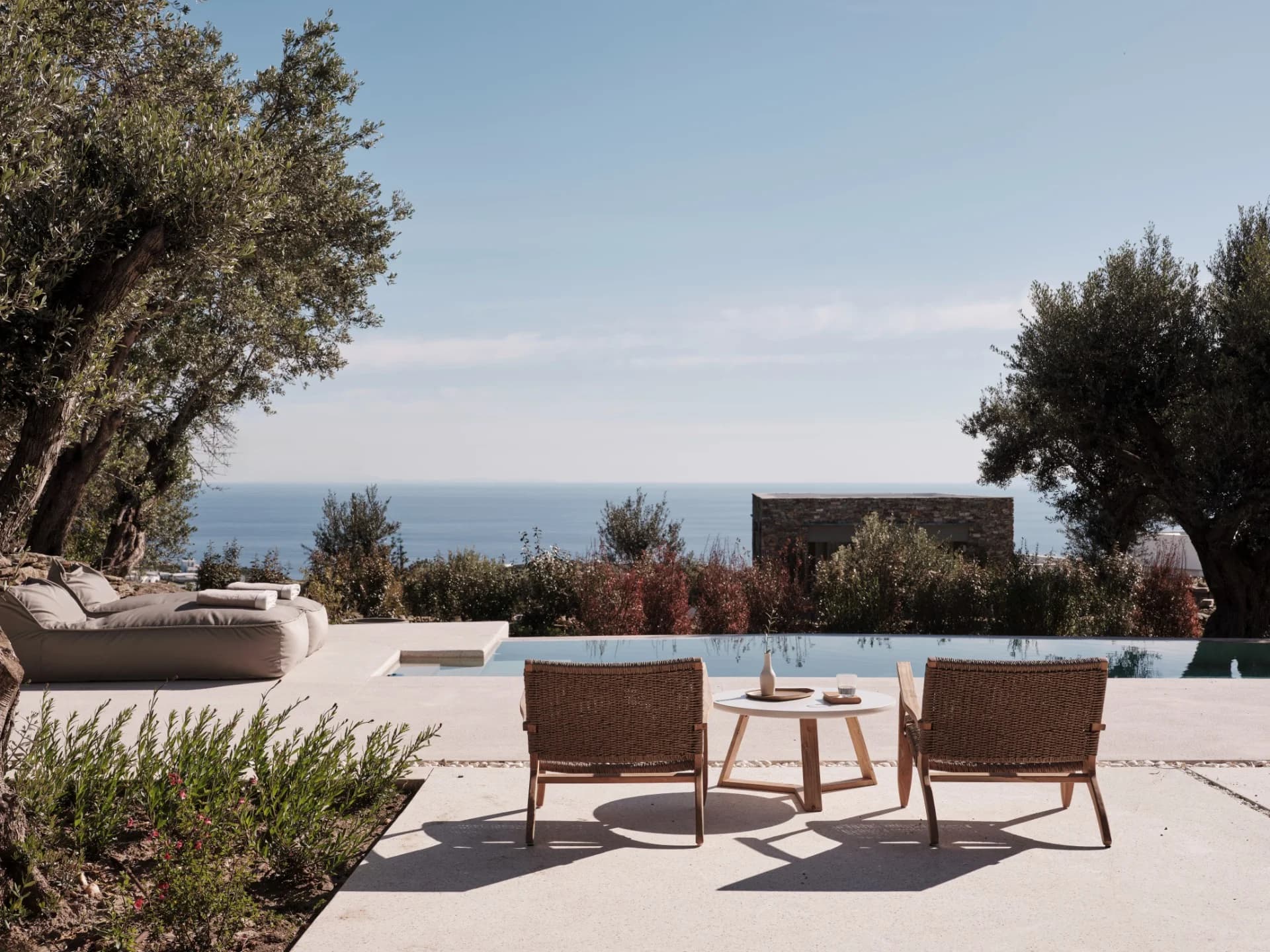
At the upper end, the relevant markers are: architectural coherence with the local building vernacular (whitewashed volumes, natural stone, considered use of shading), genuine private outdoor space at suite level (a terrace or plunge pool that is functional rather than decorative), and a kitchen or kitchenette configuration that supports extended stays. Kos is not a destination where the most distinguished properties are routinely featured in international architectural press, but the best of them demonstrate a restraint and material quality that distinguishes them from the bulk of the island's accommodation stock.
The concept of the Greek boutique hotel, which emerged strongly in the 2010s and accelerated through the following decade, is present on Kos, though less dominant than on Mykonos or Santorini. These properties typically operate at a smaller scale, with a higher ratio of staff to guests, and a design sensibility that draws on local craft traditions without resorting to folkloric pastiche.
How to choose the best luxury suite in Kos
Several considerations are specific to Kos and worth weighting carefully before committing to a property.
First, the wind. Kos sits in the path of the meltemi, the seasonal northerly wind that dominates the Aegean from July through August. Its intensity varies by location on the island, and some properties are significantly more exposed than others. For travellers whose priority is outdoor living from their suite, this is a material factor rather than a minor inconvenience.
Second, the question of historical versus purpose-built. Kos has genuine archaeological depth, and a small number of properties are physically integrated into or immediately adjacent to ancient sites. The experience of occupying a suite with a direct sightline to Roman columns or medieval fortification is qualitatively different from a resort property, however well executed the latter may be.
Third, mobility. The island is large enough that location relative to the places you intend to visit matters. A suite at the far western tip is beautiful in isolation but requires planning to access the cultural concentration of Kos Town. Properties near the capital offer spontaneity at the cost of some quietude.
Fourth, the private pool question. On Kos, as elsewhere in the Greek islands, the private plunge pool has become a standard premium offering rather than a genuine differentiator. The meaningful question is not whether a suite has a pool but whether the pool, the terrace, the orientation, and the view function as a coherent spatial experience rather than a checklist of amenities.
The value of curated selection by La Suite in Kos
The accommodation market on Kos encompasses hundreds of listed properties across a wide range of categories. Within the luxury tier, the actual number of suites that meet a rigorous standard on space, privacy, service consistency, and design integrity is considerably smaller than the volume of five-star marketing language might suggest.
La Suite's editorial process filters that market with specific criteria: verified suite dimensions and configurations, confirmed private outdoor space, documented service standards, and a design assessment that goes beyond photographic presentation. For a destination like Kos, where the distance between a genuinely excellent suite and a competently marketed average one is not always visible at the point of search, that curation has direct practical value. The curated selection by La Suite represents properties that have been assessed against those criteria, so the decision process begins from a qualified shortlist rather than an undifferentiated catalogue.