Where to stay in Mainland Greece: distinct territories for the discerning traveler
Athens and the Attica region
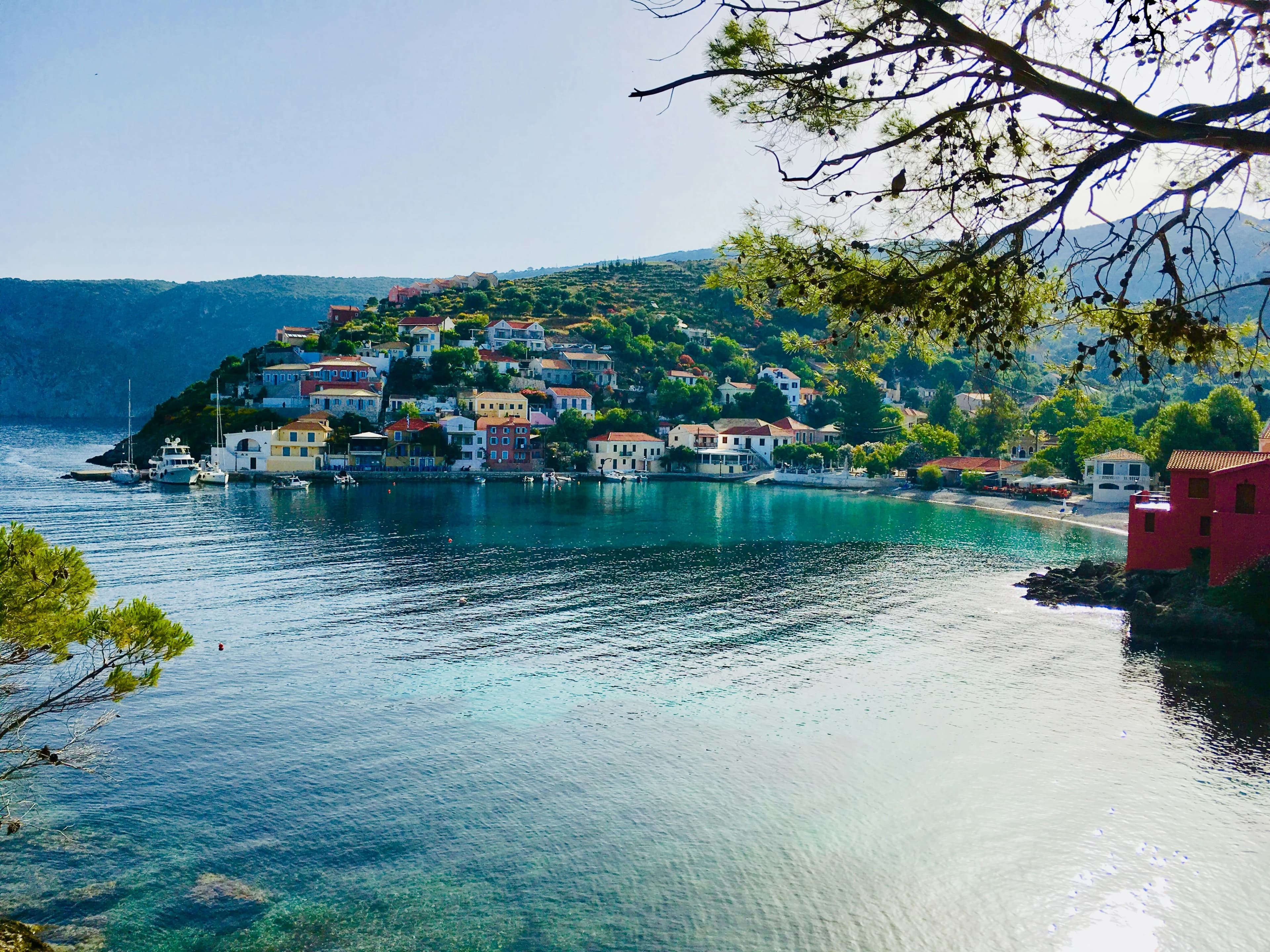
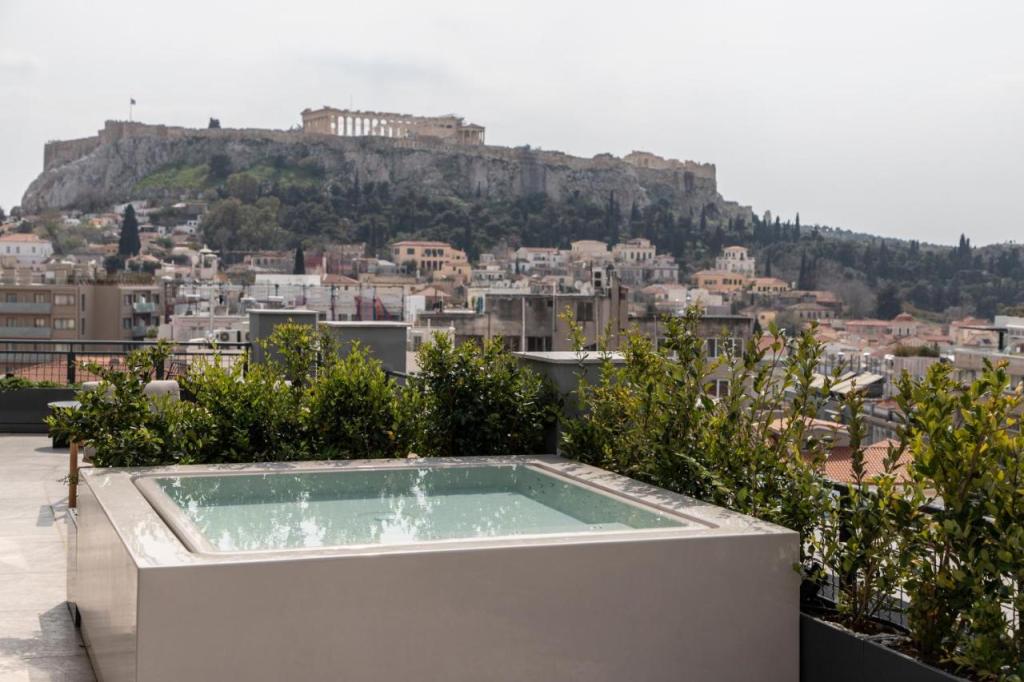
Athens anchors the mainland's luxury offer. The city is one of the oldest continuously inhabited urban centres in the world, and its high-end accommodation reflects a growing awareness of that heritage. The historic centre, particularly around Monastiraki and Plaka, places guests within direct visual range of the Acropolis. Kolonaki, the city's established residential and commercial district, offers a quieter, more residential character suited to travelers who prefer proximity to galleries, private dining, and independent boutiques over proximity to monuments. The Attica coastline south of Athens, known as the Athenian Riviera, extends toward Vouliagmeni and Sounion, where larger resort-format hotels with generous suite programmes occupy coastal plots with uninterrupted sea views.
The Peloponnese
The Peloponnese is arguably the mainland's most compelling territory for luxury travel. The peninsula contains a density of ancient sites, Byzantine fortresses, and vernacular architecture that rivals any region in Europe. Nafplio, the first capital of modern Greece, remains one of the most elegant small cities in the country. The Mani, the middle of the three southern peninsulas, is stark, dramatically eroded, and architecturally distinctive, characterised by the stone tower houses that local families built for centuries as fortified residences. Properties here tend toward the boutique end of the market, with suites often occupying restored historical structures. The northeastern coast of the Peloponnese, around the Argolic Gulf, offers calmer waters and a greener landscape with greater resort infrastructure.
Central Greece and Epirus
The mountainous interior of mainland Greece, including the Meteora plateau and the region of Epirus to the northwest, attracts a smaller, more deliberate category of traveler. Meteora, where Byzantine monasteries sit atop near-vertical rock formations, is one of the most photographed landscapes in Greece and yet remains genuinely affecting in person. Epirus, centred on Ioannina and the Zagori villages, offers a cooler, forested alternative to the Mediterranean coast, with stone-built guesthouses and small boutique hotels that prioritise local material culture. The luxury standard here is different from Athens or the coast: it is defined by seclusion, architectural authenticity, and access to protected natural landscapes.
Thessaloniki and northern Greece
Greece's second city is underappreciated by international luxury travelers, which is partly what makes it interesting. Thessaloniki has a layered urban history that includes Roman, Byzantine, Ottoman, and Jewish heritage, and its food culture is widely considered the most serious in the country. The city's hotel offer has matured considerably, with several properties now offering suite-level accommodation that matches the sophistication of the urban experience. Northern Greece beyond Thessaloniki, including the Halkidiki peninsula and Mount Olympus territory, extends the offer into coastal and highland formats.
When to visit Mainland Greece for a suite stay
The mainland operates on a different seasonal logic from the islands. The shoulder seasons, April through June and September through October, are the most balanced periods: temperatures are moderate, cultural sites are accessible without the density of high summer, and hotel availability is generally stronger. The Greek Easter period, which falls between late March and early May depending on the year, is culturally significant and worth aligning a visit around, particularly if the itinerary includes the Peloponnese or mountain regions where traditions remain intact.
Summer on the mainland, particularly July and August, is hot and dry across most of the interior. Athens in August empties of its residents and can feel hollow. The Athenian Riviera and coastal Peloponnese remain active, but temperatures regularly exceed 35 degrees Celsius, making suite-level accommodation with private outdoor space or pool access a practical consideration rather than simply an indulgence. Winter in the mountains, particularly around the Zagori and Epirus regions, brings snow and a quieter form of luxury that the coast cannot offer.
Local luxury standards: what defines a top-tier suite on the mainland
Greece does not have a formal equivalent of the French Palace classification, but the country operates a hotel star system administered by the Greek National Tourism Organisation. The five-star designation is the ceiling of this system and applies to properties meeting criteria across facilities, service standards, and spatial specifications. Within the five-star tier, suite categories vary considerably: a suite at a large resort property on the Athenian Riviera will differ significantly in character from a suite occupying a restored Ottoman-era mansion in Thessaloniki or a stone tower conversion in the Mani.
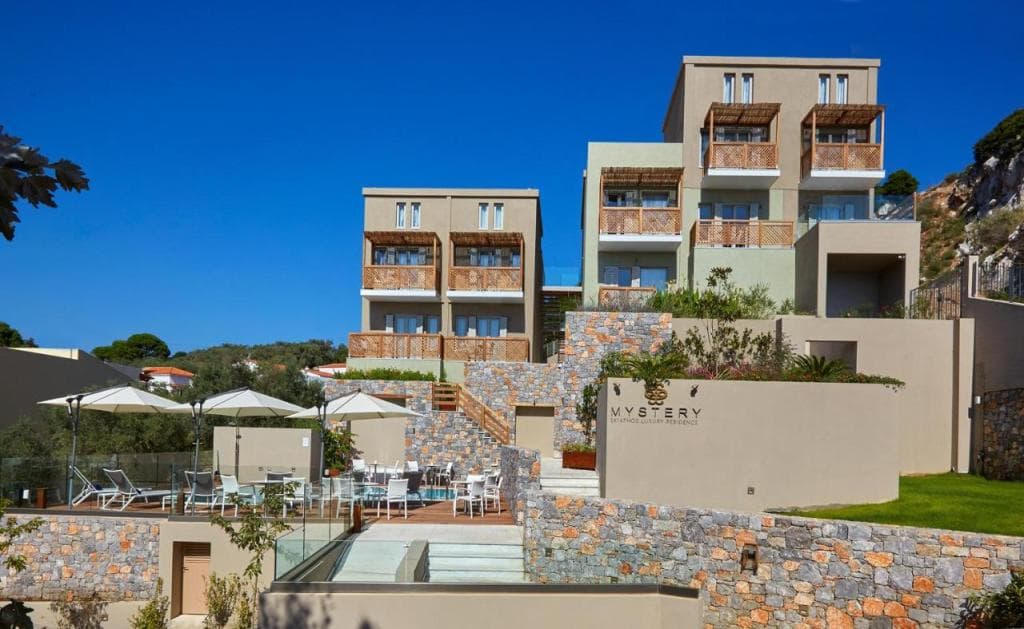
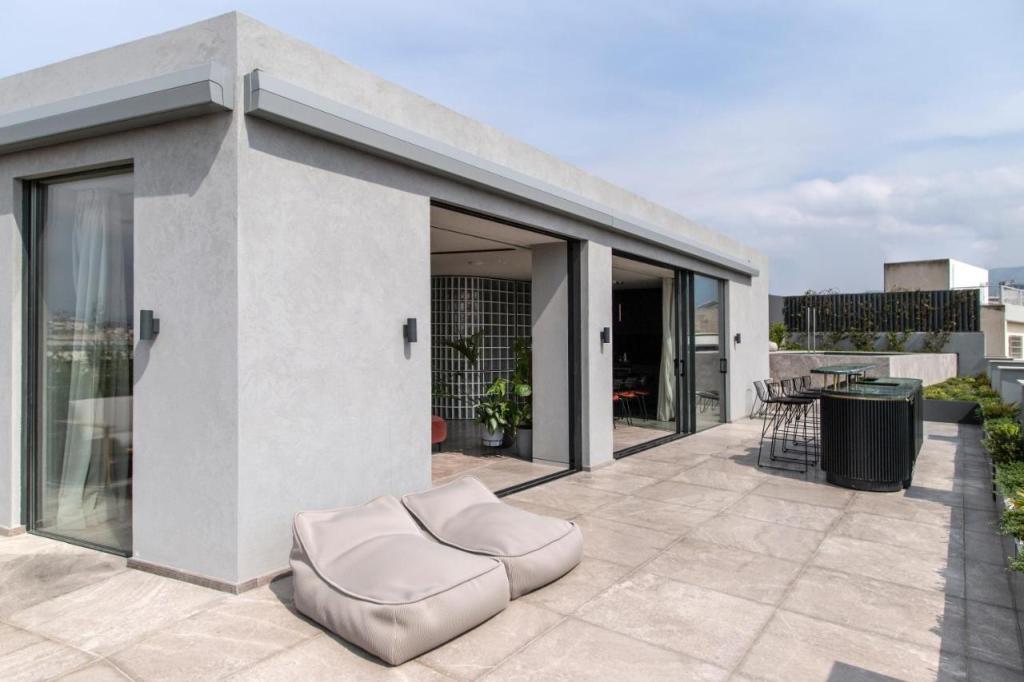
What distinguishes the best mainland suites is often a combination of architectural specificity and material honesty. Greece has a strong tradition of vernacular stone construction, and the finest boutique properties on the Peloponnese and in Epirus have preserved or incorporated this language rather than overlaid it with generic luxury finishes. Expect local stone, handmade ceramics, linen textiles, and spatial arrangements that respond to the local climate, with deep-shaded terraces, thick walls, and orientation toward prevailing breezes. In Athens, the luxury standard shifts toward a more urban typology: refined interiors, rooftop access, and service choreography that reflects the city's increasing sophistication as a destination.
How to choose the right luxury hotel suite in Mainland Greece
The choice between a mainland suite and an island suite is itself a meaningful decision. The mainland rewards travelers who are motivated by culture, history, and landscape variety rather than pure coastal relaxation. Within the mainland, the choice between Athens, the Peloponnese, the mountains, and the north depends on the balance of the itinerary. A property in Athens works as a base for day excursions to Delphi, Corinth, or Cape Sounion. A suite in the Peloponnese places the traveler within a self-contained cultural territory that can absorb multiple days without repetition.
Practical considerations include transport infrastructure. The mainland is navigable by car, and many of the most interesting properties sit off the motorway network, accessible by well-maintained regional roads. A suite with a private terrace or garden matters more on the mainland than on a resort island, where shared pool areas are the default social geometry. For mountain properties, consider the access conditions in the relevant season: some villages in Epirus and the Zagori region are not reliably accessible in heavy snow without four-wheel drive.
Why a curated selection by La Suite helps in this destination
The mainland Greece hotel market includes properties at every quality level, and the gap between a genuinely exceptional suite and a merely adequate five-star room is not always legible from standard booking platforms. La Suite applies a consistent curation logic: spatial quality, material integrity, service calibration, and a coherent sense of place. On a territory as varied as mainland Greece, where the luxury context shifts dramatically between Athens, the Peloponnese coast, and the Epirus mountains, that curation function saves meaningful time and removes the risk of a misaligned choice. The selection on La Suite represents properties where the suite itself, not just the hotel brand, is the primary value delivered to the guest.