Understanding Amalfi as a luxury destination
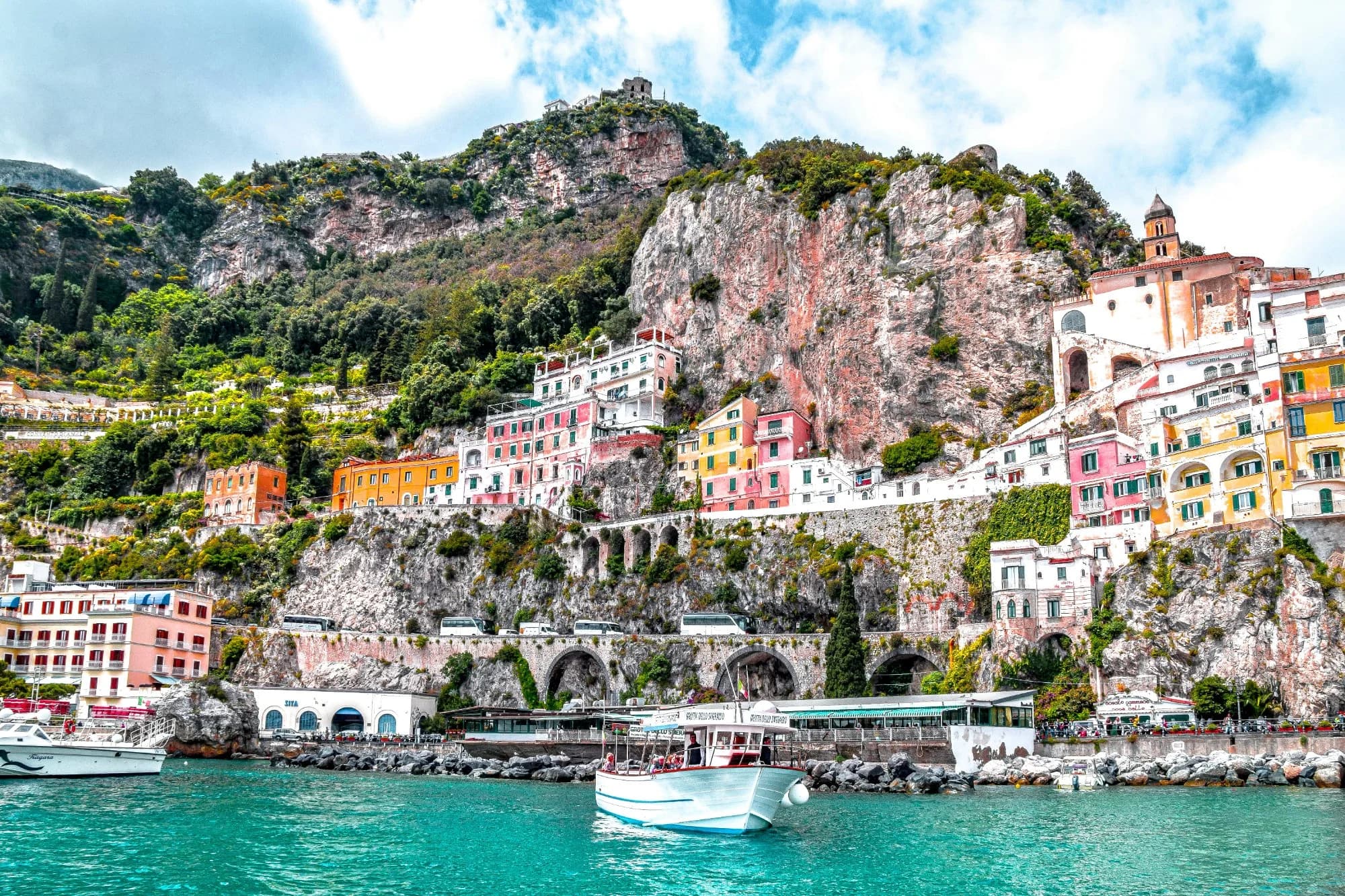
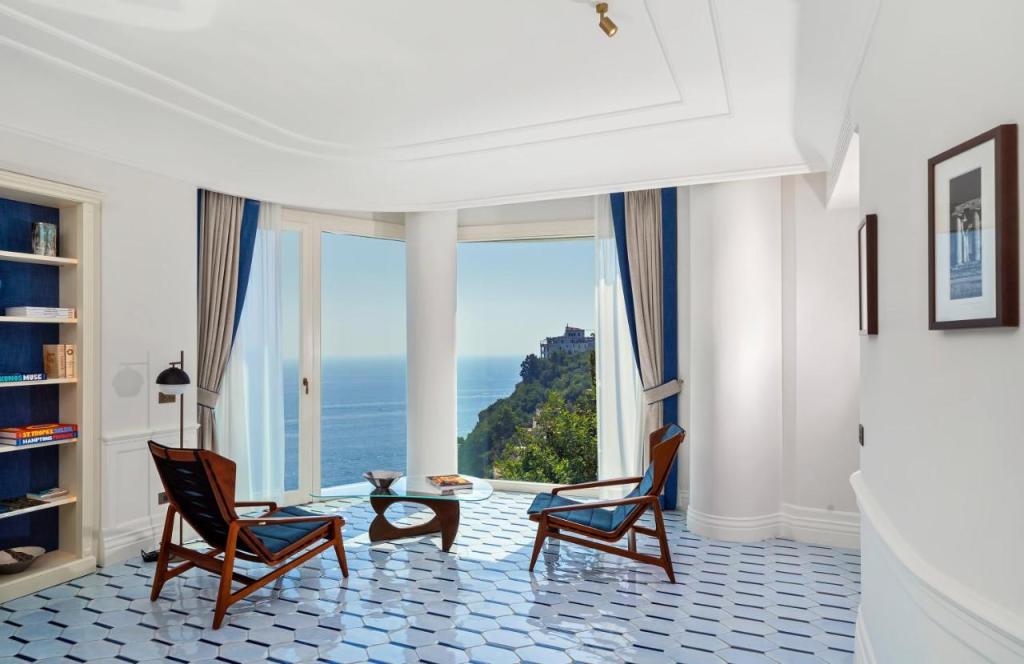
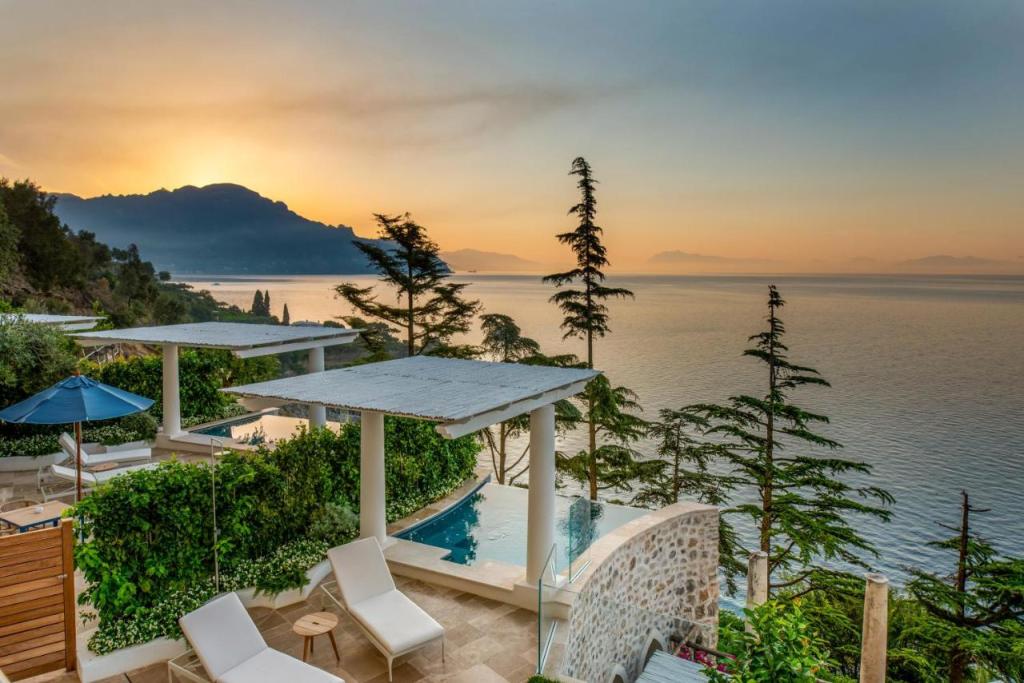
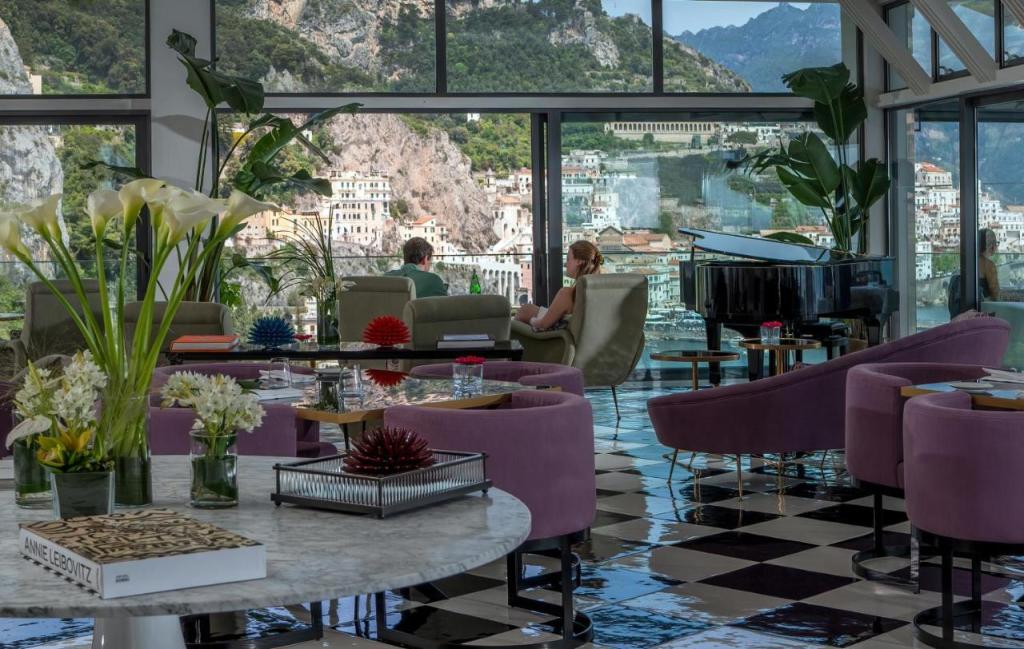
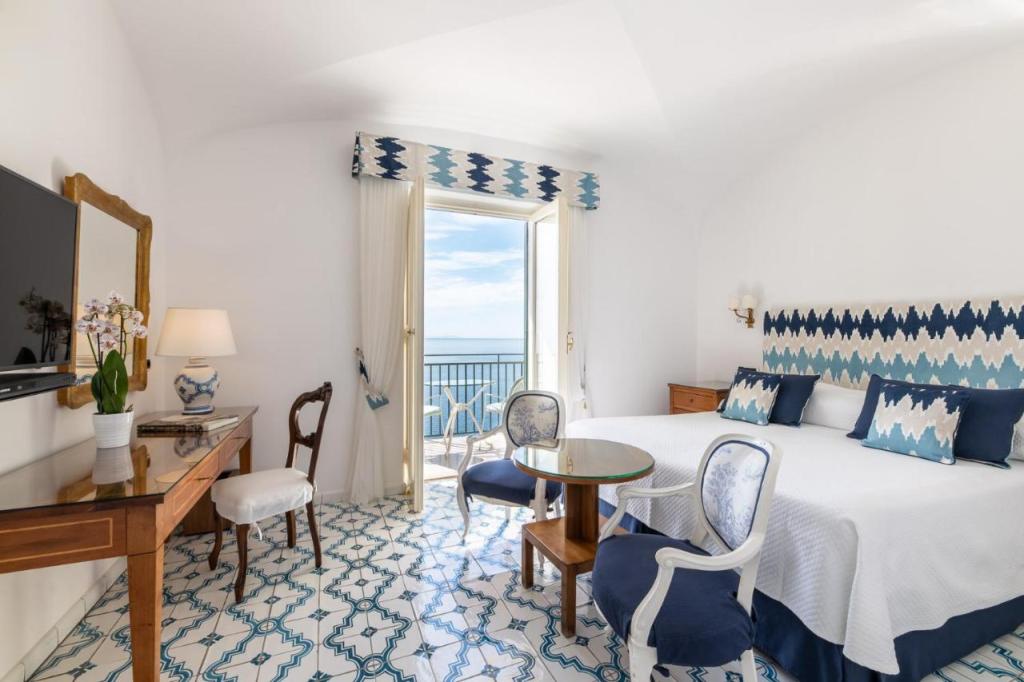
The Amalfi Coast as a whole, of which the town of Amalfi is the geographic and historical center, was designated a UNESCO World Heritage Site in 1997. The designation recognizes the exceptional integration of human settlement with natural topography. That integration is precisely what defines the suite experience here: private infinity pools carved into cliff faces, terraces that read as natural extensions of the rock, interiors that use local majolica tile, hand-painted ceramics, and pale limestone as primary materials.
Key areas to consider along the Amalfi Coast
Amalfi town and the central coast
The town of Amalfi sits at the mouth of the Valle dei Mulini, historically a center of paper production. Staying within or immediately adjacent to the town places guests within walking distance of the cathedral square and the port, but also means accepting the density of summer crowds. The finest suites in this zone are typically elevated well above street level, accessed by private lifts or staircases cut into the cliff, effectively creating a separation between the urban texture below and the sea view above.
Ravello
Positioned approximately 350 meters above sea level, Ravello offers a fundamentally different spatial experience. The town is quieter, the light different at altitude, and the gardens of Villa Rufolo and Villa Cimbrone have attracted composers, writers, and heads of state for over a century. Suites in Ravello tend toward the palatial and the historic, occupying converted villas and religious buildings with interior proportions that coastal properties cannot replicate.
Positano
West of Amalfi along the SS163, Positano is the most photographed town on the coast, its pastel buildings cascading toward a small beach. The luxury suite offer here is strong, with several internationally recognized hotels offering cliff-hanging accommodations with private pool access. The town operates on a near-vertical axis: logistics require consideration, but the visual return is consistent.
Praiano and the quieter western stretches
For travelers prioritizing privacy over proximity to tourist infrastructure, Praiano and the smaller communities between Positano and Amalfi offer a quieter register. Properties here tend to be smaller, more architecturally specific, and less subject to the high-season congestion that affects the more visible towns.
When to visit Amalfi for a luxury suite stay
The Amalfi Coast operates on a pronounced seasonal cycle. July and August represent peak demand: suite availability is at its lowest, prices are at their highest, and the coastal road (the SS163) carries significant traffic volume. For travelers who can schedule flexibly, late April through early June and September through mid-October offer materially better conditions. The light in May and September is particularly considered by photographers and design professionals for its quality and angle. Spring brings wisteria and lemon blossom; early autumn retains full summer temperatures without the compression of August.
The Ravello Festival, held annually from June through September, brings classical music performances to the clifftop gardens, including the celebrated Wagner concert series that references the composer's documented visits to the town. For culturally oriented travelers, this program justifies planning a stay around specific performance dates.
Winter on the Amalfi Coast is quiet to the point of near-closure for many properties. A small number of hotels remain operational year-round, and for the traveler who wants the landscape without the audience, December through February offers a version of the coast that few visitors ever see.
Local luxury standards: what defines a top-tier suite here
Italy does not operate a formal national palace hotel classification equivalent to France's Palace designation (managed by Atout France). However, the Leading Hotels of the World and Relais and Chateaux memberships, alongside Forbes Travel Guide ratings, function as practical reference points for the highest-tier properties on the Amalfi Coast.
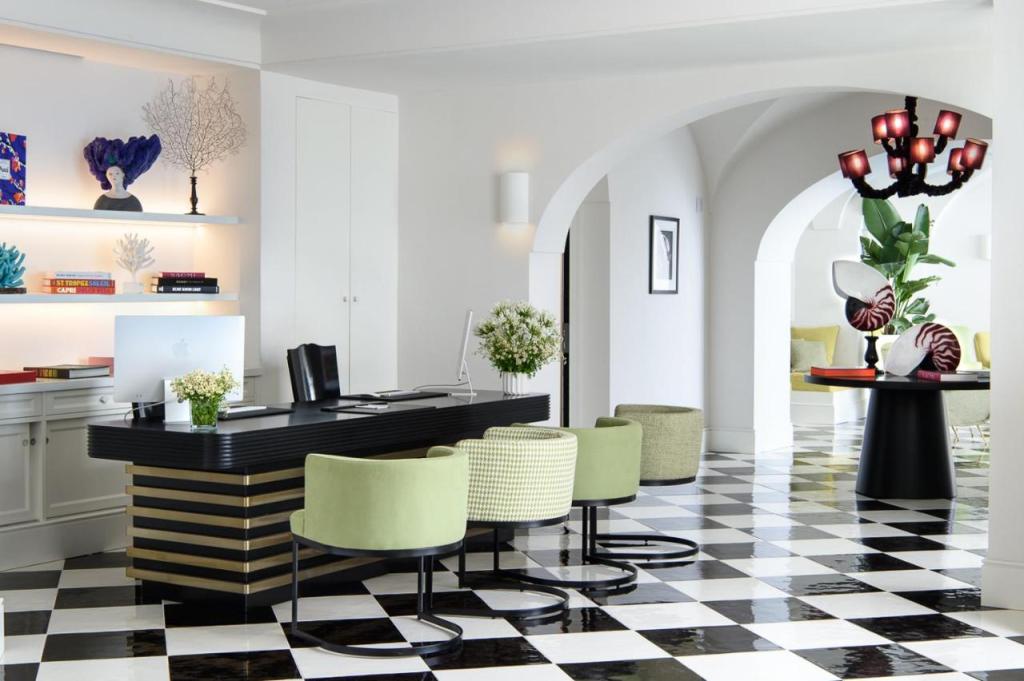
What distinguishes a genuinely exceptional suite in this territory is architectural specificity. The best properties have been built into the cliff rather than placed upon it, with suites oriented to capture both sea views and the particular quality of southern Italian light. Materials matter: hand-painted Vietri sul Mare ceramics, local stone, antique furniture sourced from Neapolitan dealers, and textiles that reference the region's silk and linen traditions. A plunge pool or terrace is standard at the top tier; what separates the outstanding suites is the degree to which interior and exterior space are conceived as a single architectural unit.
Service standards at the leading Amalfi properties operate on a staffing ratio and an institutional knowledge of guest preference that is comparable to the best European city hotels. Private boat arrangements, helicopter transfers from Naples, and access to specific fishing excursions or culinary experiences are typically organized at the concierge level rather than through third-party aggregators.
How to choose the right suite in Amalfi
The single most consequential decision when selecting a luxury suite on the Amalfi Coast is the orientation of the view and the accessibility of the property. A suite facing directly south or southwest over the Tyrrhenian will capture late afternoon light and the full open-water panorama. A suite facing east will receive morning light and, in some cases, views toward the Furore gorge or the hills above Atrani.
Access deserves equal weight. Several of the most architecturally distinguished properties on the coast are reached by boat, by private lift from a road-level entrance, or by a significant number of steps. For guests with mobility considerations or with young children, these logistics require advance confirmation rather than assumption.
Consider also the acoustic environment. Amalfi town and Positano experience boat and road noise during the day. Ravello and the elevated properties along the coast operate in a markedly quieter register. For guests who place high value on the sensory quality of silence, the altitude differential is worth the additional travel time from the coast road.
Why curated selection matters in this destination
The Amalfi Coast carries a level of international visibility that generates a correspondingly large volume of accommodation options at every price point. The challenge is not finding a hotel. It is identifying the specific properties and suite categories where the architecture, the view orientation, the service model, and the interior quality align at the level that justifies the investment.
La Suite approaches this as an editorial process rather than an inventory function. Each property in the curated selection has been assessed against the criteria that matter to design-literate, experience-driven travelers: spatial quality, material specificity, privacy infrastructure, and the degree to which the suite itself constitutes an experience rather than a container for one. In a destination where marketing imagery is consistently polished, independent curation provides a more reliable signal than aggregated review scores. The curated selection by La Suite is built on those criteria, applied consistently across the Amalfi Coast's most significant properties.