Where to stay in Basilicata: understanding the region's distinct areas
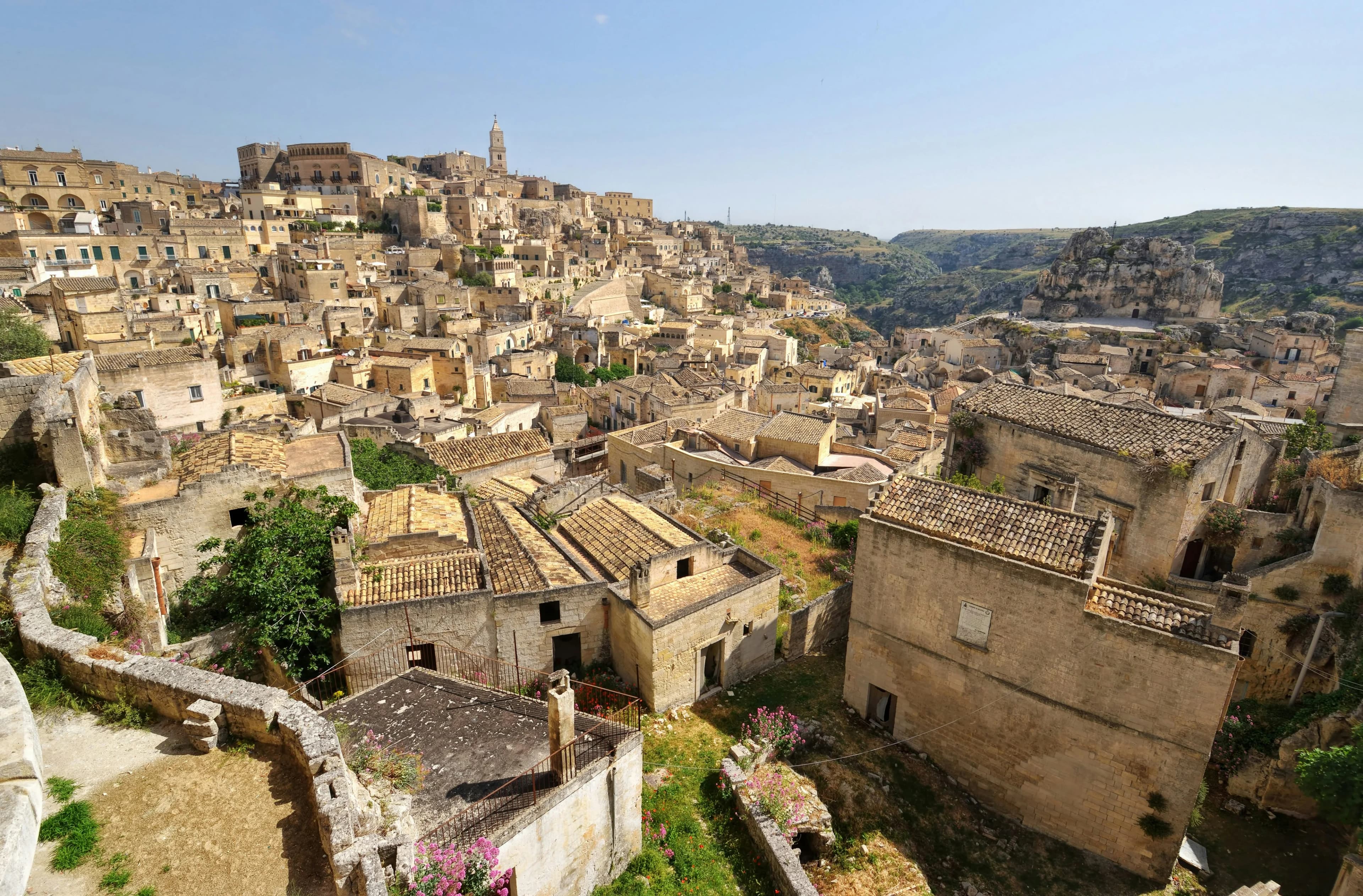
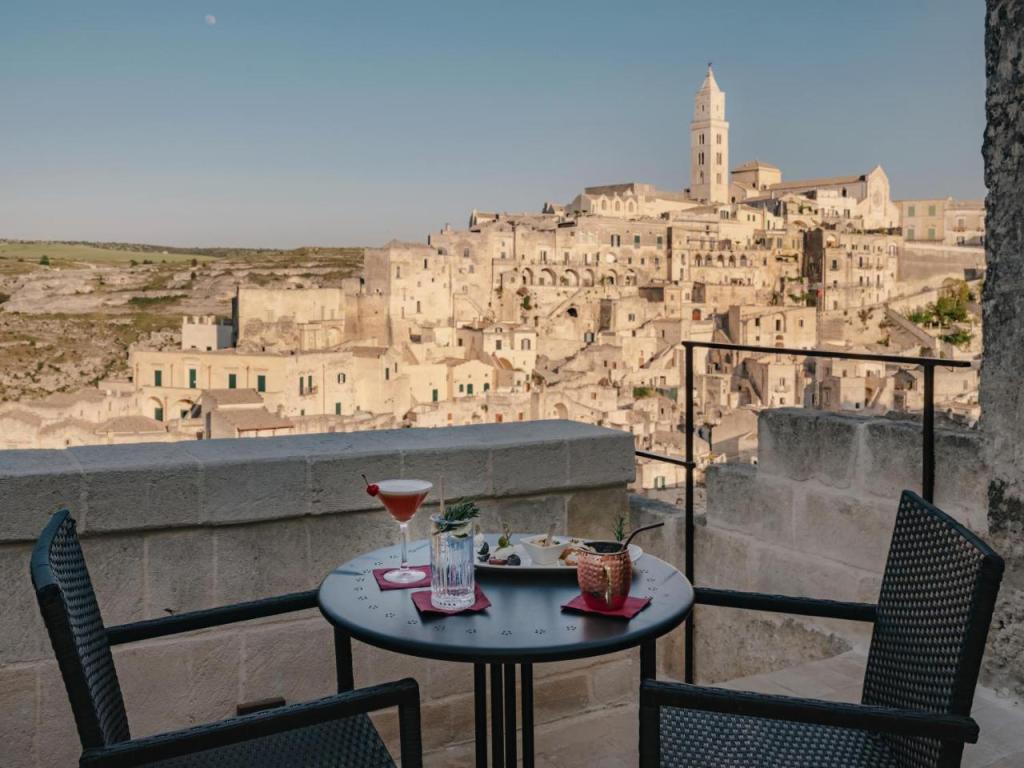
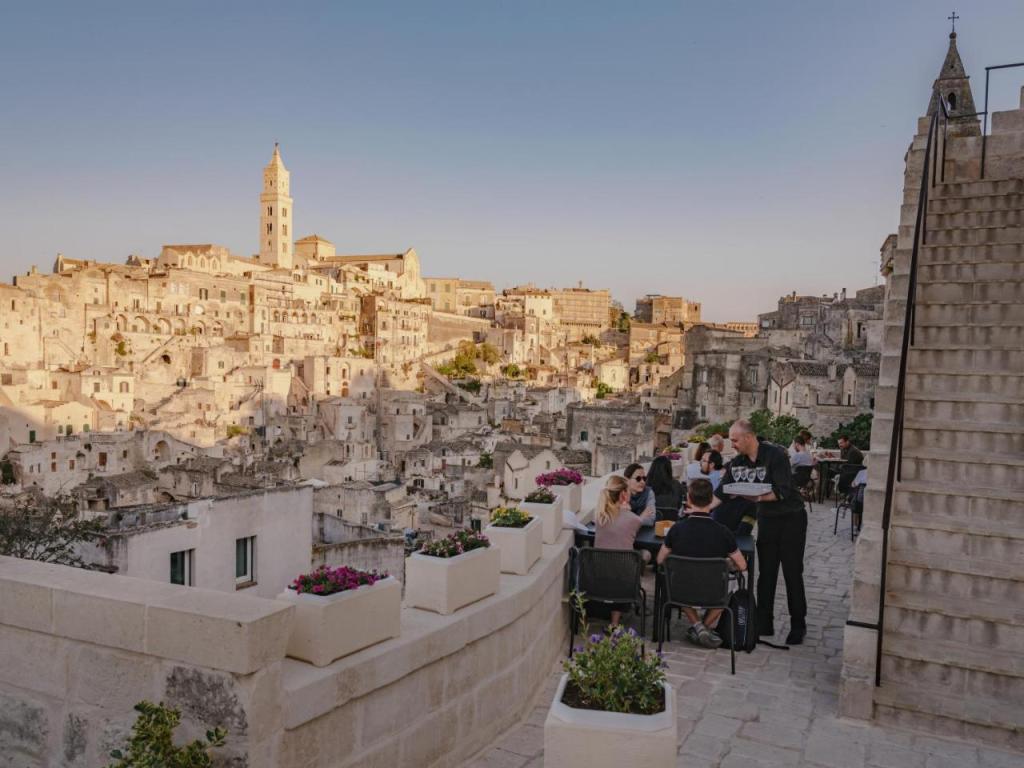
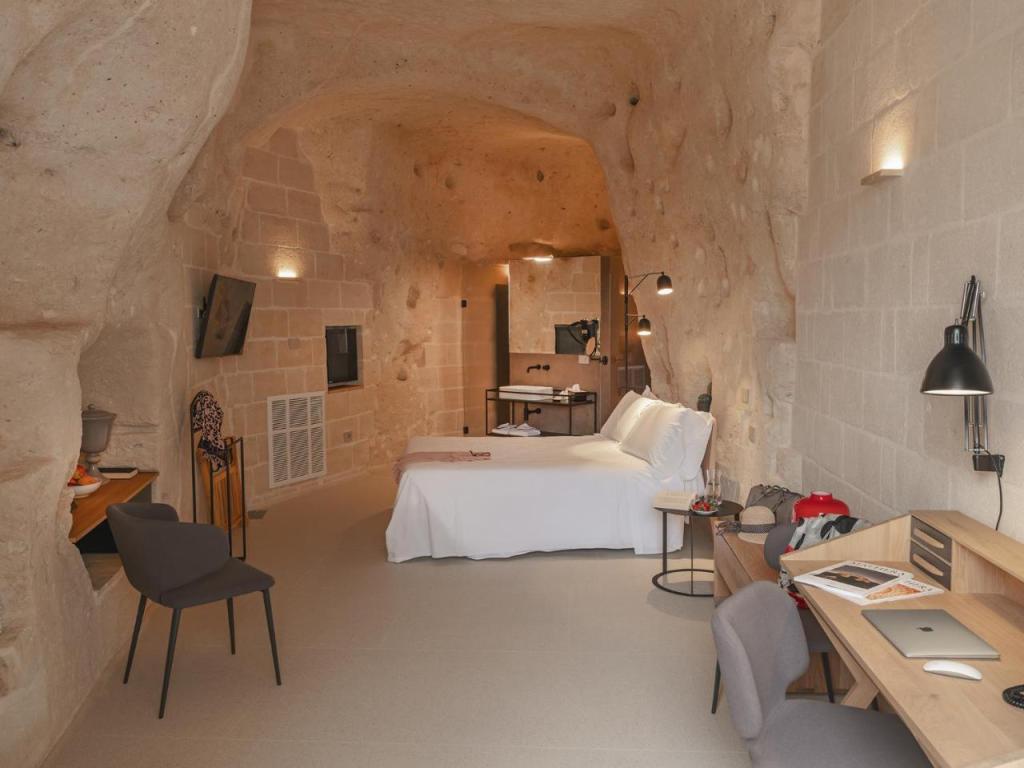
Matera is the region's most internationally recognized address. The sassi districts, carved directly into the ravine of the Gravina river, represent one of the oldest continuously inhabited urban settlements in the world. Staying within or immediately adjacent to the sassi places guests inside a geological and human archive that no other Italian city replicates. The architectural vernacular here is tufa stone, candlelight, and depth: suites cut into cave structures offer a sensory language unlike anything found in conventional hotels.
The Ionian coast, anchored around the Gulf of Taranto, presents a contrasting logic: low-density shoreline, clear shallow waters, and a seafront culture that remains local in character. Travelers who combine a coastal stay with an inland Matera visit encounter the full register of what Basilicata offers.
The interior highlands around Potenza, Pietrapertosa, and the Dolomiti Lucane reward travelers drawn to altitude, silence, and dramatic karst formations. Accommodation here is rarer and more intimate, typically small-scale properties that prize authenticity over facility breadth.
When to visit Basilicata for a luxury suite experience
The optimal windows for Basilicata are late spring (April to June) and early autumn (September to October). Temperatures are measured, the landscape is at its most photogenic, and the region's capacity constraints are less pronounced than in peak July and August.
Summer draws Italian domestic travelers to the Ionian coast, which raises demand for well-positioned coastal properties. Matera, by contrast, sustains a relatively steady year-round visitor flow given its cultural rather than purely seasonal appeal. The city hosted Matera 2019 as a European Capital of Culture, a designation that permanently elevated its international profile and the standard of hospitality infrastructure within the sassi.
The Christmas and Easter periods carry a particular weight in Basilicata, where religious tradition is deeply embedded in civic life. Traveling during these periods rewards guests with processions, local gastronomy, and a concentrated sense of place that the high season cannot offer in the same register.
Local luxury standards: what defines a prestige suite in Basilicata
Italy's national hospitality classification system awards five stars and, at the highest tier, the unofficial but significant designation of five-star superior to properties meeting rigorous criteria across space, service, and amenity. Basilicata has no official Palace hotel designation in the French sense, but several properties within the sassi of Matera have achieved a level of craft and spatial intelligence that competes with the finest boutique hotels in Rome or Florence.
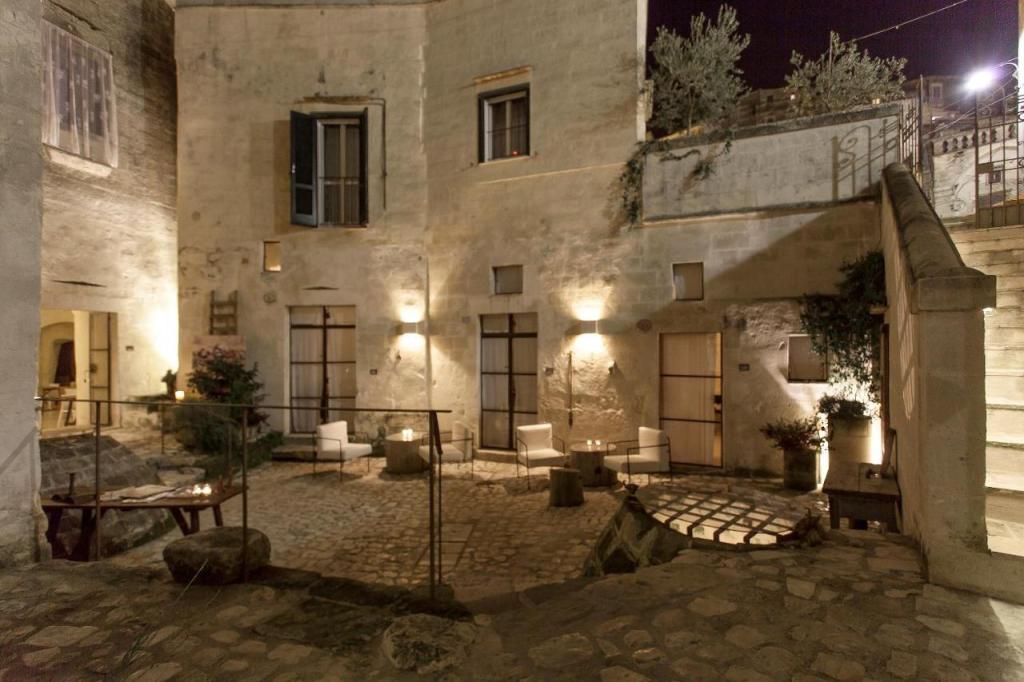
The defining typology here is the cave hotel, locally referenced as a albergo diffuso (a distributed hotel concept where rooms occupy multiple historic structures across a single neighborhood). This model, well suited to the sassi's organic urban fabric, means that a luxury suite may be spread across two or three carved chambers, with a private terrace cut into the rock face overlooking the ravine. The category is not about standardized luxury: it is about architectural specificity and material honesty.
For stays outside Matera, the relevant typology shifts toward the masseria, a fortified farmhouse estate common across the Italian south, and the restored historic palazzo. These properties typically offer larger suite footprints, private garden access, and a relationship with the agricultural landscape that cave hotels cannot provide.
How to choose the right luxury suite in Basilicata
Several considerations are specific to this region and should inform the selection process before any booking decision.
First, the question of cave versus conventional structure. Cave suites within the sassi deliver an irreplaceable sensory and historical depth, but the architecture imposes real constraints: natural light is limited by design, some rooms have no external windows, and the vertical topography of the sassi means that arrival logistics require physical engagement. These are not drawbacks for the right traveler; they are defining features. For guests who prioritize light, spatial openness, or accessibility, a property on the periphery of the sassi or in the surrounding countryside will serve better.
Second, the question of isolation versus connectivity. Basilicata's interior is genuinely remote. Travel between areas requires a private car or organized transfer. Suite selections in the highlands or on the Ionian coast should be evaluated with realistic attention to transfer distances from Matera or from the region's main rail connections at Potenza.
Third, the question of season and suite availability. The best-regarded cave properties in Matera carry limited room counts, often fewer than twenty keys. Demand concentration in June, July, and August means that preferred suite categories can be unavailable with less than three to four months of advance planning.
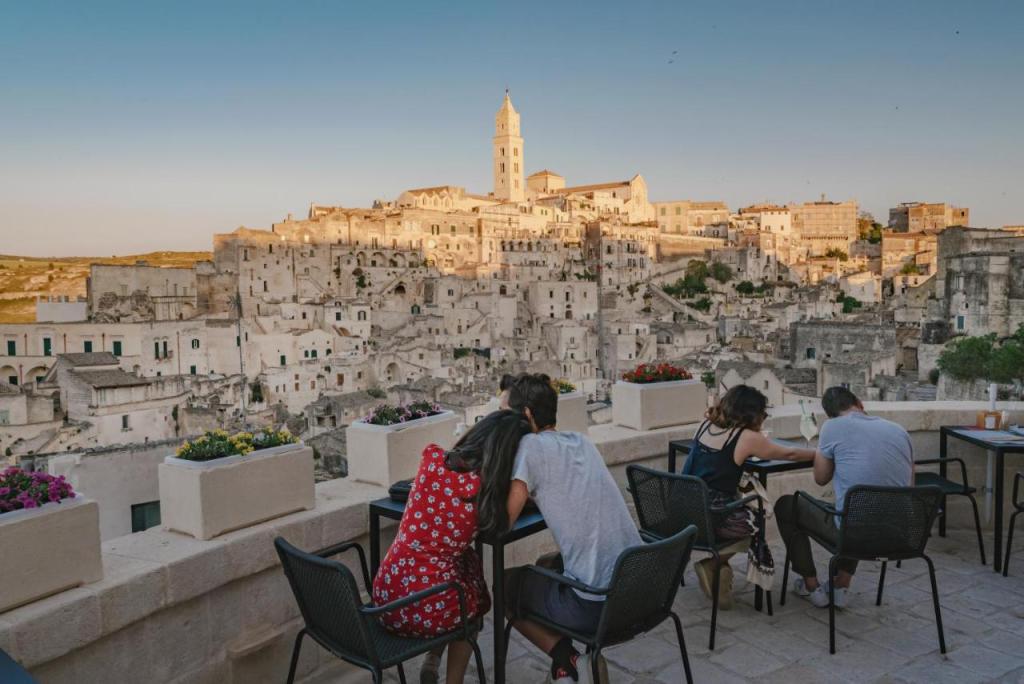
Fourth, consider what the suite is designed to frame. In Matera, the view across the Gravina ravine is the primary asset of the finest rooms. Confirm orientation, floor elevation, and terrace access before committing to a specific category. A cave suite without a ravine view trades a significant part of the experience for a lower rate.
Why a curated selection matters in Basilicata
Basilicata's hospitality market is compact and, in parts, uneven. The region's rapid elevation following the 2019 European Capital of Culture designation brought a wave of new openings across Matera, not all of which deliver consistently at the level their positioning implies. The gap between marketing language and actual experience is wider here than in more mature Italian luxury markets.
La Suite's editorial process applies consistent criteria to every property it lists: spatial quality, service architecture, design integrity, and the particular sense of place that distinguishes a suite worth traveling for from one that simply occupies a desirable postcode. In Basilicata, where the concentration of genuinely exceptional properties is limited and the differences between categories are consequential, that curation function carries real practical value.
For travelers approaching Basilicata for the first time, the curated selection by La Suite reduces the risk of misalignment between expectation and experience. For repeat visitors looking to move beyond Matera into the region's quieter territories, the platform offers a mapped view of what the broader landscape of Basilicata luxury suites actually contains.