Understanding Bolzano as a luxury destination
The city's dual identity as the administrative center of the Autonomous Province of Bolzano-South Tyrol shapes everything from architecture to cuisine. German-speaking Tyrolean heritage informs the building typologies, the hospitality culture, and the culinary vocabulary, while Italian administrative and cultural influence brings a warmth and sensory richness that pure Alpine destinations often lack. For the discerning traveler, this layering is the point.
Areas and neighborhoods worth considering for a suite stay
The old town (Altstadt/Centro storico)
The historic center is defined by its covered walkways, or Lauben in German, which extend through the main commercial arteries and create a sheltered, almost cloister-like pedestrian experience. Properties positioned here offer immediate access to the Piazza Walther, the Duomo, and the South Tyrol Museum of Nature, which houses the Otzi the Iceman exhibit. This is the appropriate base for travelers whose priority is cultural immersion and walkable urban exploration.
The surrounding wine country and hillside positions
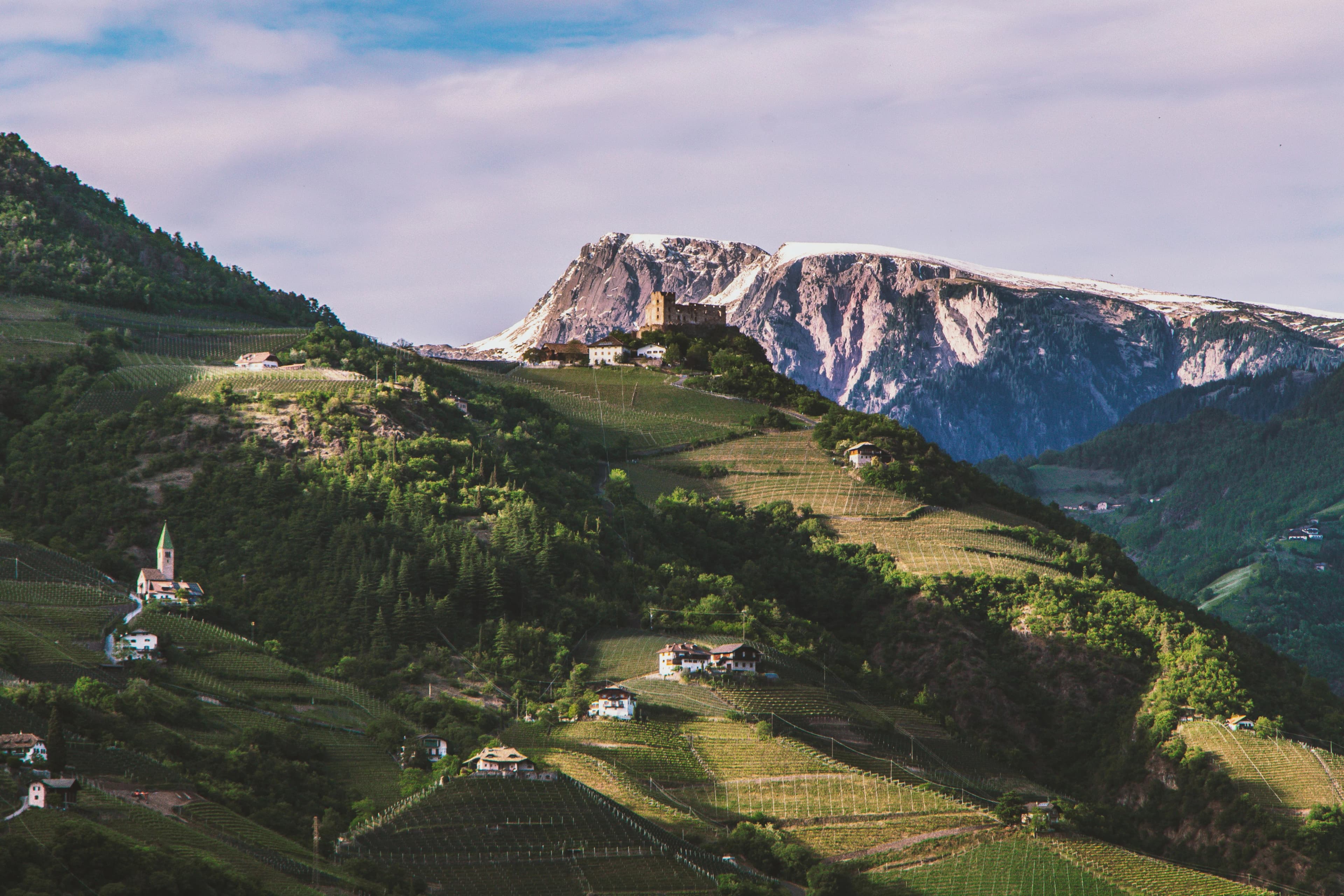
The South Tyrolean Wine Road begins directly outside Bolzano, threading through vineyards planted on steep slopes above the Adige valley. Properties positioned in this peri-urban zone, within ten to twenty minutes of the city center, offer a materially different experience: the quiet of the vineyard, views across the valley to the Rosengarten massif, and access to some of Italy's most technically precise white wines, including Gewurztraminer, Pinot Grigio, and Alto Adige Sauvignon Blanc. Suite travelers who prioritize landscape over urban convenience should orient their search here.
Proximity to the Dolomites and the Alpe di Siusi
The Alpe di Siusi, the largest high-altitude Alpine meadow in Europe, sits within an hour of Bolzano by road and cable car. Properties that position themselves as bases for this plateau offer a third register entirely: raw mountain scale, skiing in winter, and high-altitude hiking in summer, all accessible from a curated suite rather than a functional mountain lodge.
When to visit Bolzano for a luxury suite stay
Bolzano's season for suite travel is effectively year-round, with distinct characteristics in each period. Summer, from June through September, is the primary season for Dolomite access. The light at altitude during these months is a specific and much-discussed phenomenon: long, golden, and architecturally flattering to the rock formations. Suite availability is highest in early June and September, when demand from general tourism is lower but conditions remain excellent.
Winter brings a different logic. The Christmas markets in Bolzano, centered on Piazza Walther, are among the most historically rooted in the Italian Alps and draw a European clientele that values authenticity over spectacle. Ski season in the surrounding area, including the Ortler Alps and the Dolomiti Superski circuit, runs from December through March. Properties near the ski infrastructure are in high demand during this window, and advance planning is essential.
Spring, particularly April and May, is the least-visited season and in many respects the most rewarding for the non-ski traveler. The orchards of the Adige valley are in bloom, the hiking trails are reopening, and suite rates reflect the lower demand.
Local luxury standards and what to expect from top-tier properties
South Tyrolean hospitality has its own codified vocabulary. The region operates under Austrian-influenced Gastlichkeit traditions, which prioritize meticulous service, technical precision in food and beverage, and an attention to spatial comfort that is distinct from the Italian hotel mainstream. Properties at the upper tier in and around Bolzano frequently combine historic building fabric, farmhouses, Renaissance villas, or early twentieth-century grand hotel architecture, with contemporary interior design that references local craft traditions without nostalgia.
The regional spa culture is particularly developed. Thermal and wellness facilities in South Tyrolean luxury hotels tend to be architecturally integrated rather than appended, using local stone, hay baths, and herbal treatments rooted in Alpine folk medicine. For suite travelers who place wellness at the center of a stay, Bolzano and its surroundings represent one of the most technically sophisticated spa environments in the Alpine arc.
South Tyrol also holds more Michelin stars per capita than almost any other Italian region, a fact that shapes the food and beverage offer across the luxury hotel segment. Expect tasting menus that negotiate between Tyrolean and Italian culinary languages, wine lists anchored in local production, and breakfast offers that treat the morning meal as a serious cultural statement.
How to choose the right suite in Bolzano
The first decision is positional: urban center versus hillside vineyard versus mountain-adjacent. Each delivers a materially different experience, and the choice should be made against the traveler's primary motivation, whether cultural, enological, or physical.
The second consideration is architectural character. Bolzano's top properties range from converted Renaissance palaces in the city center to modernist structures cantilevered over vineyard terraces. Neither is inherently superior, but they speak to different aesthetic sensibilities. Travelers who are drawn to historic fabric should examine the construction dates and conservation records of candidate properties. Those who prioritize contemporary design should look for properties completed or comprehensively renovated within the last fifteen years.
Suite size and configuration matter in a city where privacy is a reasonable expectation. South Tyrolean properties tend to offer suites with genuine separation between living and sleeping areas, often with private terraces or balconies that face the mountains or the valley. These outdoor spaces are not decorative. In good weather, they become the primary room.
Why curation matters in Bolzano
The Bolzano luxury hotel market is relatively small and geographically distributed across city, hills, and mountain approaches. Without editorial filtering, the research process becomes time-consuming and the risk of misjudgment is real. Properties that appear equivalent at the search result level can differ substantially in terms of suite quality, service consistency, and positional logic.
La Suite applies a single criterion: whether a property and its suite offer is genuinely exceptional for a traveler who has chosen deliberately. In Bolzano and South Tyrol, this means understanding the local hospitality culture well enough to distinguish between properties that perform Tyrolean identity and those that embody it. The curated selection by La Suite is built on that distinction.