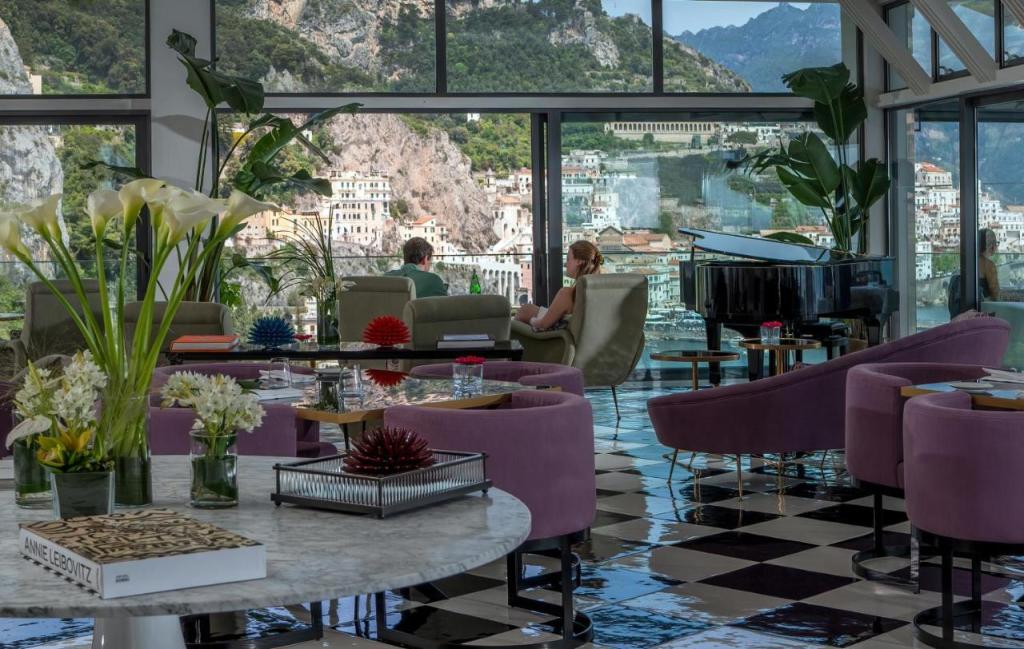
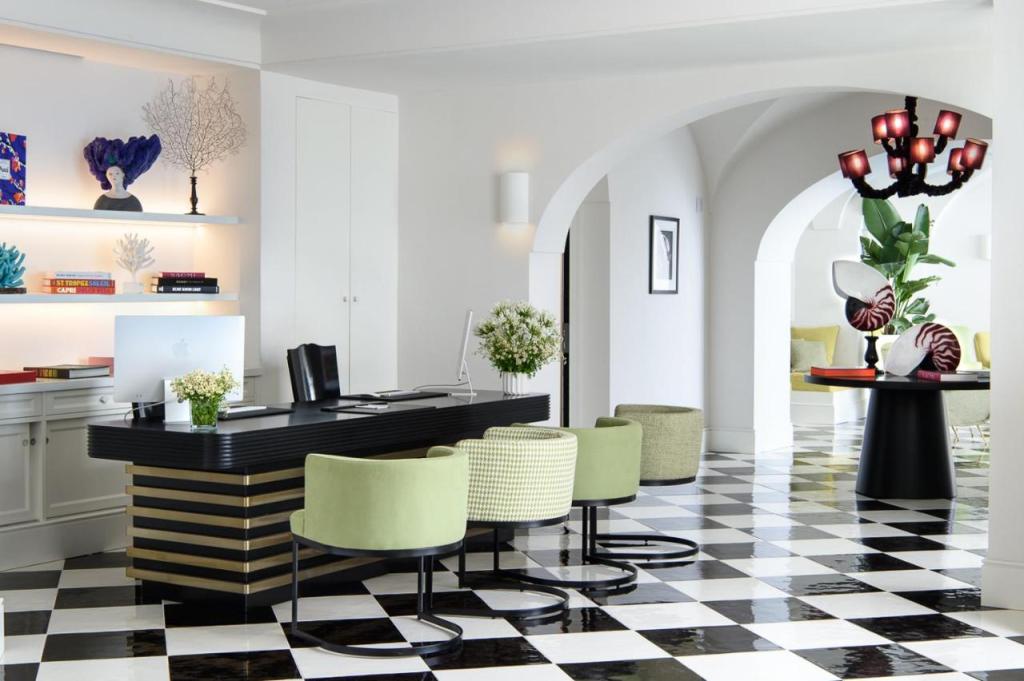
Anantara Convento di Amalfi Grand Hotel, Amalfi
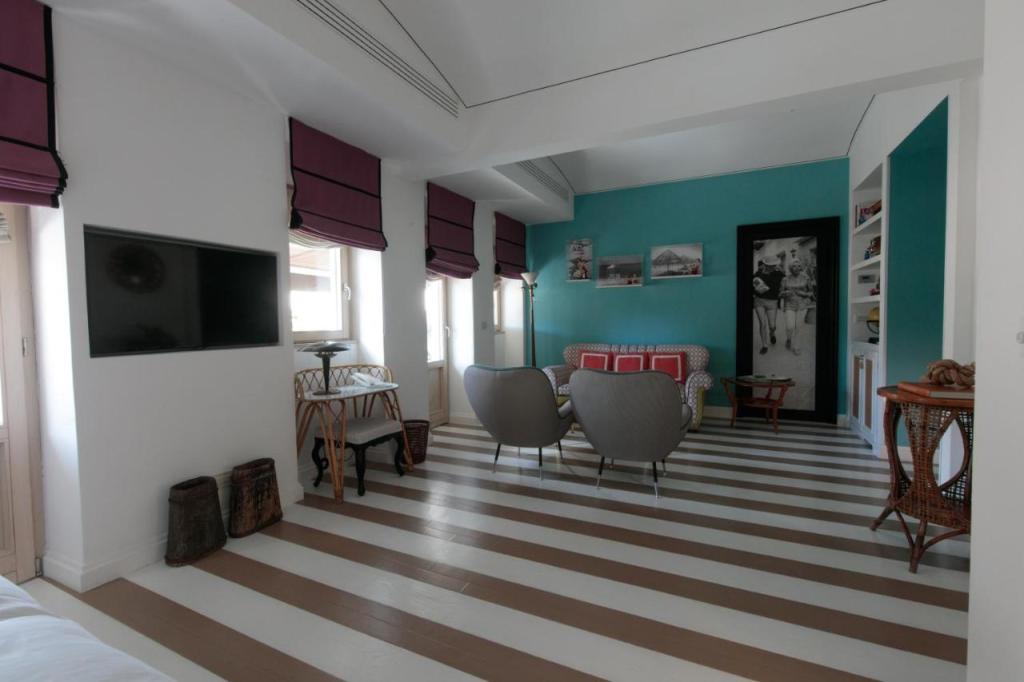
This cliff-top hotel in Amalfi is a converted 13th-century monastery. It offers free WiFi, ultra-modern rooms and an infinity pool overlooking the Mediterranean Sea. All rooms have sea views, terraco

Campania is not a uniform destination. Its geography divides naturally into several distinct territories, each with its own character and its own logic for the traveler seeking a high-end suite.
55 hotels available

This cliff-top hotel in Amalfi is a converted 13th-century monastery. It offers free WiFi, ultra-modern rooms and an infinity pool overlooking the Mediterranean Sea. All rooms have sea views, terraco

Offering panoramic views across the Gulf of Naples, Bellevue Syrene is an elegant choice for your stay in Sorrento. It offers an outdoor swimming pool and free Wi-Fi throughout. This 18th-century vill

Borgo Santandrea offers accommodations on the Amalfi Coast. It offers free parking, and panoramic sea views from the swimming pool and the sun deck. Borgo Santandrea offers spacious accommodations wi

Botania Relais & Spa - The Leading Hotels of the World is 1640 feet outside Lacco Ameno, near Ischia’s San Montano Bay and the Negombo thermal spa, easily reached by a footpath. Rooms are located in M

The Bougainville Luxury Boutique Hotel is located in the center of Anacapri, the charming and romantic upper part of Capri Island. It features a rooftop restaurant with lounge bar. Free, fast WiFi is

Set in a 19th-century building, Capri Tiberio Palace - The Leading Hotels of the World is a 2-minute walk from Capri's central Piazzetta. It offers elegant, design rooms with LCD satellite TV. It feat

Perched on a sea-view cliff on the Amalfi Coast, Caruso, A Belmond Hotel, Amalfi Coast is set in a renovated building of the 11th century. The property includes an infinity pool, terraced gardens, and

A boutique hotel perched on the cliffs of the Amalfi coast, Casa Angelina has all the ingredients for a holiday you’ll never forget, from spectacular views to excellent spa facilities. Modern and eff

With its seafront location, Covo Dei Saraceni is in Positano. This 5-star hotel features free Wi-Fi, air-conditioned rooms overlooking the Mediterranean Sea, and an outdoor swimming pool equipped with

De Bonart Naples, Curio Collection by Hilton is in a quiet area of Naples, 10 minutes' walk from the Via dei Mille shopping district and the Vomero area. Most rooms overlook the Gulf of Naples. All r

Located in Pignola, 6.1 miles from National Archaeological Museum, Dimora storica Giorni resort & spa provides accommodations with a garden, free private parking, a shared lounge and a terrace. This 5

On a rock overlooking the Bay of Naples, the Vittoria includes 3 historic buildings set in a private Mediterranean park. The property's entrance is in Sorrento’s main square. A elevator links directly

Il Moresco is framed by a high lava-stone wall and a centuries-old park with pine trees, gardens and thermal-water pools. There is also an indoor spa center, parking is free. All rooms of Il Moresco G

Grand Hotel Parker's offers extremely luxurious accommodations in the residential Corso Vittorio Emanuele. Guests enjoy amazing views of the Gulf of Naples, and good access to public transportation.

Enjoy the view of Mount Vesuvius and the Bay of Naples from the privileged location of Hotel Caesar Augustus, complete with a panoramic swimming pool, free parking, and an excellent restaurant. Accomm

Half way between Pompeii and Sorrento in the Bay of Naples, Hotel Capo La Gala & Wellness, a 5 star Luxury Hotel, offers a large outdoor swimming pool and a small hydromassage pool. Enjoy the marine s

Dating back to 1822, this elegant hotel lies in the center of Capri, just 328 feet from the island's celebrated La Piazzetta Square. It features a panoramic rooftop terrace, a restaurant, and air-cond

Featuring a free private beach, reachable by elevator, Hotel Le Agavi offers views of the Amalfi Coast, an outdoor heated pool, and 2 restaurants. It has air-conditioned rooms, and the center of Posit

Set on a cliff on the Amalfi Coast, Hotel Miramalfi provides panoramic sea views from its restaurant, swimming pool and guest rooms. It features Mediterranean-style décor. All rooms have a TV with sa

Hotel Palazzo Murat is in Positano’s center, 800 ft from the beach. In an elegant 18th-century building, it is surrounded by landscaped grounds and enjoys panoramic views of the village. Most of the s
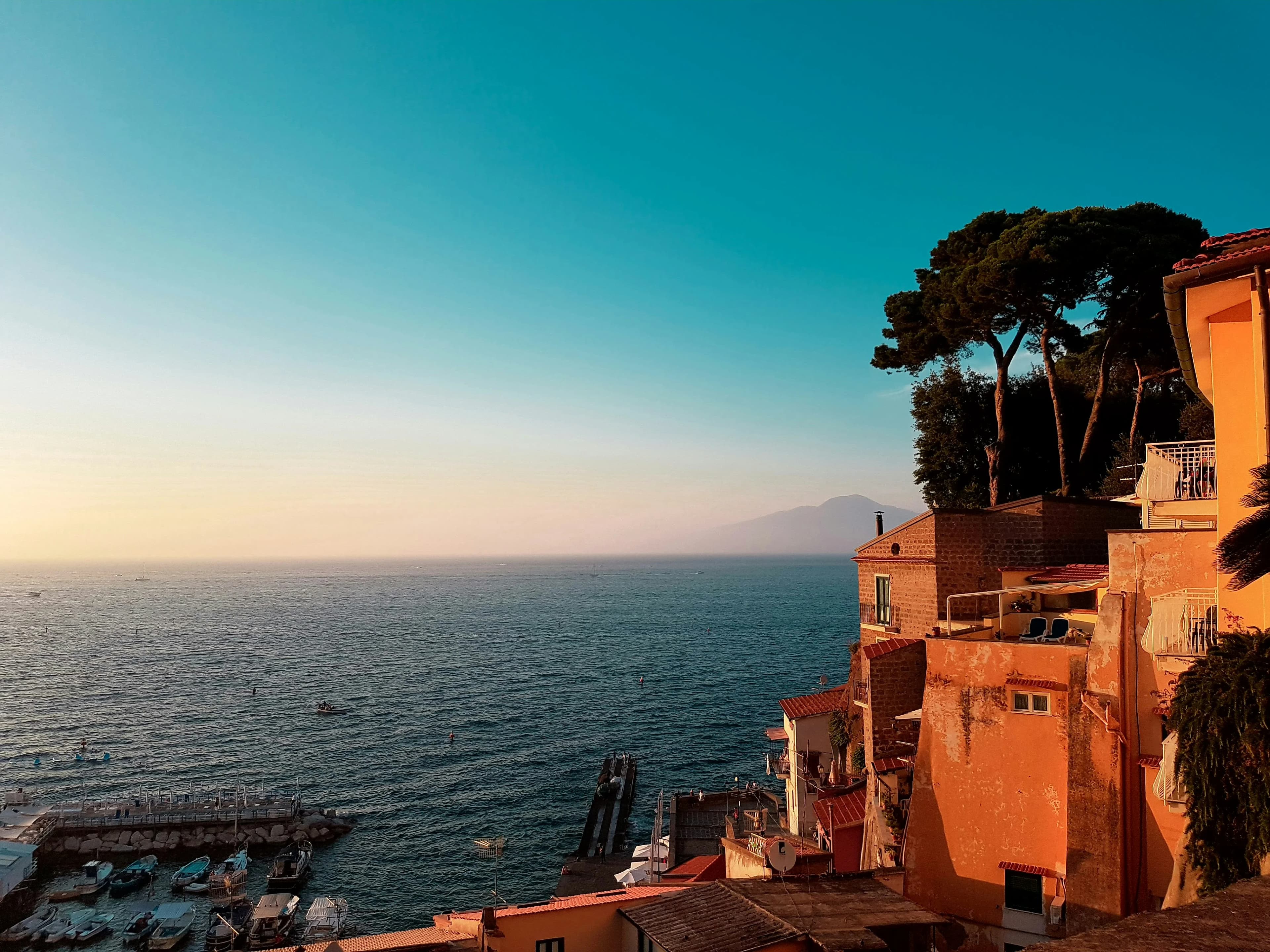
The Costiera Amalfitana remains the most internationally recognised corridor of luxury in southern Italy. Its hotels cling to terraced cliffs above the Tyrrhenian Sea, with properties that have historically defined what a grand Italian hotel suite looks like: floor-to-ceiling windows, private balconies oriented toward the water, and interiors that layer local stone, hand-painted ceramics, and antique furniture. The road connecting Positano, Amalfi, and Ravello is narrow and physically demanding, which means the best suites here are designed to make departure feel unnecessary. Ravello in particular, set several hundred metres above sea level, offers a quieter register of the same landscape.
Sorrento and the surrounding peninsula operate as a more accessible gateway to the same coastal scenery. Properties here tend to occupy clifftop positions above the Bay of Naples, with direct views toward Vesuvius and the island of Capri. The architecture is often that of converted aristocratic villas, with formal gardens and long-established hospitality traditions. Suites in this zone tend to prioritise outdoor living: large terraces, private gardens, and swimming pools integrated into historic structures.
Capri is technically a separate island but functions as an extension of the Campanian luxury circuit. The island's hotel stock is limited by geography and strict planning constraints, which keeps the quality density high. Ischia, larger and less fashionable, offers an alternative centred on thermal waters and a slower pace. Both islands are accessible by hydrofoil from Naples and Sorrento.
Naples itself is an underutilised luxury destination. The city's Baroque historic centre is a UNESCO World Heritage Site, and its palaces, churches, and street culture represent one of the most concentrated urban experiences in Europe. A luxury suite in Naples places the traveler inside one of Italy's most complex cities, where the density of art, food culture, and social life is genuinely without precedent in the country. The area around the Campi Flegrei, west of Naples, adds a volcanic and archaeological dimension that few visitors consider seriously.
The Amalfi Coast and Capri operate on a compressed high season that runs from late April through September. July and August bring peak temperatures, maximum occupancy, and significant road congestion on the coastal routes. The most considered travelers tend to book in May, early June, or September, when the light is excellent, the water is warm, and the crowds are thinner.
Naples and the inland archaeological sites, including Pompeii and Herculaneum, are accessible year-round. Winter visits to the city carry a particular quality: the Neapolitan Christmas traditions, which include elaborate nativity scene craftsmanship concentrated in the Via San Gregorio Armeno quarter, are a specific cultural event. Spring is the best season for visiting the gardens of the Amalfi hinterland and the terraced lemon groves for which the Sorrentine Peninsula is known.
Ravello hosts the Ravello Festival, a classical music programme that runs through the summer months and draws international performers to an open-air stage with views over the coast. This event has historically attracted a culturally literate travel audience and fills the area's better suites well in advance.
Italy does not use the French Palace designation, but the country's five-star luxury segment is regulated at regional level, and Campania's top properties carry certifications that reflect both service standards and physical infrastructure. The region's most prestigious hotels have often been operating for over a century, and their reputations rest on accumulated tradition as much as on recent renovation.
Several Campanian properties hold membership in international collections such as The Leading Hotels of the World or Relais and Chateaux, which provide a useful quality signal for travelers unfamiliar with the local market. However, some of the most architecturally interesting suites belong to smaller, independently operated properties, particularly in the inland areas and on Ischia, where family ownership has maintained a distinct aesthetic character.
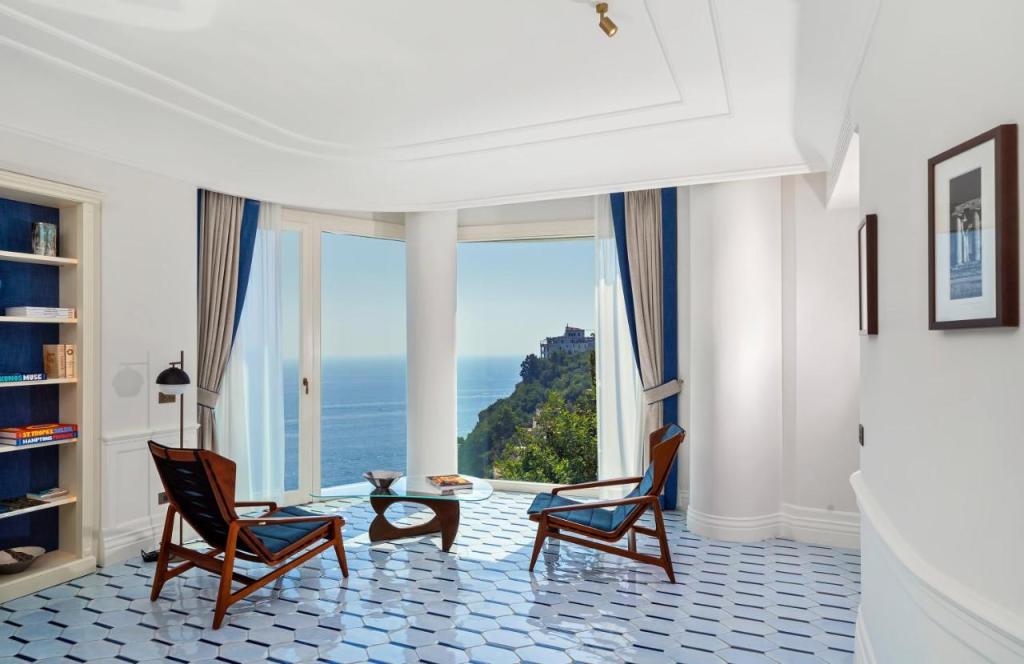
Local luxury materials carry meaning here. Vietri sul Mare, on the eastern edge of the Amalfi Coast, has produced handmade ceramics for centuries, and the best suites in the region incorporate this craft into floors, wall panels, and tableware. Locally quarried stone, coffered ceilings from historic renovations, and terraces planted with lemon and bougainvillea are consistent markers of quality in the coastal properties.
The first decision is geographic: coastal or urban. A suite on the Amalfi Coast or in Sorrento will orient the stay entirely around the sea, the light, and the landscape. A suite in Naples will orient it around culture, food, and history. These are structurally different trips, and combining them requires careful sequencing.
The second decision concerns architecture. Campania's luxury hotel stock divides between historic conversions, which tend to offer larger rooms, original architectural details, and established gardens, and contemporary builds or renovations, which offer more controlled environments, modern amenities, and a different aesthetic register. Neither is inherently superior, but the traveler's preferences should be matched precisely.
Terrace access is a practical consideration specific to this region. On the Amalfi Coast, a suite without a private outdoor space is a significant compromise. The geography places a premium on outdoor furniture, sea-facing orientation, and privacy from neighbouring terraces. These details vary considerably between rooms within the same property and should be confirmed before booking.
Accessibility is another factor that requires honest evaluation. The Amalfi coastal road involves narrow switchbacks and seasonal traffic. Many properties on the cliff face require boat access or involve significant stair counts from the road. Travelers with mobility considerations should verify access conditions in detail.
Campania's luxury hotel market is dense with options across a wide quality range, and the distinction between a genuinely exceptional suite and a competent but unremarkable room is not always visible from standard booking platforms. The region's most prestigious properties manage their inventory carefully, and the suites with the best orientation, the most private terraces, and the most considered interiors are not always the ones most prominently featured in general search results.
La Suite applies editorial criteria to every property in its Campania selection: architectural quality, suite-specific amenities, privacy, service record, and the integrity of the physical experience. For a region where the difference between a sea-view terrace and a garden view can define the entire stay, this level of specificity has practical value. The curated selection by La Suite represents a filtered entry point into one of Italy's most rewarding and most complex luxury destinations.

Late April through early June and September are generally the most considered periods for booking a luxury hotel suite on the Amalfi Coast. The weather is reliable, the coastal road is less congested, and availability at top properties is easier to secure than in peak July and August. Many suites at leading hotels are reserved months in advance for summer dates, so early planning is essential regardless of the season.
Both categories have strong representation in Campania, and the choice depends on the traveler's priorities. Historic conversions, often former aristocratic villas or monastery buildings, tend to offer larger spaces, original architectural details, and mature gardens. Contemporary or recently renovated properties offer more standardised luxury infrastructure and controlled environments. The Amalfi Coast in particular has a strong tradition of historic hotel suites that have been in continuous operation for over a century.
For high-season dates between June and August, the most desirable suites at leading properties in Positano and Ravello are typically reserved six to twelve months in advance. Shoulder season availability in May and September is more flexible, but the best-positioned rooms, particularly those with private terraces oriented toward the sea, sell out quickly regardless of the period. Booking through a curated platform with direct relationships with properties can sometimes provide access to inventory not visible through standard channels.
On Capri, the key considerations are orientation, privacy, and the quality of the outdoor space. Given the island's compressed geography and the density of tourism at its centre, suites that offer a private terrace with unobstructed sea views and genuine acoustic separation from shared areas represent the highest tier of the offer. The island's planning constraints limit new development, so the hotel stock is stable and well-established. Properties in the quieter Anacapri zone tend to offer a different, more private register than those closer to the Piazzetta.
Naples is a serious and underappreciated luxury destination. The city's historic centre holds the highest concentration of Baroque architecture in Europe, and its culinary culture, centred on markets, historic pastry shops, and pizza traditions that have UNESCO recognition, is one of the most specific in Italy. A luxury suite in the city centre places the traveler within walking distance of major archaeological museums, royal palaces, and an urban intensity that coastal resorts cannot replicate. It functions particularly well as a starting or ending point for a broader Campania itinerary.
In Campania's best properties, a top-tier luxury hotel suite is distinguished primarily by its spatial relationship to the landscape. Private terraces with unobstructed sea or garden views, suite-specific butler or concierge service, locally crafted materials such as Vietri ceramics and hand-loomed linens, and the proportions of a room designed for extended occupation rather than overnight transit are the defining markers. The quality of light, the orientation of the space, and the degree of acoustic privacy from adjacent rooms are details that separate exceptional suites from competent ones.
Several properties in Campania accommodate families in suites with multiple bedrooms or connecting room configurations, particularly along the Sorrentine Peninsula and in larger hotels in Naples. Capri and the more vertically constructed Amalfi cliff hotels require more careful evaluation because of access conditions, stair counts, and the physical layout of the properties. Ischia, with its flatter terrain, thermal facilities, and beach access, offers a more practically suited environment for families seeking a luxury hotel suite with outdoor space and amenity variety.
Transportation logistics are the primary practical consideration. The coastal road is narrow, subject to traffic restrictions, and physically demanding to navigate, particularly in high season. Many travelers use private water taxis or boats to move between towns, which is faster and considerably more comfortable. Properties should be assessed for their access conditions: some cliff-face hotels involve significant stair climbs from the road or from boat landing points. Suite travellers should confirm parking availability if arriving by car, as spaces are extremely limited across the entire coastal strip.
Campania's coastal luxury hotel market is distinctive for the combination of dramatic vertical geography, centuries-old hospitality tradition, and proximity to major archaeological and cultural sites. Compared to the Italian Riviera or the Sardinian coast, the Amalfi Coast offers a denser concentration of historic five-star properties within a shorter distance. The volcanic landscape of the Bay of Naples, with Vesuvius as a constant visual reference, adds a geological specificity absent from other Italian coastal regions. The food culture of the surrounding territory, including San Marzano tomatoes, Gragnano pasta, and Campanian mozzarella di bufala, is also a distinct luxury dimension of the stay.
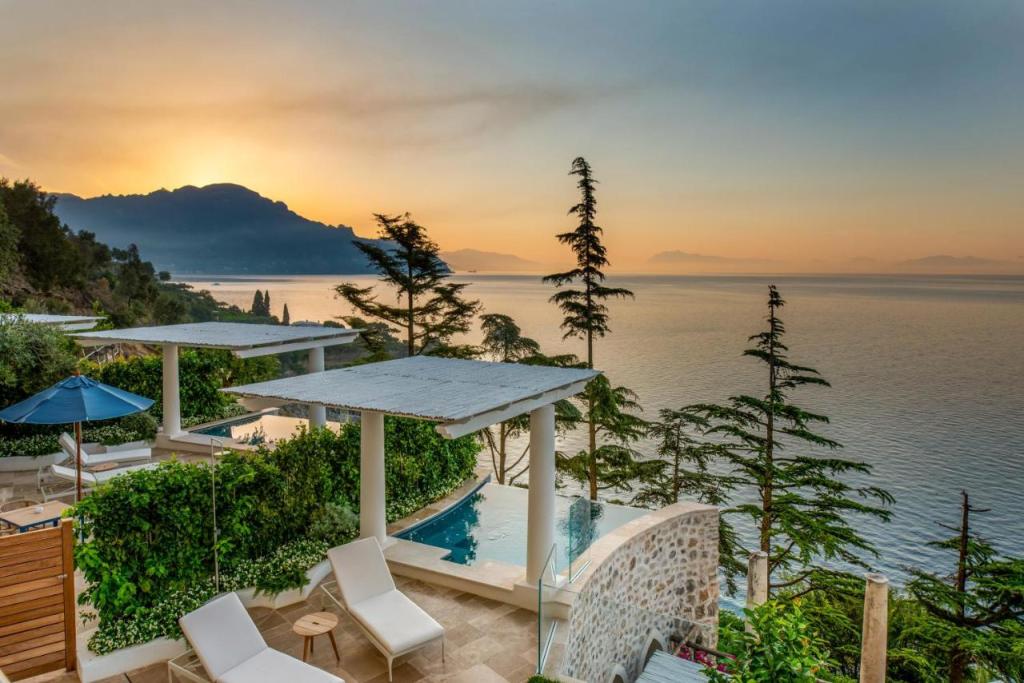
Private pool suites exist in Campania but represent a limited inventory, concentrated primarily in larger cliff-top properties on the Amalfi Coast and in certain converted villa hotels on the Sorrentine Peninsula. Given the geography, most properties offer shared infinity pools positioned to maximise sea views rather than private pools within individual suites. La Suite's curated selection specifically identifies suites with private or semi-private pool access, terrace Jacuzzis, and equivalent outdoor amenities, allowing travelers to filter by this criterion without reviewing each property individually.