Augustus Hotel & Resort, Forte dei Marmi
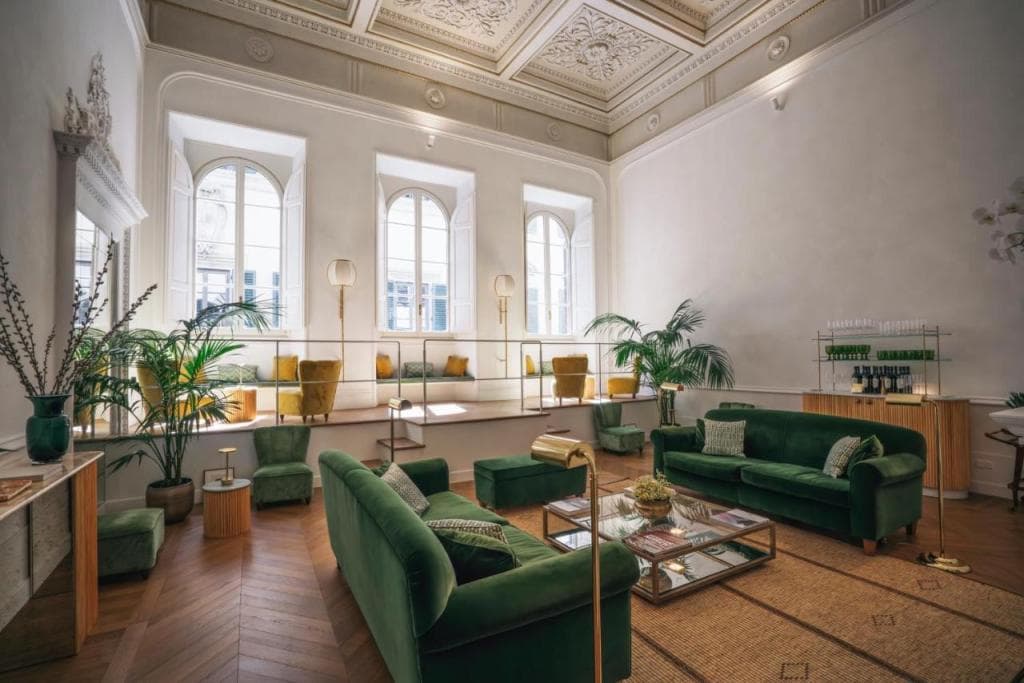
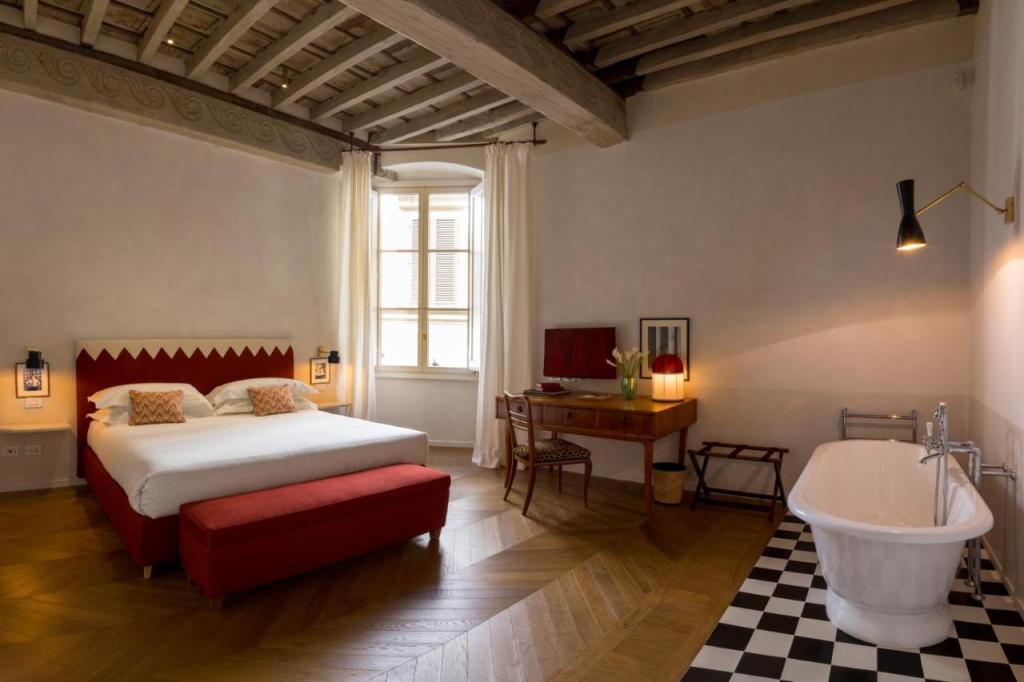
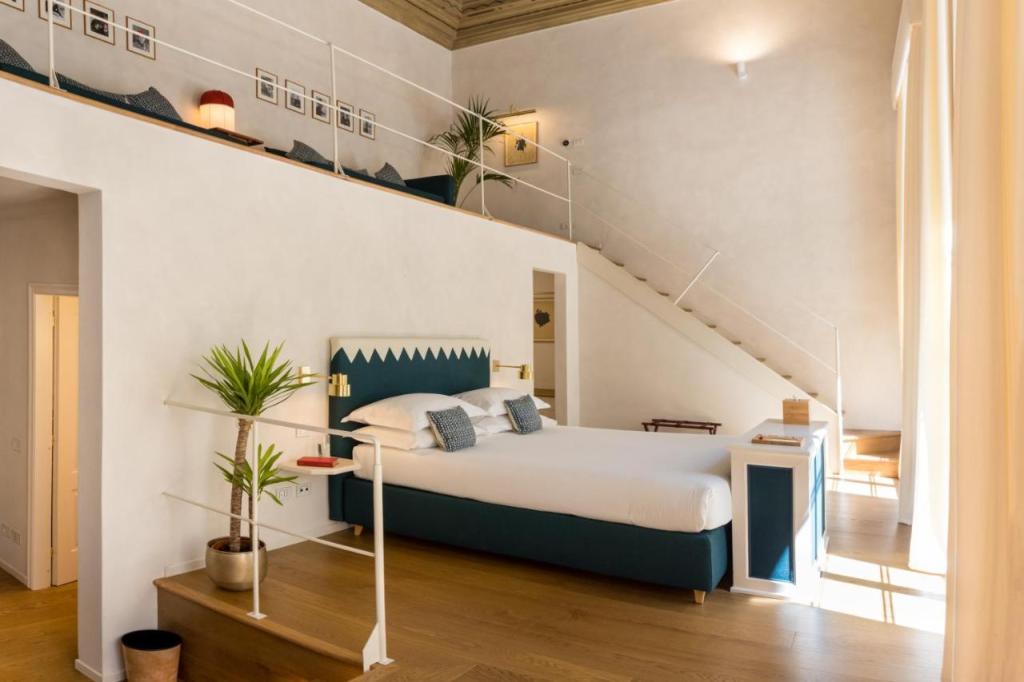
Located in a pinewood and a walk away from the private beach, Augustus Hotel & Resort offers air-conditioned rooms, 2 restaurants, a pool, and a spa. A fitness center and free Wi-Fi are available. Th

Emilia-Romagna is not a single landscape. It is a sequence of distinct territories, each with its own cultural gravity, and the choice of where to base yourself shapes the nature of the entire stay.
64 hotels available

Located in a pinewood and a walk away from the private beach, Augustus Hotel & Resort offers air-conditioned rooms, 2 restaurants, a pool, and a spa. A fitness center and free Wi-Fi are available. Th

B&B Lorena Suites is located in Florence, a 15-minute walk from Accademia Gallery. Rooms have a flat-screen TV with satellite channels. Certain rooms have a seating area to relax in after a busy day.

Boasting a large spa with natural hot springs, Bagni di Pisa is a historic property with pool set in San Giuliano Terme, 3.7 mi from Pisa. It offers luxury rooms, a restaurant, a bar and a gym. With

Located in Florence and with Palazzo Vecchio reachable within a 8-minute walk, Casa G. Firenze has concierge services, non-smoking rooms, free bikes, free WiFi throughout the property and a bar. Featu

Elegant Accommodations Collegio alla Querce, Auberge Collection in Florence offers a 5-star hotel experience with spa facilities, a fitness center, sun terrace, and a seasonal outdoor swimming poo

Elegant Accommodations Dimora Palanca Boutique & SPA in Florence offers a 5-star experience with a garden, restaurant, bar, and free WiFi. Guests enjoy private check-in and check-out, a lounge, an

Eight Hotel Portofino is located 656 feet from Portofino center and the popular Piazzetta square. The elegant rooms have contemporary furniture and are decorated in warm colors with wooden floors. Al

Offering a 2-floor spa and Michelin-star restaurant, Four Seasons Hotel Firenze is next to the botanical gardens of Giardino della Gherardesca. It offers a wide range of luxury rooms and suites. Spac

Next to Ponte Vecchio in the heart of Florence, Gallery Hotel Art is owned by the Ferragamo family and hosts regular contemporary art exhibitions. It offers a popular Fusion restaurant, and spacious a

Golfo dei Poeti Relais & Spa is located in Montemarcello, a 10-minute drive from Ameglia and within 6.8 mi of Sarzana and Lerici. It features a seasonal outdoor pool and a spa center. The elegant, ai

Former residence of the Carrega Bertolini Princes, Grand Hotel Baglioni is just 984 feet from Santa Maria Novella Train Station. It offers exclusive rooms, free Wi-Fi throughout, and a rooftop restaur

Overlooking the town of Montecatini Terme, this hotel is located next to the Tettuccio thermal establishment and its huge green park. All rooms have panoramic views over the characteristic Tuscan hill

Overlooking the stunning Tigullio Gulf, the Grand Hotel Bristol is the ideal choice for those seeking a luxurious and relaxing stay. Just 0.9 mi from the center of Rapallo, it offers a splendid outdoo

Located near the La Galleria, Grand Hotel De La Ville is a 5-star hotel in Parma. It offers a restaurant, an elegant bar, and luxury rooms with free WiFi and an LCD satellite TV. With iconic designer

You will be in the middle of pine woods in Forte dei Marmi at this 5-star hotel, offering luxury treatment, a relaxed atmosphere, and a new exclusive private beach "Remo Beach Club". Just 984 feet fr

Conveniently located in the center of Bologna, Grand Hotel Majestic gia' Baglioni provides air-conditioned rooms with free WiFi and room service. This 5-star hotel offers a business center and a conci

Grand Hotel Miramare overlooks the Gulf of Tigullio at Santa Margherita Ligure. The tropical garden has a sun terrace and a saltwater swimming pool. The Miramare offers free WiFi. Rooms feature views

Set on Portovenere's seafront, this hotel features a terrace overlooking the small port and Palmaria Island. Set in a 17th-century monastery, it is a few steps from the town center. The air-conditione

Grotta Giusti Thermal Spa Resort Tuscany, Autograph Collection features a restaurant, free bikes, an outdoor swimming pool and fitness center in Monsummano. Among the various facilities are a bar, a s

Set in a 19th-Century historical palazzo in the center of Florence, Helvetia&Bristol Firenze – Starhotels Collezione is 5 minutes’ walk from the Duomo and Ponte Vecchio. It offers elegant rooms with a
Bologna sits at the region's centre, both geographically and conceptually. Its medieval porticoes, which extend for nearly 40 kilometres across the city, have been recognised as a UNESCO World Heritage Site. The urban fabric is dense, intellectual, and gastronomically serious. For travellers seeking proximity to the region's food culture and a genuine urban atmosphere without the performative tourism of Florence or Rome, Bologna functions as a composed and confident base. The Via Emilia corridor connecting Piacenza, Parma, Reggio Emilia, and Modena follows a Roman road alignment that remains one of Italy's most culturally concentrated axes. Parma's association with aged Parmigiano-Reggiano, cured Prosciutto, and a refined neoclassical built environment makes it a particularly considered choice for those seeking cultural and culinary depth simultaneously.
The coastline from Rimini to Cervia carries a different character: more open, seasonal, and historically linked to Italian domestic tourism at scale. However, select properties along this stretch offer access to the sea combined with proximity to Ravenna, a city whose Byzantine mosaics, preserved in basilicas dating to the fifth and sixth centuries, represent one of Europe's most extraordinary concentrations of late antique art. For travellers who value cultural itineraries alongside coastal access, this pairing is architecturally and historically singular.
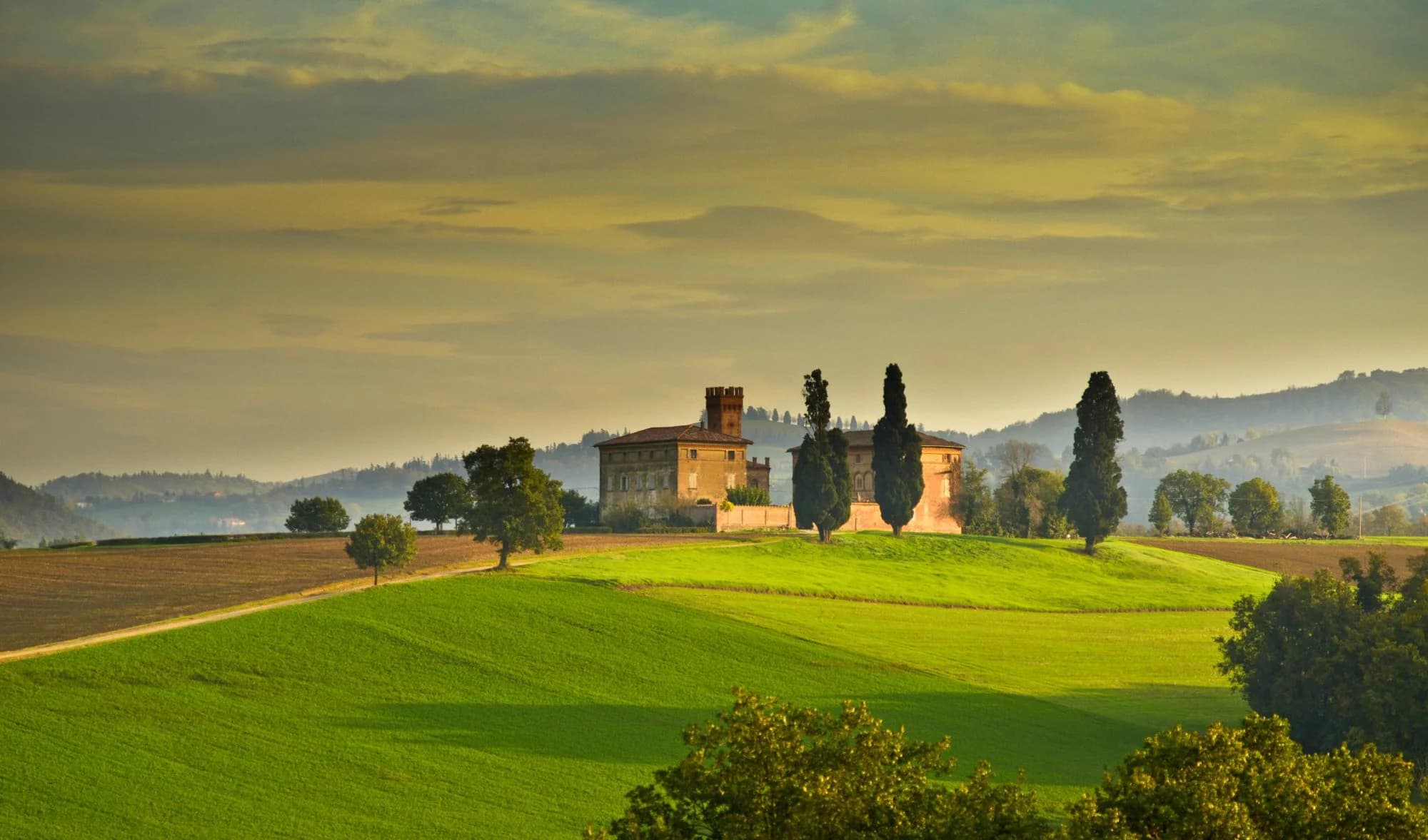
Inland from the coast, the Romagna hills rise through vineyards producing Sangiovese and Albana, past medieval hill towns toward the Apennine ridge. Properties in this zone tend toward converted historic residences, farmhouses of architectural distinction, and small manor estates. The pace is slower, the landscape more intimate, and the connection to food production, including local truffle grounds and small wine estates, more immediate. For travellers who prioritise privacy and a sensory relationship with the land, the Romagna hinterland offers that at a register distinct from better-known Tuscan alternatives.
The region's climate follows a northern Italian continental pattern, with cold winters and warm, occasionally humid summers. The most considered travel windows are spring, from April through early June, and early autumn, from September through October.
Spring brings the opening of outdoor markets, the first Sangiovese tastings, and cultural programming across the cities. The Salone del Mobile in nearby Milan draws design-focused travellers toward northern Italy during April, and Bologna frequently hosts academic and cultural conferences that animate the city across the season. Summer concentrates activity on the Adriatic coast and sees peak pricing at coastal properties, while the cities become quieter. September and October represent perhaps the region's most rewarding period: the harvest season engages every dimension of the food and wine culture, truffle fairs begin in the Romagna hills, and the quality of light across the Po Valley takes on a particular clarity. Suite availability at premium properties is typically more flexible outside the high summer window, and rates often reflect that seasonality directly.
Italy does not deploy the Palace hotel designation used in France, where the label carries regulatory weight. Italian luxury hotel classification follows the national five-star and five-star L (luxury) system, though the most meaningful signals in Emilia-Romagna are often extra-institutional: a converted Palazzo with original frescoed ceilings, a property operating within a working wine estate, or a historic thermal establishment in the hills around Salsomaggiore Terme.
The region's luxury hospitality operates at a register that rewards knowledge. A suite within a restored sixteenth-century residence carries a different quality of spatial experience than a purpose-built resort property, and understanding that distinction matters when selecting where to stay. Service in the region's leading properties tends to be attentive and informed, particularly around food: a concierge who can arrange a private visit to a Prosciutto di Parma curing facility or a direct tasting at a Parmigiano-Reggiano producer reflects a form of local expertise that elevates the stay considerably beyond room quality alone.
Spa infrastructure at leading properties has developed significantly over the past decade, with thermal traditions in the Parma and Piacenza hinterlands informing a broader wellness offer across the region. Suites in properties connected to thermal bathing tend to integrate wellness access directly into the room programme, which remains a specific functional advantage for travellers whose itinerary prioritises recovery alongside culture.
The first distinction to resolve is architectural: historic versus contemporary. Historic properties, particularly those occupying former noble residences or ecclesiastical buildings, offer ceiling height, material patina, and a spatial narrative that modern construction cannot replicate. However, they can carry constraints in terms of bathroom specification, climate control, and acoustic insulation that newer properties address more directly. Understanding your own tolerance for architectural character versus operational smoothness is a practical starting point.
The second distinction is geographic: urban versus rural versus coastal. Urban suites in Bologna, Parma, or Modena position the traveller within walking distance of the region's cultural infrastructure but offer limited green space and outdoor privacy. Rural properties invert that equation entirely, placing landscape and quiet at the foreground while requiring a vehicle for most movements. Coastal properties serve a third logic, oriented toward the sea, summer light, and the specific pleasures of the Adriatic margin.
Suite size and configuration matter particularly in a region where extended-stay visits, incorporating multiple food and cultural itineraries over four to seven nights, are common among informed travellers. Suites with dedicated sitting rooms, private terraces, or kitchenette access allow a more residential rhythm that shorter visits do not require but longer ones benefit from significantly.
Proximity to specific artisanal or cultural anchors is worth factoring explicitly: a property within the Prosciutto di Parma production zone, within easy reach of a Lambrusco producer in Modena, or near the mosaics of Ravenna provides a structural itinerary that the suite experience then supports and extends.
Emilia-Romagna's luxury hospitality market is less indexed by international travel media than Tuscany or the Amalfi Coast, which means that identifying genuinely distinguished properties requires local knowledge and editorial rigour rather than reliance on volume-based ranking platforms. The region has properties of real architectural and experiential merit that do not appear prominently in generalist searches.
La Suite applies a consistent set of criteria across spatial quality, material standards, service depth, and local integration to build a selection that reflects the region's actual character rather than its marketing surface. For a territory as specific and internally differentiated as Emilia-Romagna, that editorial function is not incidental. It is the difference between arriving at a property that happens to be expensive and arriving at one that genuinely corresponds to what the region, and the traveller, has to offer.

Emilia-Romagna combines one of Europe's most serious food and wine cultures with a dense concentration of historic architecture, from Roman road towns to Byzantine mosaics in Ravenna. Staying in a luxury suite here means engaging with that substance directly, through proximity to artisan producers, medieval city centres, and a hospitality culture that takes material quality seriously. It is a destination that rewards travellers who prioritise depth over visual spectacle.
Bologna and the Via Emilia corridor provide the strongest concentration of urban properties with architectural character and cultural proximity, particularly for stays centred on the region's food heritage. The Romagna hills offer converted rural properties with greater privacy, while the Adriatic coast adds a seasonal coastal dimension suited to late spring and summer visits. The right choice depends on whether the traveller prioritises urban culture, landscape immersion, or coastal access.
April through early June and September through October represent the most balanced periods in terms of climate, cultural programming, and suite availability at premium properties. The autumn harvest season is particularly rewarding for food and wine-focused itineraries, with truffle fairs, grape harvests, and producer events running across the region. Summer is viable on the Adriatic coast but brings peak pricing and reduced availability at sought-after properties.
The region offers a range of property typologies, including restored Palazzo residences in the urban centres, working wine estate hotels in the Romagna hills, thermal wellness properties in the Parma and Piacenza hinterlands, and contemporary design hotels positioned in the main cities. Historic properties predominate and tend to offer the most architecturally distinctive suite experiences, though they require a tolerance for the operational specificities that accompany older buildings.
Food culture in Emilia-Romagna is not peripheral to the travel experience; it is structural. Properties of genuine quality integrate local production into the stay through curated breakfast programmes, in-house restaurants working with regional producers, and concierge access to private visits at Parmigiano-Reggiano facilities, Prosciutto di Parma curing houses, or Lambrusco and Sangiovese estates. The quality of a hotel's relationship with the local food system is a meaningful indicator of its overall level of care.
The region is well-suited to extended stays given the density of itinerary options across food production, Renaissance and Roman heritage, contemporary design culture centred around Modena, and natural landscapes ranging from the Po Delta to the Apennine ridge. Suites with dedicated sitting rooms, terrace access, or kitchenette facilities support a more residential rhythm that benefits longer visits considerably. Properties in rural locations particularly reward an unhurried pace across multiple days.
The Italian five-star classification is a useful baseline but does not capture the more meaningful distinctions between properties. Architectural provenance, whether a building is a converted historic residence or purpose-built, ceiling height and material quality within the suite, the property's integration with local food and cultural networks, and the specificity of service around regional knowledge all carry more weight in practice than formal classification alone. A suite with original frescoed ceilings in a sixteenth-century Parma Palazzo delivers a fundamentally different experience than a modern five-star in the same city.
In the urban centres of Bologna, Parma, and Modena, a car is not required for the immediate cultural itinerary, and historic centre hotels often have restricted vehicle access. For properties in the Romagna hills, the Apennine foothills, or the coastal strip, a car or private transfer is effectively necessary. Travellers staying at rural or coastal properties should plan logistics in advance, as public transport connections outside the main Via Emilia corridor are limited for the type of flexible, producer-visit itinerary that the region rewards.
Emilia-Romagna operates at a lower volume of international tourism than Tuscany, which translates into more authentic local encounters, less pricing pressure at restaurants and cultural sites, and a hospitality culture less oriented toward the international luxury circuit. The architectural anchors are different: less Renaissance painting, more Roman and Byzantine heritage, and a contemporary design culture centred around the Motor Valley near Modena. Travellers who have completed multiple Tuscany itineraries frequently find Emilia-Romagna a more compositionally interesting and less crowded alternative.
La Suite applies consistent editorial criteria across spatial quality, material standards, service depth, and genuine local integration to identify properties that reflect the actual character of Emilia-Romagna rather than a generic luxury template. The region is under-indexed in international travel media relative to its hospitality quality, which means that the curation function is particularly valuable here. The selection available through La Suite represents properties chosen for what they offer in architectural and experiential terms, not for marketing visibility or volume-based rankings.