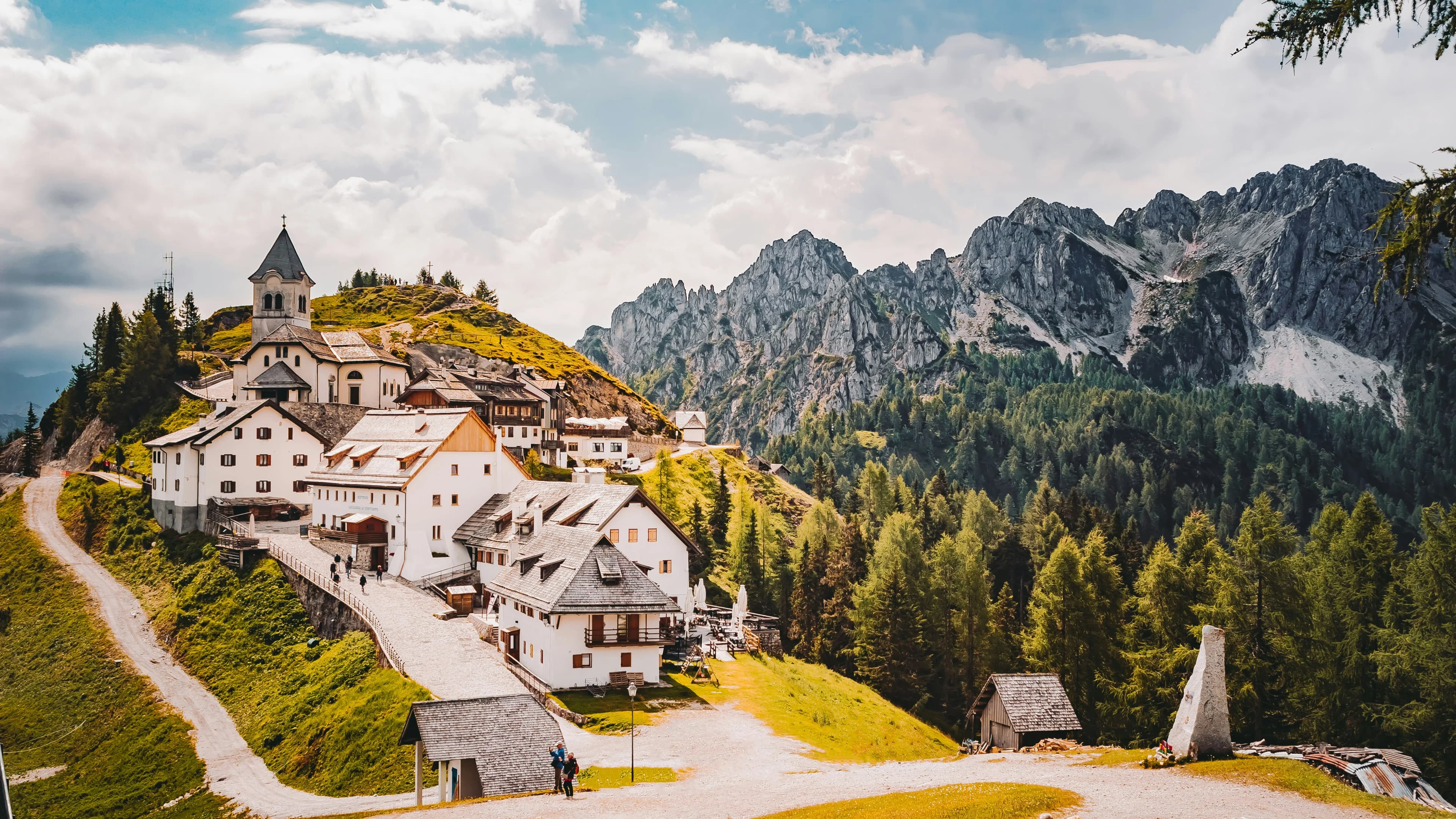
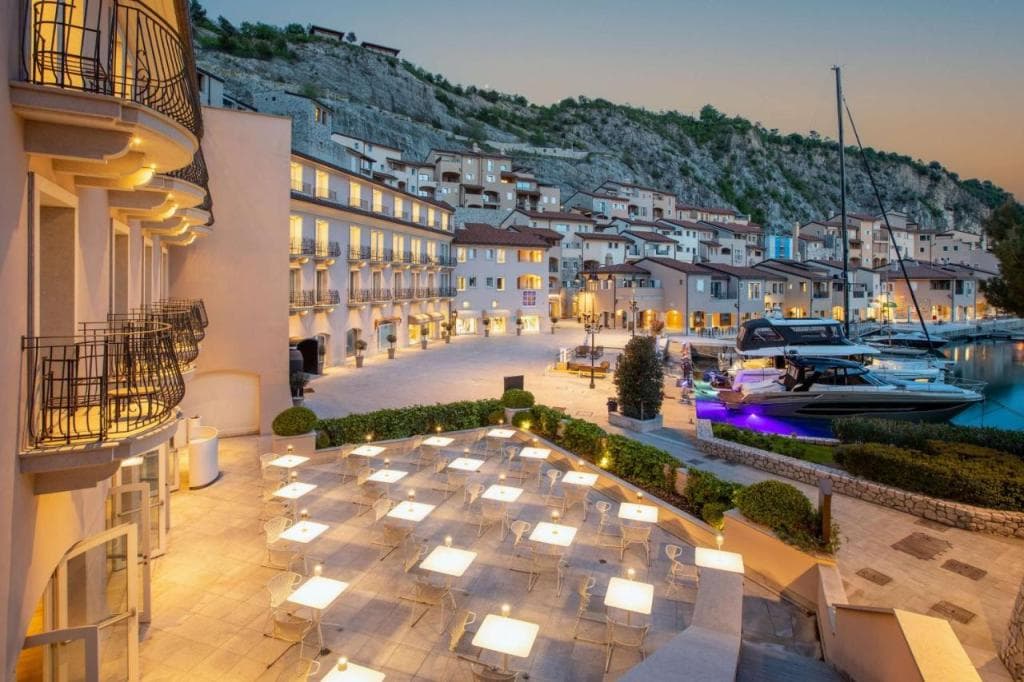
Best areas to stay in Friuli-Venezia Giulia for a luxury suite experience
Trieste and the Karst plateau
Trieste is architecturally unlike any other Italian city. Its 19th-century Austro-Hungarian grid, punctuated by neoclassical piazzas and coffee houses with a century of literary patronage, creates an environment of disciplined elegance. The Karst plateau rising immediately behind the city offers a counterpoint: raw limestone terrain, underground cave systems, and a bora wind that periodically defines the sensory experience of the entire coastline. Luxury hotel properties in this corridor tend to occupy historic palazzi or Belle Époque structures, where the architecture carries the weight of the experience. Guests who choose suites here are purchasing access to a very specific urban atmosphere.
The Collio and Friuli Colli Orientali wine country
The rolling hills along the Slovenian border constitute one of Italy's most respected white wine appellations. Ribolla Gialla, Friulano, and Pinot Grigio grown here express a minerality and restraint that wine-literate travelers recognize immediately. Agriturismo estates and boutique properties in converted farmhouses offer suite accommodations surrounded by working vineyards. This is countryside luxury in an intellectual key: the experience centers on provenance, fermentation philosophy, and the relationship between soil and glass.
Udine and the Friulian plain
Udine functions as the administrative and cultural heart of the Friuli half of the region. Its compact historic center, marked by a Venetian-influenced loggia and the Tiepolo frescoes in the Palazzo Arcivescovile, offers a more intimate version of northern Italian civic culture. Properties in and around Udine tend toward refined townhouse hotels and renovated palazzi, positioning guests within walking distance of serious gastronomy and a gallery tradition that punches above its population size.
The Adriatic coast and Lignano Sabbiadoro
The coastal strip, from Grado to Lignano Sabbiadoro, represents the region's leisure-facing identity. Grado, a lagoon island connected to the mainland by causeway, has functioned as a thermal and bathing resort since the Habsburg era. Its historic center, with early Christian basilicas and a compact grid of narrow streets, offers a quieter counterpart to the more expansive beach resort atmosphere of Lignano. Suites in this coastal zone prioritize water proximity, terrace space, and seasonal programming around the Adriatic calendar.
When to visit Friuli-Venezia Giulia
The region operates on a climate logic shaped by its geography. Alpine weather systems dominate the northern mountains year-round, while the Adriatic coast follows a more temperate Mediterranean rhythm with hot, dry summers and mild winters.
For wine country visits, late September through October aligns with harvest and the release of new vintages. Producers in the Collio and Colli Orientali open their cellars during this period, and the light across the hills acquires a particular quality that photographers and painters have documented for decades. Spring, from April through June, offers ideal conditions for the Carso plateau and the Julian Alps: cooler temperatures, wildflowers on limestone terraces, and uncrowded walking routes.
Trieste holds its literary and cultural calendar most densely in the autumn and early winter, with film events, the Barcolana regatta in October (one of the largest sailing races in the world by participant number), and a coffee culture that becomes particularly apposite in the colder months. Summer brings coastal demand, and suite availability at quality properties tightens from July through August. Booking three to four months in advance is standard for peak coastal dates.
Local luxury standards in Friuli-Venezia Giulia
Italy does not apply its national Palace designation uniformly across all regions, and Friuli-Venezia Giulia reflects this. The region's luxury accommodation landscape is not defined by grand hotel institutions in the Parisian or Roman sense. Instead, prestige here concentrates in smaller categories: the restored villa, the estate agriturismo with architecturally significant interiors, and the historic townhouse hotel where the suite count is deliberately limited.
What distinguishes the top tier in this region is often the quality of raw materials rather than the scale of service apparatus. Friulian hospitality has a Central European precision to it, reflecting the region's Habsburg inheritance. Staff formality tends toward the measured and professional rather than the effusive. Suites are frequently defined by their relationship to local craftsmanship: Friulian textiles, stonework from the Karst, and furnishings sourced from the region's furniture-making tradition centered around Manzano and the Coserozzo district, which produces a significant share of Italy's contract furniture output.
Gastronomy at this level draws from a pantry that includes San Daniele prosciutto (a DOP product of considerable standing), Montasio cheese, frico (a cooked cheese and potato preparation with deep regional roots), and a wine tradition that has shifted over several decades from quantity to precision. A suite stay that does not engage with this culinary context is a stay that misses the region's primary register of distinction.
How to choose the best luxury suite in Friuli-Venezia Giulia
The first structural decision is between urban and rural positioning. A Trieste suite places the traveler inside a historically layered city with walkable cultural density. A Collio property delivers immersion in an agricultural landscape with wine as the organizing logic. A coastal property at Grado or Lignano offers water, light, and a rhythm determined by tides and season rather than cultural programming.
Architecture matters in this region more than in many Italian destinations. Friuli-Venezia Giulia has a heritage of Central European rationalist design alongside Venetian Gothic influences and Habsburg civic classicism. The best luxury suites are those where the building's character has been preserved and amplified by the interior program, not obscured by generic contract furnishings. Look for properties that identify their architectural period and restoration methodology, as these details indicate the seriousness with which the owner has approached the project.
Practical considerations specific to the region include road access for the wine country hills (properties above Cormons or Cividale del Friuli may require a rental vehicle), the seasonal bora wind in Trieste (which can make exposed terraces unusable for days at a time), and the relatively limited suite inventory overall. This is not a region with hundreds of high-end rooms in competition. Selection is genuinely limited, which makes the quality of curation more consequential.
Why curation matters for luxury suites in Friuli-Venezia Giulia
Friuli-Venezia Giulia is not a region that markets itself aggressively to international luxury travelers. Its profile in the global premium travel conversation is lower than Tuscany or the Amalfi Coast, which means the signal-to-noise ratio in online research is inverted: there is less noise, but also less reliable signal. Properties that meet a genuine standard of suite quality here are not necessarily those with the highest search visibility or the most elaborate digital presence.
La Suite applies editorial criteria to this territory rather than algorithmic ones. The curated selection by La Suite reflects direct knowledge of which properties deliver on the specific promises that suite travelers require: spatial generosity, material quality, genuine privacy, and a staff culture that understands discretion. In a region where the luxury hotel infrastructure is intimate by design, that curation removes the uncertainty from the selection process and connects the traveler directly to the properties that define the category here.