Where to stay in Lazio: understanding the region's distinct luxury zones
Rome and its immediate surroundings
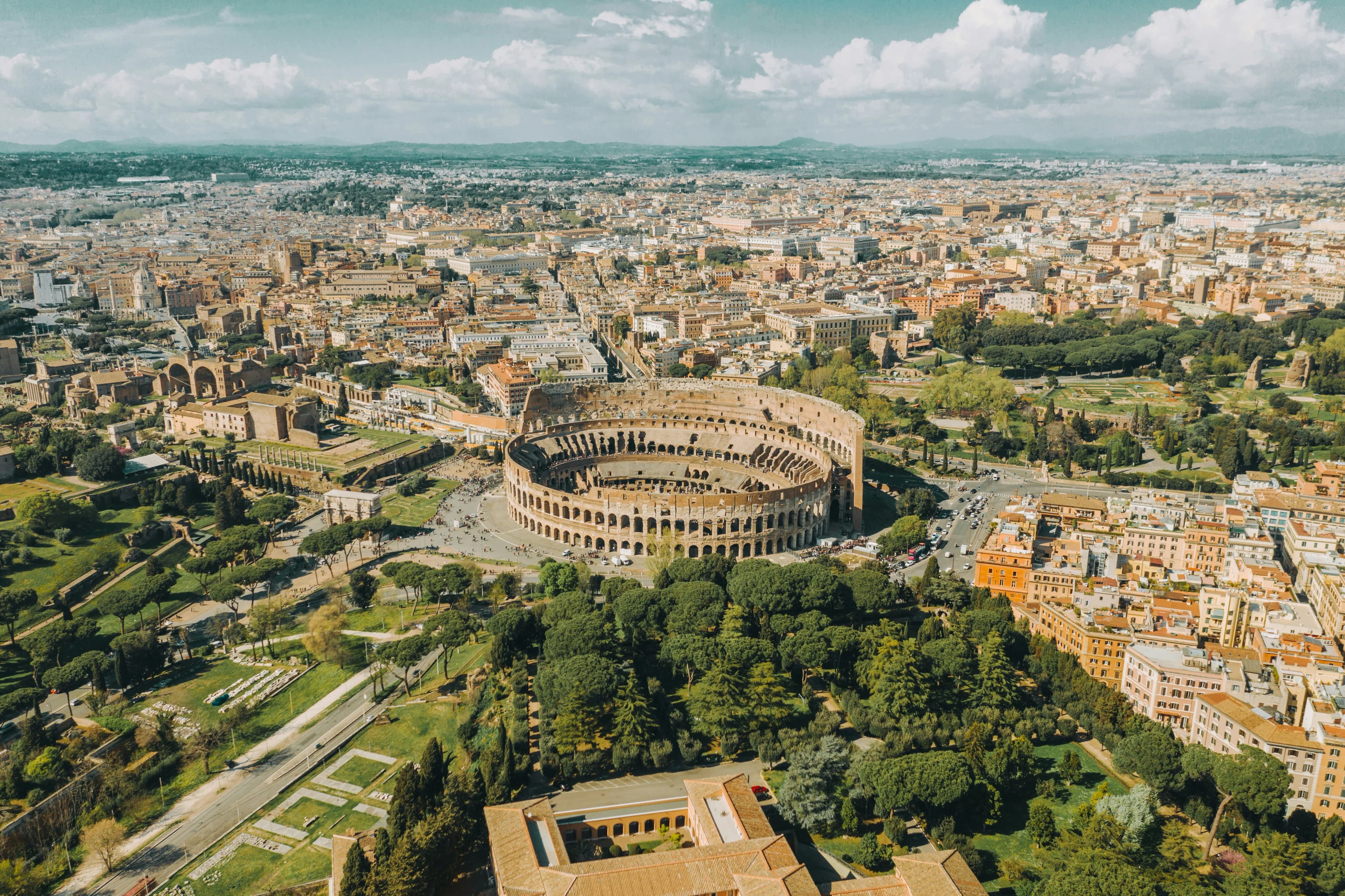
The capital concentrates the highest density of grand hotels in the region, many operating within palaces dating to the 16th and 17th centuries. The historic centre, particularly the area around the Spanish Steps, the Pantheon, and the Quirinale, remains the address of choice for travelers who prioritise proximity to cultural monuments and the particular energy of an ancient city at close range. Parioli and the Pinciano quarter offer a quieter residential alternative, with properties set further from the principal tourist circuits.
The Castelli Romani and the volcanic lakes
Roughly thirty kilometres south-east of Rome, the Colli Albani offer a counterpoint to the capital: wine country, forest walks, and hilltop towns such as Frascati and Castel Gandolfo, the latter long associated with the papal summer residence. Lake Albano and Lake Nemi sit in extinct volcanic craters, their stillness and contained scale making them among the most composed natural environments in central Italy. Properties here tend toward the villa format, with gardens and views calibrated to the landscape.
Viterbo, Civita di Bagnoregio, and northern Lazio
The northern reaches of Lazio constitute a largely undervisited landscape of Etruscan necropolises, medieval hilltowns, and thermal springs. Viterbo, once a seat of the papacy, retains an intact medieval quarter. Civita di Bagnoregio, a tufa-rock town accessible only by footbridge, represents one of the most architecturally severe and visually precise environments in the country. Thermal bathing at Viterbo's Terme dei Papi or the open-air hot springs at Bullicame adds a wellness dimension largely absent from urban Lazio.
The Pontine coast and the Circeo promontory
South of Rome, the Pontine coast extends toward Monte Circeo and the Parco Nazionale del Circeo, a protected maritime environment of dunes, lagoons, and Mediterranean macchia. San Felice Circeo has functioned historically as a discreet summer retreat for Roman professional and cultural circles. The coastline here is less developed than Tuscany's Maremma or the Amalfi Coast, which is precisely its appeal for travelers seeking architectural restraint and natural quiet.
When to visit Lazio for a luxury suite stay
The optimal window for Lazio runs from late April through early June and from September through October. During these periods, temperatures in Rome are moderate (typically 18 to 26 degrees Celsius), the light is exceptional for those for whom visual experience is central to travel, and the principal cultural sites are accessible without the compression of peak summer crowds.
July and August in Rome are intense: heat is significant, humidity rises, and much of the city's professional class relocates. Some properties reduce services or close entirely during the deepest weeks of August. However, the coast and the Castelli Romani become more active during this period, and Pontine coast properties often reach full occupancy.
Winter in Rome, from November through February, is underappreciated. The city functions at its own rhythm, cultural institutions operate fully, and major luxury hotels offer their most competitive rates for suites. The absence of leisure tourism gives the city a different texture entirely, one that design-literate and culturally motivated travelers tend to find more rewarding.
Key cultural events include the Rome Film Fest (October), the Romaeuropa performing arts festival (autumn), and the various exhibitions at the Scuderie del Quirinale throughout the year. These events do not generate the same accommodation pressure as major fashion weeks in Milan or Paris, but they do animate the city's cultural calendar in ways worth aligning a visit with.
Understanding luxury standards in Lazio: what to expect from top-tier suites
Italy does not operate an official state classification equivalent to the French Palace designation, but the Italian hotel industry has developed its own markers of prestige. The Leading Hotels of the World, Relais and Chateaux, and the Small Luxury Hotels of the World all have significant representation in Lazio, particularly in Rome.
At the top tier of the Roman market, the defining characteristic is architecture. The finest suites occupy former noble palaces, convents, and grand 19th-century constructions. Floor plans are generous by European standards, with ceiling heights of four metres or more common in historic buildings. Frescoed ceilings, original terrazzo floors, and proportions derived from classical architecture create a spatial experience that contemporary new-build hotels rarely replicate.
Outside Rome, the luxury offer diversifies into the agriturismo and villa-hotel format, where the prestige comes not from architectural grandeur but from land, privacy, and culinary access. Estates in the Castelli Romani may offer direct access to wine production; properties near Viterbo may sit adjacent to thermal sources. The suite, in this context, is as much about the estate it commands as the room itself.
Service expectations at the highest level in Lazio include multilingual concierge support with genuine cultural knowledge, in-suite dining of restaurant quality, and access to private drivers familiar with the region's secondary roads and less-trafficked archaeological sites.
How to choose the right luxury suite in Lazio
The primary structural choice is between Rome and the wider region. A Rome-based suite positions the traveler within walking distance of the Colosseum, the Vatican, the Borghese gallery, and the principal aperitivo circuits. It is the correct base for those whose itinerary is primarily cultural and urban.
For those whose priorities run toward landscape, quiet, and a more immersive relationship with the Italian countryside, a property in the Castelli Romani or northern Lazio changes the nature of the trip entirely. A car becomes necessary, but the distances are manageable: most of the region is within ninety minutes of Rome.
Floor selection matters in historic Roman properties. Upper floors in Renaissance palaces tend to offer terrace access and views across rooftops and domes; ground and first floors often retain the most significant original features, including painted ceilings and monumental fireplaces. Both choices are legitimate, but they produce different experiences.
Consider also the question of noise. Rome's historic centre is acoustically demanding. Properties with interior courtyards, double-glazed historic windows, or rooms oriented away from principal streets represent a significant practical upgrade for light sleepers and those working across time zones.
Why curated selection matters in Lazio
The Lazio luxury hotel market contains genuine excellence and considerable noise in equal measure. Five-star designations in Italy are assigned by regional authorities and reflect facilities rather than experience, which means the classification is a starting point rather than a guarantee.
La Suite's curation process filters for properties where the suite itself, not just the brand, justifies the investment. In Lazio, that means properties where the architecture is coherent, the service is substantive, and the spatial experience of the suite adds a meaningful dimension to the visit. The curated selection by La Suite is designed to remove that uncertainty and direct the traveler's attention to the properties where the decision to book a suite rather than a room produces a genuinely different result.