Capitolo Riviera, Genoa
Located in Genoa, a 14-minute walk from Spiaggia Capolungo, Capitolo Riviera provides accommodations with an outdoor swimming pool, private parking, a garden and a terrace. This 5-star hotel offers ro

Liguria is one of Italy's smallest regions, yet its geography is exceptionally varied. The coast runs for roughly 350 kilometres, and the interior rises sharply into the Ligurian Apennines almost immediately inland. Choosing where to stay requires a clear sense of what kind of experience you are building.
17 hotels available

Located in Genoa, a 14-minute walk from Spiaggia Capolungo, Capitolo Riviera provides accommodations with an outdoor swimming pool, private parking, a garden and a terrace. This 5-star hotel offers ro

Located in Cerretto Langhe, Casa di Langa offers 5-star accommodations with a garden, a restaurant and a bar. Among the facilities at this property are room service and a concierge service, along with

Eight Hotel Portofino is located 656 feet from Portofino center and the popular Piazzetta square. The elegant rooms have contemporary furniture and are decorated in warm colors with wooden floors. Al

Fiocco di Neve Relais & SPA is located in the center of Limone Piemonte, one of the most renowned ski resorts in the Piedmontese Alps, and just 2297 feet from the ski elevators of the Riserva Bianca s

Golfo dei Poeti Relais & Spa is located in Montemarcello, a 10-minute drive from Ameglia and within 6.8 mi of Sarzana and Lerici. It features a seasonal outdoor pool and a spa center. The elegant, ai

Offering free access to a free private beach, spa and fitness center, this 5-star hotel is located in Alassio's center. Grand Hotel Alassio features air-conditioned rooms with panoramic views. The mo

Overlooking the stunning Tigullio Gulf, the Grand Hotel Bristol is the ideal choice for those seeking a luxurious and relaxing stay. Just 0.9 mi from the center of Rapallo, it offers a splendid outdoo

Boasting a luxury spa, heated outdoor pool with salt water, and private beach, Grand Hotel Del Mare Resort & Spa is surrounded by beautiful gardens right on the seafront. It is 1.2 mi from Bordighera

Grand Hotel Miramare overlooks the Gulf of Tigullio at Santa Margherita Ligure. The tropical garden has a sun terrace and a saltwater swimming pool. The Miramare offers free WiFi. Rooms feature views

Set on Portovenere's seafront, this hotel features a terrace overlooking the small port and Palmaria Island. Set in a 17th-century monastery, it is a few steps from the town center. The air-conditione

Grand Hotel Savoia Genova, Curio Collection by Hilton is opposite Piazza Principe Train Station, a few steps from Genoa Aquarium. Rooms and suites feature free Wi-Fi access, a free bottle of mineral w

The Bristol Palace features an impressive elliptical staircase, leading to its elegant rooms. This historic building is in central Genoa, 328 feet from Piazza De Ferrari. The classic style rooms feat

Elegant Accommodations Hotel Palazzo Durazzo Suites in Genova offers a 5-star experience with spa facilities, sauna, restaurant, bar, and free WiFi. Private check-in and check-out, lounge, beauty

Nordelaia features a garden, shared lounge, a restaurant and bar in Cremolino. Among the facilities at this property are room service and a 24-hour front desk, along with free WiFi throughout the prop

Located in Portofino, 2625 feet from Spiaggia dell' Olivetta, Splendido Mare, A Belmond Hotel, Portofino features complimentary access to Bagni Fiore beach club in Paraggi, private parking, a fitness

Villa La Madonna has free bikes, seasonal outdoor swimming pool, a garden and terrace in Monastero Bormida. There is free private parking and the property has paid airport shuttle service. At the res

Villa Riviera Resort is a widespread hotel that combines the highest international standards with the atmosphere of the Ligurian Riviera and characteristic Italian hospitality. Two ancient villas sur
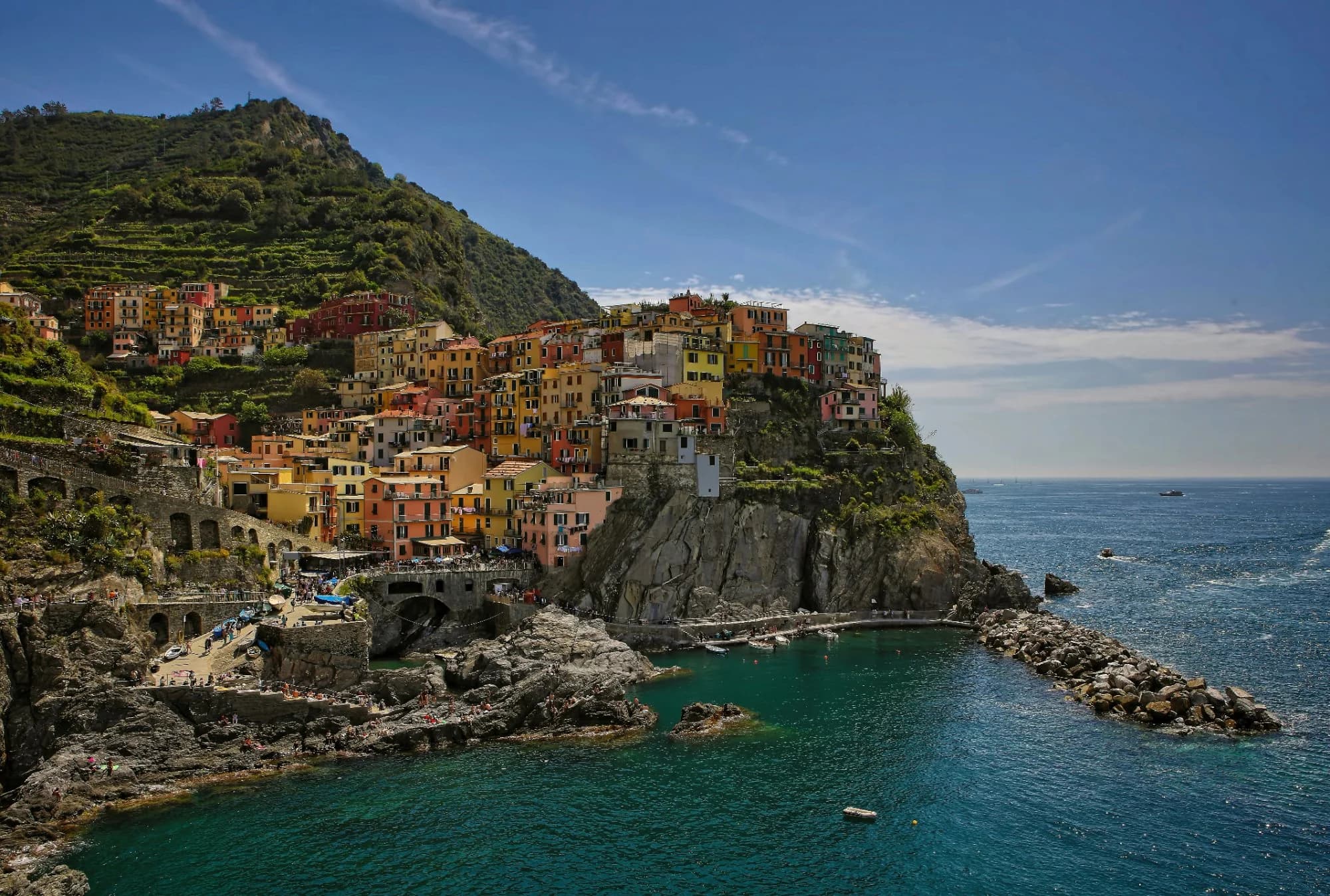
The eastern Riviera, stretching from Genoa toward La Spezia, holds the most photographed landscapes in the region. The Cinque Terre, the Portofino promontory, and the Gulf of Tigullio each offer a different register of coastal life. Portofino itself remains one of the most exclusive addresses in Mediterranean Europe: a working harbour village with a handful of properties that can genuinely claim to offer seclusion. Camogli, Santa Margherita Ligure, and Lerici provide slightly more practical bases without sacrificing the essential Ligurian character. The Riviera di Levante suits travelers who want architectural intimacy, boat access, and proximity to the sea at every scale.
The western Riviera runs from Genoa toward the French border and carries a more open, sun-facing topography. Sanremo, long associated with Italian popular culture through its annual music festival, retains a Belle Époque residential quality that distinguishes it from the more rustic villages of the east. Bordighera and Alassio have histories of Northern European winter tourism dating to the nineteenth century, and that heritage is readable in the scale of their hotels and villas. The Ponente is generally warmer and drier than the Levante, and its more gradual slopes make it accessible for a wider range of itinerary structures.
As the regional capital, Genoa occupies a category of its own. Its historic centre is a UNESCO World Heritage Site, and the Palazzi dei Rolli, a collection of aristocratic palaces once used to host visiting European dignitaries, gives the city a residential grandeur that few Italian port cities can match. A luxury suite within Genoa's historic core provides a fundamentally urban experience, one that rewards cultural travelers and those arriving by sea or air for shorter stays.
Liguria's climate is among the mildest in continental Italy, sheltered from northern winds by the Apennines. The shoulder seasons, April through early June and September through October, are the most considered periods for a suite stay. Summer (July and August) brings concentrated demand, particularly around Portofino, where availability at the top properties becomes genuinely constrained. Prices reflect this scarcity.
Spring arrivals coincide with flowering mimosa and broom across the hillsides, and the coastal light at that time of year has a clarity that changes the experience of being outdoors. Autumn in Liguria extends well into October, with sea temperatures remaining swimmable through September. The Sanremo Festival, held in February, draws significant attention to the western Riviera, though that period falls outside the primary travel window for most international visitors.
Winter in Liguria is mild by northern standards and is used by a small number of travelers who prioritise calm, reduced occupancy, and the particular quality of an off-season Riviera. Properties remain open, and the experience is categorically different from the high-season version.
Liguria does not operate within the French Palace designation system, nor does it have a regional equivalent. Italian luxury hotel classification follows the national five-star and five-star superior framework, but the most meaningful signal in Liguria is often the physical context of the property itself.
Historic villas converted to hotels, particularly around the Portofino peninsula and along the Riviera di Levante, represent the regional archetype for high-end accommodation. These buildings typically feature frescoed ceilings, terraced gardens, and direct sea access or sea views from upper-floor rooms. The quality of a luxury suite in this context is often defined less by the size of the room and more by the specificity of its position: a terrace oriented at a particular angle to the morning light, a private garden level, a room whose windows frame a specific stretch of water.
Contemporary luxury has also arrived in the region, with several properties offering suites built around modern architectural principles: clean materials, integrated indoor-outdoor transitions, and minimal visual competition with the surrounding landscape. These properties tend to be found slightly inland or on headlands where new construction was architecturally possible.
Service standards at the top end of the Ligurian market reflect the Italian hospitality tradition: attentive without being intrusive, and knowledgeable about regional food and wine in a way that is genuinely useful rather than performative. Ligurian cuisine, anchored by pesto, focaccia, fresh seafood, and local olive oil, is one of Italy's most coherent regional food cultures, and the best suites position guests to engage with it directly.
The single most important variable in a Ligurian suite is its relationship to the sea. Properties that describe themselves as having sea views vary considerably in what that means in practice. A room on a higher floor of a property set back from the water is categorically different from a terrace suite that sits at water level with direct access to a private dock or platform. Establishing this distinction before booking is essential.
Architecture matters here in a way that is specific to Liguria. The region's building tradition favours tall, narrow structures painted in deep ochres, terracotta, and washed yellows. A suite within an authentic Ligurian palazzo carries a different sensory logic than a purpose-built resort suite, even one of comparable quality. Travelers who are sensitive to architectural context should identify which type of property they are actually looking for before entering the selection process.
Practical considerations worth weighing include: road access (several of the most desirable properties require boat transfer or are accessible only via narrow coastal roads), noise levels during high season (the harbour villages are genuinely lively at night), and the presence or absence of a pool (not all historic properties have been able to add one without compromising the integrity of the building).
Liguria is a small region with a concentrated supply of genuinely exceptional suites, and the difference between a well-chosen property and a disappointing one is significant. The regional market includes properties that trade on location alone while underdelivering on the interior experience, and others that appear modest from the outside but contain suites of real quality and precision.
La Suite applies an editorial filter to this selection, identifying the properties where the suite itself, not just the setting, justifies the stay. The curated selection by La Suite is built for travelers who are making a deliberate investment in how they experience this coastline. It removes the noise from a market where surface-level photography can obscure material differences in quality, access, and service.

The Portofino promontory and the broader Riviera di Levante offer the highest concentration of historically significant properties with genuine sea access and architectural character. The Riviera di Ponente, particularly around Sanremo and Bordighera, suits travelers who prefer a more open, sun-facing coast with Belle Époque residential scale.
The shoulder seasons, April to early June and September to October, offer the most favourable combination of climate, availability, and relative calm. High summer brings compressed demand at top properties, particularly in Portofino, where suite inventory is limited and booking windows need to open considerably in advance.
In Liguria, the distinction is often positional rather than purely spatial. A luxury suite typically offers a specific relationship to the sea: a private terrace at the right orientation, direct garden access, or a view corridor that a standard room does not have. The suite level is also where historic properties tend to concentrate their most significant architectural features, including frescoed ceilings and original stonework.
Liguria does not use the formal Palace hotel designation found in France, but it has a strong tradition of aristocratic villa conversions, particularly along the Riviera di Levante. Several properties occupy buildings with direct links to Genoese merchant and noble families, and the Palazzi dei Rolli in Genoa represent the most formally documented example of this residential heritage.
Several of the most secluded properties along the Ligurian coast require boat transfer or are reached via narrow mountain roads that are not practical for large vehicles. It is worth confirming the access logistics with the property before arrival, particularly if traveling with significant luggage or with older or mobility-limited guests.
Yes, and for many traveler profiles the off-peak seasons are preferable. Liguria's climate is mild through winter by Italian standards, and properties in the autumn and spring offer a fundamentally quieter experience with reduced pricing and more attentive service ratios. The sea remains swimmable into October, and the landscape carries a different quality in spring and autumn light.
Ligurian cuisine is one of Italy's most coherent regional food cultures, built around pesto Genovese, fresh pasta, focaccia di Recco, local seafood, and the region's own olive oil and white wines. Top-tier properties typically offer direct engagement with these ingredients through in-house restaurants or curated access to local producers, and the best suites are positioned to support that engagement meaningfully.
Portofino operates at a different level of exclusivity from other Ligurian coastal towns. The village has no through traffic, limited accommodation inventory, and a residential character that makes it one of the most genuinely private coastal addresses in Italy. Other towns along the Riviera di Levante, such as Camogli or Santa Margherita Ligure, offer more practical infrastructure with a comparable coastal quality at a different price and availability level.
Both typologies exist, though the historic villa conversion remains the dominant model. A smaller number of contemporary properties, typically built on headlands or slightly inland where planning constraints allowed for new construction, offer suites designed around minimalist principles with integrated indoor-outdoor spaces. These tend to appeal to travelers who prioritise architectural clarity over historical texture.
La Suite applies an editorial selection process focused on the quality of the suite itself, not merely the reputation of the property or the appeal of its location. In Liguria, where setting can easily overshadow substance, the selection specifically tests whether the interior experience, including service, materials, spatial logic, and access to the landscape, genuinely justifies the investment. The curated selection by La Suite is updated to reflect current property standards rather than historical reputation alone.