Best areas in Piedmont for a luxury suite stay
The Langhe and Monferrato hills
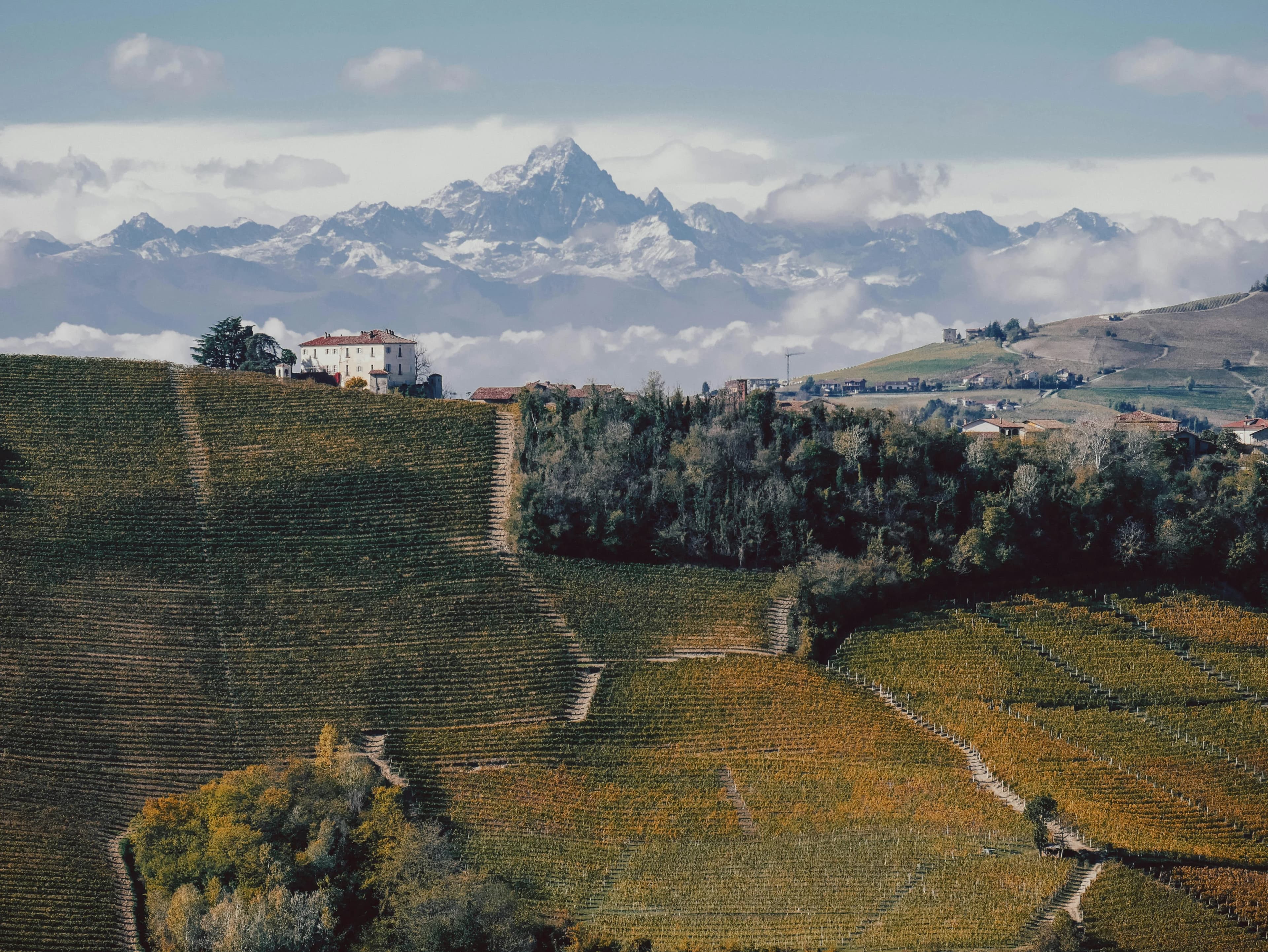
This is the emotional core of Piedmontese prestige. The Langhe, centered on the town of Alba, is UNESCO-listed wine country: a mosaic of vine rows, stone farmhouses, and cellar doors belonging to some of the most respected producers in the world. Barolo, Barbaresco, Dolcetto, and Nebbiolo define the landscape as much as the scenery. A luxury suite in this zone typically occupies a converted historic farmhouse or a boutique property embedded in working vineyard land. The sensory grammar here is earthy, mineral, and autumnal. Monferrato, slightly to the east, offers a quieter, less trafficked version of the same aesthetic with excellent access to Asti and its sparkling wine tradition.
Turin and its surroundings
Turin (Torino) is a city of Baroque colonnades, chocolate houses, and an industrial heritage that produced Fiat and Olivetti. Its luxury hotel supply reflects this civic seriousness: grand palaces on broad avenues, properties with rooftop views over the Alps, and suites that trade in scale and architectural detail rather than resort escapism. The Savoy royal residences surrounding the city, collectively a UNESCO World Heritage Site, provide an additional layer of cultural gravity that distinguishes the Turin experience from other Italian urban stays.
Lake Maggiore and the Piedmontese lakes
The western shore of Lake Maggiore falls within Piedmont (the eastern shore belongs to Lombardy). Towns such as Stresa and the Borromean Islands area offer a classically European lake-resort atmosphere: belle époque architecture, manicured gardens, and a calm that has attracted aristocratic and artistic visitors since the nineteenth century. Luxury suites in this corridor tend toward the grand hotel tradition, with lake-facing rooms, terraced dining, and a pace oriented around leisure rather than cultural programming.
When to visit Piedmont for a luxury stay
Piedmont has four genuinely distinct seasons, and the optimal visit window depends on what kind of experience you are seeking.
Autumn (September to November) is the reference period for anyone motivated by gastronomy or wine. The truffle season in Alba peaks in October and November, coinciding with the annual Fiera Internazionale del Tartufo Bianco d'Alba, one of the most attended luxury food events in Europe. Harvest season in the Langhe runs through September and October, and many cellar doors are active and accessible. Hotel suite availability at premium properties tightens considerably during this window, and rates reflect the demand. Booking three to six months in advance is standard practice for the Langhe during October.
Spring (April to June) brings moderate temperatures, flowering landscapes across the hills, and a less compressed availability picture. This is a preferred season for travelers who prioritize access and pace over the truffle calendar. The Langhe in late April and May offers clear alpine sightlines and newly opened terraces.
Summer in Piedmont is warmer and more humid than its alpine framing might suggest. The lake district becomes more active during July and August, with Lake Maggiore properties operating at peak capacity. The hills remain accessible but temperatures in the low to mid thirties Celsius are not uncommon in July.
Winter is rarely promoted but carries its own logic for suite travelers interested in the Turin urban experience, the chocolate and vermouth culture, or the proximity to alpine ski resorts such as Sestriere and the Milky Way ski area, which hosted the 2006 Winter Olympics.
Local luxury standards: what to expect from top-tier suites in Piedmont
Italy does not have a federally standardized palace-hotel designation equivalent to France's official