Understanding Trentino-South Tyrol as a luxury destination
Together, they compose one of Europe's most architecturally coherent Alpine territories, where the built environment consistently responds to landscape rather than competing with it. For travelers selecting a luxury hotel suite in this region, that coherence is a primary asset.
Best areas to stay in Trentino-South Tyrol
The Dolomites and the Alpe di Siusi plateau
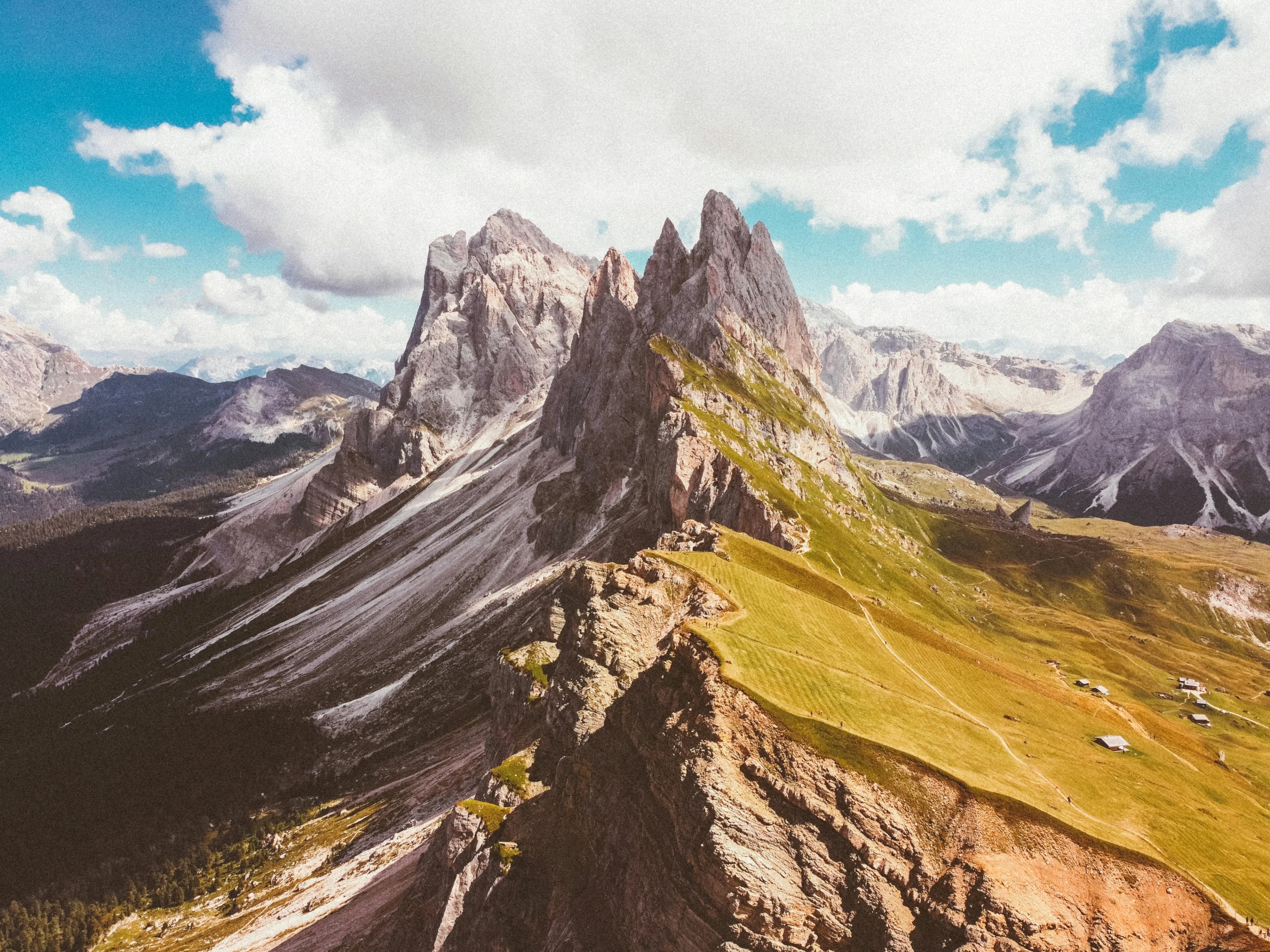
The Alpe di Siusi (Seiser Alm) is the largest high-altitude Alpine meadow in Europe, sitting above the Val Gardena and accessible by cable car from Ortisei. Properties in this zone offer what is perhaps the most spatially commanding suite experience in the entire Alpine arc: panoramic views across a plateau framed by the Sassolungo and Sciliar massifs, with almost no urban interruption. The architectural language here tends toward the traditional South Tyrolean Bauernhaus typology, updated with contemporary interiors that use local larch, stone, and natural textiles.
The wine roads of South Tyrol and the Adige Valley
The Strada del Vino (South Tyrolean Wine Road) runs from Nalles to Salorno through a sequence of villages where Gewürztraminer and Pinot Grigio vineyards cover the slopes. Staying in this corridor places a guest within immediate reach of some of Italy's most precise and internationally recognised white wine production. Luxury properties here often occupy historic manor buildings or converted farmsteads, and the suite experience is defined by proximity to the cellar as much as to the mountain.
Madonna di Campiglio and the Brenta Dolomites
Madonna di Campiglio, in Trentino proper, has functioned as a resort destination since the late nineteenth century, with a documented history of aristocratic and royal visitors. The Brenta Dolomites that surround it form a distinctly dramatic geological profile, and the town maintains a certain restrained elegance that separates it from more commercially developed ski resorts. Suite accommodations in this area tend toward the classical Alpine grand hotel format, with generous proportions and a service culture oriented toward discretion.
Lake Garda's northern shore: Riva del Garda and Arco
The northern tip of Lake Garda falls within Trentino and occupies a climatic anomaly: a Mediterranean microclimate sheltered by the surrounding mountains that allows olive trees and citrus to grow at the same latitude as northern Germany. The architecture shifts register here, becoming more Italian in scale and ornament. Luxury hotel suites in this area frequently offer lake-facing terraces and direct water access, with a sensory quality quite different from the higher Alpine zones.
When to visit Trentino-South Tyrol
The region operates at a high standard across multiple seasons, and the calculus of when to visit depends on what a traveler prioritises. Winter, from December through March, is the primary season for skiing and snowshoeing in the Dolomites, with the major resorts, including Val Gardena, Alta Badia, and Madonna di Campiglio, drawing an international clientele. Suite availability at top properties during peak winter weeks (Christmas, New Year, and the February school holidays) tightens considerably, and advance planning of three to six months is advisable.
Summer, from late June through September, is optimal for hiking, cycling, and engagement with the region's agricultural calendar. The Dolomites operate a dense network of high-altitude trails, and the light quality in July and August, long Alpine evenings with low humidity at altitude, is particularly suited to outdoor dining and terrace use. The harvest season in September and October brings the wine roads to their most active and photogenic state, with estates opening for tastings and the vineyards turning gold and red against the pale limestone massifs.
Spring, from April through May, offers the lowest occupancy and the most negotiable suite rates, with the added character of snow still present on the high peaks while the valley floors are in bloom.
Local luxury standards: what defines a top-tier suite in this region
South Tyrol in particular has developed one of the most consistent regional luxury hospitality traditions in Europe. The concept of the Gault et Millau-rated Wellnesshotel, a property where thermal and spa facilities are treated with the same seriousness as the culinary program, is deeply embedded in the local market. Many of the region's leading hotels carry a Michelin-starred restaurant on site, and the combination of cuisine and spa within a single property is a structural expectation rather than an added feature.
The material quality of suites in this region is typically high. Local craftsmanship in larch wood joinery, natural stone bathrooms using local porphyry or Lasa marble, and handwoven textiles are common in properties that position themselves at the top of the market. The regional designation system does not have a direct equivalent to France's Palace classification, but South Tyrolean five-star properties have developed their own understood vocabulary of quality that is broadly consistent and verifiable.
Trentino properties tend to operate within the Italian national classification framework, with the leading hotels carrying five-star or five-star superior designations. The distinction between a standard five-star room and a true luxury suite in this market is meaningful: suite categories here frequently include private saunas, outdoor whirlpools, or dedicated butler service, all of which should be confirmed at the time of selection.
How to choose the best luxury suite in Trentino-South Tyrol
The primary decision axis is altitude and landscape orientation. A suite at 1,800 metres on the Alpe di Siusi delivers a fundamentally different sensory and architectural experience from a suite in a converted South Tyrolean manor on the wine road at 300 metres. Neither is superior in absolute terms, but they serve different travel intentions.
A second axis is cultural register. South Tyrolean properties often carry a Germanic precision in service protocol and interior design that some travelers find more aligned with their expectations of a luxury hotel. Trentino properties tend toward a warmer Italian hospitality cadence. This distinction is real and consistent enough to factor into selection.
For travelers combining skiing with suite stays, proximity to ski-in and ski-out access is a decisive practical variable. Not all five-star properties in resort areas offer direct slope access, and the difference in experience between a property with and without it is substantial in operational terms.
Travelers focused on gastronomy should cross-reference suite selection with the property's restaurant credentials. South Tyrol has one of the highest concentrations of Michelin stars per capita of any Italian region, and selecting a property where the culinary program is treated as a primary rather than secondary offering changes the texture of an extended stay.
Why curated selection matters in this destination
The volume of properties marketing themselves as luxury hotels in Trentino-South Tyrol is high relative to the size of the territory. The regional hospitality industry is sophisticated and competitive, and the gap between a genuinely exceptional suite and a well-marketed but operationally average one is not always apparent from standard booking interfaces or aggregated review scores.
La Suite approaches this market with specific criteria: spatial quality, architectural coherence with the landscape, verifiable service standards, and the kind of sensory particularity that justifies the category. The curated selection by La Suite in Trentino-South Tyrol is built around properties where the suite itself, not merely the hotel, meets these criteria. For a traveler investing significant time and budget in this region, that distinction is the difference between a memorable stay and a correct one.