Where to stay in Umbria: areas and their character
The Tiber Valley and Perugia's surroundings
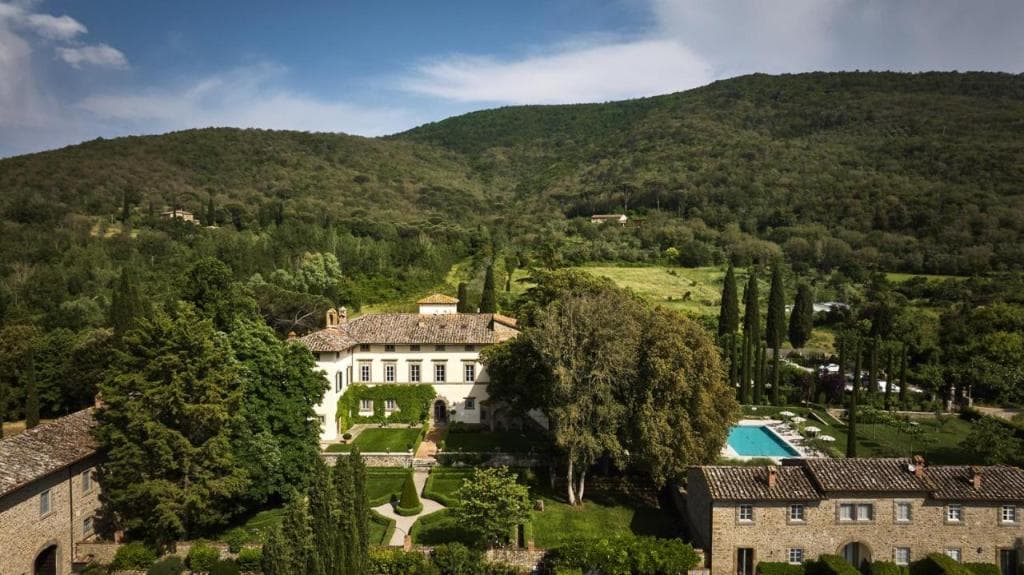
The Tiber Valley provides Umbria's most accessible entry point, with Perugia anchoring the northern part of the region as its administrative and cultural capital. The countryside surrounding the city is characterised by rolling farmland, Renaissance churches, and estates that have been converted into high-end retreats. Properties here tend to be architecturally substantial, often housed in former convents or noble residences with original frescoes and stone floors intact. For travelers arriving from Rome or Florence by train, this corridor offers a logical and unhurried introduction to the region.
Assisi and the Valle Umbra
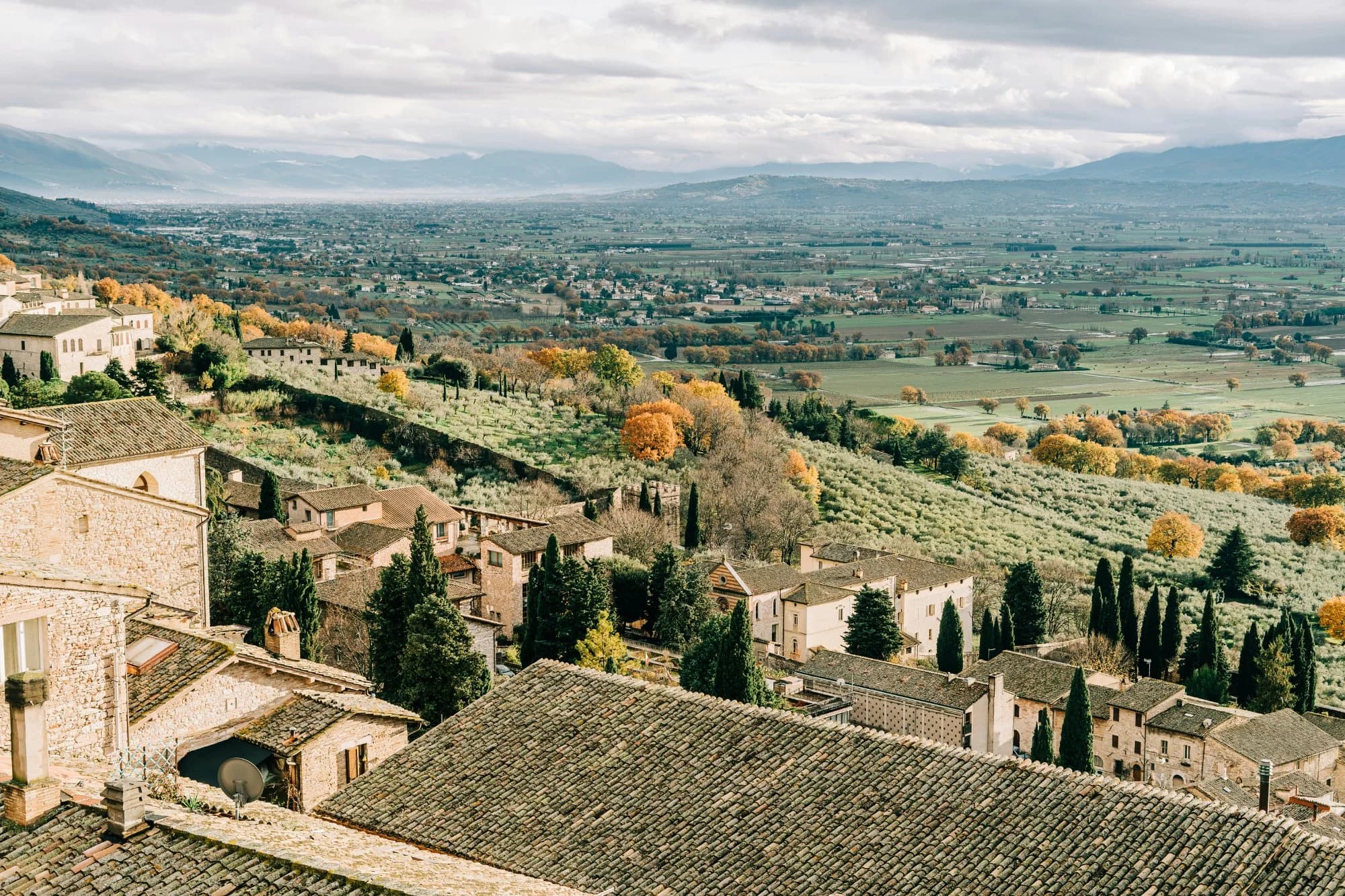
The Valle Umbra, the broad plain stretching south from Perugia toward Spoleto, is Umbria's most historically dense corridor. Assisi sits above it on the flank of Monte Subasio, its pink-limestone architecture immediately identifiable. Luxury properties in this zone tend to position themselves for views across the plain, using elevation as a deliberate design asset. The spiritual dimension of the territory attracts a particular kind of traveler: one seeking contemplative quiet alongside material comfort.
Orvieto and southern Umbria
Southern Umbria, anchored by Orvieto on its volcanic tufa outcrop, operates at a slower register. The landscape here is drier and more dramatic, with deep ravines and forested plateaus replacing the softer contours of the north. Orvieto's wine production and its extraordinary cathedral make it a destination in its own right. Estates and converted farmhouses in this zone offer a degree of seclusion that is harder to achieve closer to Perugia, and the proximity to Lazio adds a cultural layering that well-traveled guests tend to appreciate.
Valnerina and the eastern highlands
The Valnerina, the valley carved by the Nera river through the Apennines in eastern Umbria, remains the least-visited part of the region. Its medieval villages, including Norcia and Cascia, sit at altitude and carry a severity that contrasts with the pastoral gentleness of the west. Norcia in particular is the historic center of Umbrian charcuterie and truffle culture. Luxury accommodation here is sparse but intentional, oriented toward guests who prioritise authenticity and natural landscape over proximity to monuments.
When to visit Umbria for a luxury stay
Umbria rewards visits across most of the year, but the shoulder seasons offer the clearest case for a high-end stay. Spring, from late March through May, brings the truffle season in its white variety (the prized Tuber magnatum begins its cycle in autumn but the territory remains active), wildflowers across the Castelluccio plateau, and cool temperatures that make extended outdoor time genuinely pleasant. Autumn, particularly October and November, is widely considered the region's finest season: the black truffle harvest is active, the light turns amber across the hills, and the grape and olive harvests animate the countryside with a productive energy that feels authentic rather than staged.
Summer brings heat and some tourist concentration around Assisi and Orvieto, though properties in elevated or forested positions remain comfortable. The Spoleto Festival dei Due Mondi, held in late June and early July, draws an international cultural audience and creates demand for quality accommodation in the central corridor. Winter is quiet, occasionally dramatic with snow on the Apennine flanks, and significantly more affordable, though some smaller properties close for part of the season.
Understanding local luxury standards in Umbria
Umbria does not operate within the same luxury classification framework as urban Italian centers. The five-star category exists, but the most distinctive high-end properties in the region are more often classified as Relais, a designation associated with the Relais and Chateaux network, or as historic residences operating under private management. The concept of the agriturismo extends in Umbria to a level far above its common perception: some estates that carry this classification offer suites, private pools, full-service kitchens, and concierge-level hospitality while maintaining working farms producing olive oil, wine, and truffles.
What distinguishes a genuinely premium suite in Umbria is less about amenity lists and more about material integrity. Stone walls of genuine age, terracotta floors laid in specific regional patterns, hand-hewn wooden beams, and views that have not been compromised by later construction are the markers that experienced travelers learn to read. A luxury hotel suite in Umbria should offer these architectural qualities in combination with modern plumbing, climate control, and linens of substantive weight. The most respected properties manage this balance without making the modernity visible.
How to choose the right suite in Umbria
The primary decision for any traveler seeking a luxury suite in Umbria is whether to prioritise connectivity or seclusion. Properties on or near the main corridors between Perugia, Assisi, and Spoleto offer easier access to multiple sites but sacrifice some of the silence that defines the region's appeal. Estates further into the hills or in the Valnerina provide genuine isolation, which is appropriate for a stay centered on rest and landscape rather than cultural programming.
A second consideration is architectural period. Medieval and Renaissance structures dominate the region, but a smaller number of properties occupy Baroque or early modern buildings with a correspondingly different spatial quality. Suite dimensions in converted historic buildings vary considerably: some original rooms are generous by any standard, others are intimate by design. Reviewing floor plans or requesting measurements before booking is a practical step that experienced travelers do not skip.
For families or groups requiring multiple suites, villa rentals with hotel-level service exist in Umbria and represent a distinct category worth considering separately from conventional hotel booking. The region's estate culture makes this model more developed here than in many comparable Italian territories.
Why curated selection matters in Umbria
The luxury hotel market in Umbria is smaller and less standardised than in Tuscany or the Italian lake districts. This creates both opportunity and risk. The opportunity is genuine distinctiveness: properties that carry a specific history, a working landscape, or an architectural identity that no amount of interior design budget can replicate. The risk is that marketing language in this segment tends to outpace delivery, particularly for international travelers who cannot assess a property through local knowledge or repeat visits.
La Suite applies a consistent curatorial standard to each property it presents, evaluating suite quality, service infrastructure, and architectural integrity against objective criteria rather than star ratings or brand affiliation. For a destination as particular as Umbria, where the difference between a genuinely exceptional stay and a merely adequate one can be difficult to discern from a distance, this selection process has concrete value. The curated selection by La Suite in Umbria represents properties that have been assessed on the terms that matter to the travelers this platform serves.