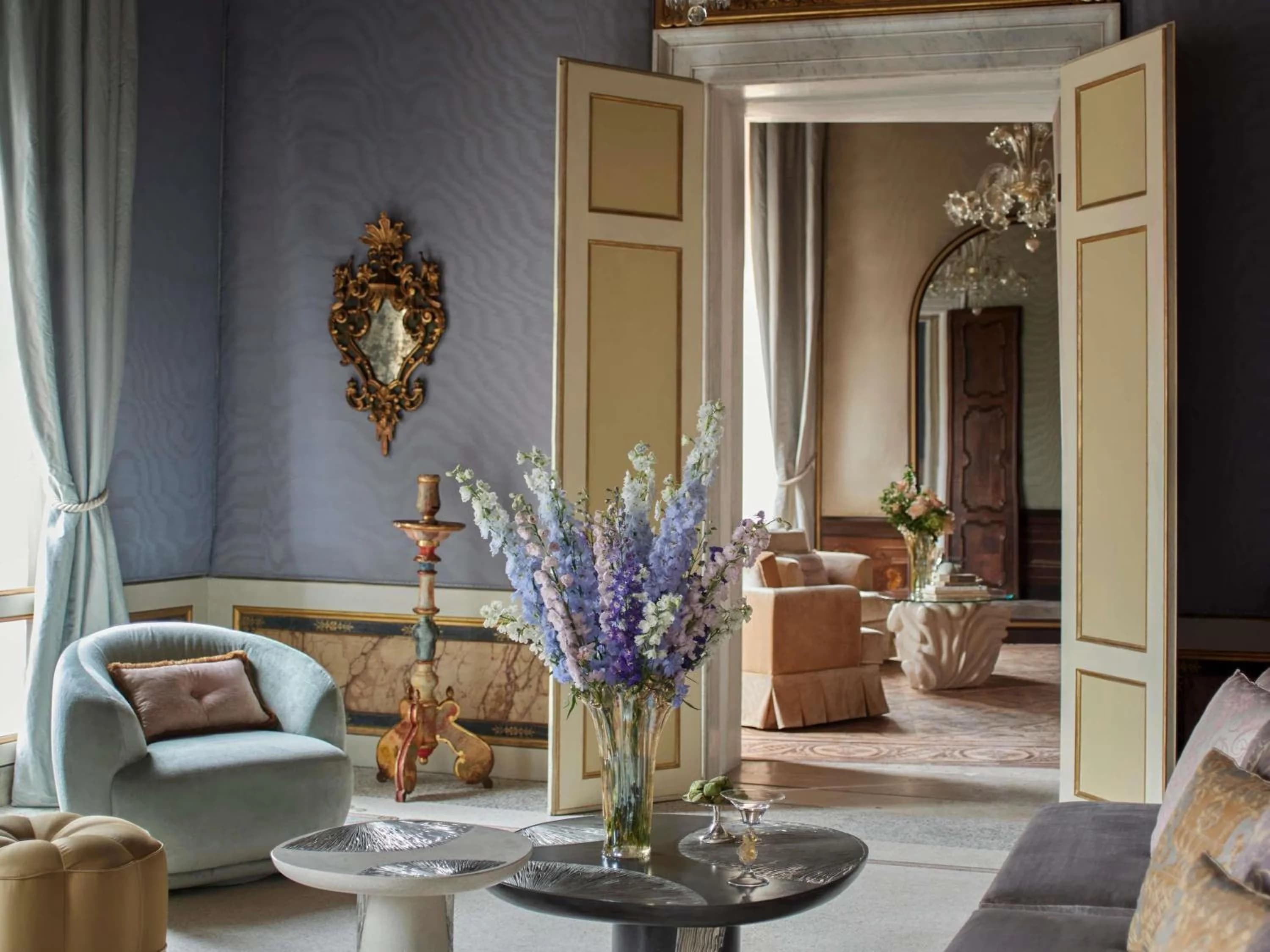



Baglioni Hotel Luna - The Leading Hotels of the World, Venice
Set 262 feet from Saint Mark's Square, Baglioni Hotel Luna offers impressive interiors with original frescoes and stunning views across the lagoon. This 5-star hotel guarantees a memorable experience


Suite
50 m²
This elegant suite features a double or twin bedroom, a separate living room with sofa bed and LCT TV, and a marble bathroom with free toieltries.


Suite with Lagoon View
50 m²
Offering views of the lagoon, this elegant suite features a double or twin bedroom, a separate living room with LCD TV, and a marble bathroom with free toiletries.


Junior Suite with Lagoon View
45 m²
Offering views of the lagoon, this junior suite features a double or twin bedroom, LCD TV and a marble bathroom with free toiletries.


San Giorgio suite with Terrace
125 m²
Featuring a private terrace with views of San Giorgio Island, this suite features a living room, free mini-bar, 1 bedroom and a private marble bathroom with free toiletries.


Tiziano Suite with Lagoon View
60 m²
Offering views of the lagoon, this suite features a free mini-bar, a living room and large marble bathroom.


Junior Suite
40 m²
With seating area, LCD TV and a private bathroom with free toiletries.


Family Suite
60 m²
This air-conditioned suite has 2 bedrooms, a living room with LCD TV and 2 private marble bathrooms with free toiletries.


Giorgione Terrace Suite
70 m²
Set on 2 levels, this suite has a living room, free mini-bar, and two large marble bathrooms. It features a terrace overlooking the city’s rooftops.


Sansovino Suite with Lagoon View
60 m²
Featuring a private terrace with views of San Giorgio Island, this suite has a separate living room, free mini-bar and a private bathroom with free toiletries.

Deluxe Double Room
30 m²
Elegant room with a view of the courtyard, street or the rooftops of Venice. This room cannot accommodate an extra bed.

Family Junior Suite
60 m²
Offering free toiletries and bathrobes, this family room includes a private bathroom with a bath, a shower and a bidet. The spacious family room offers air conditioning, soundproof walls, a mini-bar,