Where to stay in Liechtenstein: understanding the country's geography for suite travellers
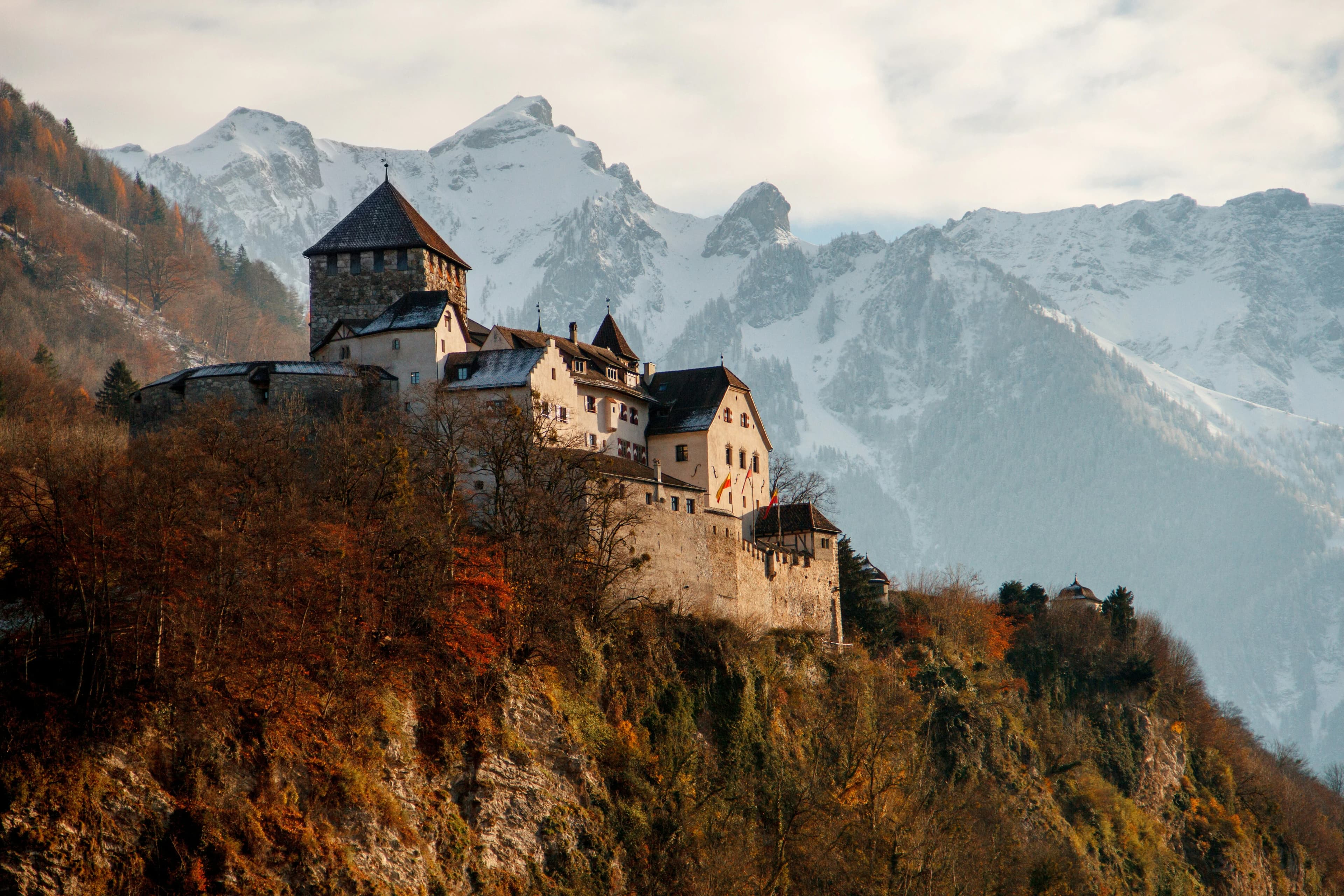
Vaduz functions as the country's cultural and political centre. The Liechtenstein National Museum, the Kunstmuseum, and the Prince's Castle (not publicly accessible but architecturally defining on the skyline) give this small capital a density of serious cultural infrastructure that belies its size. Staying in or close to Vaduz places guests within walking distance of the country's primary galleries and its parliamentary quarter. For travellers who treat a destination's institutional life as part of the itinerary, this is the logical base.
Triesenberg, situated on a terrace above the Rhine Valley at around 900 metres elevation, offers a materially different perspective. The views across to the Swiss canton of St. Gallen are unobstructed, and the village retains a Walser cultural heritage that is documented locally. Suites in elevated positions here trade urban proximity for landscape immersion, which suits a specific kind of traveller: one who wants the principality's geography as the primary experience.
Malbun, at approximately 1,600 metres, is Liechtenstein's ski resort. It is a small, family-oriented resort by Alpine standards, but its seclusion and the absence of large resort infrastructure give it a quality of calm that more prominent ski destinations cannot replicate. Winter suite stays here are calibrated to that quietness.
When to visit Liechtenstein: seasons, events, and suite availability
Liechtenstein's compact scale means it does not experience the same seasonal saturation as larger Alpine destinations. That said, timing a visit with awareness improves both the experience and accommodation access.
Late spring (May to June) and early autumn (September to October) represent the clearest windows for travellers whose priorities are landscape clarity, moderate temperatures, and uncrowded cultural sites. The Rhine Valley floor and the elevated communes are both accessible, and the light in these months has a quality that suits the country's green and grey-stone palette.
August 15th is Liechtenstein's National Day, one of the few occasions in European statecraft where the reigning prince opens the grounds of the royal castle to the public for an evening reception. For travellers with an interest in the principality's living constitutional monarchy, this date carries genuine significance. Accommodation in the country is limited, and planning well in advance is necessary.
Winter, from December through March, is relevant primarily for Malbun's ski season. The resort is modest by Swiss or Austrian standards, which is part of its appeal: no lift queues, no crowded piste restaurants, and a pace that allows for extended stays without the friction of large resort logistics.
Luxury standards in Liechtenstein: what to expect from a high-end suite
Liechtenstein does not carry a national hotel classification label equivalent to France's Palace designation or Austria's formal five-star hotel category requirements. The country's hotel stock is small, and the properties that occupy the upper tier of the market tend to be independently operated with a character defined by ownership rather than brand standards.
In practice, this means that a top-tier suite in Liechtenstein will typically reflect Central European luxury conventions: precision in material quality, restraint in decoration, and a service culture that prioritises efficiency and discretion over theatrical hospitality. Expect well-proportioned rooms with considered Alpine or contemporary design, reliable connectivity (the country operates on Swiss telecommunications infrastructure), and proximity to fine dining that draws on both Austrian and Swiss culinary traditions.
Given the country's relationship with Swiss financial and cultural norms, privacy is treated as a structural value rather than an amenity. Properties catering to high-end guests understand that discretion is non-negotiable, and the absence of large international hotel chains in the country's upper tier reinforces this.
How to choose the right luxury suite in Liechtenstein
With only four hotels listed on La Suite for this destination, the selection process is inherently focused. The key variables are location, elevation, and the nature of the stay.
For a culturally oriented visit, proximity to Vaduz is the primary consideration. Access to the Kunstmuseum, the National Museum, and the concentrated gallery and restaurant offer of the capital on foot changes the texture of a multi-day stay. A suite within this radius allows the city to be engaged on its own scale, without the mediation of transport logistics.
For a landscape-first stay, the elevated communes offer suites with a spatial and sensory relationship to the Alpine environment that is simply unavailable at valley level. The trade is urban convenience for territorial perspective, and for many travellers this is an entirely deliberate choice.
For winter stays, Malbun's character as a contained, unhurried ski area is itself the defining criterion. Travellers who have grown fatigued by the industrial scale of major Alpine resorts will find something genuinely different in its proportions.
In all cases, given the small number of available properties, booking lead time matters more in Liechtenstein than in most European destinations. Peak periods, including National Day and the winter school holiday windows, reduce availability to near zero across the country's full hotel stock.
The value of curation: why La Suite for Liechtenstein
In a destination with limited hotel infrastructure, the curatorial function is not about filtering a vast market. It is about the quality of the information applied to a small number of options. La Suite's selection for Liechtenstein identifies the properties where suite-level accommodation delivers a coherent and considered experience, rather than simply the best available room in an otherwise undifferentiated property.
For a traveller arriving in Liechtenstein with specific expectations around space, privacy, and the integration of landscape or culture into a stay, the difference between an informed and an uninformed choice is significant. La Suite provides that orientation: not a list of options, but a curated selection that reflects the principality's particular character and the standards that a discerning traveller will bring to it.