Where to stay in Montenegro for a luxury suite experience
The Bay of Kotor
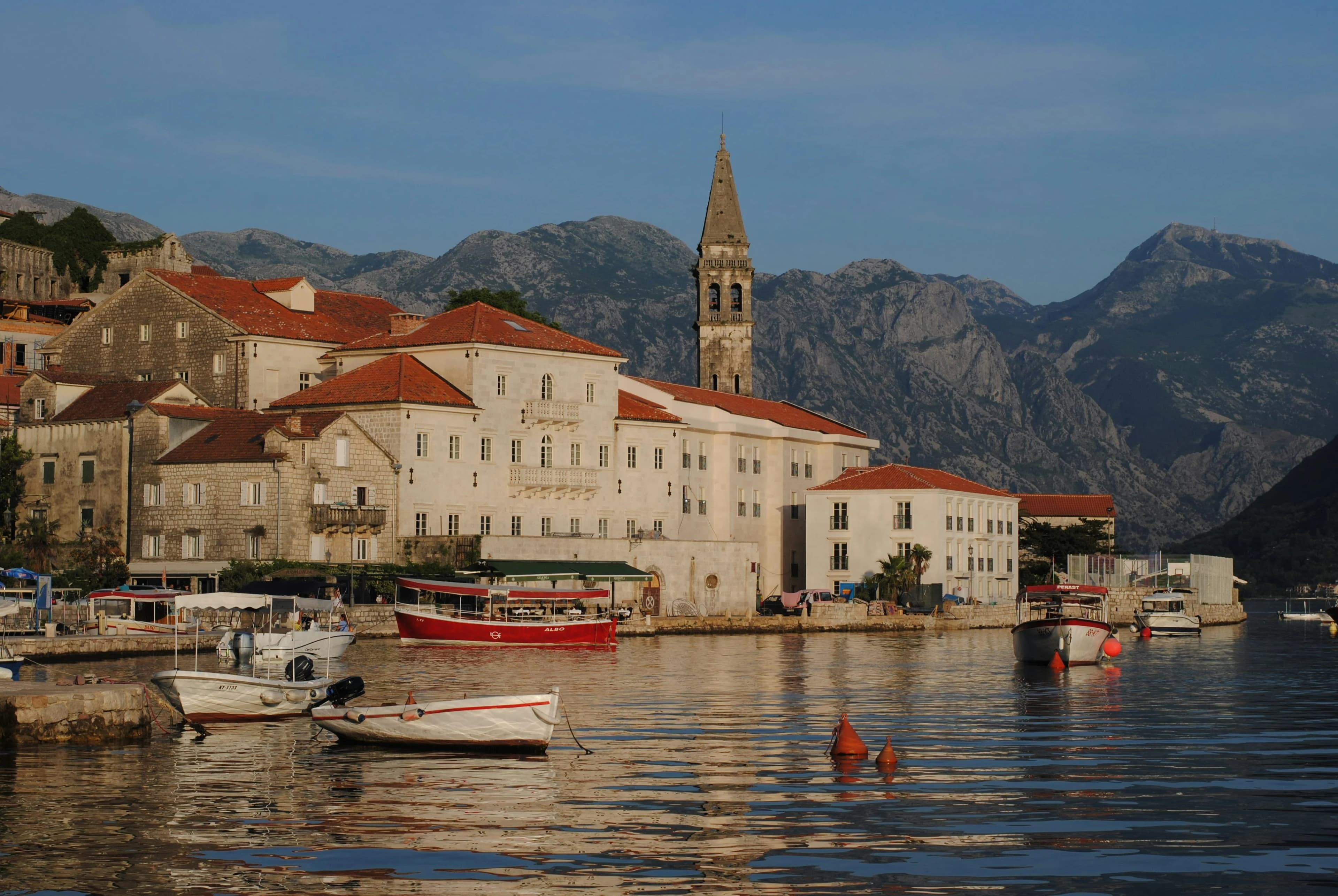
The Bay of Kotor is Montenegro's most photographed geography, and for good reason that goes beyond aesthetics. The enclosed bay, ringed by limestone mountains dropping directly into the water, creates a microclimate and a visual atmosphere unlike anything else on the Adriatic. Historic towns such as Kotor, Perast, and Dobrota sit on the bay's edge, many of them within UNESCO-designated old town boundaries. Properties here tend to occupy converted stone palaces or purpose-built structures that work with the landscape rather than against it. A suite overlooking the bay provides a completely different relationship to the light, the water, and the surrounding fortifications than any standard accommodation can offer.
The open Adriatic coast: Budva Riviera and beyond
South of the bay, the coastline opens onto the Budva Riviera, where the geography shifts from enclosed fjord to open sea. The town of Budva itself has a medieval walled centre, but the surrounding area is more cosmopolitan and resort-oriented. Further south, the Lustica Peninsula and the area around Tivat have attracted significant infrastructure investment, including Porto Montenegro, a superyacht marina that has reshaped the luxury profile of the entire region. Suites in this corridor tend toward the contemporary: larger footprints, direct sea access, and a more international design sensibility.
The mountain interior: Durmitor and Kolasin
Montenegro's interior is frequently overlooked by travelers who treat the country as a coastal destination only. This is an error. Durmitor National Park, a UNESCO World Heritage Site, contains one of Europe's deepest canyons (Tara River Canyon) and a landscape defined by glacial lakes and dense pine forest. Kolasin, the country's primary ski resort town, has seen notable investment in higher-end accommodation. A suite in the mountain interior offers thermal silence, altitude, and a fundamentally different sensory register than the coast.
When to visit Montenegro and book a luxury hotel suite
Montenegro's tourism rhythm is heavily coastal and seasonal. The peak months of July and August concentrate the highest demand, the highest prices, and the fullest calendar of nautical and social activity along the Adriatic. For travelers who prioritize space, quiet, and suite availability without the friction of high season, June and September represent the most considered choice: the sea temperature is comparable, the crowds are absent, and properties are more likely to accommodate specific requests.
The spring shoulder season (April to May) suits travelers oriented toward the interior and cultural sites. The old towns, the monasteries of the Ostrog and Moraca, and the national parks are accessible without the summer compression. Winter is relevant primarily for the mountain interior, where Kolasin operates as a ski destination from December through March.
There are no globally significant art or fashion events on the scale of Venice or Milan that would anchor a specific travel date. The Kotor Carnival in winter and the Sea Dance Festival in summer are the two most recognized cultural events on the Montenegrin calendar, though neither operates at the scale that drives significant luxury travel decisions on its own.
Understanding luxury hotel standards in Montenegro
Montenegro does not operate under a domestic prestige classification equivalent to the French Palace label. The country uses a standard star rating system, and five-star properties are relatively few in number compared to more established Mediterranean markets. What Montenegro does offer is a category of property that could be described as the historic stone residence: Venetian-era palaces, Orthodox monastery guesthouses, and fortified coastal villas that have been converted into high-specification accommodation.
The arrival of international brands and significant private investment, particularly around Porto Montenegro and the Lustica Bay development, has introduced a more contemporary luxury vocabulary. These projects bring amenities, marina access, and design standards consistent with international expectations. The tension between historic architecture and contemporary resort development defines the current luxury landscape in Montenegro, and it is a tension worth understanding before selecting where to stay.
Suite specifications in Montenegro's top properties typically include direct sea or bay views, private terraces, and in some cases private pool access. Butler service, while available in the most established properties, is less universal here than in comparable Mediterranean markets such as the French Riviera or the Greek islands.
How to choose the best luxury suite in Montenegro
The primary variable in Montenegro is geography, not brand. The experience of staying in a suite on the Bay of Kotor is categorically different from a suite on the open Adriatic, which is again different from a mountain property. Clarifying which landscape you are actually choosing is more important than any amenity list.
The second variable is architectural register. Montenegro's most interesting properties occupy historic structures: Venetian stone buildings, Ottoman-era residences, and Austrian-period villas that carry genuine material history. These properties offer atmosphere and specificity that purpose-built resort hotels cannot replicate, but they may come with constraints: limited elevator access, smaller suite footprints, or the ambient sound of a working historic town. Contemporary resort properties offer scale and operational consistency, with the trade-off of less distinctive character.
Practical considerations specific to Montenegro include transfer logistics. The country has two international airports (Podgorica and Tivat), and Tivat is significantly more convenient for coastal properties. During peak summer, road traffic along the coastal highway can add considerable time to transfers. Guests staying on the bay should factor in water taxi access as a genuine and often preferable alternative to road travel.
For families, suite sizing is a relevant filter. Montenegro's historic properties often have smaller individual suite footprints than their resort counterparts. Guests traveling with children or requiring multiple connecting rooms should verify configuration carefully before confirming.
Why a curated selection by La Suite matters in Montenegro
Montenegro's luxury accommodation market is still developing its international legibility. The supply of genuinely exceptional suites is concentrated among a relatively small number of properties, and the quality gap between a well-chosen suite and a poorly chosen one is significant. Marketing across Montenegrin hospitality can be aspirational in ways that do not always correspond to the physical reality.
La Suite applies a consistent editorial standard to every property in its selection: suite footprint, view geometry, service architecture, and the coherence between price and experience. In a market where due diligence is particularly valuable, a curated selection by La Suite removes the noise and surfaces the properties that actually deliver at the level this landscape is capable of providing. Montenegro rewards travelers who arrive prepared. The curated selection by La Suite is the instrument that makes that preparation possible.