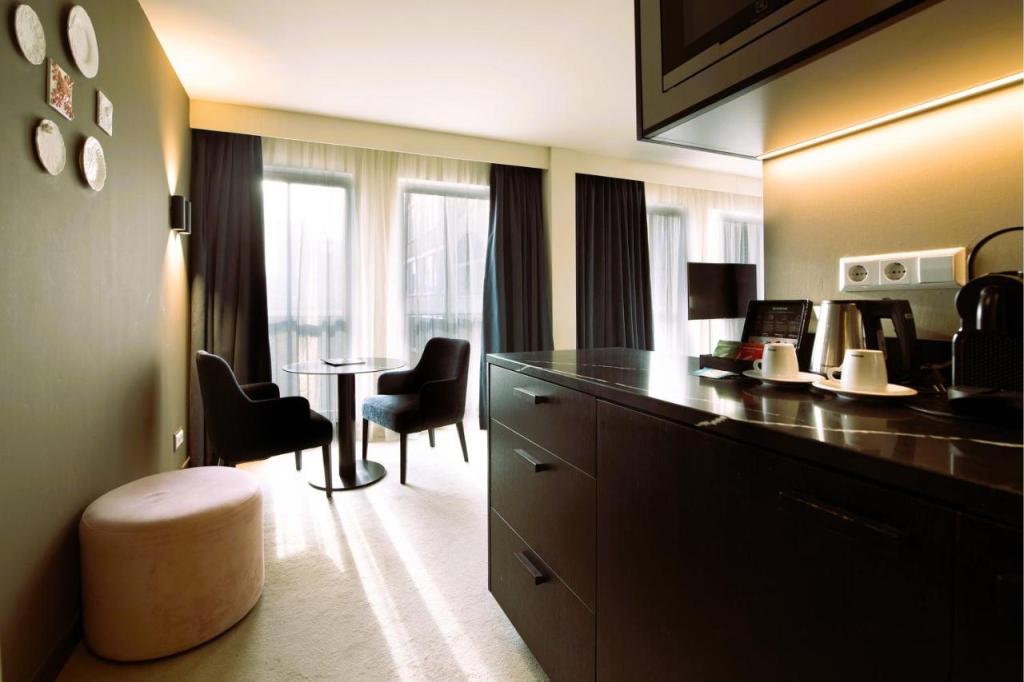
Staying in De Pijp: what the neighbourhood offers the suite traveller
For the traveller choosing a suite in this part of Amsterdam, the neighbourhood's compactness is its primary asset. The Rijksmuseum, the Van Gogh Museum, and the Stedelijk are all within a ten-minute walk from its northern edge. The Vondelpark borders it to the west. The Pijp itself contains the Heineken Experience (architecturally notable as a repurposed 19th-century brewery) and the Gerard Douplein, a square that functions as a de facto living room for the neighbourhood's cafe culture.
The distinct character of De Pijp compared to other Amsterdam neighbourhoods
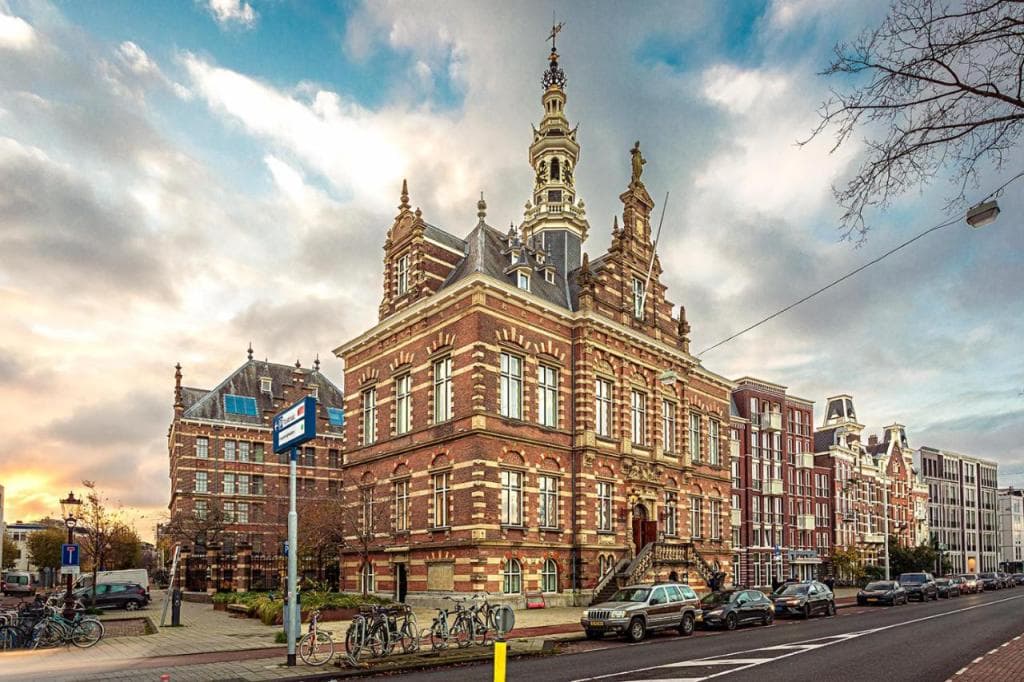
Amsterdam's luxury accommodation is distributed unevenly across its districts. The canal ring, designated a UNESCO World Heritage Site in 2010, concentrates the city's most historically significant hotel conversions: former merchant houses and civic buildings repurposed into boutique properties. De Pijp operates on a different register. It is less monumental, more granular. The luxury experience here is defined less by architectural grandeur and more by neighbourhood density: the quality of what is immediately outside the door.
The Oud-Zuid district, which borders De Pijp to the west and south, contains Amsterdam's highest concentration of five-star properties along the Museumplein axis. Travellers who prioritise formal hotel infrastructure tend to gravitate there. De Pijp appeals to a guest who values the surrounding street life as part of the stay, rather than something to be managed around.
When to visit De Pijp and Amsterdam
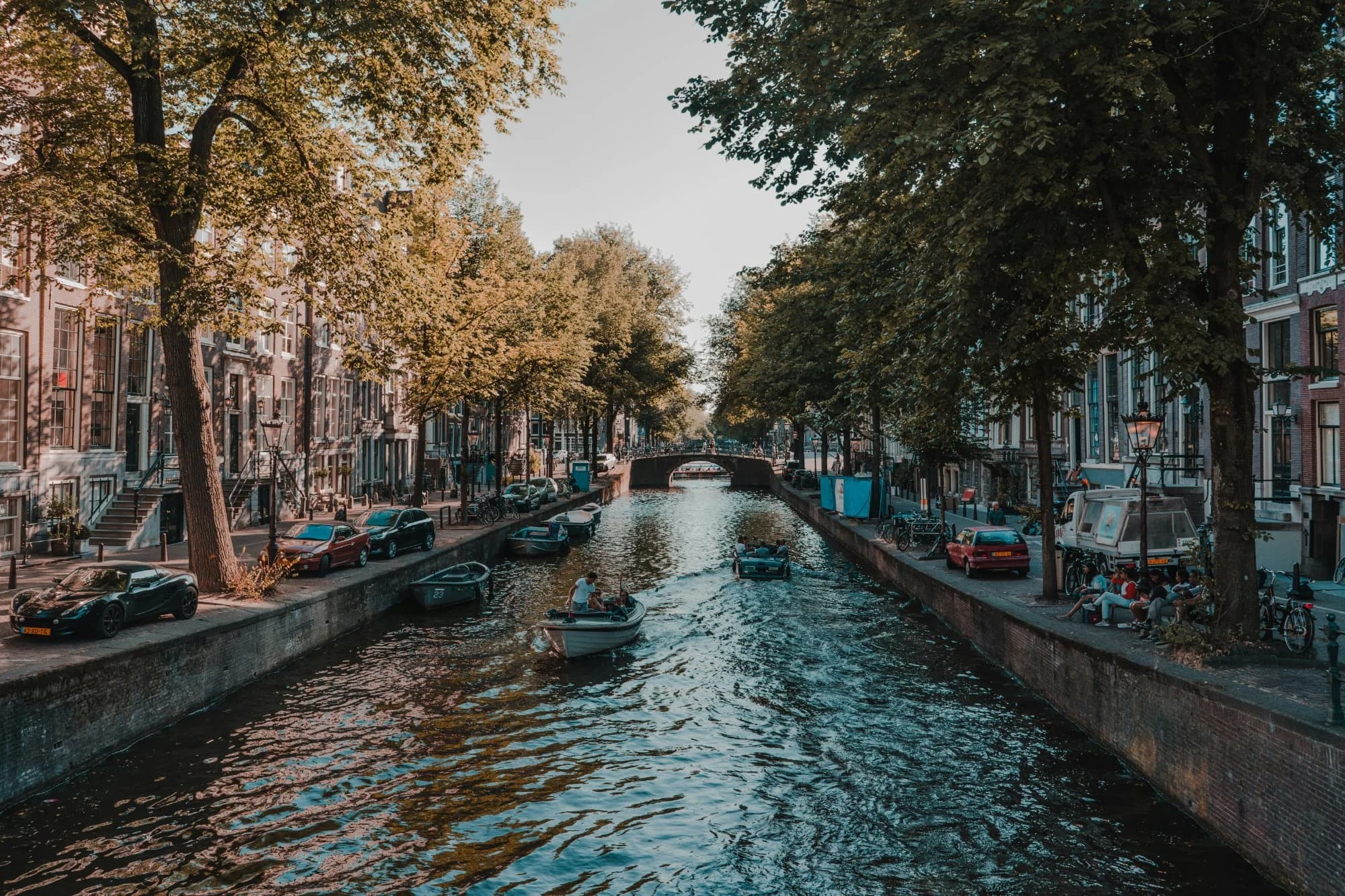
Amsterdam's peak season runs from April through August, when canal light is at its most photogenic and the city's outdoor culture fully activates. The Albert Cuyp market is busiest on Saturday mornings during this period. Suite availability at the city's better properties tightens considerably from late April onward, and rates reflect this.
September and October represent a considered alternative: temperatures remain mild, cultural institutions begin their autumn programming, and the neighbourhood operates without the compression of summer tourism. The Amsterdam Dance Event, held each October and drawing a significant international audience, fills the city's higher-end accommodation rapidly. February and March are the city's quietest months, with suite rates at their most negotiable and the Dutch Masters collections accessible without queuing.
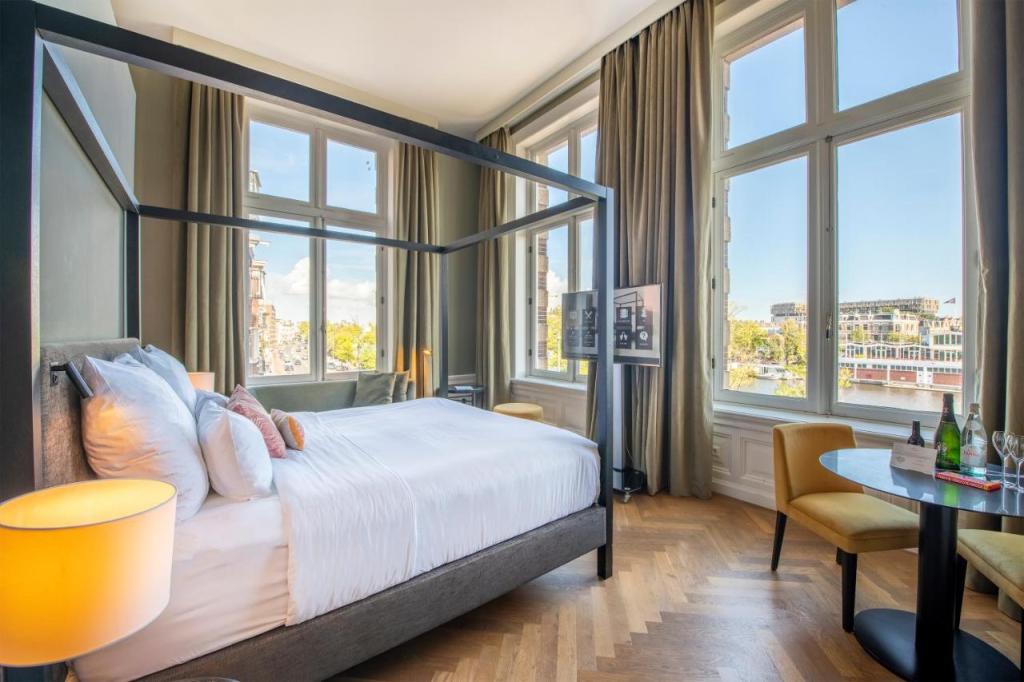
Amsterdam does not have a formal designation equivalent to the French Palace label. The Netherlands classifies hotels through a standard star system administered by the Benelux Hotel Classification. Within this framework, the city's top-tier properties typically position themselves through design investment, suite-to-room ratios, and food and beverage programmes rather than regulatory distinction. A luxury hotel suite in Amsterdam at the highest tier will typically offer canal or courtyard views, historically sensitive interiors, and access to spa or wellness infrastructure, though configurations vary significantly by property.
How to choose the right suite in De Pijp
The primary consideration for a suite in this neighbourhood is orientation. De Pijp's streets are narrow and dense, and a suite facing an internal courtyard will deliver a qualitatively different experience from one facing the street. Courtyard-facing rooms offer quiet; street-facing rooms offer the neighbourhood's ambient life. Neither is objectively superior, but the choice should be made consciously.
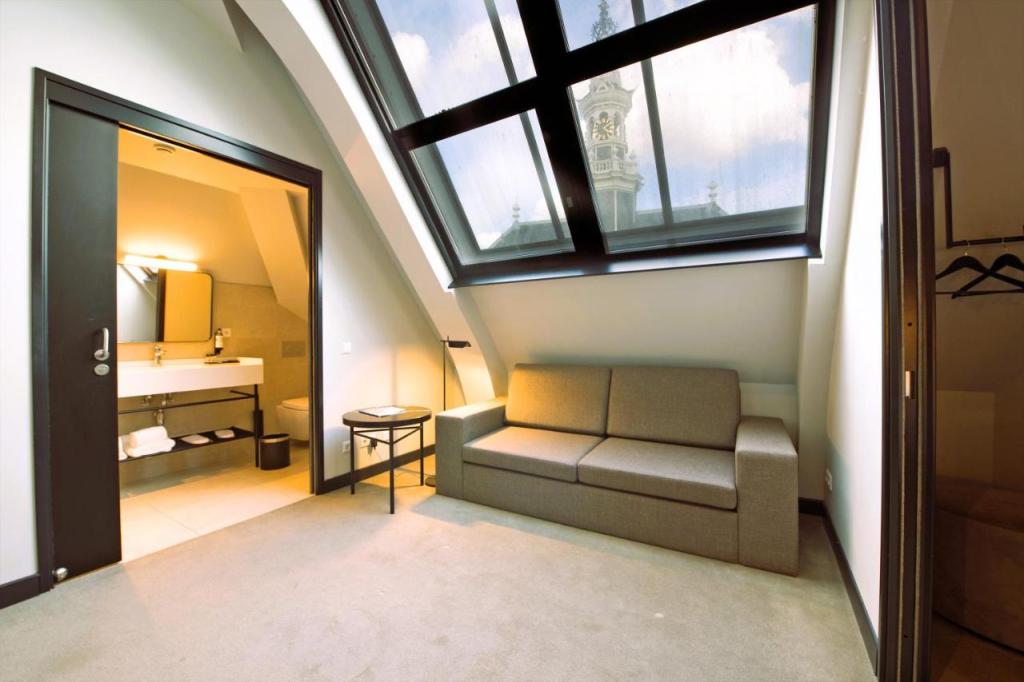
The second consideration is scale. Amsterdam's building stock, even in repurposed form, rarely produces the kind of large-format suites common in purpose-built luxury hotels in Paris or London. Ceiling heights in 19th-century Pijp buildings are generous, but floor plates are narrow. Travellers accustomed to suite configurations in newer urban properties should review spatial dimensions carefully. A well-curated smaller suite in this neighbourhood will often outperform a larger room in a less considered property elsewhere in the city.
Connectivity to the rest of Amsterdam is uncomplicated. Tram lines run along Ferdinand Bolstraat and the northern edge of the neighbourhood, connecting directly to Centraal Station and the canal ring. For travellers arriving from Schiphol, the journey by train to Amsterdam Zuid and then tram into De Pijp takes approximately thirty minutes under normal conditions.
The value of curation in a neighbourhood with limited luxury inventory
De Pijp is not a neighbourhood with a large luxury hotel footprint. The properties that qualify under La Suite's criteria are few, and the distinctions between them are specific. In a market where supply is constrained and the differences between properties are architectural and experiential rather than categorical, a curated selection provides a material advantage over broad booking platforms.
La Suite's approach to Amsterdam applies the same editorial rigour used across Europe: each property is assessed on suite quality, spatial integrity, neighbourhood appropriateness, and the coherence of the guest experience. For a neighbourhood like De Pijp, where the surrounding context is as important as the room itself, this contextual assessment matters. The goal is not to present every available option but to identify the suites that will perform well for a specific kind of traveller.
Across the Netherlands, La Suite applies the same standard: fewer properties, more precision. The curated selection by La Suite reflects a considered view of where a luxury hotel suite genuinely delivers on the promise of the destination.