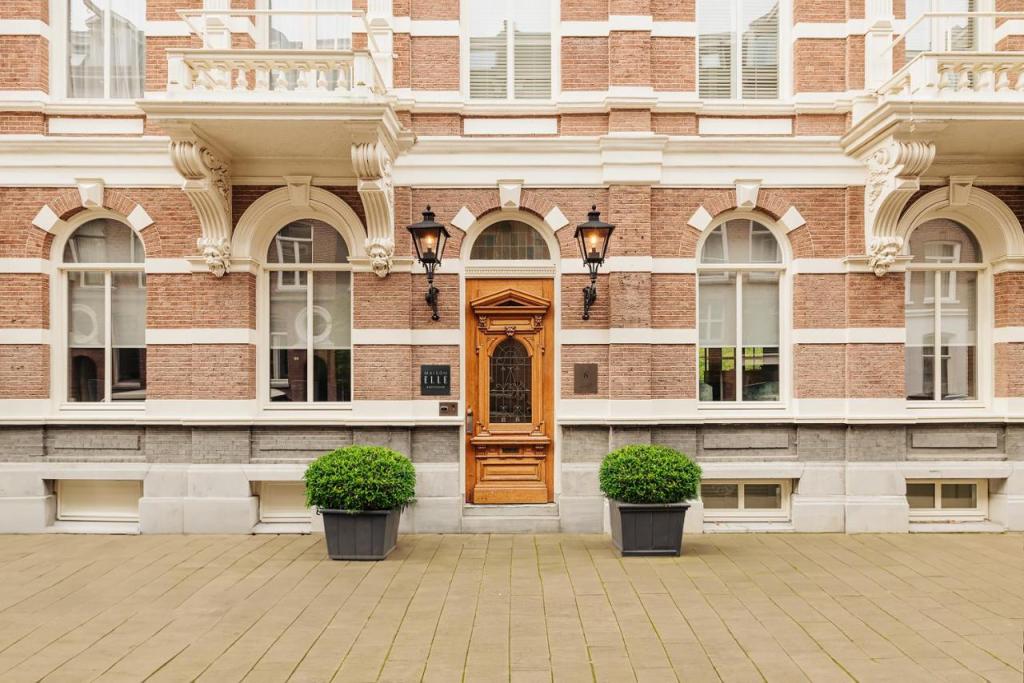
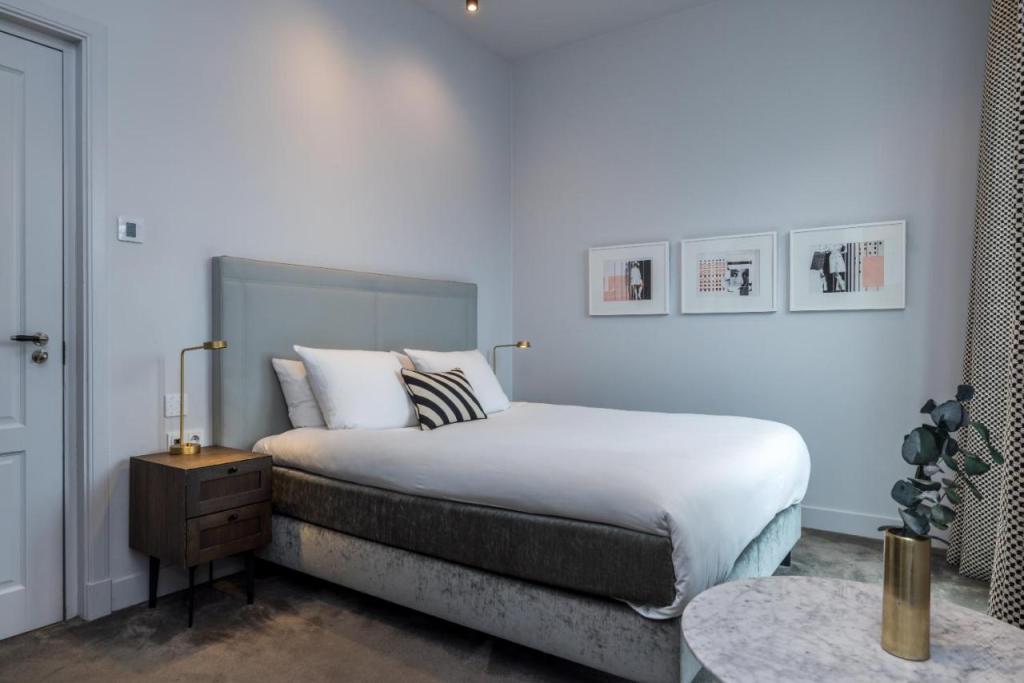
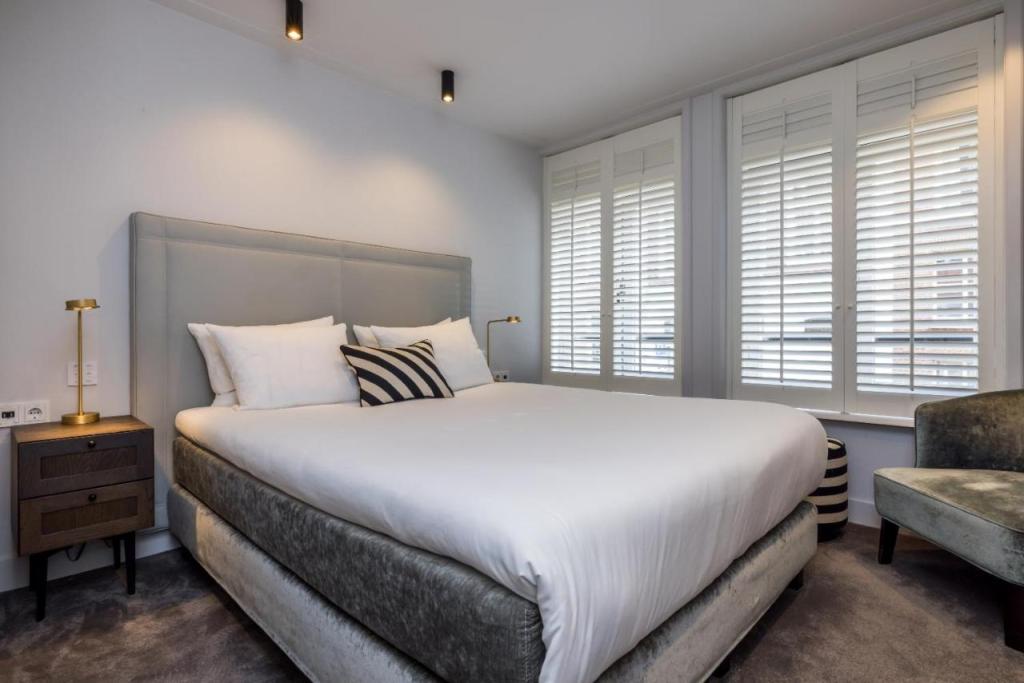
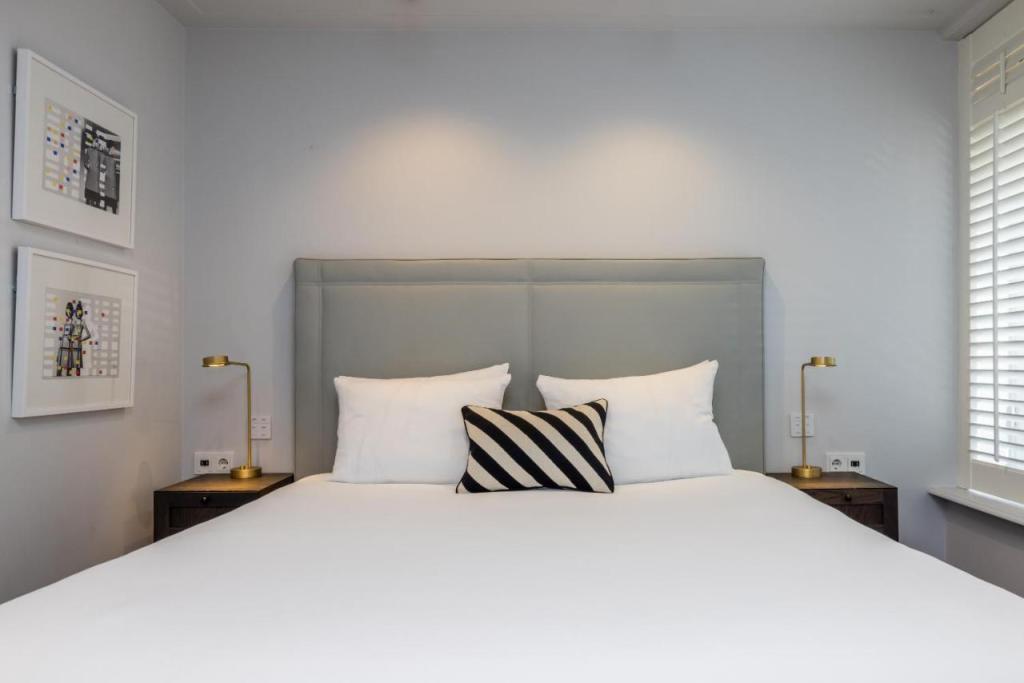
Comfortable Accommodations Maison ELLE Amsterdam offers 4-star comfort with air-conditioning, private bathrooms, and modern amenities. Each room includes a work desk, free WiFi, and a flat-screen

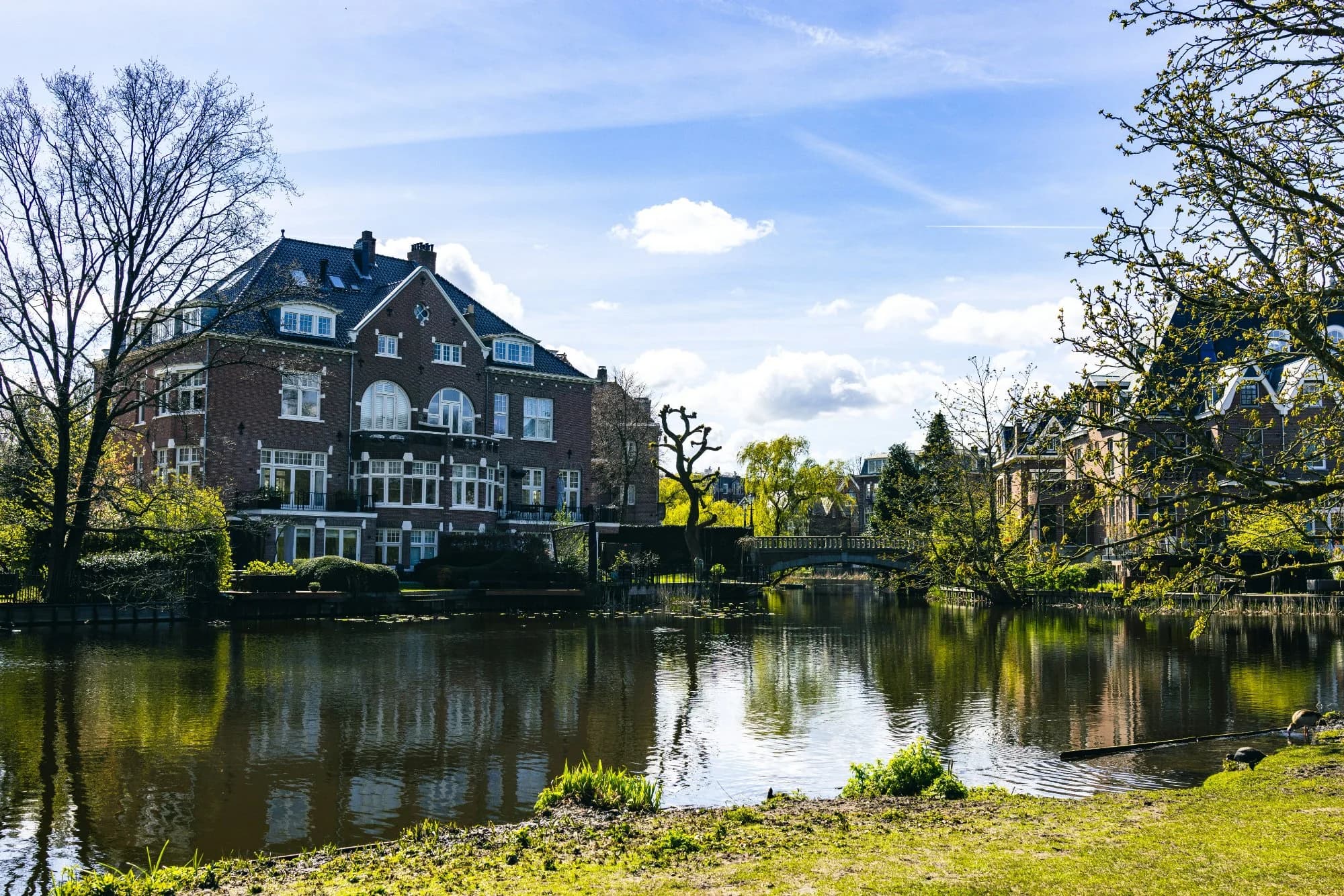
Vondelpark sits in Amsterdam's Oud-Zuid district, a quarter that developed rapidly during the late 19th century as the city's mercantile class sought space and architectural expression beyond the medieval centre. The result is a neighbourhood of broad, tree-lined streets, substantial brick townhouses, and a civic park designed by landscape architects Jan David Zocher and his son Louis Paul Zocher. Today, the area retains a residential seriousness that sets it apart from the canal belt's tourist-facing commercial layer. For a high-end traveller, this distinction matters considerably.
1 hotel available

Comfortable Accommodations Maison ELLE Amsterdam offers 4-star comfort with air-conditioning, private bathrooms, and modern amenities. Each room includes a work desk, free WiFi, and a flat-screen

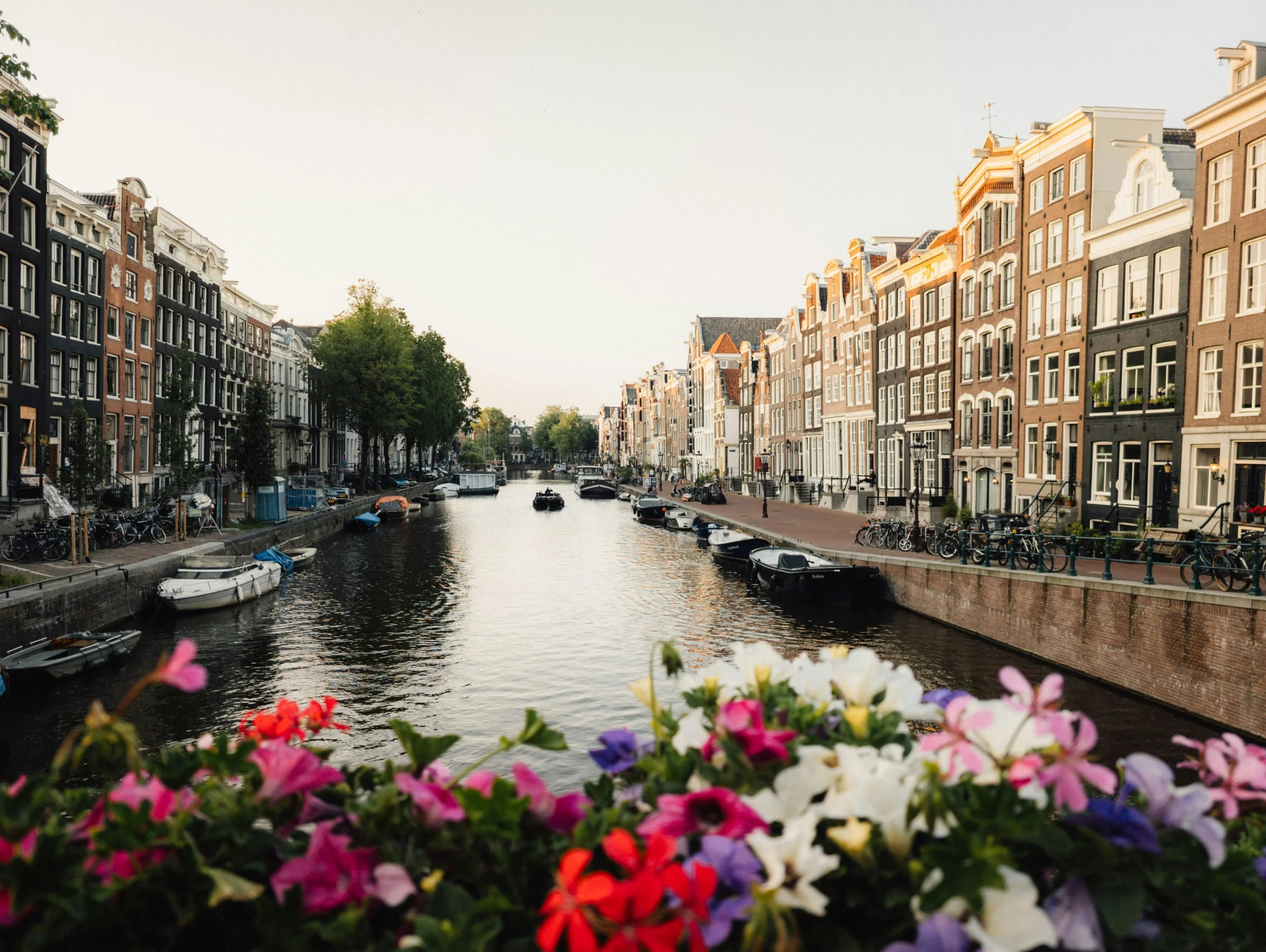
Centrum is not simply the geographic centre of Amsterdam. It is the city's original urban fabric, and its physical coherence is unlike almost any other European capital district. The canal ring at its core, inscribed as a UNESCO World Heritage Site, was engineered in the early 17th century as a deliberate act of urban planning. The result is a neighbourhood where every street, bridge, and gabled facade participates in a singular visual logic. A luxury hotel suite positioned within this framework offers something that no peripheral address can replicate: genuine immersion in the city's architectural identity.

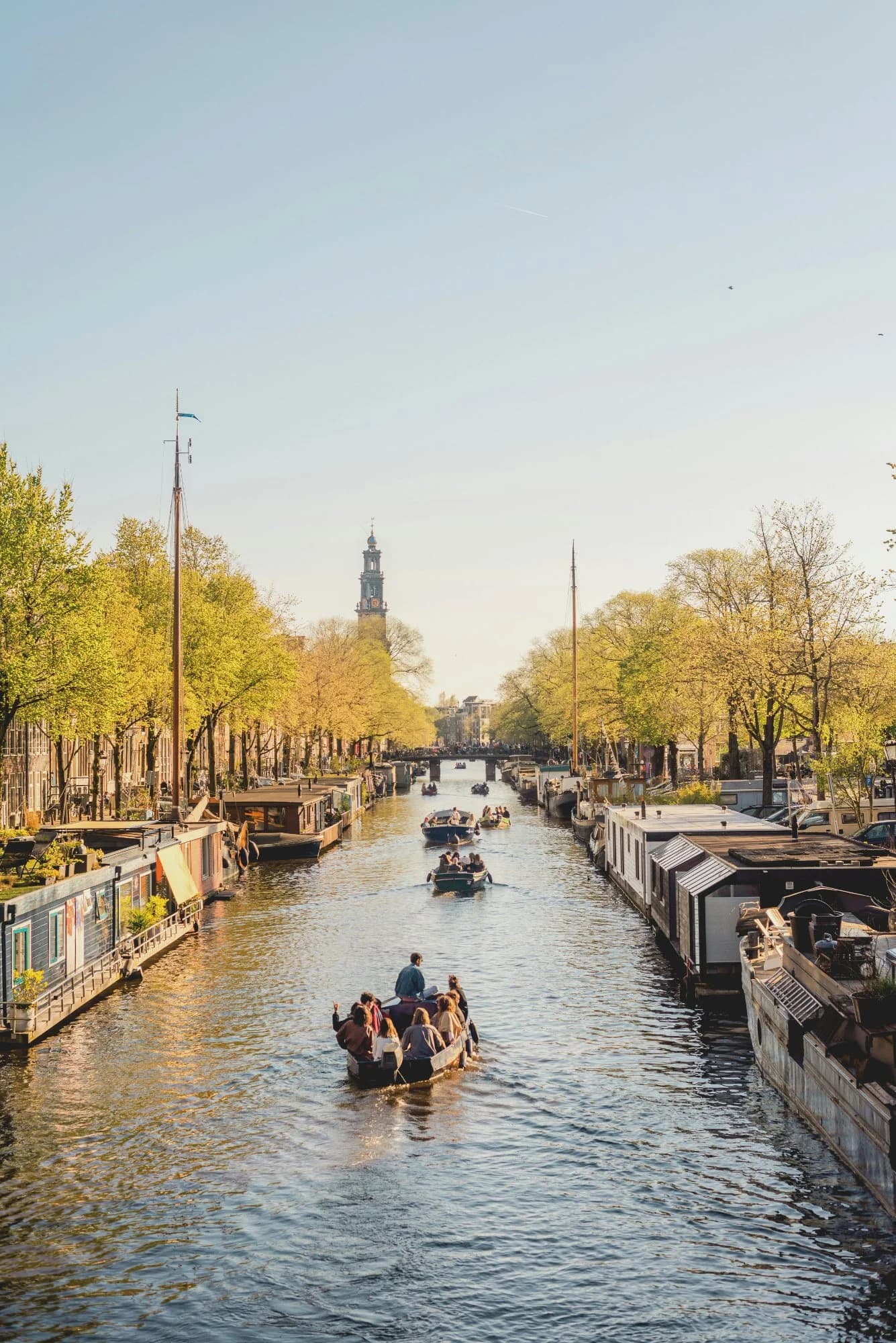
Grachtengordel translates literally as "canal girdle": a semicircular belt of four principal canals, the Herengracht, Keizersgracht, Prinsengracht, and Jordaan-adjacent waterways, constructed during Amsterdam's Golden Age in the early 17th century. The district was planned with deliberate social hierarchy. The Herengracht, meaning Gentlemen's Canal, attracted the wealthiest merchant families, whose double-fronted houses with ornate gables set the architectural standard for the entire ring. Today, that hierarchy persists in a different register: the Herengracht corridor remains the address of choice for diplomats, institutional foundations, and the most considered hotels in Amsterdam.

Le Jordaan sits in the western canal ring of Amsterdam, bounded by the Prinsengracht to the east and the Singelgracht to the west. Historically a working-class district of artisans and merchants, it has undergone a long and deliberate transformation into one of the most sought-after addresses in the Netherlands. Today, it is characterized by independent design shops, gallery-dense streets, and a low-rise streetscape that gives it an intimacy absent from more commercial parts of the city.
The park itself is not an amenity in the resort sense. It is a functioning urban green space used by Amsterdam residents for cycling, open-air performance, and daily movement. Its presence gives the surrounding streets a tempo that is slower and more deliberate than the Damrak or the Jordaan. Staying here, particularly in a well-appointed suite, means engaging with Amsterdam on terms closer to those of its inhabitants than its visitors.
The hotels and grand residences that sit closest to Vondelpark are predominantly housed in late-19th-century and early-20th-century buildings. This matters from a suite-selection perspective. The floor plans of these structures tend to be generous, with high ceilings, tall sash windows, and a scale that accommodates suite configurations more naturally than post-war construction. The Oud-Zuid streetscape, particularly along Vondelstraat and the streets radiating from the park's perimeter, offers a visual coherence that makes the neighbourhood immediately legible as a place of considered urban living.
The proximity to Amsterdam's principal museum quarter is a defining factor. The Rijksmuseum, the Van Gogh Museum, and the Stedelijk Museum are all accessible on foot or by bicycle from the park's southern edge. This is not incidental. For a culturally motivated traveller, choosing a luxury hotel suite in this part of Amsterdam creates a natural spatial relationship between accommodation and institution that more centrally located hotels cannot replicate with the same ease.
Amsterdam operates across two distinct seasonal registers. From April through early June, the city is at its most photogenic, with long daylight hours, moderate temperatures, and the tulip season drawing cultural travellers from across Europe and North America. This period also coincides with King's Day (27 April), when the city's streets and canals function as a single public event of considerable scale. Suite availability during this window contracts early; advance planning of several months is standard practice for properties of the highest calibre.
September and October represent a second premium window. The summer crowds have dissipated, the cultural institutions resume their full autumn programming, and the light over the park acquires a particular quality that photographers and design-literate travellers specifically seek. Rates in this shoulder season can be marginally more accessible, though the most sought-after suites in Amsterdam's finest hotels remain consistently priced. Winter, from November through February, suits travellers who prioritise privacy and a more intimate city. The park's bare-branch geometry and the reduced foot traffic in the museum quarter create a different but equally precise version of the city.
The Netherlands does not operate the French Palace designation system, nor does it maintain an equivalent state-endorsed prestige tier for hotels. Quality is instead signalled through membership in international collections such as The Leading Hotels of the World or Preferred Hotels and Resorts, combined with consistent critical positioning in specialist travel media. At the suite level, the strongest Amsterdam properties are characterised by a design approach that favours restraint over ornament. Dutch interior culture has historically prized functional clarity, quality of material, and spatial organisation over decorative excess. This translates, in the finest luxury hotel suites near Vondelpark, into rooms where the quality of a fabric or the proportion of a window carries more weight than a chandelier.
Service culture in the best Amsterdam hotels is notably direct and knowledgeable. Staff at this level are typically fluent in multiple languages and accustomed to working with international guests who have precise, non-negotiable requirements. This aligns well with the expectations of the traveller who selects accommodation through a curated platform rather than through a generic booking aggregator.
Several considerations are specific to this neighbourhood. First, the building typology. A suite in a converted 19th-century townhouse will deliver a different spatial experience from one in a purpose-built contemporary hotel nearby. The former tends to offer character, original architectural detail, and a sense of historical continuity; the latter typically provides more uniform infrastructure, soundproofing, and the logistical advantages of a larger property. Neither is categorically superior; the choice depends on the traveller's primary motivation for the stay.
Second, consider orientation and aspect. Suites facing the park itself or its perimeter streets offer a quality of natural light and visual calm that inward-facing rooms cannot match. This is worth specifying at the point of reservation rather than leaving to chance.
Third, assess the suite's relationship to the building's common areas. In this neighbourhood, smaller boutique properties sometimes offer suite-level accommodation without the corresponding infrastructure of a spa, multiple dining spaces, or a concierge with genuine local depth. For the extended stay, or for a trip built around cultural programming, this infrastructure matters and should be part of the evaluation. For those exploring the broader landscape of luxury accommodation in Europe, understanding local typologies at the neighbourhood level is often what separates a precisely right stay from a merely comfortable one.
Amsterdam is a city where the distance between a genuinely exceptional suite and a well-marketed but fundamentally average room can be difficult to read from standard booking interfaces. Photography is almost universally flattering; descriptions borrow from a shared vocabulary of quality signals that have been diluted through overuse. The decision about where to stay in Vondelpark, specifically, requires a level of local and typological knowledge that aggregator platforms are structurally unable to provide.
La Suite's curated selection for Amsterdam applies a consistent editorial framework: space relative to price point, design coherence, service architecture, and the suite's functional relationship to the neighbourhood around it. For the traveller who arrives in Vondelpark with a defined purpose, whether cultural, professional, or personal, this kind of pre-filtered selection is not a convenience but a precondition for a stay that performs as expected. The Curated selection by La Suite reflects the same precision that the neighbourhood itself demands.

Vondelpark sits at the edge of Amsterdam's museum quarter, providing direct access to the Rijksmuseum, the Van Gogh Museum, and the Stedelijk Museum without the noise and density of the historic centre. The surrounding Oud-Zuid district offers wide, residential streets and 19th-century architecture that create a calmer, more considered urban environment. For a high-end traveller, this combination of cultural proximity and neighbourhood quality is a significant advantage over more central locations.
April through early June and September through October represent the two strongest windows for visiting Amsterdam from a cultural and experiential standpoint. Suite availability in the finest hotels contracts considerably during King's Day in late April and during major museum exhibitions, so reservations should be made several months in advance. Winter offers greater privacy and a more intimate version of the city, with park and museum access that feels proportionally more exclusive.
The properties closest to Vondelpark are predominantly housed in late-19th-century Dutch townhouses and Oud-Zuid residential blocks, characterised by high ceilings, large windows, and generously proportioned floor plans. This architectural typology supports well-scaled suite configurations and provides a sense of historical continuity. Some newer boutique properties have adapted these structures with contemporary interiors that maintain the spatial quality of the original buildings.
The Netherlands does not operate a formal state prestige designation equivalent to the French Palace label. Top-tier Dutch hotels signal quality through membership in international collections such as The Leading Hotels of the World and through consistent critical positioning. Design restraint, material quality, and spatial organisation tend to define the finest suites, reflecting a Dutch interior culture that prioritises functional clarity over decorative complexity.
Yes. The Rijksmuseum, Van Gogh Museum, and Stedelijk Museum are all accessible on foot from the park's southern perimeter, typically within a ten-to-fifteen-minute walk. This pedestrian relationship between accommodation and institution is one of the neighbourhood's most practical advantages for culturally motivated travellers staying in a luxury suite in this part of Amsterdam.
A boutique property in a converted townhouse typically offers distinctive architectural character, original period detail, and a more intimate service environment, but may have limited infrastructure such as spa facilities or a full concierge team. A larger luxury hotel provides more consistent logistical support, superior soundproofing, and broader amenity access. The right choice depends on whether the traveller prioritises atmospheric specificity or operational reliability.
The neighbourhood's residential character and the quality of its immediate environment make it well-suited to extended stays. The park provides daily outdoor access, the museum quarter sustains several weeks of cultural programming, and the Oud-Zuid's independent retail and dining infrastructure supports a rhythm closer to local life than to tourism. Suites with kitchen access or integrated living areas are worth prioritising for stays beyond five nights.
Suites in the Vondelpark and Oud-Zuid area are generally positioned at the upper end of Amsterdam's hotel market, reflecting the quality of the building stock, the neighbourhood's prestige, and proximity to the museum quarter. The canal belt and the Jordaan offer comparable or occasionally higher pricing for landmark properties, but the Vondelpark area tends to deliver more consistent spatial quality at the suite level, particularly in terms of room size and architectural character.
Park-facing suites are a distinct asset worth requesting explicitly at the time of reservation rather than relying on standard room assignment. The quality of light over the park changes substantially by season, with spring and autumn offering the most photogenic and atmospherically rich aspects. Suites on upper floors facing the park's perimeter typically provide the best combination of visual access and acoustic separation from street-level movement.
Standard booking platforms apply uniform category labels that do not differentiate meaningfully between a genuinely exceptional suite and a well-marketed standard room with suite designation. In a neighbourhood like Vondelpark, where the building typology, suite orientation, and service architecture vary considerably between properties, a curated approach provides the pre-filtered knowledge necessary to match the right suite to a specific traveller's requirements. La Suite applies a consistent editorial framework that aggregators are structurally unable to replicate.