Best areas in Serbia for a luxury suite stay
Belgrade and the urban core
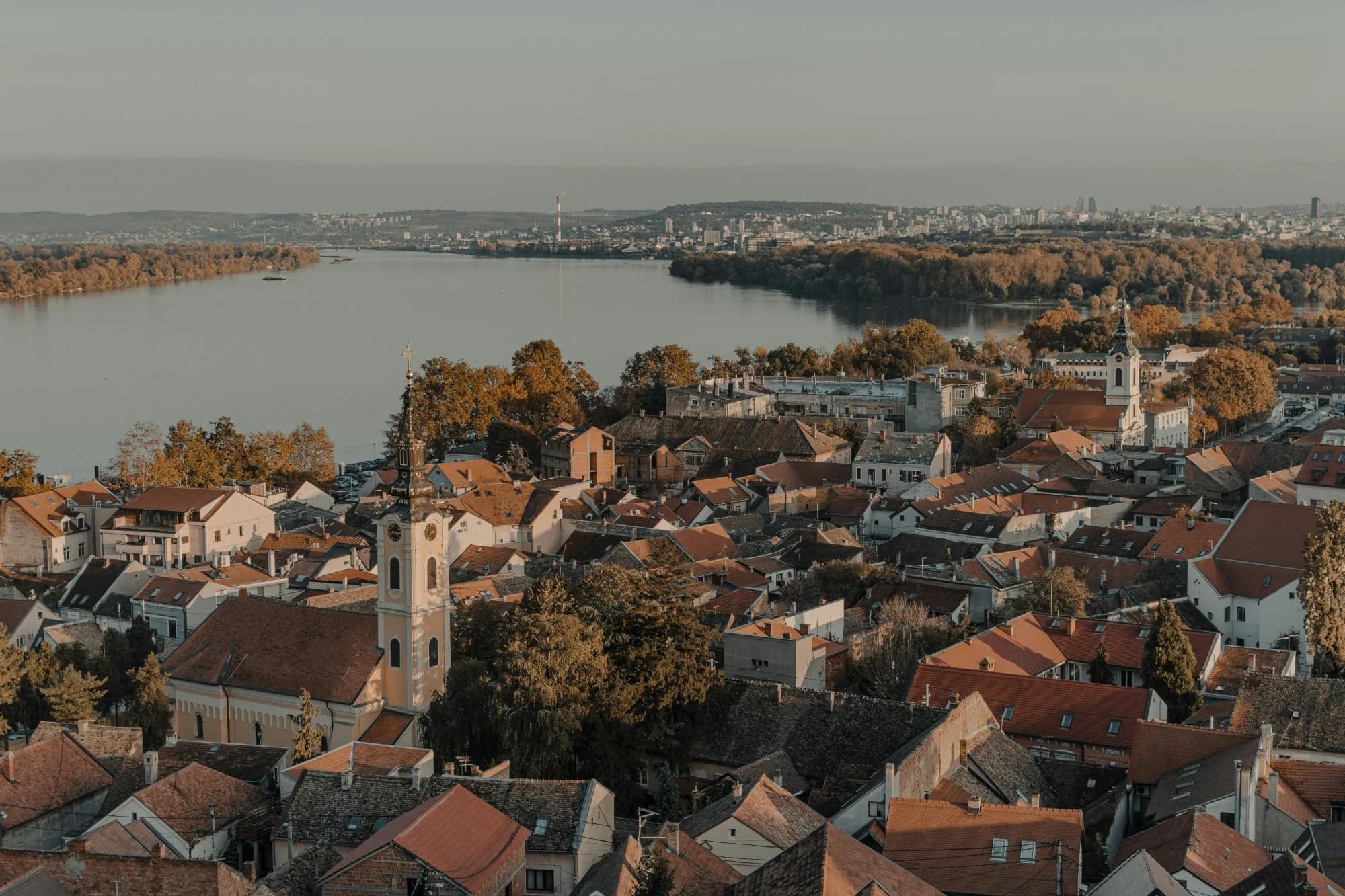
The capital is the country's primary destination for high-end travelers. Its urban fabric is dense with architectural contradiction: Austro-Hungarian facades on the same street as Socialist-era concrete, punctuated by contemporary insertions. The Savamala district has become a reference point for design-forward culture, while Stari Grad (the Old Town) retains the civic weight of an older city. For suite travelers, Belgrade rewards those who want proximity to serious dining, gallery culture, and a nightlife scene that operates by its own rules. The Danube and Sava rivers converge here, and suites with river exposure offer a genuinely distinctive perspective on the city's topography.
Vojvodina and the northern plains
North of the capital, the flat agricultural province of Vojvodina presents a different proposition. Novi Sad, its cultural center, hosts EXIT Festival each summer and carries a relaxed, Central European tempo. The region's rural estates and restored manor properties offer privacy and spatial generosity that city properties cannot match. Travelers drawn to wine, cycling through flat countryside, and the cadence of a slower itinerary will find Vojvodina unexpectedly rewarding.
Western Serbia and the mountain corridor
The Zlatibor plateau, Tara National Park, and the Drina river canyon represent Serbia's most scenically concentrated zone. Altitude here ranges from moderate to significant, and the landscape shifts between forested ridges and open highland meadows. Luxury properties in this zone tend toward intimate scale, with an emphasis on thermal access, outdoor programming, and withdrawal from urban pressure. The hand-carved wooden vernacular architecture of the region informs the aesthetic of several high-end retreats.
Southern Serbia and the monastery route
The Raška region and the Ibar river valley contain some of the most significant medieval architecture in the Balkans: Studenica, Sopoćani, and Žiča are UNESCO-listed or nationally protected monasteries that anchor a cultural circuit of real depth. Accommodation in this corridor is less developed in terms of luxury infrastructure, but select rural properties offer a contemplative counterpoint to the urban energy of Belgrade.
When to visit Serbia for a luxury suite experience
Serbia operates across four distinct seasons, and the optimal timing depends on the nature of the trip rather than a single universal recommendation.
Late spring (April through June) and early autumn (September through October) represent the most balanced periods. Temperatures are moderate, cultural programming is active, and demand for suite inventory has not yet reached peak compression. Belgrade's restaurant terraces open fully in May, and the city's social calendar becomes dense with events through June.
Summer brings EXIT Festival to Novi Sad's Petrovaradin Fortress in July, drawing an international crowd and compressing accommodation availability across the city significantly. Travelers who plan around this event should secure suite bookings several months in advance. The Zlatibor and Tara mountain zones are at their most accessible in July and August, though thermal wellness properties operate year-round and draw visitors through the winter months for exactly that reason.
December through February in Belgrade has a distinct character: a compressed, indoor social life centered on restaurants, galleries, and a jazz and classical music calendar that continues without interruption. Suite rates in this period are generally at their lowest, and the city's texture is visible without the distortion of peak tourist volume.
Local luxury standards: what to expect from top-tier suites in Serbia
Serbia does not operate under a French-style Palace designation or an equivalent national prestige classification for its highest-tier properties. The country's five-star hotel category is the functional ceiling within the official classification system, though the quality and character of properties within that band varies considerably.
The most relevant distinction for suite travelers is between internationally branded luxury hotels (which bring consistent service standards and predictable suite typologies) and independent or locally rooted properties (which tend to offer more spatial idiosyncrasy, more direct connection to regional materials and craft, and a less formulaic guest experience). In Belgrade, both categories are present. In the countryside, independent properties dominate almost entirely.
Suite sizes in Serbia's top properties are competitive with Western European equivalents, and several Belgrade hotels have invested significantly in suite-level design, including dedicated living areas, curated local art, and in some cases private terrace access overlooking the river confluence. Spa infrastructure is strong in the mountain and thermal resort zones, where hydrotherapy traditions are long-established.
How to choose the best suite in Serbia
The primary decision axis for suite selection in Serbia is the tension between urban immersion and territorial withdrawal. Belgrade suites offer density, access, and the particular energy of a capital that operates on its own cultural frequency. Mountain and countryside suites offer the inverse: silence, spatial expansion, and a relationship with landscape that requires no programming to justify itself.
Within Belgrade specifically, floor height and orientation matter considerably. The city's topography rises toward Kalemegdan Fortress, and suites positioned on upper floors with western or northern exposure capture the Sava and Danube rivers as a compositional element rather than a background detail. This is worth specifying at the point of reservation.
For travelers combining both registers (urban and rural) within a single itinerary, the practical distance between Belgrade and the Zlatibor plateau is approximately three hours by road, which makes a split stay logistically coherent without requiring internal flights or complex transfers.
Service expectations at the upper end of the Serbian market have risen measurably in recent years, with several properties investing in multilingual concierge capacity, private car arrangements, and bespoke dining formats. The country's culinary scene, long underestimated externally, has developed sufficient depth in Belgrade to support serious gastronomic programming as part of a suite experience.
Why a curated selection by La Suite matters in Serbia
Serbia's luxury hospitality market is smaller and less mapped than those of its Western European counterparts, which creates a genuine information problem for first-time visitors. Properties range considerably in quality within the same star classification, and the gap between a well-marketed but formulaic hotel and a genuinely considered suite experience is not always visible from standard booking interfaces.
La Suite applies a consistent editorial standard across the territory: spatial quality, design integrity, service calibration, and the capacity of a property to function as a genuine base for the kind of travel its guests actually want to undertake. In a market where curation is less established, this selectivity has measurable value. The curated selection by La Suite for Serbia reflects properties that meet these criteria without concession to volume or marketing spend.