Alanda Marbella Hotel & Wellness, Marbella
Offering an outdoor swimming pool, Alanda Marbella Hotel & Wellness is a 5-star hotel located in Marbella's Golden Mile, just 1.9 mi from Puerto Banus. Free WiFi is available throughout. Overlooking

Andalusia is Spain's largest autonomous community, covering eight provinces and a range of landscapes that require separate consideration. Choosing a base is the first strategic decision for any high-end traveler, because each territory offers a fundamentally different sensory and cultural experience.
53 hotels available

Offering an outdoor swimming pool, Alanda Marbella Hotel & Wellness is a 5-star hotel located in Marbella's Golden Mile, just 1.9 mi from Puerto Banus. Free WiFi is available throughout. Overlooking

Prime Beachfront Location Amare Beach Hotel Sancti Petri in Chiclana de la Frontera offers direct beachfront access with La Barrosa Beach just a 1-minute walk away. Guests can relax on the terrace or

Modern Comforts Apartamentos Buendia Suites in Torremolinos offers recently renovated aparthotel accommodations with air-conditioning, private bathrooms, and free WiFi. Each unit includes a kitche

Elegant Accommodations Boho Club Marbella in Marbella offers a 5-star experience with spa facilities, a fitness center, sun terrace, and a year-round outdoor swimming pool. Guests enjoy free WiFi,

Elegant Accommodations Bordoy Grand House Algarve in Vila Real de Santo António offers a 5-star experience with a swimming pool boasting stunning views, a bar, and free WiFi. Comfortable Amenities Gue

Modern Accommodations Boutique Hotel Casa Cánovas in Cádiz offers adults-only rooms with air-conditioning, private bathrooms, and free WiFi. Each room includes a work desk, mini-bar, and soundproofing

Prime City Center Location Casa Alameda 1760 member of Meliá Collection in Cádiz offers a central position with La Caleta Beach a 19-minute walk away and Plaza San Antonio just 1640 feet nearby. Genov

Elegant Accommodations Cavalta Boutique Hotel in Seville offers a 5-star experience with a rooftop swimming pool, sun terrace, restaurant, bar, and free WiFi. Private check-in and check-out servic

Elegant Accommodations Cristine Bedfor Sevilla Boutique Hotel in Seville offers a 4-star experience with a rooftop swimming pool, sun terrace, restaurant, bar, and free WiFi. Comfortable Ameni

Prime Beachfront Location DAIA Slow Beach Hotel Conil in Conil de la Frontera offers direct beachfront access with La Fontanilla Beach just a 4-minute walk away. Nearby attractions include Playa de la

El Fuerte a historic establishment on the Costa del Sol, now transformed to 5 stars, is the Marbella hotel that best combines casual luxury, an exclusive and welcoming atmosphere and the sheer comfort

The stylish EME Catedral is located next to Seville Cathedral and 197 feet from La Giralda. It offers a rooftop swimming pool and bar with views over the city. The boutique hotel has free WiFi and a s

Elegant Accommodations Fairmont La Hacienda Costa del Sol in Alcaidesa offers a 5-star hotel experience with beachfront access, an infinity swimming pool, and a hot spring bath. Guests enjoy spa f

Located in the heart of Andalusia on a large country estate, Finca La Bobadilla - The Leading Hotels of the World features a seasonal outdoor pool and a spa. Constructed in the style of a traditional

Elegant Accommodations Gran Marbella Resort & Beach Club in Marbella offers a 5-star experience with spa facilities, a sun terrace, and a lush garden. Guests enjoy a modern restaurant serving Medi

Elegant Accommodations Hacienda del Mar member of Meliá Collection in Estepona offers luxurious rooms with sea views, air-conditioning, and modern amenities. Each room includes a private bathroom,

Comfortable Accommodations Hospedium Hotel A Mar in Villafranca de los Barros offers comfortable rooms with air-conditioning, private bathrooms, and modern amenities. Each room includes a mini-bar, TV

This 5* Grand Luxury Boutique Hotel occupies a 16th-Century palace in the heart of the ancient city of Córdoba. It has an outdoor pool set in pretty gardens. The elegant rooms of the Hospes Palacio d

Hotel Alfonso XIII, a Luxury Collection Hotel, Seville is located next to Seville’s Real Alcazares. It offers an outdoor swimming pool, gym and a characteristic garden courtyard with fountain. Rooms

Elegant Accommodations Hotel Bodega Tio Pepe in Jerez de la Frontera offers a 4-star experience with a rooftop swimming pool, fitness center, sun terrace, and lush garden. Guests enjoy free WiFi, a re

When summer crowds disperse and August's frantic pace fades away, an enchanted respite opens for discerning travelers. October is, without question, the best-kept secret of luxury hospitality. It's the time when Mediterranean light turns golden, when the sea retains the warmth accumulated all summer long, and when service in exceptional establishments returns to its most attentive fluidity. Traveling in the shoulder season is no compromise, but rather a quest for elegance, space, and intimacy. From Andalusia to the foothills of the Atlas, through the wild coasts of the Algarve, we have selected five sumptuous retreats to celebrate the return of tranquility. Here is our guide to extending summer with mastery.
BY Jules Peulet

Your honeymoon is far more than a simple journey. It's the inaugural celebration of a new chapter, a moment where time itself seems to pause. For an occasion of such rarity, choosing your destination matters almost as much as selecting your intimate sanctuary. A standard room in a grand hotel simply won't do; you deserve an exceptional suite. A space where architecture, design, and service merge to create the incomparable. Whether it's a troglodytic refuge facing Santorini's caldera, a hidden castle in the heart of Paris, or a Scottish villa swept by sea spray, La Suite has explored the continent for you. Discover our carefully curated selection of 11 exceptional European suites for a honeymoon defined by aesthetics and privilege.
BY Jules Peulet
Seville functions as the cultural capital of the south. Its historic centre contains some of Spain's most architecturally significant palaces and aristocratic townhouses, many of which have been converted into formal luxury hotels. The Baroque street grid, the proximity to the Real Alcázar, and the city's tradition of private courtyard culture make this an environment where interior design and historical authenticity carry real weight. Suites in this context tend to reward guests who appreciate spatial storytelling over amenity maximisation.
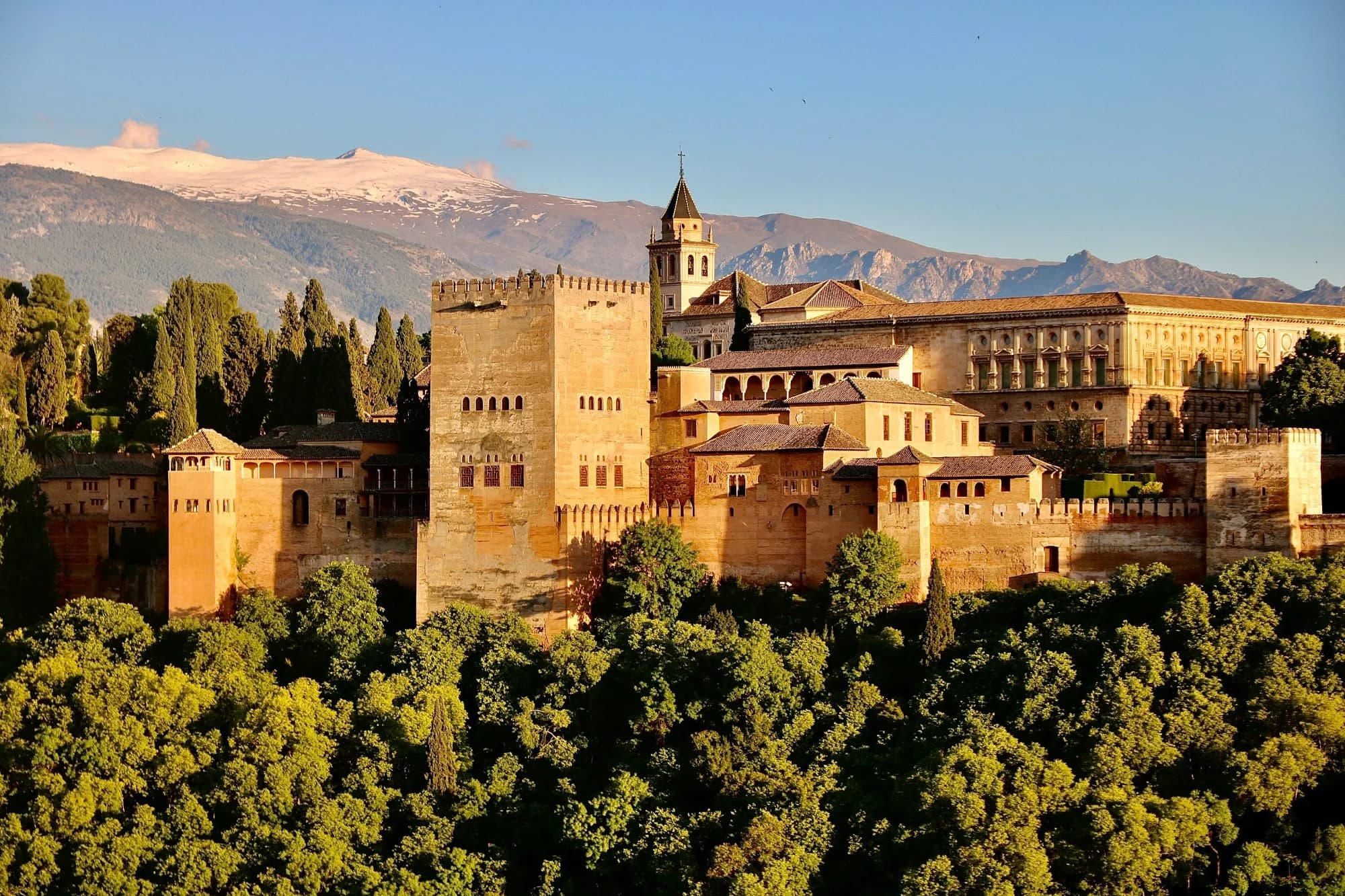
Granada sits at the foot of the Sierra Nevada, Spain's highest mountain range. The Alhambra palace complex defines the city's international identity, but the surrounding province extends into a far quieter rural landscape. Luxury properties here range from converted carmen houses within the old Moorish quarter to contemporary rural retreats at altitude. The contrast between the urban density of the Albaicín and the silence of the sierra makes this one of Andalusia's most architecturally and experientially varied zones for suite travel.
The western coastline, centred on Marbella and its surrounding municipalities, represents Andalusia's most internationally recognised luxury resort territory. This is a zone defined by private beach access, marina culture, and a Mediterranean microclimate that supports outdoor living for the majority of the year. High-end properties here tend toward contemporary architecture with strong indoor-outdoor integration. The area attracts a cosmopolitan clientele and maintains some of the highest suite inventory density in the region.
The inland provinces of Cádiz and Málaga contain some of Andalusia's most scenically concentrated landscapes. Ronda, positioned on a limestone plateau bisected by the El Tajo gorge, has long attracted travelers interested in dramatic natural geography. Jerez de la Frontera offers a different register: flamenco culture, equestrian heritage, and sherry production within a city that remains largely off the international luxury circuit. Boutique hacienda conversions and rural fincas in these provinces offer genuine seclusion at a scale that coastal properties rarely achieve.
Andalusia's climate is one of the most reliable in Europe, but seasonal timing has a direct bearing on both the quality of the experience and suite availability at top-tier properties.
Spring (March to May) is widely considered the optimal period. Temperatures are moderate, the landscape is in full botanical expression, and the major cultural events concentrate in these months. Seville's Semana Santa (Holy Week) and the Feria de Abril represent two of Europe's most significant popular festivals, drawing considerable demand for premium rooms. Advance planning of several months is advisable for these periods.
Summer (June to September) brings extreme heat to the interior, with temperatures in Seville and Córdoba routinely exceeding 40°C. Coastal properties and elevated rural retreats remain viable, but urban suite travel during July and August requires genuine tolerance for intense heat outside air-conditioned environments. The coastline compensates with long evenings and consistent sea conditions.
Autumn (October to November) offers a second window of comfortable temperatures with significantly reduced visitor density. This is a considered traveler's season: cultural institutions are less pressured, restaurant reservations easier to secure, and properties often in a more attentive mode of operation.
Winter (December to February) is mild by northern European standards, particularly on the coast, and represents excellent value for suite travel at properties that remain open. The Sierra Nevada ski season typically runs from December through April, offering a counterintuitive pairing of mountain sport and Moorish architectural culture within a single regional trip.
Spain does not operate the Palace hotel designation used in France, but the national hotel classification system awards five-star Gran Lujo status to its most exceptional properties. This designation is relatively rare and signals a consistent commitment to spatial standards, service ratios, and physical infrastructure.
The hacienda typology is particularly significant in Andalusia. These agricultural estates, many dating to the 16th and 17th centuries, have been converted with varying degrees of architectural sensitivity into luxury hotels. The best examples preserve the original structural logic of the building, including working chapels, olive presses, and private gardens, while integrating contemporary service standards. Identifying which haciendas represent genuine architectural preservation rather than cosmetic renovation is a core part of the curation process.
Parador de Turismo properties, the Spanish state-run hotel network occupying historic monuments, are present throughout Andalusia. While not uniformly positioned at the ultra-luxury tier, several Andalusian Paradors occupy buildings of exceptional historic significance and offer suites that deliver an experience unavailable in the private sector.
Several considerations specific to Andalusia should inform the selection process beyond standard luxury metrics.
Architecture type carries significant experiential weight. A suite within a converted Moorish palace will deliver a fundamentally different sensory environment to one in a purpose-built contemporary resort. Neither is superior in absolute terms, but alignment between architectural character and personal preference determines whether a stay is merely comfortable or genuinely memorable.
Orientation and courtyard access are functional considerations in a hot climate. Suites positioned around interior patios benefit from passive cooling, natural light diffusion, and acoustic insulation that exterior-facing rooms in the same property may not offer. In historic urban properties particularly, asking about specific room positioning relative to the building's structural layout is worthwhile.
Private outdoor space becomes a qualitative differentiator at altitude and in rural settings. Suites with dedicated terraces or garden access in properties within the Alpujarras, the Serranía de Ronda, or the Doñana periphery offer a relationship to landscape that interior suites, however well appointed, cannot replicate.
Service language and staff continuity matter more than they are typically credited. In a region where hospitality culture is deeply embedded, properties that maintain long-term staff relationships tend to deliver more coherent and personalised service than those with high turnover.
Andalusia's luxury hotel market has expanded considerably over the past decade, and the distance between properties that trade on historical association and those that genuinely deliver exceptional suite experiences has widened. Marketing materials in this sector are consistently aspirational and rarely discriminating.
La Suite approaches Andalusia as a region of genuine complexity: eight provinces, four centuries of architectural layering, and a spectrum of luxury philosophies from austere minimalism to maximalist Baroque. The curated selection by La Suite applies consistent editorial standards across this complexity, identifying properties where the suite experience justifies the investment in both financial and experiential terms.
For travelers who are deciding between Andalusia and comparable Mediterranean destinations, or who are allocating limited travel days across multiple Andalusian territories, a curated framework shortens the research process without reducing the quality of the final decision. That is the specific value La Suite provides in this market.

The primary concentrations of high-end suite inventory are found in Seville's historic centre, the Marbella corridor on the Costa del Sol, and Granada's upper city near the Alhambra. Rural hacienda properties in the provinces of Cádiz, Málaga, and Huelva offer a contrasting form of luxury for travelers prioritising seclusion over urban access.
Spring (March to May) combines moderate temperatures with Andalusia's most significant cultural calendar. Autumn (October to November) offers comparable climate conditions with lower demand and generally better suite availability at top properties. Summer remains viable on the coast but requires careful property selection given extreme inland temperatures.
A hacienda is a historic agricultural or landed estate, many originating in the 16th and 17th centuries, that has been converted into a hotel. The best examples retain original structural elements including private chapels, tiled courtyards, and formal gardens. Suite quality varies significantly between conversions, making independent architectural assessment essential before booking.
Andalusia offers a density of architectural heritage and climatic consistency that few other Spanish regions match. The Balearic Islands provide stronger coastal infrastructure, and the Basque Country a distinct gastronomic culture, but Andalusia's combination of Moorish, Renaissance, and Baroque built environments creates a suite travel context that is architecturally unique within Spain.
Private plunge pools and terrace pools are available at a number of rural fincas, hacienda conversions, and coastal resort properties in Andalusia. They are less common in historic urban properties where building constraints limit outdoor private space. Specification of this amenity at the search stage is advisable, as it varies considerably even within a single property's suite inventory.
Gran Lujo is the highest tier within Spain's official hotel classification system, awarded by regional tourism authorities based on criteria covering physical infrastructure, service staffing levels, and facility requirements. It is a relatively rare designation and provides a useful baseline indicator of property standards, though it does not account for architectural quality or the specific character of individual suites.
Winter travel in Andalusia is underutilised relative to its actual quality. Coastal properties on the Costa de la Luz and the Costa del Sol remain fully operational, temperatures are mild by northern European standards, and cultural institutions operate without seasonal pressure. Several properties offer preferential suite rates between December and February, making this one of the region's most considered travel windows.
Andalusian luxury properties reflect several distinct architectural periods: Moorish (characterised by geometric tilework, carved plasterwork, and courtyard orientation), Renaissance and Baroque (heavier stone construction, formal symmetry), and contemporary design (often deploying local materials within modernist spatial frameworks). Each creates a fundamentally different sensory environment, and aligning architectural preference with property selection is central to a successful stay.
For Seville's Semana Santa (Holy Week, typically March or April) and the Feria de Abril (two weeks after Easter), premium suite availability at leading properties is often exhausted six to twelve months in advance. These are among the most heavily demanded periods in the Spanish luxury hotel calendar and require early commitment to both property selection and reservation.
Coastal resort suites in Andalusia, particularly along the Marbella corridor, prioritise direct sea access, outdoor living space, and contemporary amenity integration. Urban palace hotels in Seville or Granada offer historical architecture, proximity to cultural sites, and a more formal service tradition. The choice reflects a fundamental difference in how the traveler intends to use the suite: as a base for exploration or as a destination in itself.