Where to stay in Cantabria: the region's distinct luxury territories
The coastal strip, known locally as the Costa Verde, runs along the Bay of Biscay and encompasses a sequence of fishing villages, estuaries, and cliff-edged headlands. Towns such as Santillana del Mar, a remarkably preserved medieval ensemble declared a historic-artistic monument, sit just inland from this coast. Properties positioned here tend to occupy converted manor houses or stone-built rural structures that anchor guests in the region's architectural texture. The aesthetic is restrained and deeply material: exposed limestone, slate roofing, interior beams darkened by age.
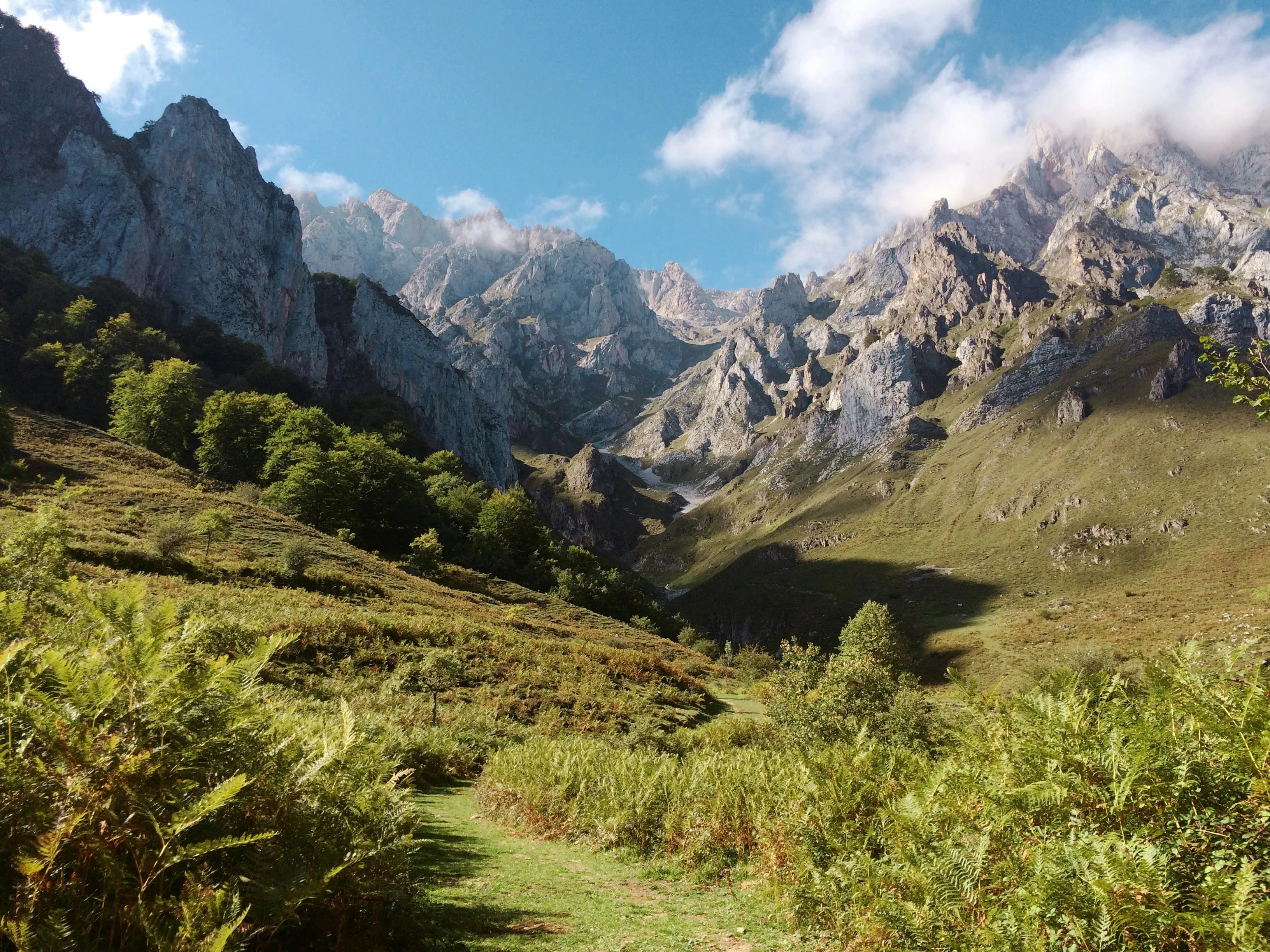
The Pas valley system and the foothills approaching the Picos de Europa offer a fundamentally different proposition. This is pastoral, layered landscape where cattle farming has shaped the land for centuries and where the light, particularly in late afternoon, carries a quality that painters have long sought out. Luxury accommodation in these interior zones tends toward smaller, more intimate properties. Space is generous, density is low, and the relationship between the suite and its immediate natural surroundings becomes the defining element of the stay.
The capital, Santander, functions as the region's urban anchor. A port city with a rational grid, a fine arts museum, and a summer palace that brought the Spanish royal family here annually for decades, it provides the infrastructure for those who prefer urban proximity without surrendering to a major metropolitan context. Suites in and around Santander offer a different register: more contemporary, more connected, with the bay as constant visual reference.
When to visit Cantabria for a luxury suite stay
Cantabria's Atlantic climate produces a temperate rhythm that separates it markedly from the rest of Spain. Summers are mild, rarely exceeding 25 degrees Celsius, and humidity stays moderate. This makes July and August genuinely pleasant at the coast and in the mountains, without the scorching heat that forces much of southern Spain into midday retreat. These months also align with the region's cultural calendar: the International Music Festival of Santander, one of Spain's most established classical music events, takes place in August and draws an audience that understands how to travel well.
Spring, from April through June, is arguably the most rewarding period for landscape-oriented travellers. The Picos de Europa carry residual snow on their upper ridges while the valley floors are in full bloom. Suite availability is wider, pricing is more rational, and the region operates at a human pace. Autumn, from September through November, delivers similar conditions with the added register of copper-toned beech forests across the inland mountains.
Winter is Cantabria's most private season. The coast empties, properties reduce their guest count, and the entire region takes on an austere quality that appeals to a specific kind of traveller: one who prefers silence and texture over social density. Several properties offer reduced rates in winter while maintaining full service standards, making it a period worth considering for those who book on their own terms.
Understanding luxury standards in Cantabria
Spain's national hotel classification system uses a star rating that does not always translate directly to experiential quality at the upper end of the market. In Cantabria, several of the most distinguished properties operate as Palacios or Casas de Indianos, historic buildings constructed by families who made their wealth in the Americas and returned to build with ambition. These structures carry an architectural authority that newer builds cannot replicate, and the finest have been converted with a fidelity to original materials that preserves their character rather than erasing it.
The Parador network, Spain's state-managed chain of heritage hotels, maintains a presence in Cantabria. While Paradores are not uniformly at the top of the luxury spectrum, their properties in this region occupy significant historic buildings and offer a form of calibrated comfort that is distinctly Spanish in register. They serve as a useful reference point for understanding how the region's architecture translates into hospitality.
At the genuine upper end, luxury hotel suites in Cantabria typically offer: exceptional spatial generosity relative to the building's historic envelope, a direct and considered relationship with the surrounding landscape, local materials used with intelligence rather than as decoration, and a staffing model that emphasises discretion. The region does not have the volume of ultra-luxury properties found in Andalusia or the Basque Country, which means the properties that do operate at this level tend to be more deliberate and more consistent.
How to choose the right luxury suite in Cantabria
The single most important variable when selecting a luxury hotel suite in Cantabria is the relationship between the property and its immediate environment. Unlike a city hotel, where location functions primarily as urban access, a Cantabrian suite's position within its landscape is architectural and experiential in equal measure. A suite overlooking the Ría de San Martín carries different conditions to one facing the interior meadows of the Liébana valley. These are not equivalent options at different price points; they are categorically different experiences.
Consider also the question of access. Cantabria is not a destination where a car is optional for most travellers. Properties in the interior valleys and along sections of the coast require private transport to engage fully with the surrounding terrain. The finest suite becomes a diminished proposition if the guest cannot move freely through the landscape that defines its context. Logistics are part of the curation.
For families or groups travelling with space requirements, look carefully at suite configurations. Several historic properties in Cantabria offer multi-room suites that function as self-contained apartments within the building, preserving the character of the original architecture while providing the flexibility that contemporary family travel demands. For couples or solo travellers, the intimate properties in the valley systems tend to offer a depth of experience that larger coastal hotels cannot replicate.
Why curated selection matters in Cantabria
Cantabria's luxury accommodation market is small enough that general travel platforms surface inconsistent results. The volume of listed properties is lower than in Spain's most established regions, which means that search-based discovery tends to return a mix of genuinely distinguished properties alongside unremarkable mid-range options presented with similar language.
La Suite's curated selection for Cantabria addresses this directly. Each property in the selection has been assessed against criteria that reflect the priorities of the audience that uses this platform: spatial quality, design coherence, service discretion, and the authenticity of the property's relationship to its setting. The result is a shortlist that removes the interpretive work from the decision process and allows the traveller to move directly to the question of which experience best matches the specific logic of their trip.
For a region as geographically and culturally layered as Cantabria, that clarity is not a convenience. It is the difference between a trip that delivers and one that approximates.