Barceló Torre de Madrid, Madrid
Set in Madrid’s Plaza de España Square, Barceló Torre Madrid offers elegant rooms with free WiFi, an indoor pool and on-site restaurant. Plaza de España Metro Station is right beside the hotel. Moder

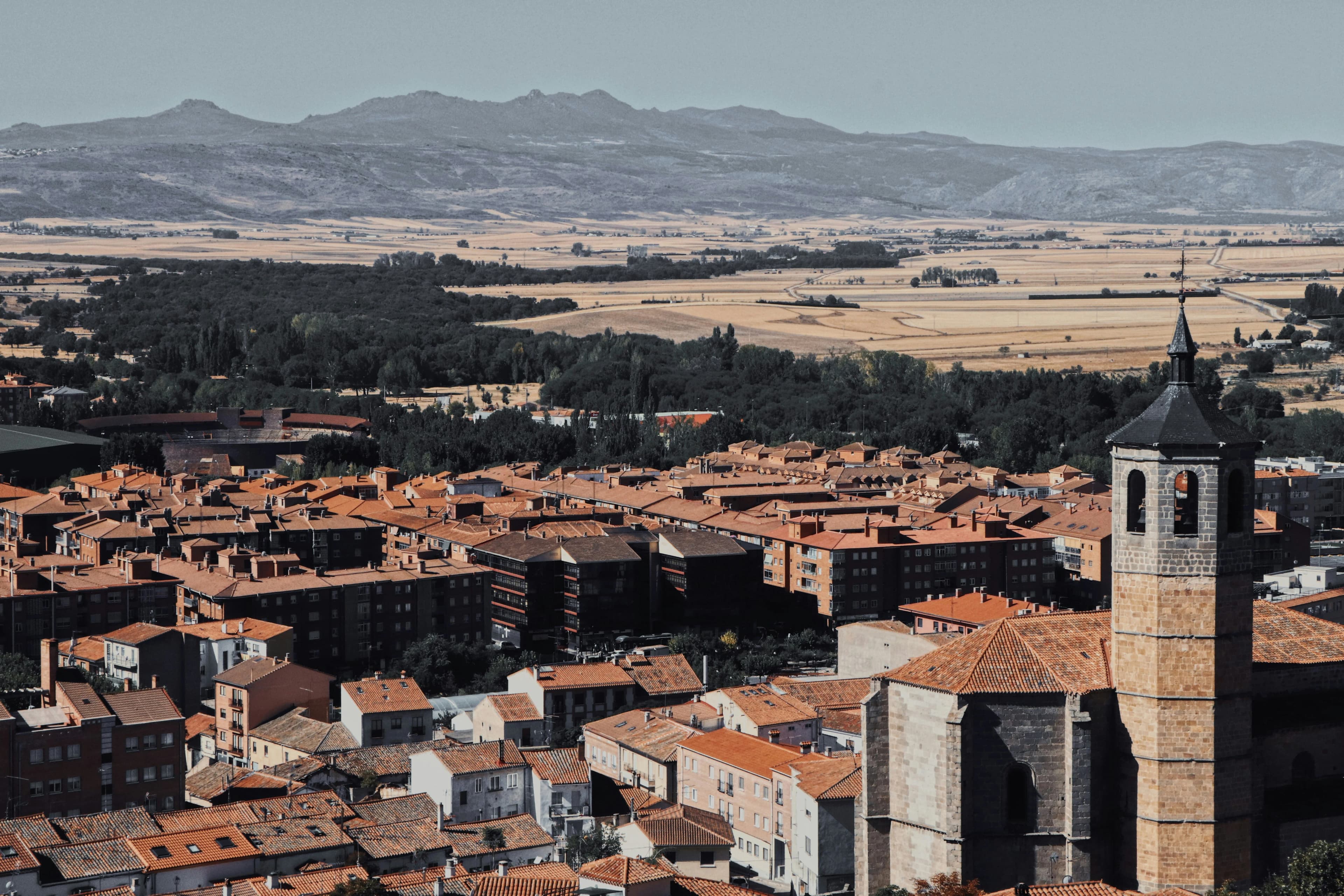
Castile and León is not a destination shaped by coastal ease or resort infrastructure. It is an interior region of extraordinary formal weight: nine provinces, nine UNESCO-listed old town centres or monuments, and a gastronomic identity anchored in roasted meats, Ribera del Duero wines, and artisan cheeses. For the traveller who chooses a suite deliberately, for space, context, and privacy rather than amenities alone, this is a territory that rewards a slower, more deliberate approach.
22 hotels available

Set in Madrid’s Plaza de España Square, Barceló Torre Madrid offers elegant rooms with free WiFi, an indoor pool and on-site restaurant. Plaza de España Metro Station is right beside the hotel. Moder

Located in the Salamanca district, the most emblematic and exclusive neighborhood in the center of the city, BLESS Hotel Madrid stands out for its unique style and timeless design the work of top inte

A Parisian hotel logic applied with discipline to the center of Madrid. Quiet architecture, serious spa, deliberate design.

Located in Brihuega, 23 miles from Panteon de la Duquesa de Sevillano, Castilla Termal Brihuega has accommodations with a seasonal outdoor swimming pool, private parking, a fitness center and a garden

Only 1969 feet from Plaza de España Square, these bright and modern apartments with city views include free WiFi. Our on-site Reception team is available every day from 9am to 5pm; also 24-hour check-

Featuring a seasonal outdoor swimming pool, a restaurant as well as a bar, Eurostars Valladolid is located in the center of Valladolid, a 14-minute walk from Valladolid Train Station. This 5-star hote

Located in Madrid, a 6-minute walk from Gran Via Station Metro Station, Four Seasons Hotel Madrid has accommodations with a terrace, private parking, a restaurant and a bar. With free WiFi, this 5-sta

Located in the Barrio de las Letras, Gran Hotel Inglés - The Leading Hotels of the World is set on a 19th century building, and offers 5* accommodations 984 feet from Puerta del Sol and only 1969 feet

This converted convent is in the beautiful Duero Valley and has its own vineyard and a spa. Boasting spectacular gardens leading down to the Tormes River, it offers a gourmet restaurant and free WiFi

Named Most Excellent European City Hotel by Condé Nast Johansens, this is a charming and quiet hotel in which you find spacious, perfectly designed and well equipped rooms. The hotel itself offers: a

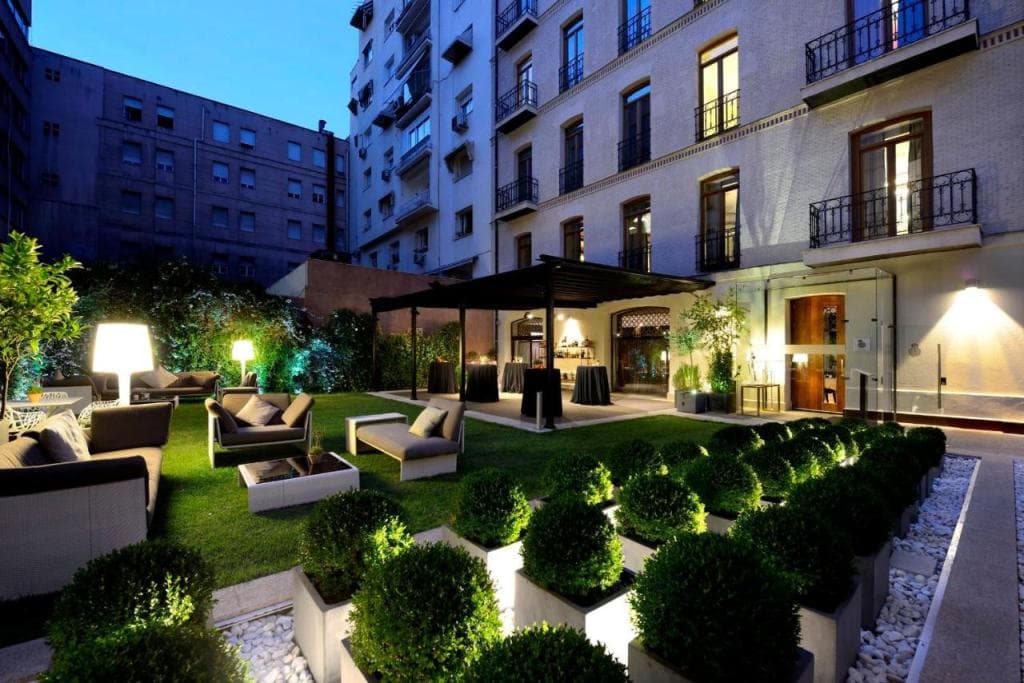
Hotel Único Madrid, Small Luxury Hotels’s - Located in Madrid’s Salamanca district, this restored 19th-century building offers free Wi-Fi, a modern gym and a charming garden courtyard. This boutique

This boutique hotel houses a permanent display of art from Papua New Guinea. Hotel Urban has a small rooftop swimming pool and a terrace open in summer, and a cocktail bar. The hotel has beautiful de

This good-value hotel is located 656 feet from the famous Puerta del Sol, in the cultural and commercial center of Madrid. Rooms at the Asturias are simple and classic in style. JW Marriott Hotel Mad

Opulent and exclusive Mandarin Oriental Ritz, Madrid is located in a Belle Époque palace and offers an experience unlike any other. It features a luxurious Wellness Center, free parking and in suite r

In a prime location in Madrid, Nômade Temple Madrid provides air-conditioned rooms, a terrace, free WiFi and a restaurant. This 5-star hotel offers room service and a 24-hour front desk. The property

Palacio de los Duques, a Gran Meliá Hotel - The Leading Hotels of the World is located 984 feet from Madrid's Royal Palace, the Royal Theater and the Cathedral. It features a seasonal rooftop pool and

Relais & Châteaux Heritage Hotel offers 5-star accommodations in Madrid, next to Paseo de la Castellana. It is located on a 20th century listed building beautifully decorated with a belle-époque desig

Hotel Orfila is located in Madrid’s Chamberí District, less than 656 feet from Alonso Martinez and Colón Metro Stations. Set in a 19th-century palace, it features a restaurant and tea room. Rooms at

The elegant Rosewood Villa Magna offers exclusive rooms and suites in Madrid’s fashionable Salamanca area. The hotel features a spa, marble bathrooms and views onto Serrano Street or Castellana Avenue

Exceptional Facilities The Madrid EDITION in Madrid offers a rooftop swimming pool, spa facilities, sauna, fitness center, sun terrace, garden, restaurant, massage services, bar, and free WiFi. Ad
The accommodation landscape here differs markedly from Spain's coastal or island offerings. Luxury hotel suites in Castile and León frequently occupy buildings of genuine historical significance: converted Renaissance palaces, former episcopal residences, or stone farmhouses reworked with architectural precision. The physical fabric of the room is part of the proposition.
Salamanca presents one of the most cohesive architectural environments in Spain. The city's sandstone facades, which shift from gold to amber across the day, frame a university city with a continuous cultural programme. The surrounding sierra and river valley extend the territory for those seeking rural properties with direct access to the landscape. Suites in this area tend to privilege views of the old city or access to private courtyard gardens.
Stretching across the provinces of Burgos, Soria, Segovia, and Valladolid, this wine corridor has generated a category of destination accommodation directly linked to estate viticulture. Properties here are often integrated with active wine production, offering guests a relationship with the land and its seasonal rhythms that is uncommon in urban settings. Suite experiences in this zone frequently include private tastings, access to cellars, and direct views across the vineyard plateau.
Segovia, with its Roman aqueduct and Alcazar, sits at an elevation that produces genuinely cool evenings even in summer, making it a preferred destination for Madrid's more design-literate travellers seeking weekend removal. The sierra to the south adds hiking and equestrian options. Luxury suites in this area range from historic town properties to converted agricultural estates in the surrounding landscape.
Burgos anchors the northern part of the region with its Gothic cathedral and a serious contemporary food scene. The provinces of León and Palencia to the west and north offer a quieter, more remote luxury: restored Romanesque monastery hotels, rural stone properties, and landscapes where solitude is a genuine offering rather than a marketing claim.
The meseta climate is one of continental extremes. Summers are hot and dry, with temperatures regularly exceeding 35 degrees Celsius on the plateau, while winters are cold and frequently sharp, particularly at elevation. The optimal windows for suite travel are late spring (April through June) and early autumn (September through October), when temperatures are moderate, the vineyard landscape is active, and cultural programming in the major cities is at its most concentrated.
The vendimia, or grape harvest, which runs through September and into October across the Ribera del Duero, is a period of particular interest for travellers connected to wine culture. Several estate properties organise private harvest participation and vertical tasting programmes during this period. Semana Santa (Holy Week) in cities such as Valladolid and Zamora is among the most formally significant in Spain, drawing a dedicated audience of cultural travellers.
Suite availability in the region's most sought-after converted properties is tightest during these peak cultural periods and during the summer months when domestic Spanish and European demand concentrates. Booking three to four months in advance for premium properties during harvest season is a practical minimum.
Spain's national classification system recognises five-star and five-star Gran Lujo designations, but the more operationally relevant category for this region is the Parador network. Paradores are state-managed hotels housed within historic monuments, castles, convents, and palaces, and several of the most architecturally significant properties in Castile and León operate under this label. A Parador suite offers a formal relationship with Spanish heritage that privately operated luxury hotels rarely match in terms of structural authenticity.
Beyond the Parador system, the region has a growing category of privately owned boutique luxury properties, often referred to locally as hoteles con encanto or casas rurales de lujo, which offer more personalised service structures and closer integration with local producers and artisans. At the top tier, these properties compete seriously with urban luxury hotels in terms of cuisine, linens, and suite specification, while offering something the city cannot: silence, spatial generosity, and a direct relationship with the agricultural landscape.
Gastronomy is a non-negotiable component of suite quality in this region. The combination of Ribera del Duero and Rueda wines with local lechazo (suckling lamb), Iberian pork preparations, and aged Castilian cheeses defines a food culture of genuine seriousness. The best suite properties integrate this directly into the guest experience, either through in-house restaurants of formal standing or through curated access to local producers.
The primary distinction to navigate is between urban and rural positioning. Urban suites in cities such as Salamanca, Valladolid, or Burgos offer proximity to cultural programming, walking access to architecture and restaurants, and a social energy that suits shorter stays. Rural suites, whether in vineyard estates, restored farmhouses, or converted monasteries, require a car and reward stays of three nights or more, allowing the surrounding landscape to become part of the experience rather than a day-trip backdrop.
Architectural character is a second axis of choice. Properties converted from historic buildings carry structural irregularities: vaulted ceilings, stone walls with limited acoustic separation, and room configurations that do not always conform to modern luxury suite norms. For travellers who prioritise these qualities, the trade-off is a worthwhile one. For those who require uniform contemporary specification, newly constructed or comprehensively renovated properties within the region deliver a more predictable product.
Consider also the seasonal orientation of each property. Some vineyard estate hotels effectively close or reduce their offering in winter, while certain historic city properties operate at their most formal during the quiet months, offering a more private and attentive service dynamic.
The hotel market in Castile and León is not as legible from the outside as the resort markets of Andalusia or the Balearics. Properties of genuine quality exist across all nine provinces, but they are distributed unevenly and are not always well represented on generalist booking platforms. A curated selection by La Suite filters this landscape by applying consistent editorial criteria: architectural integrity, suite spatial quality, service discretion, and gastronomic seriousness. The result is a shortlist that saves the traveller from a market where reputation and reality do not always align, and where the distance between a very good property and a genuinely exceptional one is rarely visible from photographs alone.

Castile and León offers a distinct range of suite typologies, from rooms within converted Renaissance palaces and former monasteries in historic city centres to vineyard estate suites integrated with active wine production on the Ribera del Duero plateau. Rural stone manor properties in the sierra provinces represent a third category, combining architectural authenticity with direct landscape access. Each type delivers a materially different experience, and the choice depends largely on whether the traveller prioritises urban cultural proximity or spatial and sensory immersion in the landscape.
Late spring, from April through June, and early autumn, from September through October, represent the most comfortable and culturally active periods for suite travel in this region. The September harvest season across the Ribera del Duero wine corridor is particularly sought after, with several estate properties offering private participation in the vendimia. Booking three to four months in advance for these periods is advisable, as the inventory of genuinely premium properties across the nine provinces is limited relative to demand.
Yes, this is one of the defining characteristics of the regional luxury offer. Several properties operate within structures of genuine historical significance, including former episcopal palaces, convents, and Castilian manor houses. The Parador network manages some of the most architecturally significant of these, housing suites within castles and monasteries that have been adapted with contemporary comfort specifications while preserving their structural character. Privately operated boutique properties in cities such as Salamanca and Burgos follow a similar model at smaller scale.
The Ribera del Duero is one of Spain's premier wine appellations, running across the provinces of Burgos, Soria, Segovia, and Valladolid along the Duero River valley. It produces primarily Tempranillo-based red wines of international standing and has attracted a category of estate hotel directly connected to wine production. For luxury suite travellers with an interest in wine culture, properties in this corridor offer private tastings, cellar access, and harvest-season programmes that place the guest directly within the production environment rather than at a remove from it.
Paradores are state-operated hotels housed within historic monuments across Spain, and Castile and León contains some of the network's most architecturally significant properties, including sites in Zamora, Sigüenza, and León. Suite categories within Paradores tend to offer structural authenticity that privately operated luxury hotels rarely match, given that the buildings themselves are of heritage status. The service model is formal rather than intensely personalised, which suits travellers who prioritise architectural experience and historical context over bespoke concierge programming.
The region is well configured for wine-focused stays, particularly along the Ribera del Duero corridor and in the Rueda appellation near Valladolid, which produces notable white wines from the Verdejo grape. Several estate properties in these zones offer structured access to producers, including private cellar visits and guided tastings with winemakers, as part of a suite stay. A car is essential for navigating between estates, and a minimum stay of three nights is recommended to engage meaningfully with the wine landscape rather than covering it as a series of day excursions.
Gastronomy in Castile and León is anchored in roasted meats, particularly lechazo (suckling lamb) and cochinillo (suckling pig), prepared in wood-fired ovens according to preparations with centuries of regional continuity. Iberian pork products from the Salamanca sierra, aged Castilian cheeses, and pulses from the Tierra de Campos represent the broader larder. The best luxury properties integrate this culinary identity directly, either through in-house restaurants with serious wine lists built around Ribera del Duero and Rueda appellations, or through curated access to local producers and market visits.
The degree of remoteness varies significantly by sub-zone. Urban suite properties in Salamanca, Valladolid, Burgos, or Segovia are accessible by high-speed rail from Madrid, with journey times ranging from 25 minutes for Segovia to approximately 55 minutes for Valladolid. Rural estate and vineyard properties, particularly in the Ribera del Duero corridor or the northern provinces of León and Palencia, are effectively inaccessible without a car. For stays that combine urban and rural elements, hiring a car at the point of arrival in the regional city is the most practical configuration.
The primary distinction is tonal and contextual rather than material. Castile and León delivers a suite experience rooted in architectural weight, landscape austerity, and gastronomic seriousness rather than the coastal ease, resort infrastructure, or warm-weather hedonism associated with Andalusia's coast or the Balearic Islands. The traveller who chooses this region is typically motivated by cultural depth, historical immersion, and privacy within a landscape of formal grandeur. The luxury here is quieter and more deliberate, better suited to extended stays than to destination weekends built around pool and beach access.
La Suite applies consistent editorial criteria across every property considered for its selection in the region, assessing suite spatial quality, architectural integrity, service discretion, and the seriousness of the gastronomic offer. In a market where quality is unevenly distributed across nine provinces and where smaller properties of genuine merit are often underrepresented on generalist platforms, this curation layer is practically valuable. The result is a shortlist that removes the ambiguity from a destination where the gap between a well-presented average property and an exceptional one is not always legible from photographs or aggregated reviews alone.