Where to stay in Galicia: understanding the region's distinct areas
The Rías Baixas, running along the southwestern coastline, is the most immediately seductive area for luxury travelers. This is the territory of sheltered estuaries, white Albariño wine, and seafood of a quality that commands serious attention. Properties here tend to offer proximity to the water, either on the Rías themselves or within reach of the Atlantic-facing beaches of the Costa da Morte. The pace is unhurried, the light particular to this latitude, and the density of gastronomic producers remarkable for a region of this size.
Santiago de Compostela, while a city, functions as the emotional and architectural center of the region. Its Baroque cathedral and medieval granite streets draw pilgrims and cultural travelers in equal measure. Staying in or near Santiago places the traveler within reach of the entire region while offering direct access to some of Galicia's most historically significant properties.
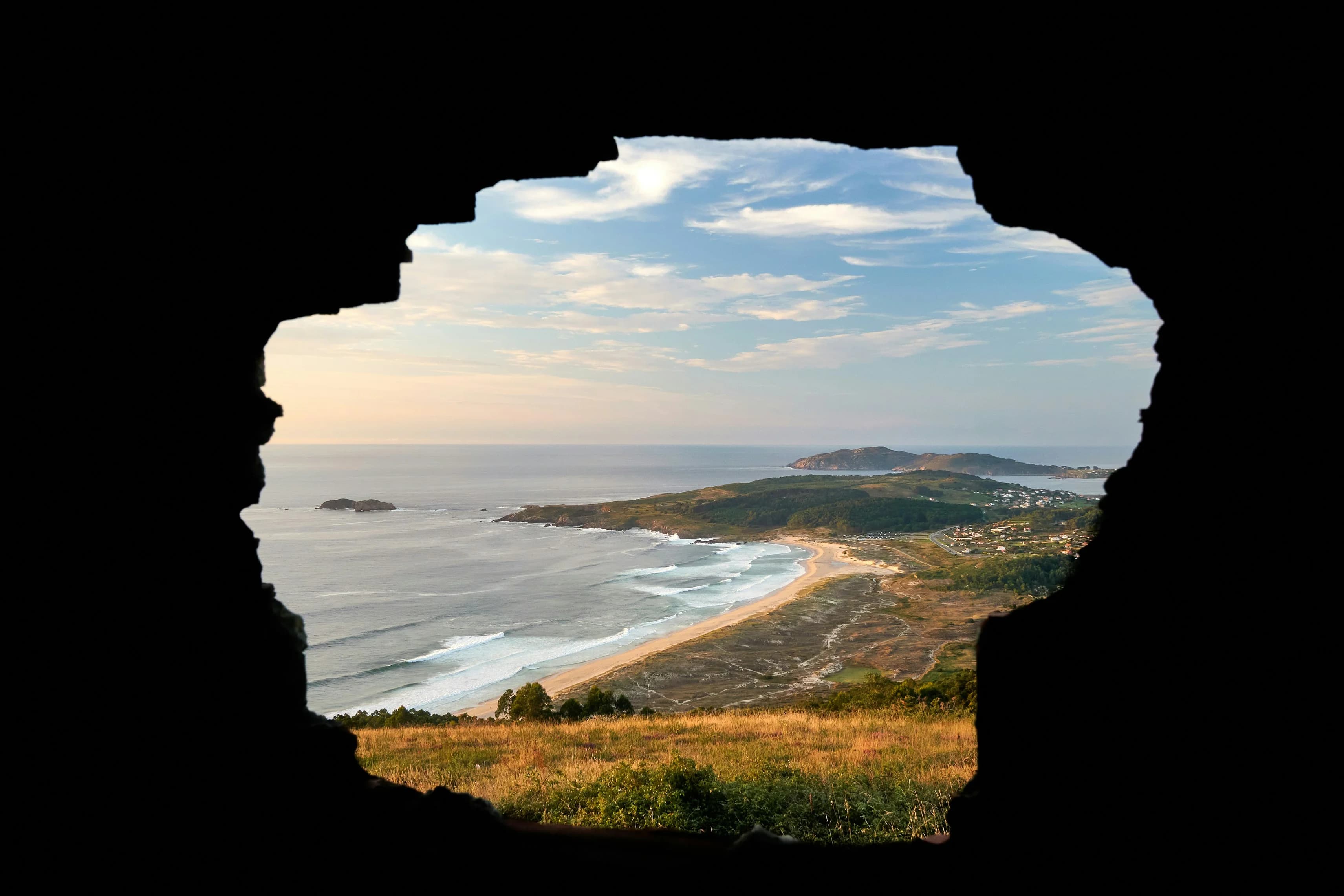
The Rías Altas, to the north, are less traveled and correspondingly more private. The coastline here is dramatic: steep cliffs, powerful surf, and small fishing harbors. For travelers seeking genuine seclusion, this stretch of the Galician coast rewards those willing to look beyond the obvious.
Inland Galicia, particularly the province of Lugo, offers a different register entirely. Roman walls, thermal springs, and a deeply rural landscape define the experience here. Pazo conversions in this area deliver a form of quiet immersion that is difficult to replicate elsewhere in Spain.
When to visit Galicia for a luxury suite stay
Galicia's climate is shaped by the Atlantic, which means rainfall is distributed across the year more evenly than in most of Spain. That said, the high season runs from June through September, when temperatures are moderate, the estuaries are at their most navigable, and the majority of luxury properties operate at full capacity.
July and August bring the Galician summer, which is temperate rather than scorching. This is the ideal period for coastal stays, sailing the Rías, and experiencing the full energy of the local seafood markets. Suite availability at premium properties tightens considerably during these months, and early planning is essential.
The shoulder seasons, particularly May and October, offer a compelling alternative. Crowds thin, pricing adjusts, and the landscape takes on a quality that photographers and design-conscious travelers tend to find more arresting than the height of summer. The light in October in the Rías Baixas, filtered through Atlantic mist, is worth planning a trip around.
Late July sees the Feast of Saint James on 25 July, a significant event in Santiago de Compostela that draws large numbers of visitors and places considerable pressure on accommodation within the city. Travelers seeking proximity to the celebrations should plan well in advance. Those preferring to avoid the congestion might consider coastal properties during this period instead.
Local luxury standards: pazos, paradores, and what Galicia's finest suites offer
Understanding the local architectural and hospitality typologies is essential to making an informed choice in Galicia.
The pazo is the defining prestige property type of the region. These are Galician manor houses or small palaces, typically built in granite, often surrounded by formal gardens, and historically associated with the landed gentry of rural Galicia. A number of pazos have been converted into hotels of genuine quality, preserving original architectural features while introducing contemporary comfort. The best pazo conversions offer suites of considerable spatial generosity, with stone walls, period furniture, and grounds that function as private retreats.
The Parador network, Spain's state-managed chain of historic buildings converted into hotels, has a notable presence in Galicia. The Parador de Santiago de Compostela, known as Hostal dos Reis Católicos, is one of the oldest continuously operating hotels in the world, occupying a building commissioned by the Catholic Monarchs in 1499. While the Parador brand is not exclusively luxury by contemporary standards, certain properties within the network offer suite experiences that are historically irreplaceable.
Beyond these typologies, Galicia has attracted a cohort of design-forward rural properties, particularly in the Rías Baixas and along the northern coast. These tend to prioritize architectural restraint, local materials, and a sensory connection to the surrounding landscape. Expect natural stone, linen, local timber, and menus built entirely around the produce of the surrounding area.
How to choose the right luxury suite in Galicia
Several considerations are specific to choosing accommodation in this region and should inform any serious decision.
Coastal proximity versus inland immersion is the primary axis. A suite overlooking a Galician estuary offers an entirely different experience from one set within the grounds of a rural pazo. Neither is superior in the abstract; the choice depends on whether the traveler is oriented toward the sea, toward heritage architecture, or toward gastronomic access.
Architecture matters considerably in Galicia. The region's vernacular building tradition uses granite almost exclusively, and properties that work with rather than against this material tend to deliver a more coherent sense of place. When reviewing a potential property, the relationship between the building and its landscape should be a primary consideration.
Access to produce and restaurants should also factor into the decision. Galicia's culinary culture is built on proximity to source: percebes (goose barnacles), Galician octopus, Padrón peppers, and the shellfish of the Rías. Properties within reach of active fishing harbors or established gastronomic destinations add a layer of experience that cannot be replicated in more isolated locations.
Finally, consider the logistical context. Galicia is accessed most directly via airports at Santiago de Compostela, Vigo, and A Coruña. Driving within the region is the most practical means of movement, and the road network, while often scenic and winding, rewards patience. For longer stays, a coastal base and inland excursions by car represents the most effective structure.
Why a curated selection by La Suite makes sense in Galicia
Galicia is a region where the gap between a well-marketed property and a genuinely exceptional one is wider than in more established luxury destinations. The local hospitality market includes properties of real distinction alongside others that trade on heritage or location without delivering on the fundamentals of a premium suite experience.
La Suite applies consistent editorial criteria across every listing in this territory. The selection is built on direct assessment of spatial quality, service standards, architectural integrity, and the overall coherence of the guest experience. For travelers approaching Galicia without prior knowledge of the local market, this curation removes the primary risk: spending significant money on a property that underdelivers.
The curated selection by La Suite in Galicia reflects the actual distribution of quality across the region, weighted toward properties where the suite itself, not merely the surrounding landscape, justifies the investment.