The distinct areas of Madrid for a luxury stay
The Barrio de los Jerónimos and the Paseo del Prado corridor represent the city's most institutionally significant address. The Prado, the Reina Sofía, and the Thyssen-Bornemisza museums form a triangle that no culturally serious traveler can ignore. Properties along or adjacent to this axis position guests within walking distance of this concentration of European art. The architecture of the district is wide, formal, and deliberately monumental.
The Salamanca district, developed in the second half of the nineteenth century under the patronage of the Marqués de Salamanca, is Madrid's equivalent of Paris's eighth arrondissement. Its grid of wide streets holds the city's highest concentration of international fashion houses, independent jewelers, and serious restaurants. Travelers who organize their time around shopping, dining, and meeting will find Salamanca the most operationally convenient quarter. The residential street scale here creates a sense of privacy unusual for a capital city center.
The Almagro and Chamberí areas, immediately north of the center, attract guests who prefer a quieter residential atmosphere without sacrificing proximity to the central cultural institutions. The built fabric here is late nineteenth and early twentieth century, characterized by stone facades, interior courtyards, and a calmer street life than the tourist-facing zones.
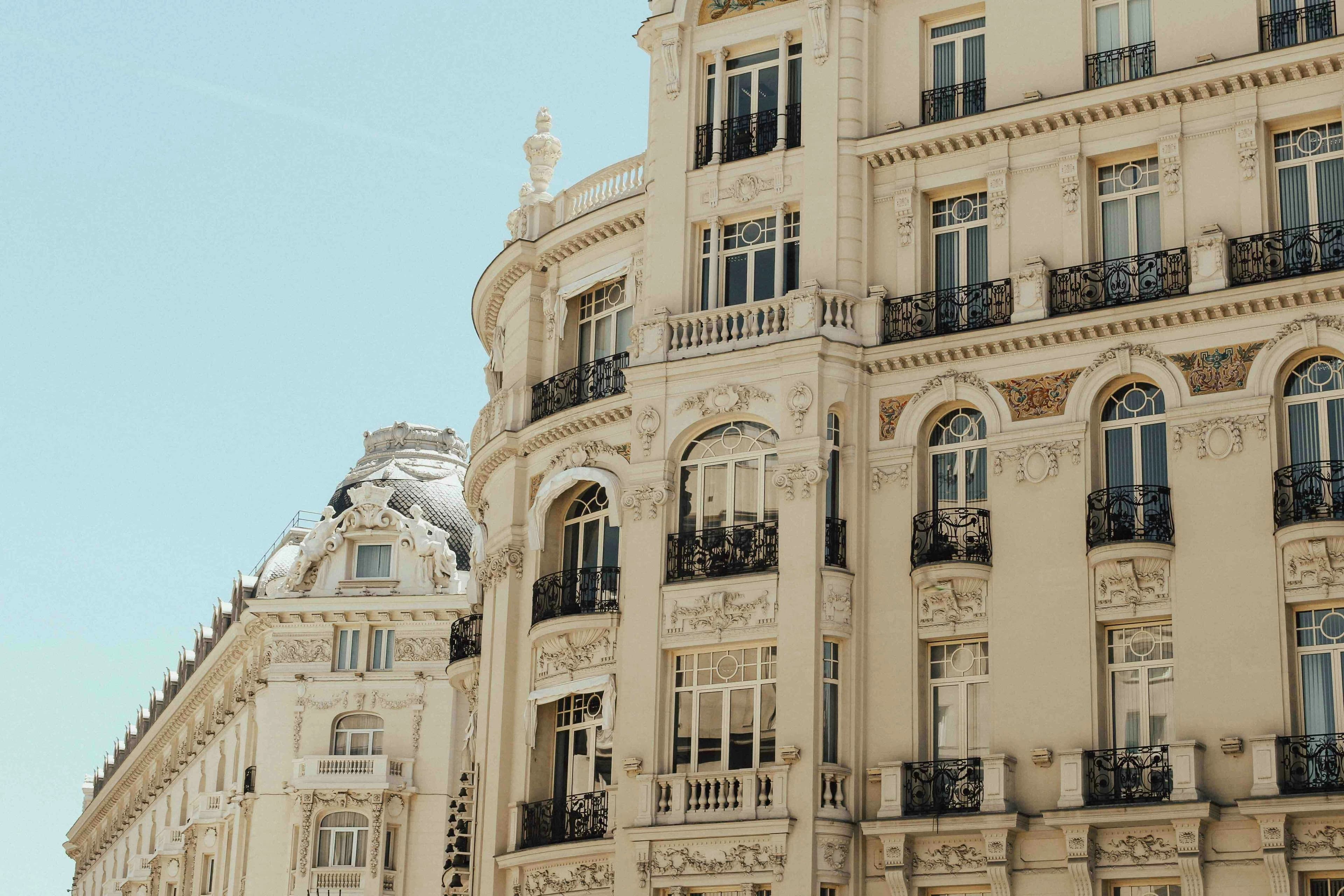
The Gran Vía and its surroundings offer the most theatrical version of Madrid, with neoclassical and early modernist buildings of considerable scale. This area suits travelers who want to be embedded in the city's commercial and theatrical energy, though it operates at a louder frequency than Salamanca or Almagro.
Immerse yourself in our exclusive selection of Madrid’s most stunning suites.
When to visit Madrid for a luxury suite experience
Madrid's climate is defined by its elevation. Sitting at roughly 650 meters above sea level, the city experiences cold winters and very warm summers, with spring and autumn representing the most agreeable seasons for extended stays.
May and October are generally considered the optimal months for luxury travel. Temperatures are moderate, the city is active without the compression of peak summer tourism, and the cultural calendar is at its richest. The ARCO contemporary art fair, held in February, draws a significant international collector audience and creates notable demand on premium hotel inventory. Semana Santa, Holy Week before Easter, brings religious processions and a distinctive atmosphere across the city.
July and August see temperatures that regularly exceed 35 degrees Celsius. The city empties of its own residents, who retreat to the coast or the mountains. Many cultural institutions reduce their programming. For travelers who prioritize discretion and quiet, this period can work precisely because the city is less crowded, though the heat requires properties with effective climate control and private outdoor spaces.
December is animated by Christmas lighting and markets, particularly around the Plaza Mayor, and the city receives a high volume of domestic tourism from other Spanish regions. Suite availability at the most sought-after addresses tightens considerably during this period and advance planning is essential.
Local luxury standards: what defines a top-tier suite in Madrid
Spain operates a five-star gran lujo classification for its highest-rated hotels, but the more meaningful designation in the Spanish market is the gran lujo category and, at the absolute apex, the informal but widely recognized status of a historic palace conversion.
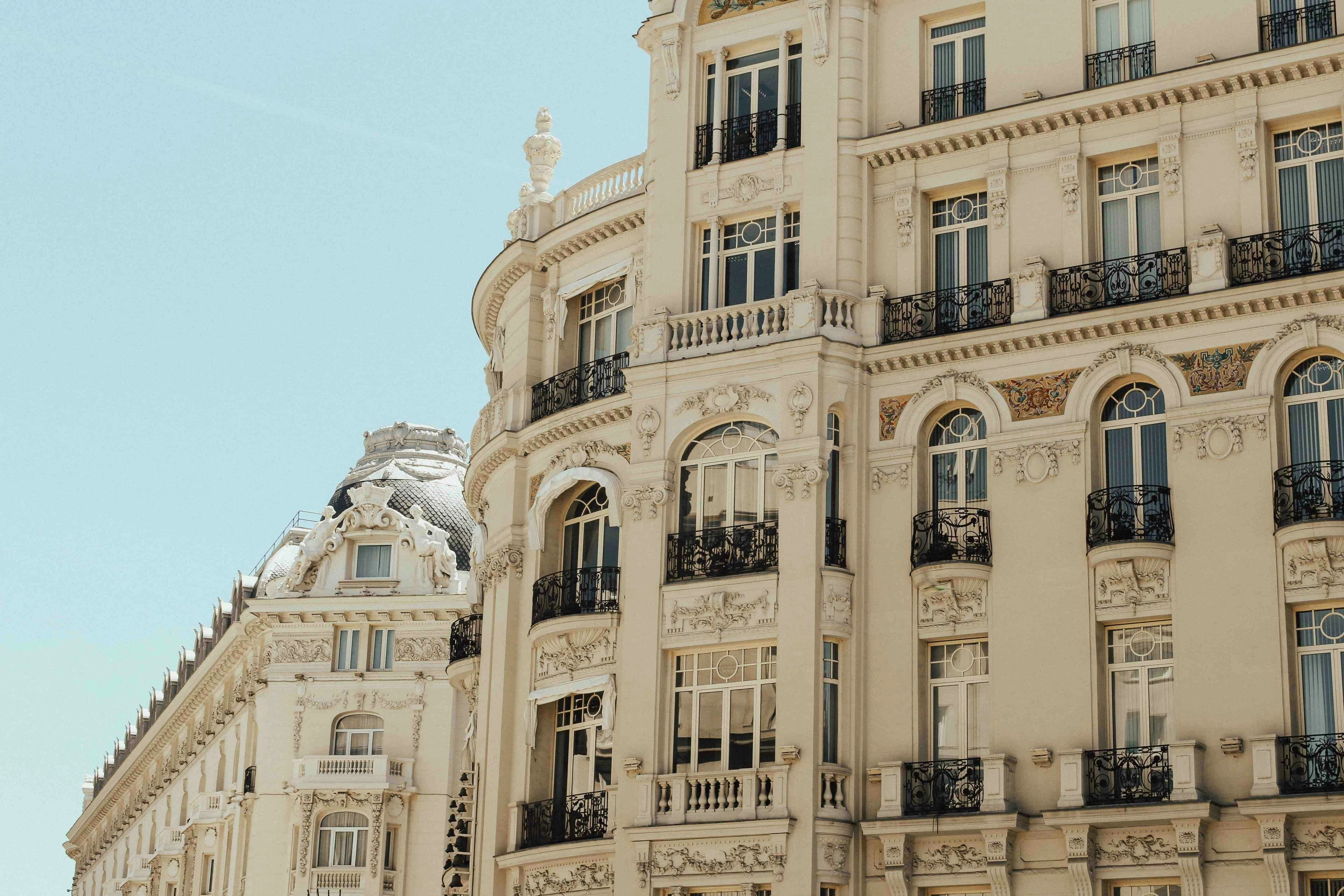
Madrid's finest addresses tend to occupy buildings of genuine architectural history: nineteenth-century palaces, early twentieth-century grand hotels, and notable civic buildings that have been converted with care. The quality of a suite in these properties is partly a question of the building itself: ceiling height, floor plan, original details such as plasterwork, marble, and hardwood that no contemporary construction can replicate.
Service in Madrid's top hotels follows a model of formal attentiveness. The city has a strong tradition of professional hospitality, and the better properties maintain trained concierge teams with genuine knowledge of the city's private cultural access, restaurant relationships, and logistical infrastructure. Butler service at the suite level is standard in the leading properties.
Many of the best suites in Madrid include private terraces with views over the city's rooftops and tile domes. Given the quality of light in Madrid, particularly in the late afternoon, this is not a trivial consideration. The city's sky is notably clear by the standards of northern European capitals, and a suite with an outdoor private space captures a significant part of what the city offers sensorially.
How to choose the right suite in Madrid
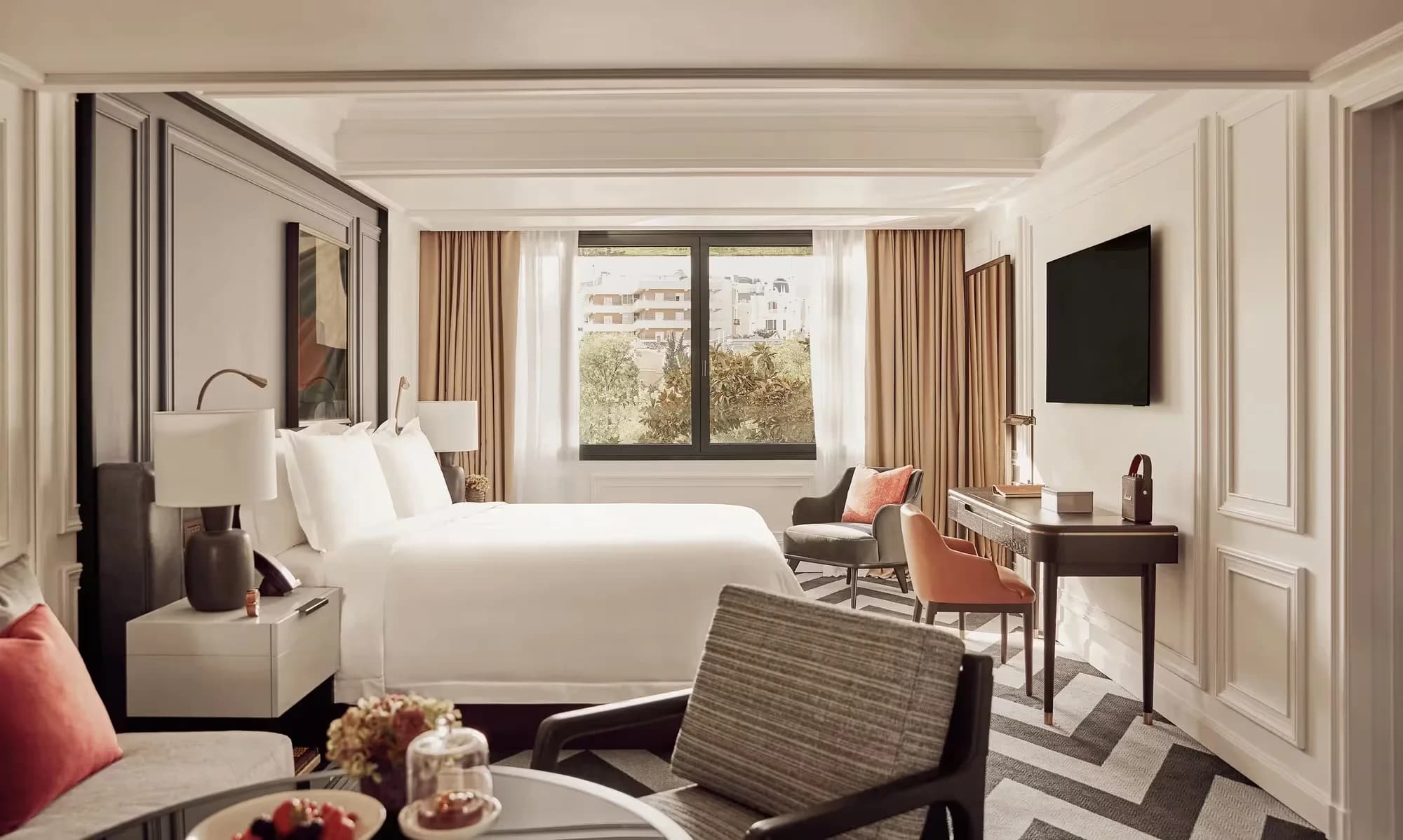
The primary axis of choice in Madrid is between historic architecture and contemporary design. The city has both, and they appeal to different sensibilities. Historic palace properties offer irreplaceable scale and material quality. Contemporary properties, several of which have opened in recent years within redesigned civic buildings, offer controlled light, modern systems, and a less ceremonial atmosphere.
Suite size in Madrid varies more than in comparable capitals. Some of the most prestigious addresses offer suites of considerable floor area with separate living rooms, multiple bathrooms, and private dining facilities. Others, in boutique properties, offer smaller but more precisely designed spaces. Travelers with families or those who require working space should verify floor plans carefully rather than relying on category names alone.
Location relative to the traveler's primary purpose matters considerably. The Prado district is optimal for culture. Salamanca is optimal for retail and dining. The Gran Vía axis is optimal for theater and entertainment. Madrid is walkable in a way that many capitals are not, but the distances between these areas can be tiring in summer heat or with young children.
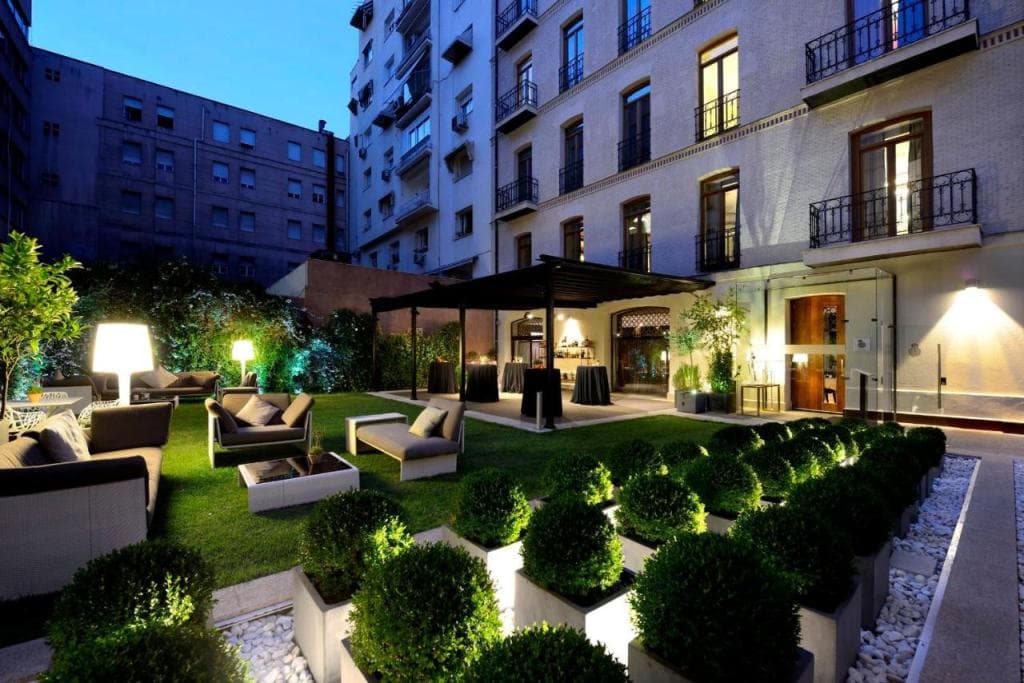
Views from Madrid suites range from internal courtyard quiet to panoramic rooftop exposure. Neither is inherently superior. The courtyard suite offers silence at a level that is genuinely difficult to achieve in a European capital. The rooftop suite offers the specific quality of Madrid's evening light and the particular geometry of the city's mixed architectural skyline.
Why a curated selection by La Suite changes the decision
Madrid has a large and uneven hotel market. The range between a competent five-star property and a genuinely exceptional suite experience is significant, and the difference is not always legible from standard booking platforms. Category names, star ratings, and marketing language compress real distinctions that matter to travelers at this level.
La Suite applies a consistent editorial framework to every property in its selection. The criteria are architectural, spatial, material, and experiential. Only properties where the suite itself constitutes a genuine experience, not simply an enlarged room, appear in the curated selection. This process removes the considerable friction of filtering a large market independently. For Madrid specifically, where history and contemporary renovation intersect in complex ways, this curation reduces the risk of a choice that looks correct on paper but underdelivers in the room.