Where to stay in Murcia: distinct areas and their luxury character
The city of Murcia itself, positioned inland along the Segura river, functions as the cultural and administrative core. Its Baroque cathedral, covered market, and dense restaurant culture make it a credible urban base. Luxury accommodation in the capital tends toward historic palaces and converted civic buildings, where thick stone walls and vaulted ceilings are architectural facts rather than decorative choices.
The Mar Menor and the La Manga strip form Spain's largest saltwater lagoon, separated from the Mediterranean by a narrow sand bar stretching approximately 22 kilometres. The microclimate here is notably mild, and the shallow, warm waters have drawn European visitors since the mid-twentieth century. Properties in this zone lean toward resort formats, where suites with direct lagoon or sea orientation are the primary draw.
The Cartagena coastal belt offers a more archaeologically layered experience. One of Spain's oldest continuously inhabited cities, Cartagena retains its Roman theatre, Punic walls, and Modernista architecture in close proximity. Staying near Cartagena places the traveller within reach of both refined urban culture and quieter Mediterranean coves to the south.
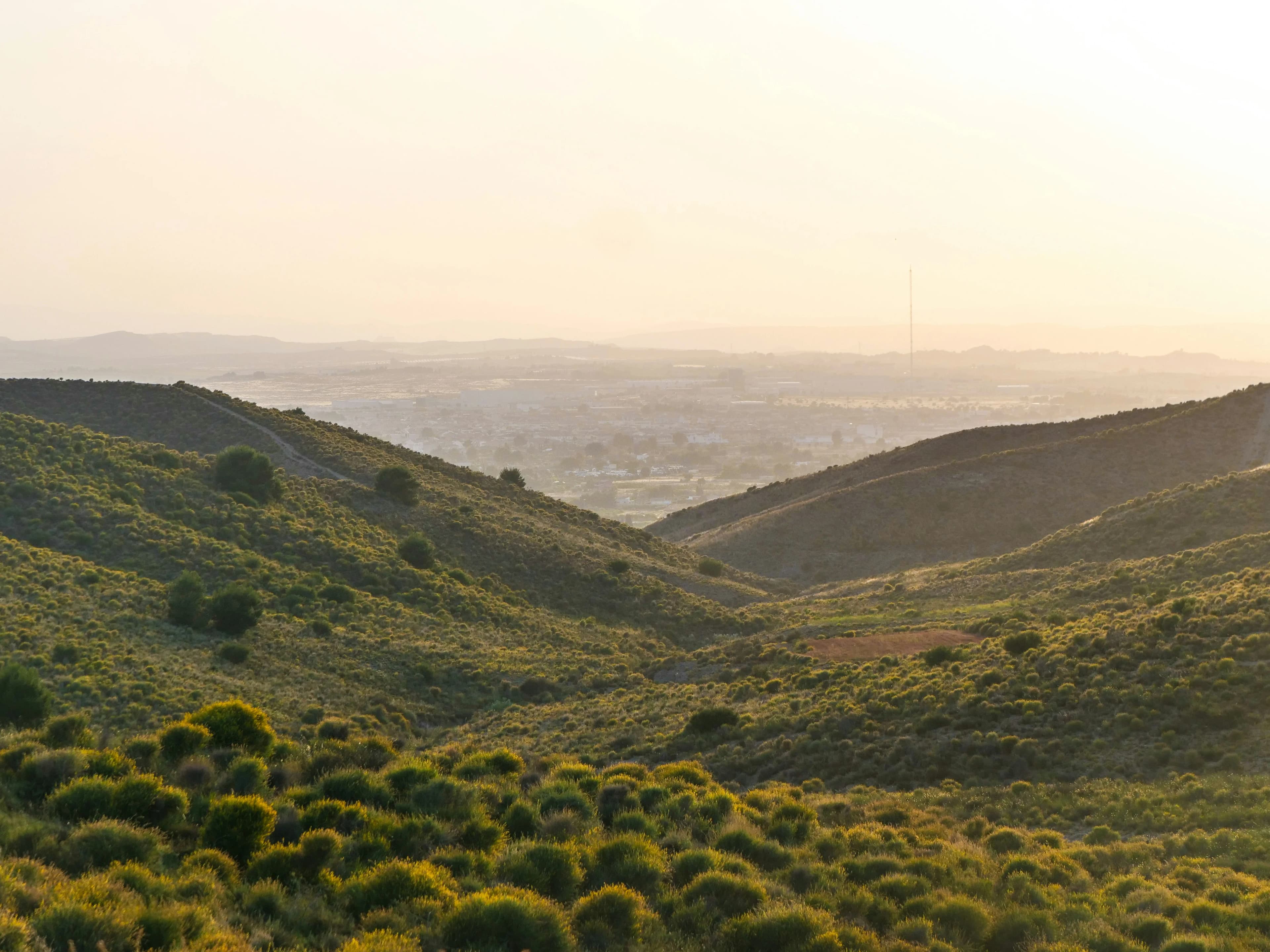
The interior sierras, including the Sierra Espuña natural park, provide a thermal and ecological counterpoint. The Alhama de Murcia area has historical spa infrastructure, and rural estates in the foothills offer the particular silence of agricultural Murcia, where lemon and citrus cultivation defines the landscape.
When to visit Murcia for a luxury suite stay
Murcia is one of Spain's sunniest and driest regions, with an annual sunshine average consistently above 300 days. The implications for travel planning are significant.
Spring (March to May) is the most calibrated window. Temperatures are comfortable, the interior is in bloom, and the Semana Santa processions in the city of Murcia rank among the most elaborate in Spain in terms of sculptural tradition, drawing international visitors with a serious interest in sacred imagery and Baroque craft.
Early autumn (September to October) mirrors this quality. The coast has shed its peak-season volume, suite availability improves, and temperatures remain warm enough for outdoor dining and water access. The Feria de Murcia in September brings a different energy to the capital, though the overall pace remains controlled relative to the large Andalusian festivals.
Summer (June to August) is intense, with inland temperatures regularly exceeding 38 degrees Celsius. The coast and Mar Menor attract considerable domestic tourism. Suites with climate control, private terraces, and pool access become functional necessities rather than amenities. Availability at the best properties should be secured months in advance for July and August.
Winter (November to February) is mild by northern European standards, rarely cold enough to preclude outdoor activity, and represents the lowest-demand period. For travellers prioritising discretion and competitive rates on premium suites, this window is worth serious consideration.
Local luxury standards: what to expect from top-tier suites in Murcia
Spain operates a national hotel classification system using stars, but the designation that carries most weight among discerning travellers is the Gran Lujo category, which sits above standard five-star classification and implies stricter spatial and service benchmarks. A smaller number of properties in Murcia reach or approach this standard.
Regionally, the most architecturally interesting luxury properties tend to be converted cortijos or rural estates (fincas), where original agricultural structures have been adapted with care for contemporary comfort. The quality markers here are specific: original tile work preserved in circulation areas, indigenous stone used structurally rather than decoratively, and suite footprints that reflect the generous proportions of working farmhouse architecture.
In coastal contexts, the relevant quality signal is suite orientation and privacy. The Mar Menor's particular geography means that lagoon-facing suites and sea-facing suites offer categorically different experiences. Properties that can offer both, or that maintain genuine acoustic separation between units, occupy the upper tier.
Thermal and spa infrastructure is historically embedded in Murcian culture. Properties near Archena or Alhama de Murcia that incorporate genuine thermal water access (rather than standard wellness pools) represent a distinct category of experience aligned with the region's long-standing hydrotherapy tradition.
How to choose the best luxury hotel suite in Murcia
Several practical considerations sharpen the decision process for this specific region.
Urban versus coastal versus rural: The three zones of Murcia serve different travel intentions. A suite in the capital positions the traveller for culture and gastronomy. A coastal suite prioritises climate and water. A rural finca positions the traveller for privacy, silence, and landscape. These are not interchangeable, and the best choice depends on the explicit purpose of the stay.
Architectural era matters: Murcia's most characterful properties span from post-Moorish agricultural estates to mid-century resort formats and contemporary boutique construction. Travellers with a preference for historic fabric should prioritise converted structures. Those who value precision in climate control, acoustics, and contemporary bathroom specification may find purpose-built modern properties more reliable.
Suite size and configuration: In a region where families and multi-generational groups travel together, suite configurations with separate sleeping and living areas, or connecting room options, are a practical necessity. Verifying actual square footage and floor plan logic before booking avoids the disappointment of a suite that reads well on paper but functions poorly in practice.
Gastronomy access: Murcia has a serious and underrecognised food culture. The region produces a significant share of Spain's fruit and vegetable output and has a corresponding tradition of market-driven cooking. Properties with in-house dining that references local produce, or those positioned within reach of Murcia city's restaurant district, add a layer of experience that purely resort-focused properties cannot replicate.
Why a curated selection by La Suite matters in Murcia
Murcia is not a destination where luxury supply is abundant or uniformly legible from the outside. The region's relative modesty in international marketing terms means that genuinely exceptional properties can sit alongside adequate ones with little visible differentiation in standard booking channels.
La Suite applies a consistent editorial standard across the full selection: spatial quality, architectural coherence, privacy infrastructure, and service calibration. In a region like Murcia, where the luxury hotel market is smaller and more varied than in Andalusia or the Balearics, this specificity of curation is the most efficient path to an informed decision. The curated selection by La Suite removes the noise and surfaces only the properties where the suite experience is the primary design intention, not an afterthought.