Where to stay in the Valencian Community
The capital and its historic core
Valencia city concentrates the region's architectural density. The old town holds structures spanning Moorish, Gothic, and Baroque periods within walking distance of each other. The Barrio del Carmen and the streets around the Catedral de Valencia offer proximity to the region's civic and cultural institutions. Properties positioned within or immediately adjacent to this core place guests at the intersection of daily Valencian life and a refined hotel experience. Suite selections in this zone reward those who prioritise walkability, cultural immersion, and access to the city's covered market, the Mercado Central, one of the largest functioning food markets in Europe.
The Costa Blanca and Alicante province
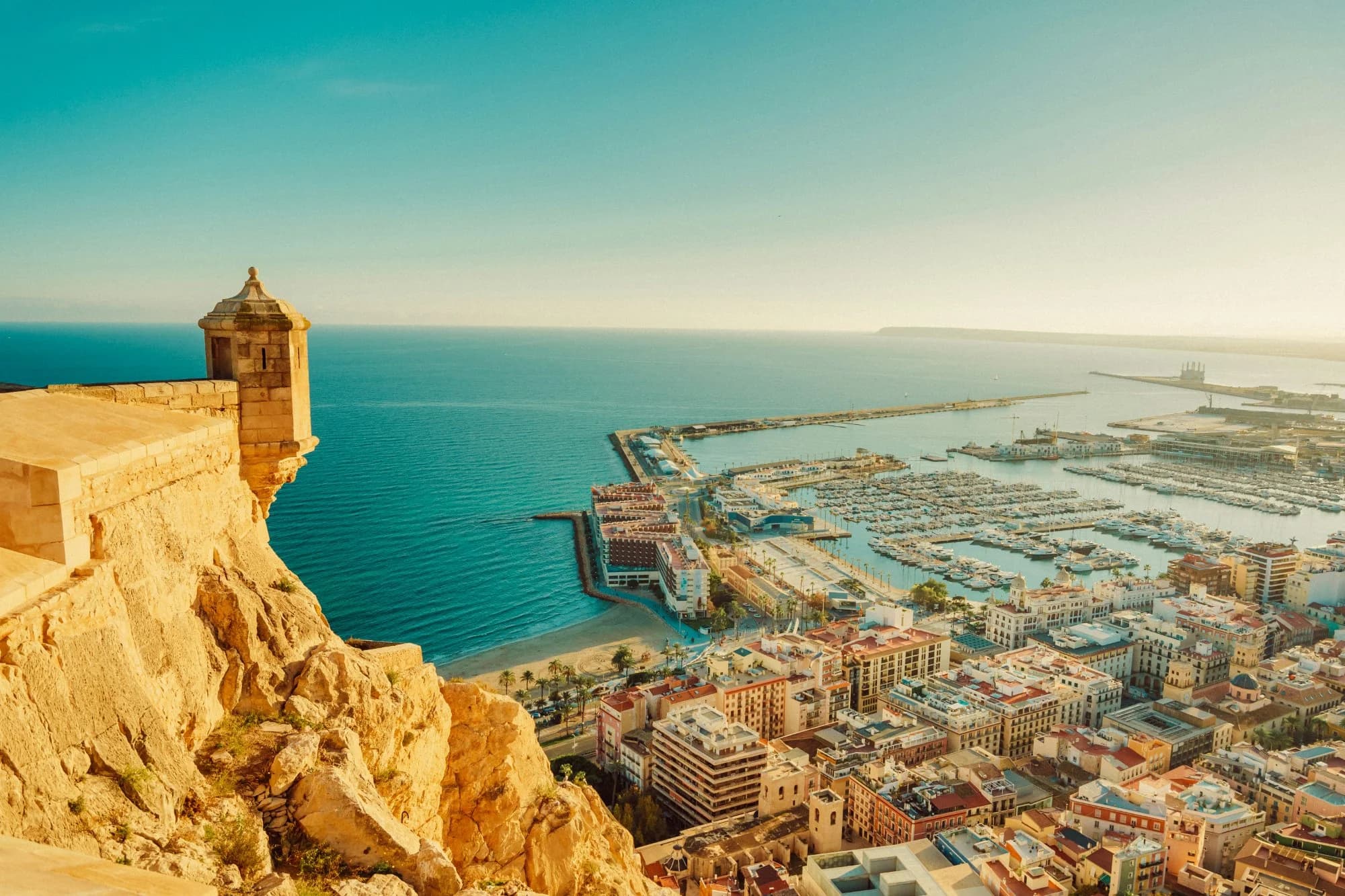
Alicante province contains some of the most geographically varied coastline on the Spanish Mediterranean. The northern stretch, centred on the marina town of Dénia and the surrounding comarca of the Marina Alta, has developed a reputation for precision gastronomy, anchored in part by the international profile of the restaurant Quique Dacosta. The landscape here is defined by the Montgó massif descending to the sea. Further south, Altea and Calpe offer cliff-set positions above the water. The interior of Alicante province, around Alcoy and the Vall de Gallinera, provides a counterpoint: cooler, forested, and largely unknown to international visitors. Luxury hotel suites in this province tend to prioritise views and coastal positioning over urban density.
Castellón and the northern reaches
Castellón province is the quietest sector of the Valencian Community for international luxury travel. The interior, including the Maestrazgo plateau and the Tinença de Benifassà natural park, offers a severity of landscape that appeals to a specific kind of traveller: those seeking altitude, silence, and distance from the coastal circuits. The coastline around Peñíscola and Benicàssim is more accessible and has seen measured investment in higher-category accommodation. For those building an itinerary that combines urban stays in Valencia with rural retreat, Castellón provides the geographical transition.
When to visit the Valencian Community
The Mediterranean climate of the Valencian Community produces mild winters and long, warm summers. For suite travel, the optimal windows are spring (March to May) and early autumn (September to October). These periods offer stable temperatures between 18 and 26 degrees Celsius, lower occupancy at the best properties, and access to the region's agricultural calendar: orange blossom in spring, grape harvest in autumn.
March is the month of Las Fallas in Valencia city, one of the most architecturally and sensory significant festivals in Europe. Streets are filled with monumental sculptural structures that are ceremonially burned on the final night. Suite availability during this period is constrained and rates reflect the demand. Booking lead times of three to six months are appropriate for first-tier properties during Fallas week.
Summer in the Valencian Community is consistently hot, with July and August seeing the highest coastal occupancy. For those who favour this period, properties with private terraces, direct sea access, or garden suites with independent outdoor space become particularly relevant. The rice fields of the Albufera natural park, just south of Valencia city, take on a particular quality in late summer light.
Understanding luxury standards in the Valencian Community
Spain's official hotel classification system runs to five stars, with a five-star Gran Lujo designation available for properties meeting an elevated set of criteria. The Valencian Community does not carry the same concentration of Gran Lujo properties as Madrid or Barcelona, which makes the selection process more nuanced. Several properties of genuine quality operate at four or four-superior levels, where the physical experience of the suite and the service standard exceed what the star rating alone would suggest.
The region also has a growing category of restored heritage properties: former palaces, convents, and agricultural estates (known locally as masías) that have been converted into high-category hotels. In these cases, the architecture itself is the principal asset. Suite sizing and configuration in historic conversions can vary considerably from contemporary builds, and the selection process benefits from attention to the specific room layout rather than relying solely on category designation.
Gastronomy is a legitimate part of the luxury infrastructure of the Valencian Community. The region holds more Michelin-starred restaurants per capita than is typical for comparable Spanish territories. Paella, its canonical dish, is treated here as a technical preparation requiring specific rice varieties (bomba, senia), precise broth reduction, and the socarrat, the caramelised base layer considered the mark of proper execution. Access to this culinary culture is a meaningful component of any suite-level stay in the region.
How to choose the right suite in the Valencian Community
The first distinction to make is between coastal and urban positioning. A suite in Valencia city offers density: cultural programming, restaurant access, and the social texture of a functioning metropolitan centre. A coastal suite, whether in the northern Marina Alta or the central stretch around Benidorm's quieter outskirts, offers space, light, and direct relationship with the Mediterranean.
For coastal properties, orientation matters. North-facing terraces can lose direct sunlight by early afternoon. East-facing suites catch morning light across the water. Checking the specific terrace orientation before confirming a reservation is a practical step that significantly affects the daily experience of the suite.
Historic properties require attention to acoustic conditions. Stone construction in old-town buildings transmits street sound differently from contemporary hotels. Properties on pedestrianised streets or interior courtyards tend to offer greater quiet. In converted masías and rural estates, the principal concern shifts to access: some of the most interesting properties in the Valencian interior are positioned at the end of unpaved tracks, which affects arrival logistics and mobility during the stay.
Suite size designations across Spanish hotels are not standardised. What one property calls a junior suite may be equivalent in floor area to what another designates a deluxe room. Reviewing actual square footage where disclosed, and the specific amenities of the suite rather than its title, produces better outcomes than relying on category labels.
Why curated selection by La Suite matters in this region
The Valencian Community presents a selection challenge that rewards prior knowledge. The market spans a genuinely wide range of property types: five-star urban hotels, boutique conversions in medieval villages, coastal villas operating as small hotels, and rural estates with minimal online visibility. For a traveller arriving at this region without specialist context, the range is difficult to navigate efficiently.
La Suite applies a consistent editorial framework to this market. Each property is assessed on suite quality, architectural coherence, service structure, and the relationship between the physical setting and the experience it delivers. The result is a shortlist rather than a directory: a set of properties where the suite itself justifies the visit, not merely the location. For the Valencian Community specifically, where the gap between marketing presentation and actual suite quality can be significant, this curatorial layer is a practical asset.