Hotel Bellevue Palace Bern, Bern
This traditional 5-star palace hotel occupies an elegant Art Nouveau building dating from 1913, located in the heart of Bern next to the Federal Parliament. The Bellevue Palace with is amazing views t

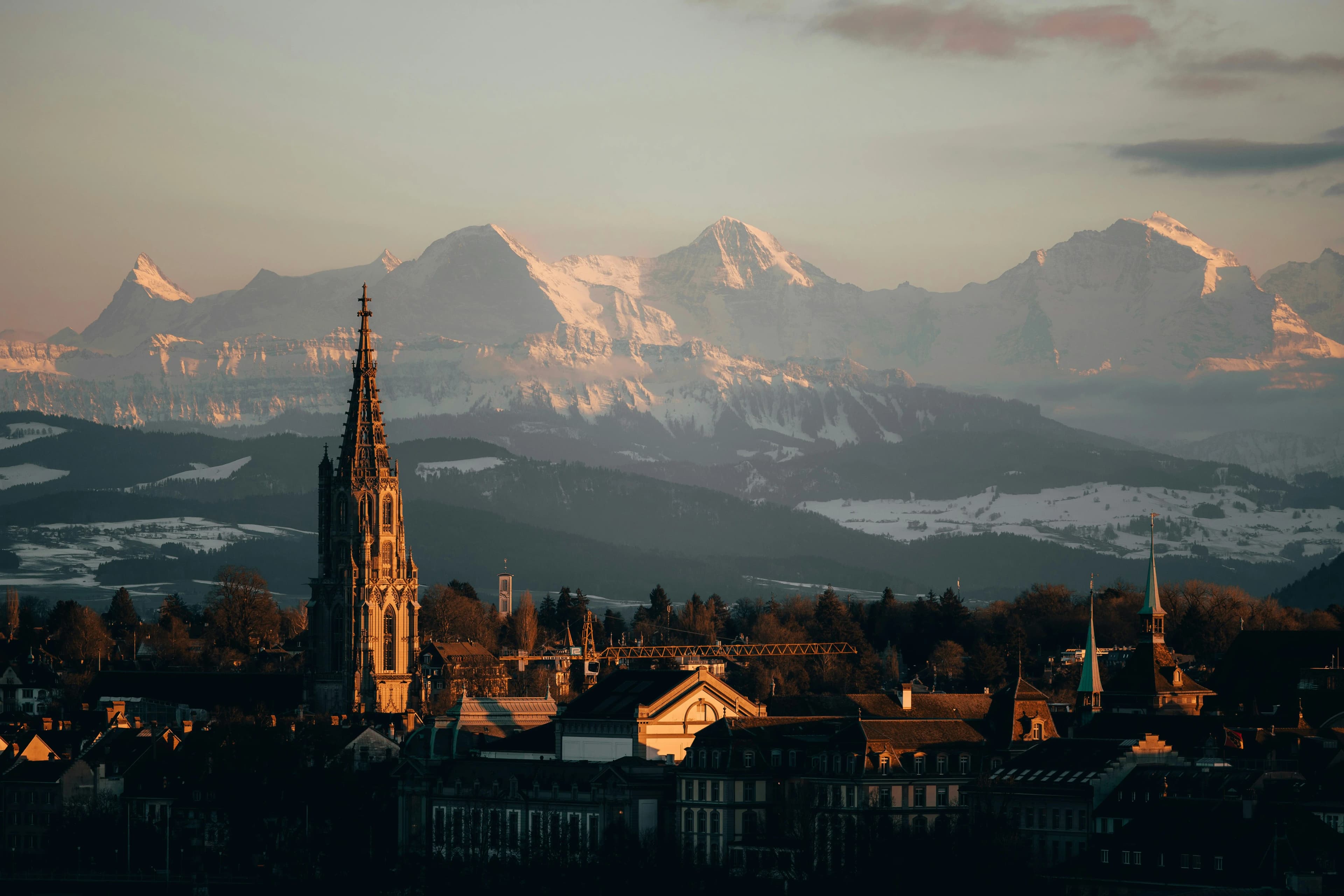
Bern is not a city that announces itself. It operates at a frequency that rewards the attentive traveler: the six kilometers of covered arcades, the rose gardens above the Aare bend, the Bear Park at the city's eastern edge, the Federal Palace sitting with institutional gravity at the city's center. A luxury hotel suite here is not a retreat from the city but an extension of it. The best properties position guests within the medieval core or along the river corridor, offering direct proximity to the city's most considered districts. For those exploring Switzerland at a measured pace, Bern functions as the country's most coherent urban base.
4 hotels available

This traditional 5-star palace hotel occupies an elegant Art Nouveau building dating from 1913, located in the heart of Bern next to the Federal Parliament. The Bellevue Palace with is amazing views t

The Hotel Schweizerhof Bern & Spa is a historic five-star hotel located in the heart of Bern, Switzerland. It offers luxurious rooms and suites, a spa, the famous Jack's Brasserie, Sky Terrace, Cigar

Historic Setting One Suite Hotel - Zollhaus in Bern offers a spacious aparthotel housed in a historic building. Guests enjoy a terrace with city and river views, complemented by free WiFi througho

Located in the city center, with an exceptional view of the medieval Old Town and the impressive Alps, Swissôtel Kursaal Bern features a casino, 2 restaurants, 1 bar, garden lounge and a convention ce

68 km away
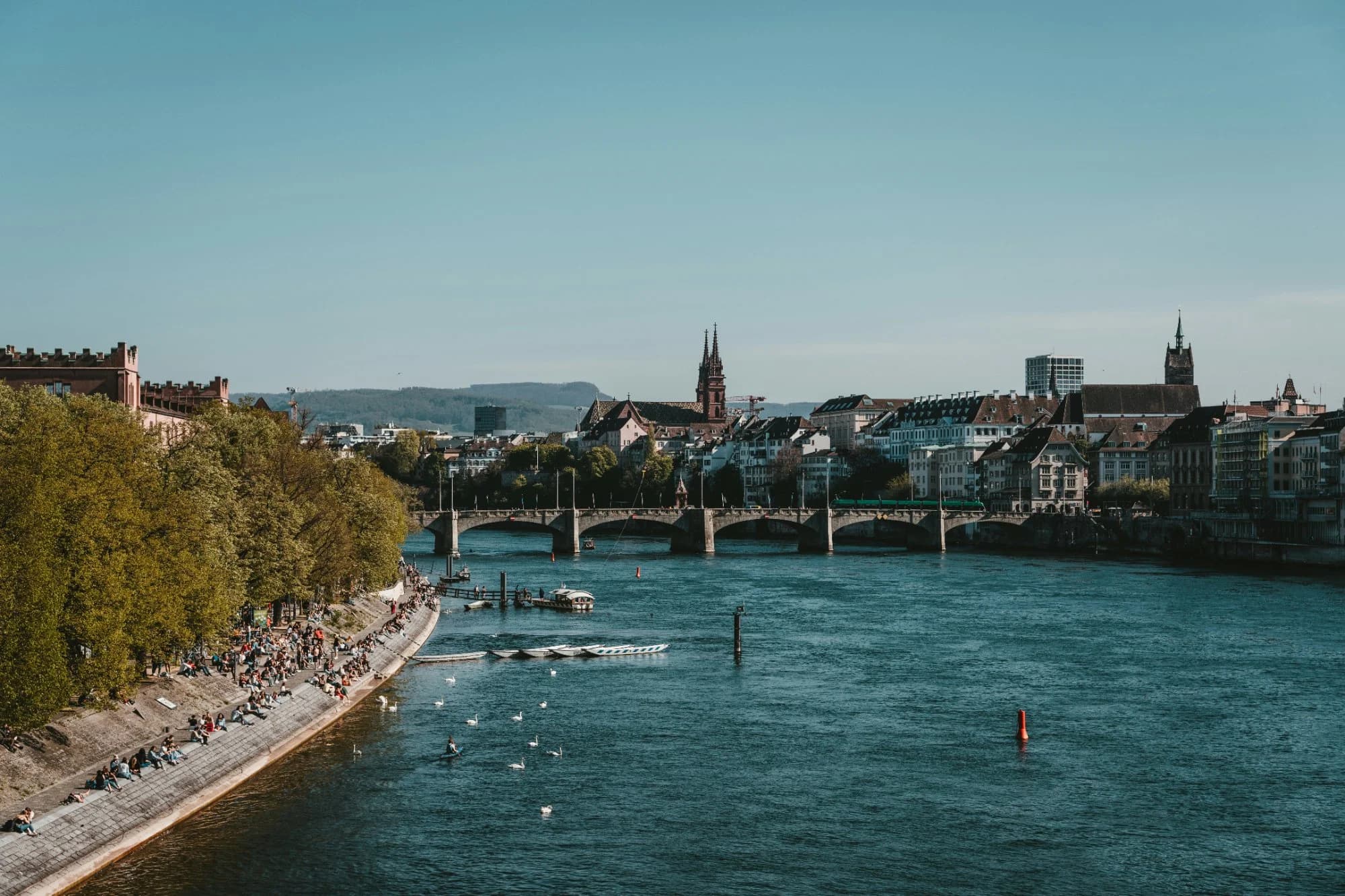
Switzerland is not short of sophisticated cities, but Basel operates on its own register. It is not driven by alpine spectacle or financial gravity in the way that Zurich or Geneva are. Basel's prestige is cultural and architectural. The city hosts more museums per capita than almost any other in Europe, and its annual art fair, Art Basel, functions as a kind of global barometer for contemporary taste. For the design-literate traveler, this is a destination that rewards attention. The luxury hotel suite here is less about escapism and more about immersion in a city that takes aesthetics seriously at every scale.

95 km away
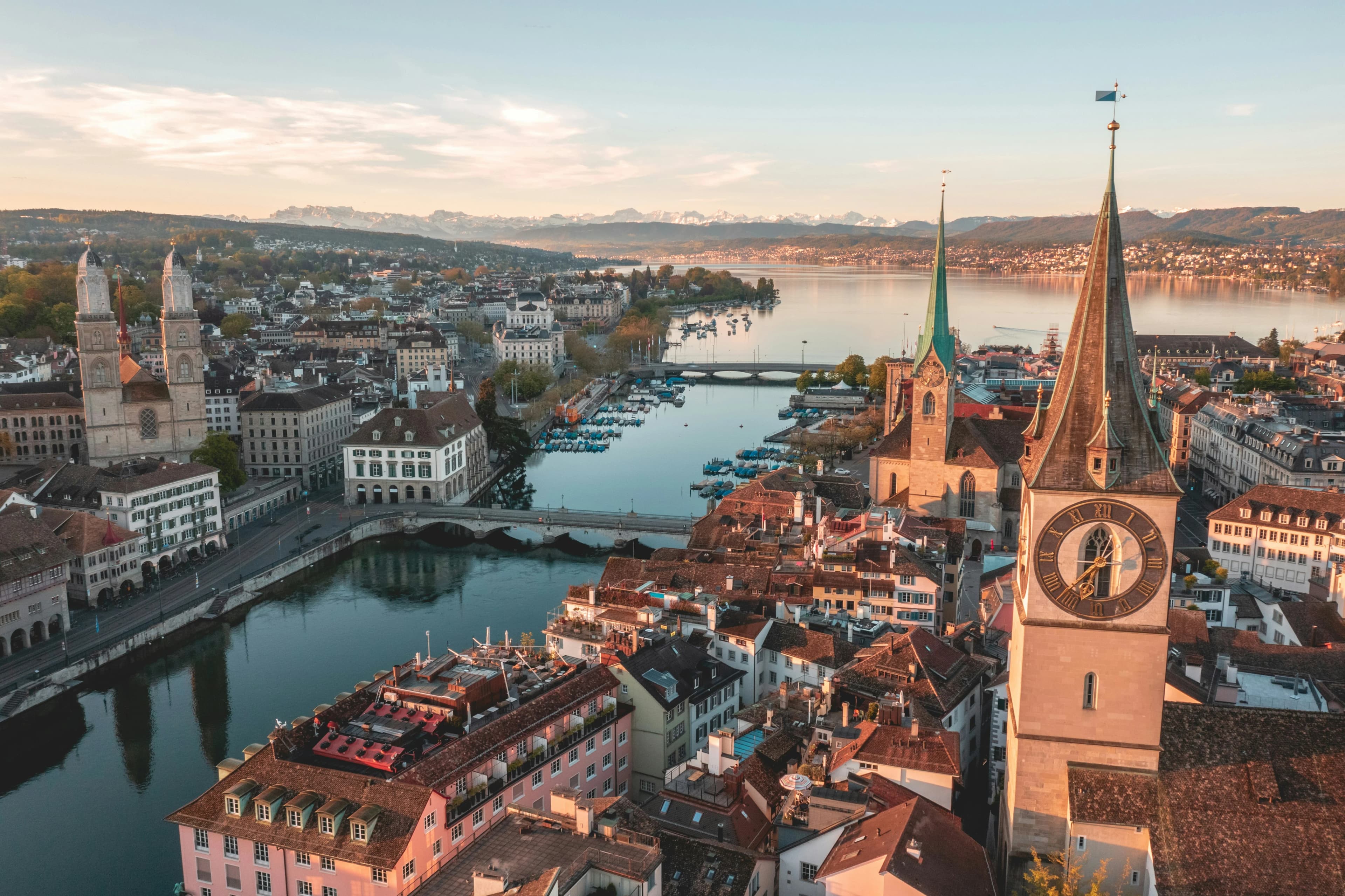
Zurich is not a city that performs luxury. It practises it. The distinction matters to the kind of traveler who chooses a suite deliberately, not for size alone, but for what the space communicates about where they are. In Zurich, that communication is architectural, material, and precise. The city ranks among Europe's most expensive and most livable, and its hotel culture reflects both realities: properties here operate at a standard that assumes the guest has experienced the best elsewhere and expects no explanation of what makes something good.

66 km away
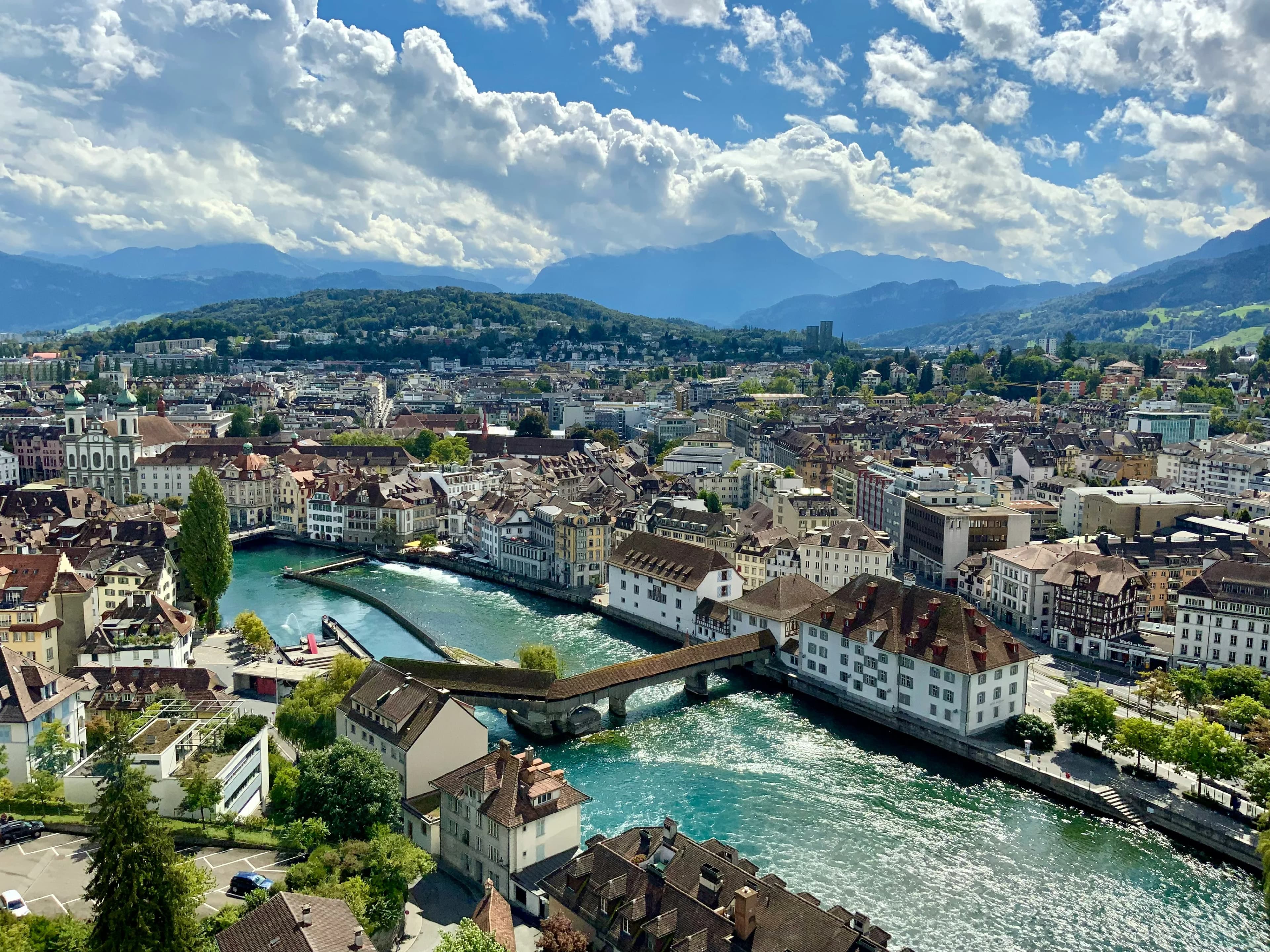
Lucerne is compact by design and generous in detail. The medieval Old Town, the Chapel Bridge (Kapellbrücke), the promenade along Lake Lucerne: each element of this city has been maintained with a seriousness that most destinations can only approximate. Staying in a standard room here would be a category error. The right luxury hotel suite places you above the roofline, facing the water or the mountains, with space to absorb what the city is quietly offering. This is a destination for people who travel to slow down, not to accumulate experiences. A suite is the architectural expression of that intention.
The UNESCO-listed Altstadt is the natural address for a first visit. The sandstone arcades, the Zytglogge clock tower, and the dense pattern of guild houses define one of the best-preserved medieval city centers in Europe. Properties within this perimeter place guests at walking distance from the Federal Palace, the Bern Historical Museum, and the Kunstmuseum. The acoustic environment is notably calm for a capital city, particularly after dark.
The river loop that defines Bern's topography also defines its most atmospheric residential districts. Hotels along the Aare corridor offer views across the river to the Bernese Alps on clear days, and direct access to the swimming areas that locals use through summer. This is a quieter, more residential orientation, suited to travelers who prefer proximity to landscape over proximity to commerce.
South of the old town, across the Kirchenfeldbrücke, Kirchenfeld is Bern's museum quarter. The Paul Klee Center is located further east, but several of the city's significant cultural institutions concentrate here. The architecture is late-nineteenth-century residential, wide-boulevarded and considered. A suite in this district positions guests between the civic core and the quieter, greener southern reaches of the city.
Bern operates year-round with Swiss consistency, but the experience shifts considerably by season. Late spring, from May through early June, brings the rose gardens of the Rosengarten into full condition and the Aare into swimmable temperature for the season's first weeks. Summer, from June through August, is the city's most active period: outdoor markets, the Buskers Bern street music festival in August, and the full use of the river. The light at this latitude is long and architectural, lasting past nine in the evening.
September and October offer the most comfortable temperatures for walking the arcades and the Aare path, with the summer crowds substantially reduced. Winter transforms Bern into a quieter, more interior city. The Christmas market at Waisenhausplatz is one of Switzerland's more restrained and atmospheric seasonal markets. Suite availability is generally strongest in winter, when the city is at its most local and least tourist-oriented.
For travelers interested in Swiss political life, the Federal Assembly sessions in spring and autumn bring a specific professional demographic to the city's hotels. Planning around these periods requires earlier reservation of preferred properties.
Switzerland does not operate a palace hotel designation in the formal French sense, but the country maintains its own rigorous classification system through Hotelleriesuisse, the national hotel trade body. The five-star superior category represents the apex of Swiss hotel classification, and properties carrying this designation in Bern are subject to audit across a comprehensive set of service and infrastructure criteria.
The Swiss luxury standard is characteristically precise. It prioritizes function alongside form: soundproofing, thermal comfort, linen quality, and bathroom engineering are treated with the same seriousness as interior design and food programming. A luxury hotel suite in Bern will typically offer substantial square footage relative to the room rate, well-engineered climate control, and service that is attentive without being performative. The Swiss hospitality tradition values discretion over demonstrative warmth, a quality that suits a specific type of traveler well.
Beyond the formal hotel sector, Bern's smaller historic buildings occasionally house boutique properties where suite inventory is limited but the architectural specificity is high. These addresses require more active curation to identify, as they do not always carry formal five-star classification despite operating at an equivalent standard of experience.
Several practical considerations apply specifically to Bern. First, the city's topography: the Altstadt sits on a peninsula elevated above the Aare, which means that properties within the old town proper are generally above the river rather than directly on it. If a river view is a priority, the distinction between properties requires careful attention.
Second, the acoustic environment: Bern is a compact city with a contained street plan, and the arcades channel both foot traffic and sound in specific ways. A suite facing an internal courtyard will offer a substantially different acoustic experience from one facing the main arcade streets. For light sleepers, this distinction matters.
Third, the question of historical versus contemporary architecture. Some of Bern's most significant hotel properties occupy buildings with genuine medieval or nineteenth-century fabric, where the architecture is part of the experience. Others operate in more neutral modern structures where the design program does the experiential work. Neither is superior in absolute terms, but the preference is personal and worth establishing before selection.
For travelers arriving by rail, Bern's main station is exceptionally well connected within the Swiss Federal Railways network, with direct services to Zurich, Geneva, Basel, and Interlaken. A centrally located suite eliminates the need for a vehicle within the city entirely.
Bern's hotel market is not large by European capital standards. The number of properties operating at genuine luxury level is contained, and the differences between them are meaningful rather than marginal. A curated approach to this market is not an indulgence but a practical efficiency: it eliminates the properties that present well in photography but underdeliver in architectural specificity, service calibration, or suite quality relative to price.
La Suite applies a consistent editorial standard to every property in its selection. For a city like Bern, where the experience depends as much on precise positioning within the urban fabric as on the room itself, this granular knowledge is what separates an adequate stay from a genuinely considered one. The curated selection by La Suite for Switzerland reflects this standard across the full country, with Bern assessed within its proper context: a capital of quiet authority, best experienced from an address that matches it.

Bern offers a rare combination of UNESCO-listed medieval architecture, Swiss institutional calm, and a coherent urban environment that is largely free of mass tourism pressure. The Aare river loop, the covered arcade system, and the density of cultural institutions make it a city that rewards extended stays over short visits. For travelers who choose destinations on the basis of architectural and cultural specificity, Bern is a considered choice within the Swiss canon.
The UNESCO-listed Altstadt places guests within the city's most historically significant fabric, within walking distance of the Federal Palace, the Kunstmuseum, and the main arcade streets. The Aare riverside districts offer a quieter orientation with proximity to the river. The choice depends on whether the traveler prioritizes civic centrality or atmospheric calm.
Late spring and early autumn offer the most comfortable conditions for exploring the city on foot, with moderate temperatures and reduced visitor numbers. Summer activates the Aare swimming culture and outdoor programming, including the Buskers festival in August. Winter is the quietest period, with strong suite availability and a more local, interior atmosphere.
Switzerland's national classification system through Hotelleriesuisse sets a rigorous standard, and five-star superior properties in Bern are assessed across a comprehensive set of criteria covering service, infrastructure, and design. The Swiss approach to luxury prioritizes precision and discretion: soundproofing, climate engineering, and linen quality are treated with the same seriousness as interior design. Suite square footage in the top Bern properties is typically generous relative to comparable European capital rates.
Zurich and Geneva carry greater international business traffic and a larger luxury hotel market with more properties operating at the top tier. Bern operates at a quieter frequency, with a smaller suite inventory that is correspondingly more specific. Travelers who value civic coherence, architectural authenticity, and a less commercially pressured environment tend to find Bern the more considered choice for a residential-style stay.
Bern's hotel market includes both international group properties and smaller independent addresses that occupy historic buildings within the old town or adjacent districts. The boutique tier in Bern tends to have limited suite inventory, which means these properties require earlier planning and more active curation to access. The architectural specificity of these addresses is often the primary draw for design-literate travelers.
Bern's position within the Swiss Federal Railways network makes it one of the country's most practical rail hubs. Direct services connect to Zurich, Geneva, Basel, Lucerne, and the Interlaken gateway to the Bernese Oberland. A centrally located luxury suite in Bern allows guests to reach the Alps, Lake Geneva, and the Rhine corridor within two hours by train, making it a viable base for a wider Swiss itinerary.
The Kunstmuseum Bern holds one of Switzerland's most significant fine art collections, with particular depth in twentieth-century Swiss and international work. The Paul Klee Center, designed by Renzo Piano, is a significant piece of contemporary architecture as well as a dedicated museum. The Bern Historical Museum and the adjacent Einstein Museum occupy a substantial neo-Gothic building in the Kirchenfeld district. The Federal Palace offers guided visits during non-session periods.
Suite rates in Bern's top-tier properties vary considerably by season and by room configuration, with the peak summer and autumn conference periods commanding the highest rates. The city's hotel market is smaller than Geneva or Zurich, which limits downward rate pressure at the top end. Travelers accustomed to major European capital pricing will generally find Bern competitive within the Swiss context, though Swiss operating costs mean that the floor rate for genuine luxury is high relative to comparable European cities.
La Suite applies a consistent editorial standard to every property in its selection across <a href="/en/destination/world/europe/switzerland">Switzerland</a>, assessing suite quality, architectural specificity, service calibration, and positioning within the urban or landscape context. For Bern, this means evaluating not only room quality but also the precise location within the city's topography and the acoustic and experiential differences between properties. The curated selection by La Suite reflects this granular knowledge rather than relying on star classification alone.