Art Deco Hotel Montana Luzern, Lucerne
The Art Deco Hotel Montana offer rooms as well as luxurious spa suites with panoramic views of Lake Lucerne, the city and the Alps. All the spacious rooms and suites feature stylish designer furnitur

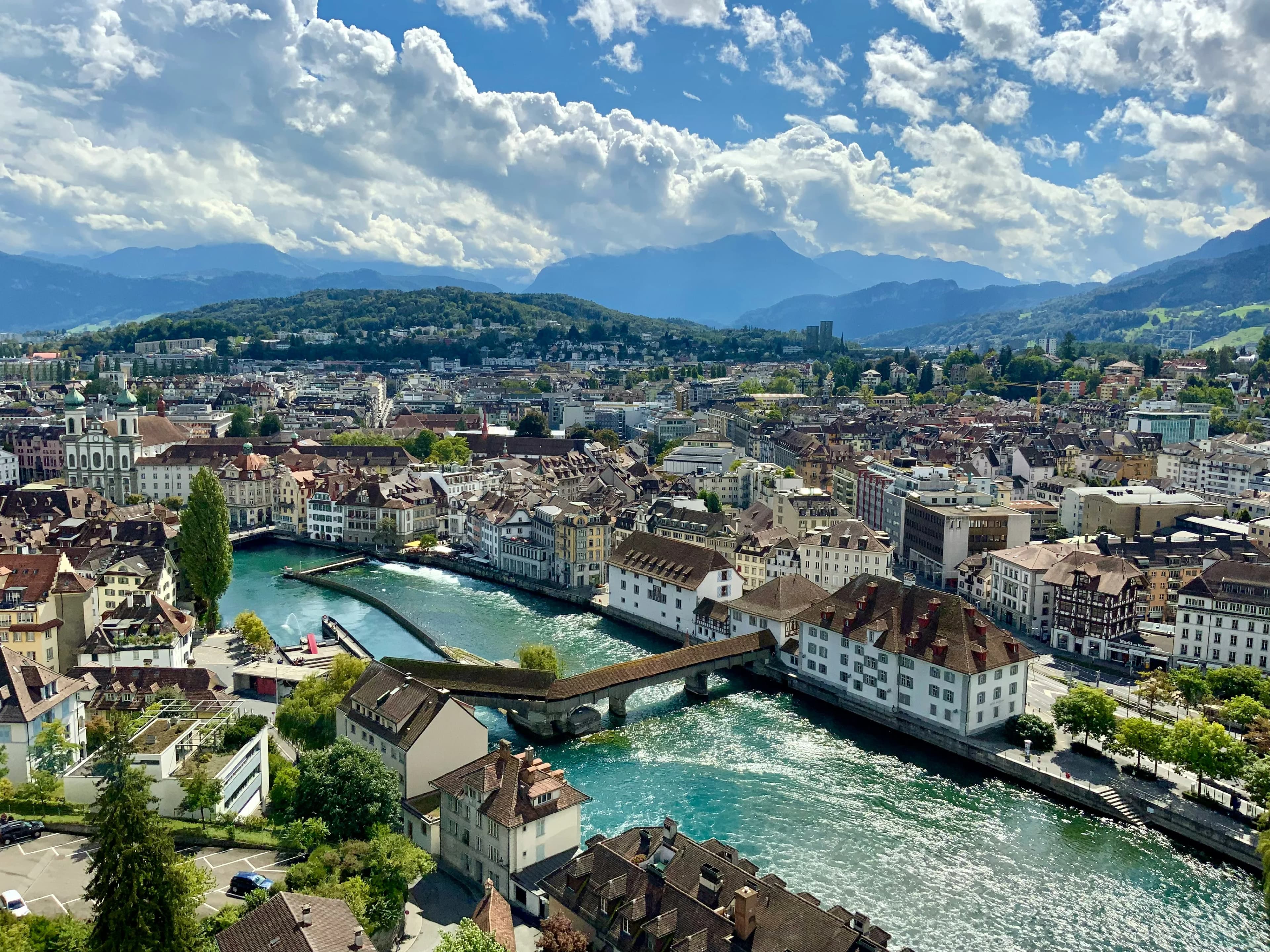
Lucerne is compact by design and generous in detail. The medieval Old Town, the Chapel Bridge (Kapellbrücke), the promenade along Lake Lucerne: each element of this city has been maintained with a seriousness that most destinations can only approximate. Staying in a standard room here would be a category error. The right luxury hotel suite places you above the roofline, facing the water or the mountains, with space to absorb what the city is quietly offering. This is a destination for people who travel to slow down, not to accumulate experiences. A suite is the architectural expression of that intention.
8 hotels available

The Art Deco Hotel Montana offer rooms as well as luxurious spa suites with panoramic views of Lake Lucerne, the city and the Alps. All the spacious rooms and suites feature stylish designer furnitur

Château Gütsch is set in a 19th-century castle, overlooking the town of Lucerne and Lake Lucerne, with views to the Rigi Mountain. The interior was renovated and designed by Martyn Lawrence Bullard. F

The luxurious Grand Hotel National is situated right on the shore of Lake Lucerne, only a 5 minute walk from the train station and the historic quarter. Lucerne's legendary luxury hotel was built in

The HERMITAGE Lake Lucerne - Beach Club & Lifestyle Hotel is tranquilly located within its own grounds on the shores of Lake Lucerne, only 2.5 mi away from the city center with beautiful views of the

Housed in a former Guild Hall, the Hotel des Balances enjoys a picturesque location on the Reuss river in the heart of Old Lucerne. Wi-Fi is available free of charge. Most rooms offers views of the

The family-owned 5-star Hotel Schweizerhof Luzern is located right in the Old Town of Lucerne, next to the lake. It offers a spa area and elegant rooms with modern furniture. The Culture and Conventio

Elegant Accommodations Mandarin Oriental Palace in Luzern offers a 5-star experience with spa facilities, a sauna, restaurant, and bar. Guests enjoy private check-in and check-out, a 24-hour front

Designed by the celebrated Parisian architect Jean Nouvel, the hotel is centrally located next to a pleasant park in the heart of Lucerne. Free WiFi is available in the entire hotel. The Culture and

78 km away
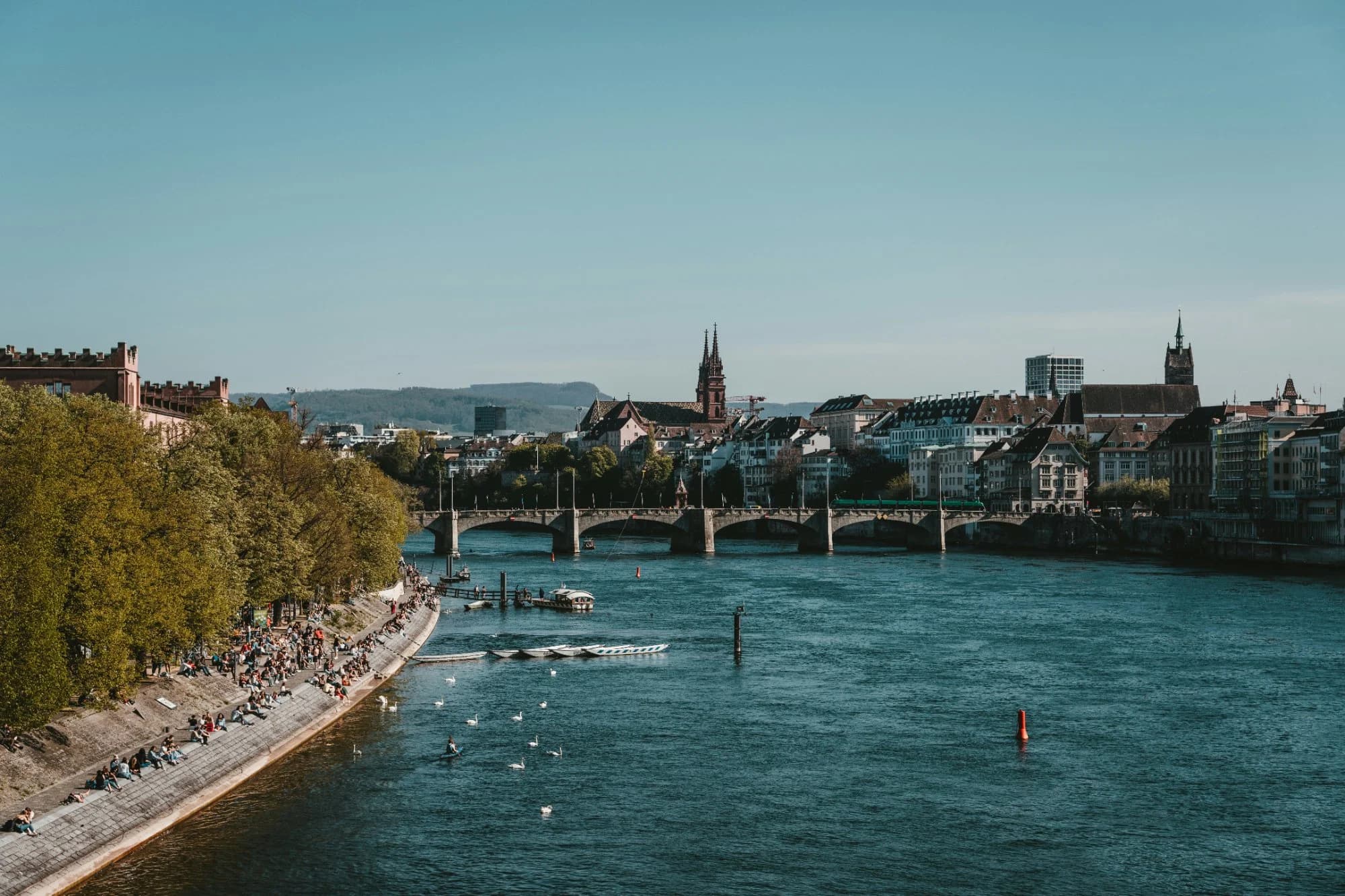
Switzerland is not short of sophisticated cities, but Basel operates on its own register. It is not driven by alpine spectacle or financial gravity in the way that Zurich or Geneva are. Basel's prestige is cultural and architectural. The city hosts more museums per capita than almost any other in Europe, and its annual art fair, Art Basel, functions as a kind of global barometer for contemporary taste. For the design-literate traveler, this is a destination that rewards attention. The luxury hotel suite here is less about escapism and more about immersion in a city that takes aesthetics seriously at every scale.

40 km away
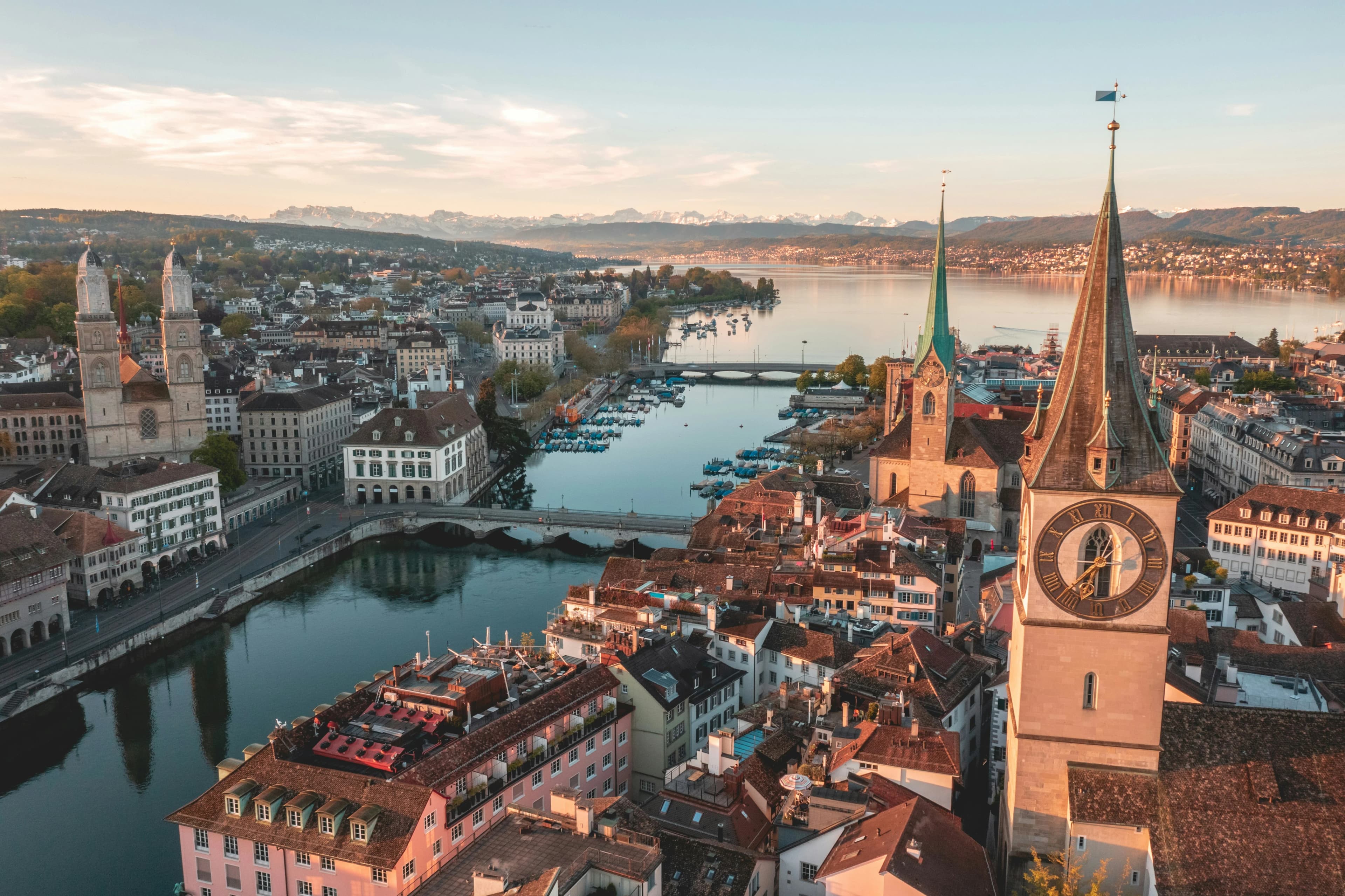
Zurich is not a city that performs luxury. It practises it. The distinction matters to the kind of traveler who chooses a suite deliberately, not for size alone, but for what the space communicates about where they are. In Zurich, that communication is architectural, material, and precise. The city ranks among Europe's most expensive and most livable, and its hotel culture reflects both realities: properties here operate at a standard that assumes the guest has experienced the best elsewhere and expects no explanation of what makes something good.

66 km away
Bern is not a city that announces itself. It operates at a frequency that rewards the attentive traveler: the six kilometers of covered arcades, the rose gardens above the Aare bend, the Bear Park at the city's eastern edge, the Federal Palace sitting with institutional gravity at the city's center. A luxury hotel suite here is not a retreat from the city but an extension of it. The best properties position guests within the medieval core or along the river corridor, offering direct proximity to the city's most considered districts. For those exploring Switzerland at a measured pace, Bern functions as the country's most coherent urban base.
The most coveted addresses in Lucerne face the lake directly. The grand hotels along the lakefront promenade were built in the late nineteenth and early twentieth centuries, designed from the outset for a clientele that expected both scale and refinement. Suites in these properties tend toward classical proportions: high ceilings, large windows oriented toward the water, and a physical separation from the street-level noise of the Old Town. The Rigi and Pilatus mountains are visible from many of these rooms on clear days, providing a backdrop that no interior decorator could replicate.
For travelers who prefer proximity to Lucerne's cultural core, suites positioned within or adjacent to the Old Town offer a different register. The scale is smaller, the architecture more intimate, and the sensory experience shifts from panoramic to textural: cobblestones, painted facades, the sound of the river Reuss. Some boutique properties in this area occupy historic buildings repurposed with architectural care. The tradeoff is a more contained view, compensated by immersion in the city's medieval grain.
Lake Lucerne (Vierwaldstättersee) extends across a wide territory, and several properties beyond the city itself offer suite experiences with direct lake access and mountain immediacy. These are correct choices for travelers seeking solitude alongside cultural proximity: the city remains reachable, but the daily rhythm is defined by water and altitude rather than urban movement. For a broader overview of Swiss suite travel, the La Suite Switzerland destination page covers the full national landscape.
April through June offers the clearest visibility of the surrounding Alps, before summer haze settles over the valley. Hotel occupancy begins to build in May, and suite availability at premium properties becomes competitive through June. This is the season for walkers, for those interested in the surrounding mountain infrastructure (the cog railways to Rigi and Pilatus open fully by late spring), and for travelers who prefer a temperate climate without the density of high summer.
July and August are the peak months. The city is at full operational capacity, the lake is in use, and the light is at its most flattering in the late afternoon. Suite availability is tightest during this period, particularly for lake-facing rooms. September and October represent the most considered choice for experienced travelers: the crowds thin, the foliage on the surrounding hillsides shifts, and the hospitality industry operates with slightly more attentiveness per guest. The Lucerne Festival, one of Europe's most respected classical music events, takes place in late summer and attracts a culturally engaged international audience.
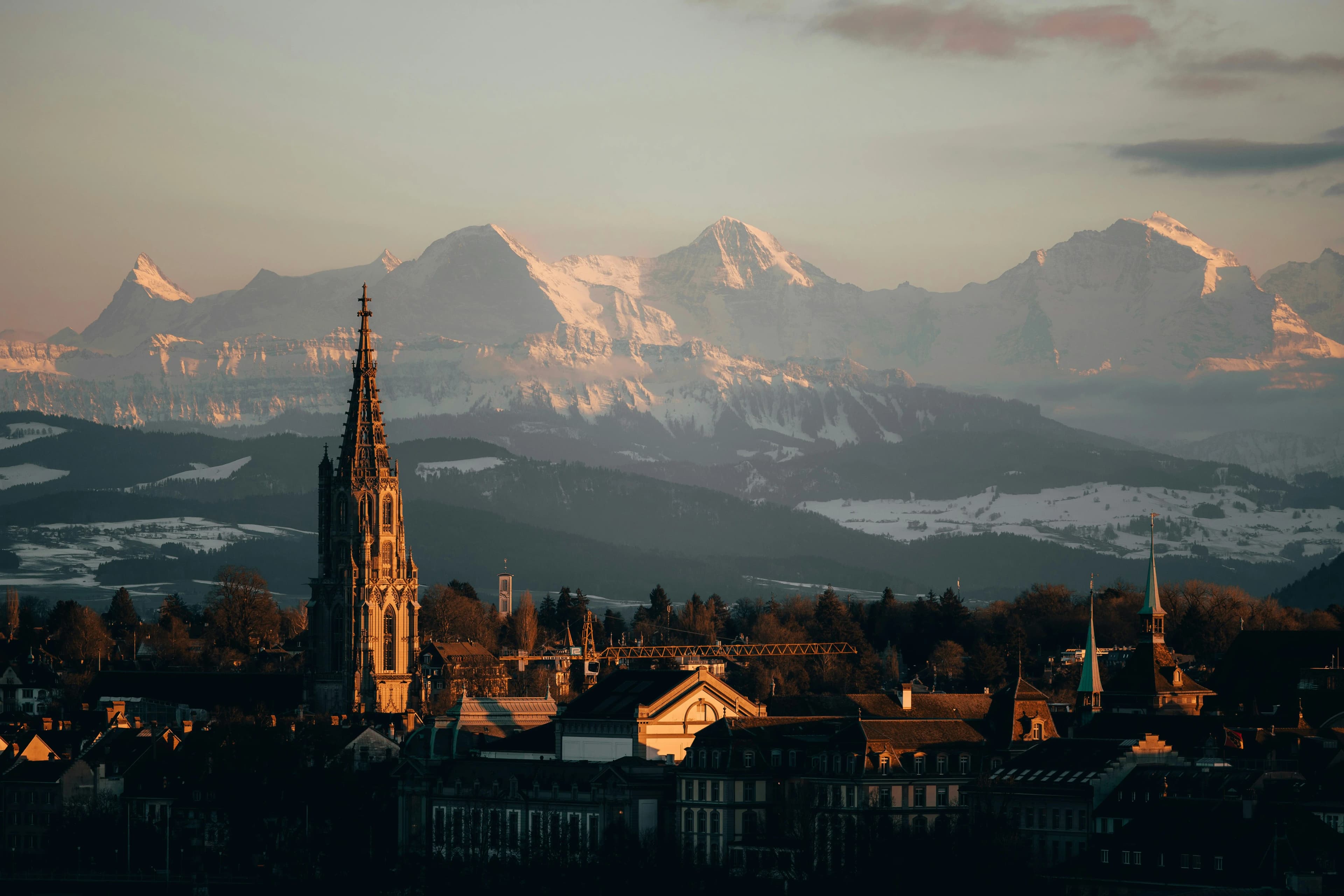
Lucerne in winter is underrated. The city does not close: it recalibrates. The Christmas market on the lakefront is architecturally coherent and not excessive. The mountains surrounding the lake receive snow from November onward, and the visual contrast of white peaks against grey water is one of the more singular sights in Central Europe. Suite rates at lakefront properties are generally more accessible in January and February, outside the holiday peak.
Switzerland does not have a formal national classification equivalent to the French Palace designation, but the Swiss hotel industry operates under a rigorous five-star system administered by hotelleriesuisse. In practice, the leading Lucerne properties have maintained continuous operation at the top of this classification for over a century. What distinguishes Swiss five-star suites is not ostentation but operational precision: service is anticipatory rather than reactive, materials are chosen for longevity rather than visual impact, and the technical quality of the room itself (acoustics, climate control, bed construction) is treated as seriously as the view. For context on Swiss hospitality standards across the country, the La Suite Switzerland guide provides a useful reference point. Travelers accustomed to the broader European luxury hotel landscape within Europe will find Lucerne properties consistent with the highest regional benchmarks.
The most prominent luxury hotels in Lucerne are grand historic properties, built between 1870 and 1920 for the original wave of international leisure travelers. These buildings have been continuously updated, but their fundamental character (high ceilings, formal proportions, classical materials) remains intact. Contemporary or design-forward suite options exist but are less numerous. Travelers with a preference for minimalist interiors should research individual properties carefully rather than assuming the city's newer offerings match the scale of its established grand hotels.
In Lucerne, the lake view is not a cosmetic amenity. It is a defining element of the stay. A suite without direct lake orientation, in a lakefront property, represents a meaningful reduction in the core experience. When selecting a suite, the precise orientation of the room (and the floor level, given that lower floors may face obstructions) is a practical consideration, not an indulgence.
Lucerne's luxury suites vary considerably in configuration. Some of the most sought-after rooms in the grand hotels are corner suites that capture both lake and mountain views simultaneously. Others are structured as residential apartments within the hotel, appropriate for extended stays or for travelers who require a working environment within the room. Identifying the correct configuration before arrival is a function of curation, not chance.
Lucerne has a small number of luxury properties, and the differences between them are specific and consequential. The correct suite for a solo traveler attending the Lucerne Festival is not the correct suite for a couple on an anniversary stay, nor for a family requiring residential space. La Suite's curated selection for Lucerne is built on direct knowledge of these distinctions. Rather than presenting an undifferentiated list of five-star options, the La Suite approach identifies the precise properties and room categories that match the purpose and profile of the stay. In a city this considered, the selection process should be equally deliberate.

The lakefront promenade offers the most architecturally significant and view-forward suite options in Lucerne, with properties built in the grand hotel tradition of the late nineteenth century. The Old Town provides a more intimate alternative with historic character, while the broader Lake Lucerne region suits travelers seeking solitude with proximity to the city.
September and October are widely regarded by experienced travelers as the optimal window: the summer density has passed, suite availability improves, the foliage on the surrounding hillsides is at its most photogenic, and service standards tend to be more attentive. January and February also offer strong value at lakefront properties outside the holiday period.
Top-tier suites in Lucerne's established five-star properties typically include lake or mountain views, high-ceiling classical interiors, butler or concierge service, and technically precise room specifications including acoustic insulation and climate control. Many of the grand historic properties also offer private terrace access in their upper-category suites.
Switzerland uses a national five-star rating system administered by hotelleriesuisse, applied consistently across the country. In Lucerne, the leading properties have held five-star status continuously for decades, with periodic reassessment. The Swiss system emphasizes operational consistency and service standards alongside physical amenities.
Yes. Winter in Lucerne is architecturally compelling and operationally quieter. Suite rates at lakefront hotels are generally more accessible in January and February, the surrounding mountains carry snow from November onward, and the city maintains a full range of cultural and culinary activity throughout the season. The holiday period itself (mid-December to early January) sees higher occupancy and rates.
The Lucerne Festival, held primarily in late August and early September, is one of the most respected classical music events in Europe and draws an internationally culturally engaged audience. Suite availability at premium lakefront properties becomes very limited during festival weeks, and advance planning is essential. The Easter weekend also hosts a festival edition.
For high-demand periods including the Lucerne Festival in late summer and the peak summer months of July and August, booking six to twelve months in advance is a practical standard for lake-facing suites at the leading properties. For shoulder season stays in spring or autumn, three to six months is generally sufficient for most suite categories.
In Lucerne's historic properties, junior suites typically offer a larger-than-standard room with a defined seating area but without a fully separate living room. Full suites and above provide genuine spatial separation between sleeping and living zones, often with dedicated dining areas and, at the top categories, private terrace or balcony access with unobstructed lake views. The distinction is functional, not merely nominal.
Lucerne is one of the most direct gateways to alpine mountain infrastructure in Switzerland. The cog railway to Mount Rigi and the cable car and cogwheel system to Mount Pilatus both depart from within or immediately adjacent to the city. The Jungfrau region, Engelberg, and the Gotthard corridor are all within a reasonable travel radius, making Lucerne a logical base for alpine excursions combined with a lakeside suite stay.
Lucerne has a small number of truly exceptional suite properties, and the differences between specific room categories within those properties are consequential. La Suite's curation is built on detailed knowledge of room orientations, floor-level considerations, and suite configurations, allowing travelers to match the right property and room to their specific purpose rather than selecting from an undifferentiated list of five-star options.