Understanding Geneva as a luxury destination
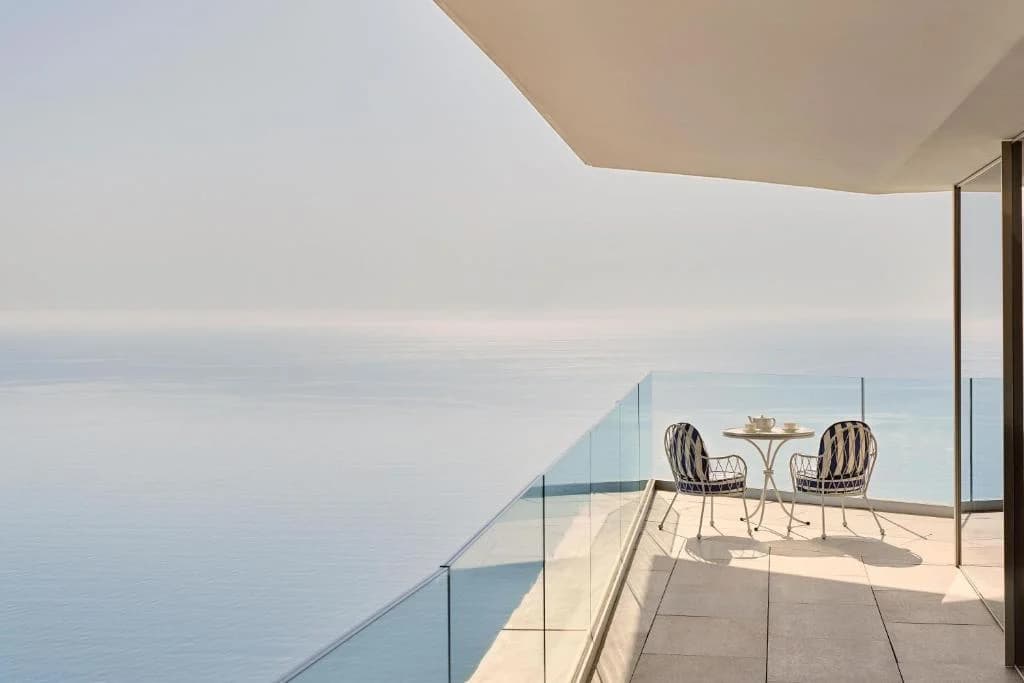
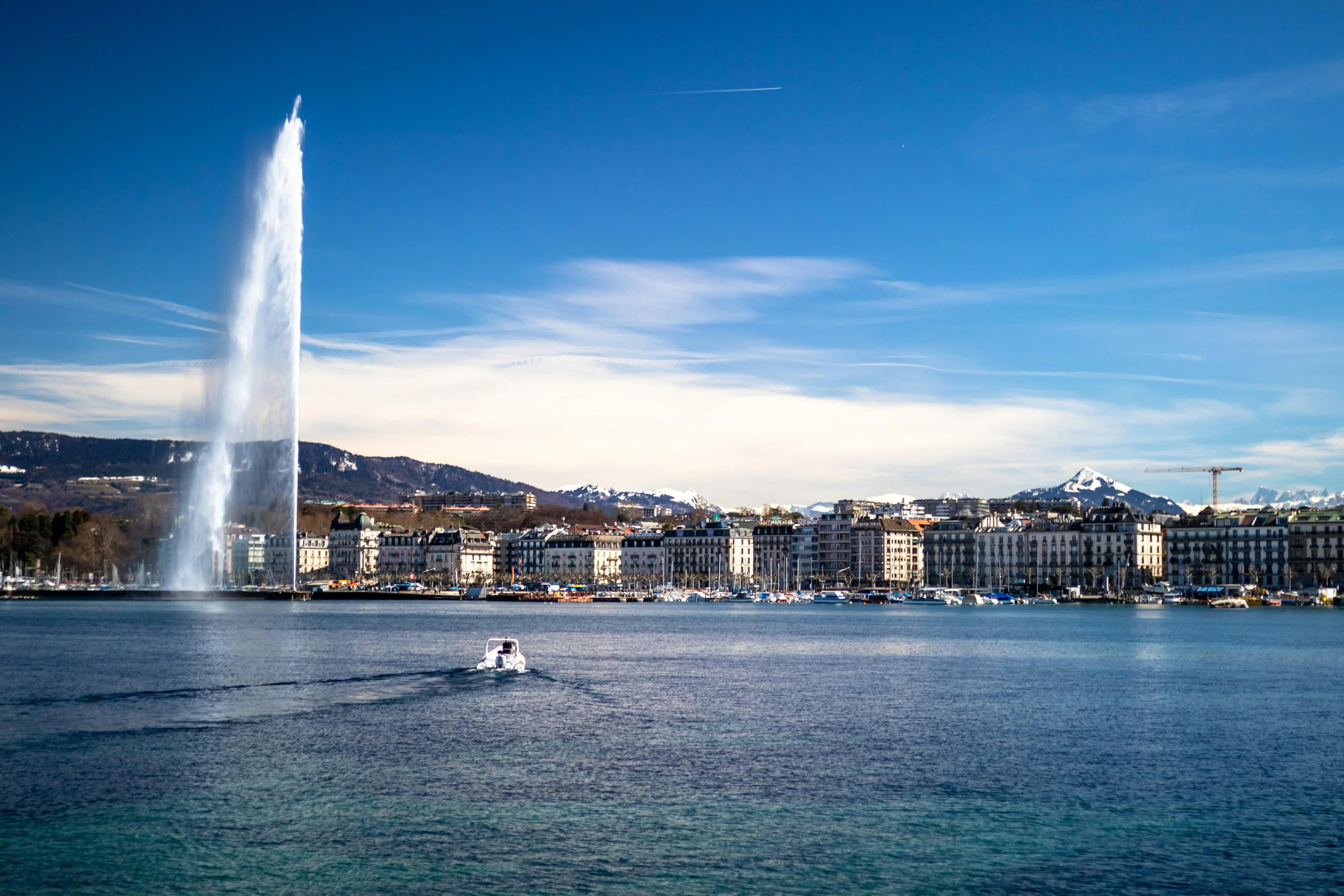
Lake Geneva itself, known locally as Lac Léman, provides the city's defining spatial quality. The lake's surface shifts from flat grey to deep blue depending on the light and the season, and the best suites in the city are oriented to capture it. The Jet d'Eau, the city's monumental water column, is visible from multiple points along the lakefront and serves as a consistent spatial anchor. The combination of mountain horizon, open water, and low-density urban fabric creates a visual environment that is genuinely uncommon among major financial centres.
The best areas to stay in Geneva for a luxury suite
The lakefront and Quai du Mont-Blanc
The northern lakefront, anchored by the Quai du Mont-Blanc and the Quai Wilson, concentrates the city's most established luxury hotel addresses. Properties here sit directly on the water or within a short walk of it, with views oriented toward the Alps. This is where Geneva's hospitality tradition is most legible: grand facades, formal lobbies, and suites scaled for extended stays. For guests attending international summits, Art Geneva, or the SIHH watch fair (now Watches and Wonders), proximity to the Palexpo and the central business district is a functional advantage.
The Old Town and Plainpalais
Geneva's Vieille Ville, built on a raised promontory above the Rhône's southern bank, offers a denser, more textured urban environment. Boutique properties here tend to occupy historic structures, with architecture that reflects the city's Calvinist heritage: restrained, precise, built to last. The area around Plainpalais, adjacent to the university quarter, has developed a quieter creative density, with independent galleries and design-oriented addresses that suit guests who prioritise aesthetic coherence over lakefront access.
Champel and the residential quarters
Geneva's residential districts, particularly Champel and the areas extending toward Carouge, offer a different register of luxury. Properties here tend to be smaller, more discreet, and oriented toward guests seeking extended stays in a genuinely residential context. Carouge itself, with its Sardinian-influenced street grid and artisan workshops, provides a counterpoint to the formality of the lakefront without sacrificing quality of experience.
When to visit Geneva for a luxury hotel suite
Geneva operates year-round at a high baseline of activity, which means suite availability at top-tier properties is never automatic. The most strategically significant periods are spring and autumn, when the city's major professional events concentrate demand. Watches and Wonders, held annually in late March and early April at the Palexpo, is among the most significant events in the global watch calendar and draws a concentrated audience of collectors, industry figures, and press. Suite availability during this period requires advance planning measured in months, not weeks.
The summer months, from June through August, bring a different demographic: families, visitors to the United Nations and other international organisations, and travellers using Geneva as a gateway to the Alps and the Swiss countryside. The lake becomes the city's primary recreational infrastructure during this period, with sailing, paddleboarding, and evening promenades along the Quais. Winter in Geneva is cold and clear, with the Alps visible in sharp relief on fine days. The period around the festive season brings its own demand, particularly from visitors attending private events and the Geneva International Motor Show, which typically takes place in late winter.
Local luxury standards: what to expect from a Geneva suite
Switzerland does not have a formal equivalent to France's Palace designation, but the Swiss Hotel Association's five-star superior category operates as a practical benchmark for the city's leading properties. Geneva's top luxury hotels are measured against a set of expectations shaped by the city's international clientele: multilingual staff operating at a high level of competence, room service that extends through the night without degradation, and suites that function as genuine working environments as well as sleeping quarters.
The watchmaking tradition of the canton, and of Switzerland more broadly, has a traceable influence on the hospitality culture here. Precision and punctuality are not marketing claims but operational realities. Swiss hospitality training, much of it formalised through institutions in Lausanne and elsewhere in the Romandy region, produces staff with a technical command of service that is distinct from the warmer improvisation characteristic of, say, Italian or French hospitality. The experience is more calibrated, more consistent, and sometimes more austere.
Suites in Geneva's leading hotels tend toward the architectural rather than the decorative. Proportions are generous, materials are high quality, and the prevailing aesthetic favours restraint over elaboration. Lacquered surfaces, natural stone bathrooms, and double-glazed windows oriented toward the lake or the old town roofline are common features. Technology integration is generally strong, reflecting the expectations of a business-oriented clientele.
How to choose the right luxury suite in Geneva
The primary decision axis in Geneva is orientation: lake-facing suites command a premium and offer a visual quality that is genuinely distinct from city-facing or courtyard rooms. If the lake view is a priority, it is worth specifying not just a lake-view room but the floor level and the angle, since the curvature of the shoreline means that some suites frame the Jet d'Eau and the Alps directly, while others offer a more oblique perspective.
For guests attending professional events, proximity to the Palexpo convention centre (located near the airport) versus the central lakefront is a practical consideration that affects transfer times and logistical ease. The airport itself is unusually integrated with the city centre, with a direct train link taking approximately seven minutes, which reduces the weight of this decision for most itineraries.
For families or guests requiring suite configurations with multiple bedrooms, Geneva's larger luxury properties offer interconnecting options that function as self-contained apartments. This is particularly relevant for extended stays, where the quality of the kitchen facilities or in-suite dining setup becomes a meaningful differentiator.
Why a curated selection by La Suite matters in Geneva
Geneva's luxury hotel market is geographically compact but editorially complex. The difference between a five-star property and a genuinely exceptional suite experience is not always visible in the standard booking interface. La Suite's approach is to disaggregate the property rating from the suite quality, identifying the specific room types and configurations that deliver at the level this audience expects. In a city where the wrong choice means a city-facing room in a building that presents itself as a lakefront address, that granularity is not a refinement. It is the entire point.