Charlotte Street Hotel, Firmdale Hotels, London
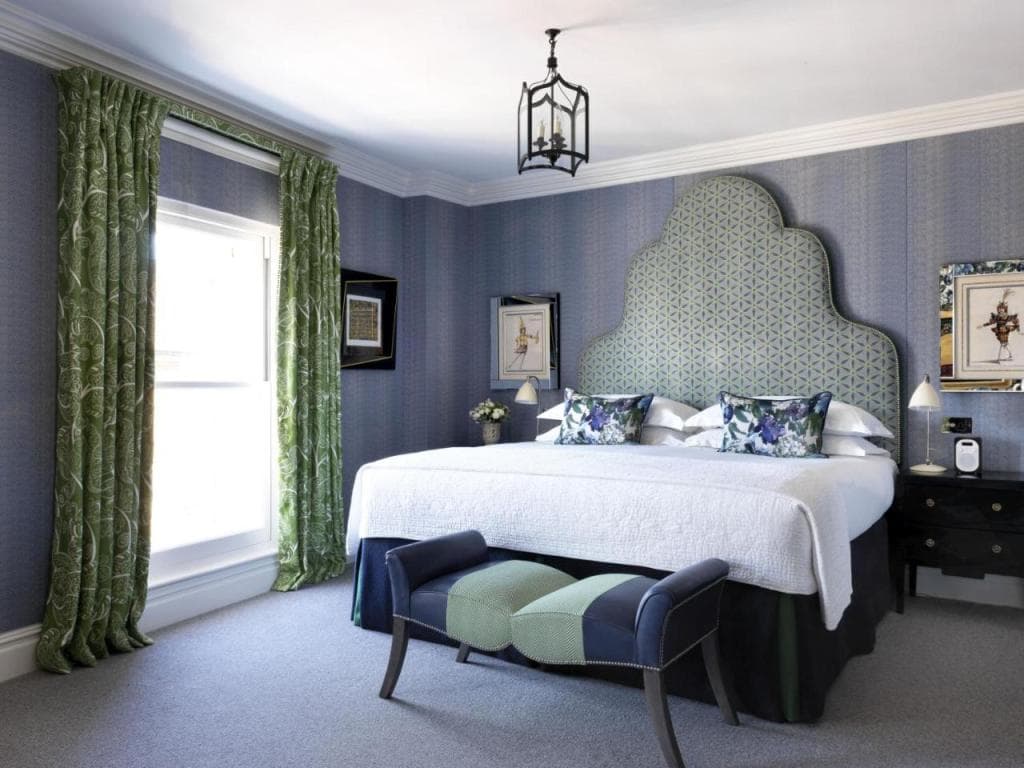
Featuring design to reflect contemporary London life, Charlotte Street Hotel also features features of classic elegance such as period fireplaces and a wood-paneled library room. The hotel has its own

Fitzrovia sits within the broader geography of London as one of its most internally coherent neighbourhoods. Bounded loosely by Oxford Street to the south, Euston Road to the north, Tottenham Court Road to the east, and Great Portland Street to the west, it covers a compact area that rewards those who choose to stay within it rather than simply pass through. The street grid is largely Georgian, the scale is human, and the density of independent businesses, galleries, and studios gives it a texture that larger, more commercially homogenised parts of central London have lost.
7 hotels available

Featuring design to reflect contemporary London life, Charlotte Street Hotel also features features of classic elegance such as period fireplaces and a wood-paneled library room. The hotel has its own

With unique and stunning design, this innovative boutique hotel is just a 2-minute walk from Oxford Street. Its spacious, designer rooms boast fantastic London views, HD TVs, and Egyptian cotton sheet

Located at the top of Regent Street, the prestigious Langham offers an award-winning glamorous bar, Artesian. Free WiFi is available and Oxford Circus tube station is just a 5-minute walk away. Numero

The London EDITION is located in central London’s Fitzrovia district, with Oxford Street, Theatreland and Piccadilly Circus all within a 10-minute walk. Inside, there is a Michelin starred restaurant,

Set within a 2-minute walk from Oxford Street in central London, The Mandrake is a luxury lifestyle hotel featuring eclectic, vibrant interiors and a carefully-curated private art collection. Free WiF

The Marylebone Hotel is within 1640 feet from Bond Street Underground Station and the shops of Oxford Street including Selfridges, John Lewis and the designer boutiques of Bond Street. It offers compl

Elegant Accommodations The Newman in London offers a 5-star hotel experience with spa facilities, a wellness center, sauna, fitness center, terrace, restaurant, bar, and free WiFi. Comfortable

The West End is not a single neighbourhood but a collection of distinct urban quarters, each carrying a different character and a different logic for the suite traveller. Mayfair remains the most architecturally coherent of these: its grid of Georgian and Victorian streets, its private members' clubs, its concentration of art dealers and couturiers, and its proximity to Green Park all contribute to a residential quality that larger hotels in the area have absorbed into their identity. Staying here means operating at the centre of London's private wealth geography, where discretion is structural rather than performative.

Camden is not a traditional luxury enclave in the way that Mayfair or Kensington are structured. Its appeal is more specific: a neighbourhood with genuine cultural weight, industrial architecture repurposed with care, and direct access to some of central London's most considered green spaces. The traveller choosing a luxury hotel suite here is making a deliberate statement about how they wish to engage with the city.

Mayfair is not London's largest district, nor its most photographed. It is, however, the one that operates most consistently on its own terms. The architecture is predominantly Georgian and early Victorian, characterised by measured proportions, Portland stone facades and the kind of spatial logic that prioritises comfort over display. For the traveler choosing a luxury hotel suite in London, this matters. The built environment itself sets the standard.
For the traveler selecting a luxury hotel suite, Fitzrovia's position is logistically sound and aesthetically coherent. The neighbourhood connects easily to Mayfair, Marylebone, and the West End without being subsumed by any of them. It operates on its own terms.
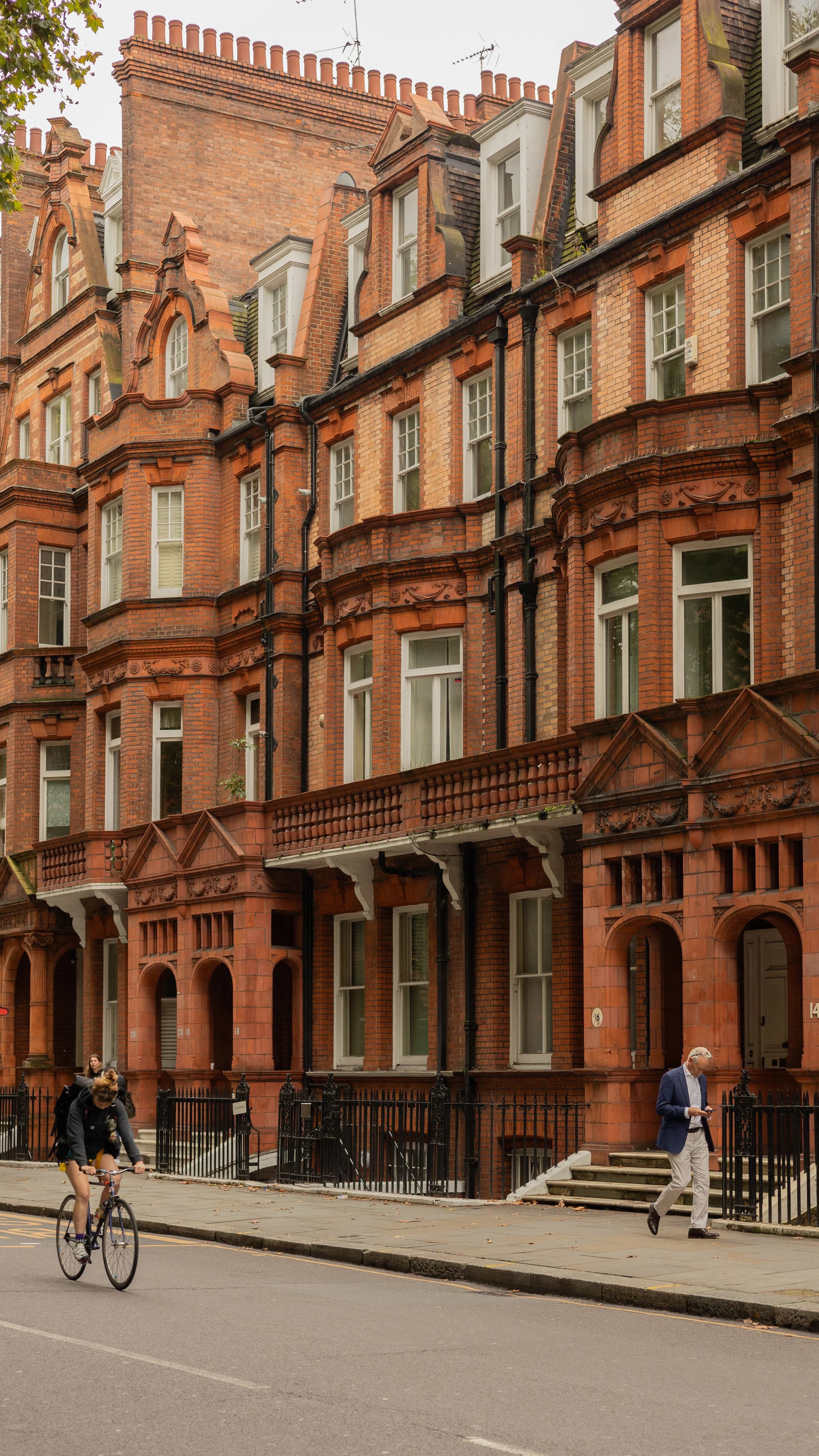
The built fabric of Fitzrovia is predominantly late Georgian and early Victorian, with significant surviving streetscapes along Charlotte Street, Fitzroy Square, and the network of smaller residential streets that run between them. Fitzroy Square itself, partly designed by Robert Adam in the 1790s, gives the neighbourhood a formal anchor that distinguishes it from the more ad hoc character of neighbouring Soho.
The cultural associations are equally specific. Fitzrovia was the address of choice for a succession of writers, artists, and intellectuals through the twentieth century, from Virginia Woolf and George Bernard Shaw to Dylan Thomas and George Orwell. That history has not been preserved as a theme park. It persists instead as an atmosphere: a preference for substance over spectacle that continues to inform the neighbourhood's hospitality offer.
Charlotte Street and its immediate surroundings remain the commercial and social core, with a concentration of independent restaurants and bars that reflects the area's long association with the media and creative industries. The neighbourhood also contains the Wellcome Collection, a museum and library focused on medicine, life, and art, whose programming consistently attracts a culturally engaged audience.
London's accommodation market operates year-round, but Fitzrovia has particular rhythms worth understanding. The period from May through September brings the highest visitor density across the capital, with pricing for luxury hotel suites reflecting that demand. For travelers with schedule flexibility, the shoulder months of March, April, and October offer more favorable conditions: cooler weather, reduced competition for reservations, and a city that functions at a more manageable pace.
The London Design Festival, held annually in September across multiple venues including spaces in and around Fitzrovia, draws a concentrated audience of design professionals, collectors, and culturally literate travelers for whom the neighbourhood's aesthetic character is already a point of reference. London Fashion Week, held in February and September, similarly affects suite availability across the central postcodes.
December brings a different kind of pressure: the West End is at its most crowded, and rates across central London reflect that. Travelers seeking a composed, private base during that period should anticipate booking well in advance.
The United Kingdom does not have a formal designation equivalent to the French Palace classification, but London's luxury hotel market self-regulates through a combination of Forbes Travel Guide ratings, AA rosettes, and the sustained reputation of individual properties. Within that context, the top tier of London hospitality is genuinely competitive with any comparable market in Europe.
In Fitzrovia specifically, the luxury hotel offer tends toward the architecturally considered rather than the grandly traditional. Properties in this neighbourhood generally occupy converted or purpose-built structures that reflect the area's design sensibility: precise, material-conscious, and attentive to the relationship between interior and street. A luxury suite here will typically prioritise spatial quality, natural light, and curated detail over the more formal ceremonial conventions of Mayfair or Knightsbridge.
Service expectations at the top level remain consistent with London's broader luxury standard: discretion, anticipation, and a staff-to-guest ratio that makes the experience genuinely personal. Suite travelers in Fitzrovia should expect access to in-suite dining, dedicated concierge support, and the kind of local knowledge that distinguishes a curated property from a generically upscale one.
The practical considerations for selecting a suite in Fitzrovia are more specific than the general London market. The neighbourhood's Georgian building stock means that historic properties will have ceiling heights, room proportions, and window configurations that differ materially from purpose-built contemporary hotels. Both typologies have merit; the choice depends on what kind of spatial experience the traveler is seeking.
For those prioritising natural light, upper-floor suites in the neighbourhood's converted townhouses can offer exceptional quality, particularly in the long summer months when London receives light well into the evening. For those prioritising soundproofing and contemporary infrastructure, newer builds or properties with significant recent investment in their physical plant will be more reliable.
Proximity to Charlotte Street is relevant for travelers who intend to use the neighbourhood's restaurant offer extensively. For those prioritising quiet, the residential streets to the north and west of Fitzroy Square offer a more removed experience while remaining within easy walking distance of the neighbourhood's main draws.
The question of room category matters in this context. A standard luxury room in Fitzrovia can be handsome; a suite unlocks a different spatial register entirely, with the separation of living and sleeping areas creating the conditions for a stay that is genuinely restorative rather than merely comfortable.
Fitzrovia is not a large neighbourhood, and its hotel offer, while of high quality, is selective. That selectivity makes the curation role of La Suite particularly relevant. In a market where the difference between a good property and the right property is often invisible to general booking platforms, a curated selection filters for the specific qualities that matter to suite travelers: spatial generosity, material quality, service consistency, and a relationship between the property and its neighbourhood that makes the location meaningful rather than incidental.
La Suite's approach to Fitzrovia is the same as its approach to the broader London market and to every destination it covers across Europe: no property is included because of its marketing budget or its star rating in isolation. Inclusion reflects a judgment about whether the suite experience on offer is genuinely worthy of the traveler's time and expenditure. In a neighbourhood as considered as Fitzrovia, that judgment is both more nuanced and more consequential than in less specific parts of the city.

Fitzrovia combines central positioning with a neighbourhood character that is more composed and architecturally coherent than many of London's better-known luxury postcodes. Its Georgian streetscapes, independent restaurant and cultural offer, and proximity to Mayfair, Marylebone, and the West End make it a practical and aesthetically considered base. For suite travelers, the neighbourhood's scale and density reward staying in rather than simply passing through.
Properties in Fitzrovia tend toward a more design-led, material-conscious approach rather than the formal grandeur associated with Mayfair or the traditional opulence of Knightsbridge. Suites here are typically distinguished by spatial quality, considered interiors, and a relationship to the street that reflects the neighbourhood's creative and intellectual character. The register is precise rather than ceremonial.
The shoulder months of March, April, and October offer the most favorable conditions: reduced demand, more competitive pricing, and a city operating at a measured pace. September is notable for the London Design Festival, which draws a design-literate audience that aligns naturally with the neighbourhood's character. December and the summer peak months require significantly earlier booking to secure suite availability at the top properties.
Both typologies exist within the neighbourhood. Fitzrovia's Georgian and early Victorian building stock provides the basis for a number of converted properties where suites occupy rooms with high ceilings and period proportions. There are also purpose-built and substantially renovated contemporary properties that offer modern infrastructure alongside spatial generosity. The choice between them is a question of personal preference for architectural character.
The Wellcome Collection, a museum and library focused on the intersections of medicine, life, and art, is one of the neighbourhood's primary cultural institutions and is within easy walking distance of most Fitzrovia properties. The British Museum in adjacent Bloomsbury, the galleries and commercial spaces of nearby Mayfair, and the theatre district of the West End are all accessible on foot or by a short journey.
La Suite selects properties based on the quality of the suite experience specifically, not on star ratings or marketing profile alone. The criteria include spatial generosity, material and design quality, service consistency, and the relevance of the property's relationship to its neighbourhood. In Fitzrovia, this means a focus on properties whose suite offer reflects the area's architectural and cultural character rather than simply its central London postcode.
At the top level of Fitzrovia's hotel market, suite travelers should expect dedicated concierge support, in-suite dining, a high staff-to-guest ratio, and service that prioritises discretion and anticipation. The neighbourhood's culture of considered hospitality means that the best properties combine formal competence with genuine local knowledge, including access to reservations, experiences, and services that are not publicly available.
Fitzrovia is served by several Underground stations including Goodge Street, Warren Street, and Great Portland Street, providing direct access to the broader London network. The neighbourhood's central position means that Mayfair, the City, and major transport hubs including King's Cross St. Pancras are all within a short journey. For travelers arriving by air, both Heathrow and Gatwick connect to the area via direct rail and Underground routes.
Suite pricing in Fitzrovia reflects both the central London market and the specific positioning of individual properties. At the upper end of the neighbourhood's offer, suite rates are consistent with comparable central London postcodes, with nightly rates for a premium suite typically ranging from several hundred to over one thousand pounds depending on the property, room category, and time of year. La Suite's curated selection focuses on properties where the suite experience justifies the expenditure at each price point.
The distinction is primarily spatial and functional. A suite in Fitzrovia provides the separation of living and sleeping areas that transforms a stay from a night in a well-appointed room into a genuinely private and restorative environment. For travelers on extended stays, working remotely, or hosting private meetings and dinners, the additional space is not incidental but central to the value of the experience. The best suites in the neighbourhood are designed with that function in mind.

In London, a private jacuzzi in a suite is no longer a mere amenity: it is a selection criterion in its own right, redefining the urban luxury experience. From Fitzrovia to Kensington, through the east of the city, three addresses stand out as absolute references for a thermal and discreet stay in the British capital.
BY Jules Peulet