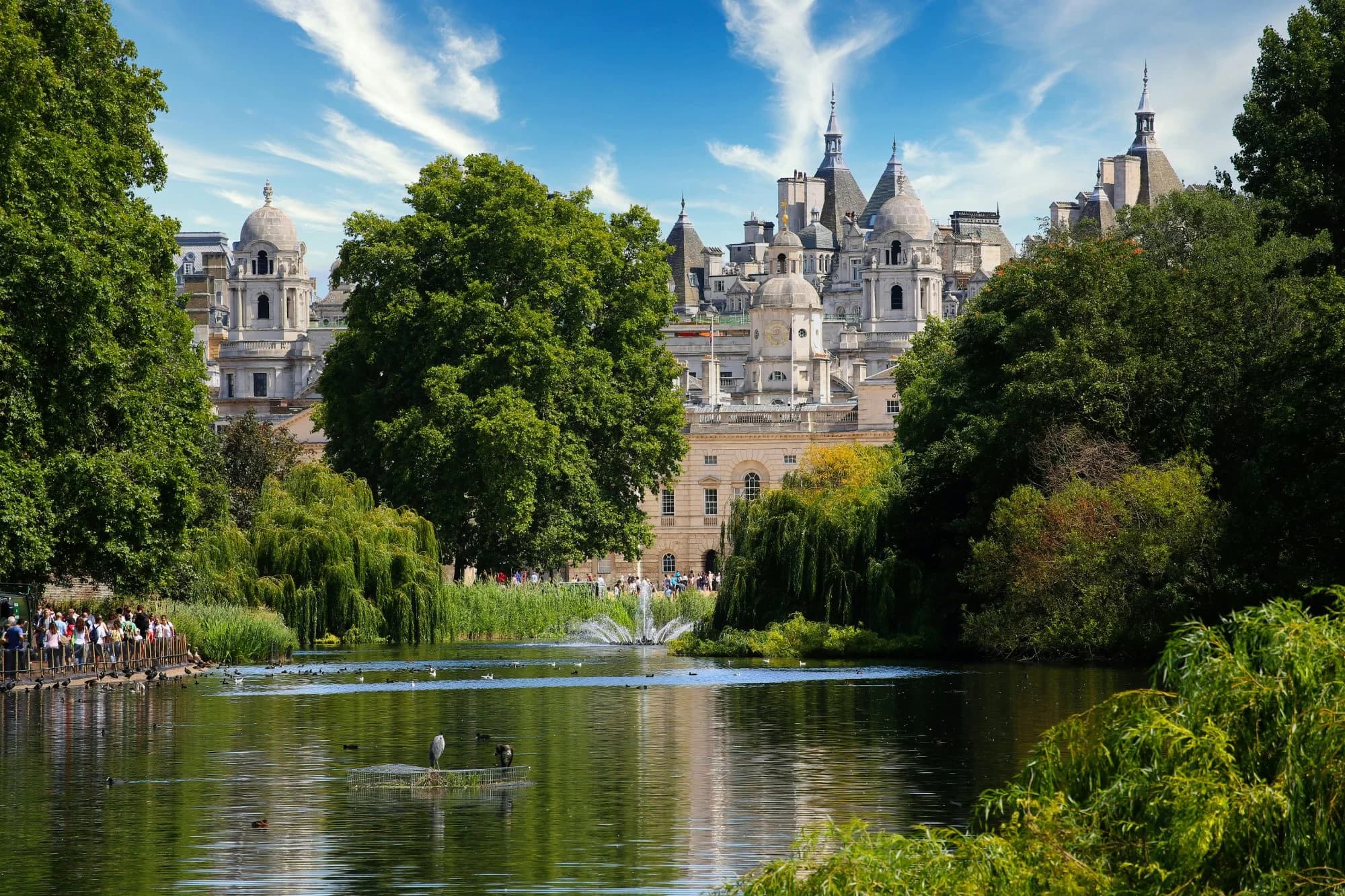
Why Hyde Park defines London's luxury suite landscape
The distinct areas bordering Hyde Park
Knightsbridge
To the south of the park, Knightsbridge carries the highest concentration of luxury retail and hotel density in England. The proximity to Harrods, the Serpentine Galleries, and the South Kensington museum quarter makes it a logical base for culturally engaged travellers. Suites in this zone tend toward the palatial: high ceilings, formal drawing rooms, and service teams accustomed to the particular expectations of an international clientele.
Mayfair (western edge)
Where Hyde Park Corner meets Park Lane, the urban grain shifts. This corridor, running north toward Marble Arch, has long hosted the grandest hotels in the country. Park-facing suites along Park Lane represent a specific category of room: substantial floor plans, direct sightlines across the park's treeline, and an address that carries weight in any context. The western edge of Mayfair retains a residential quietness that the neighbourhood's commercial centre does not always offer.
Kensington and Bayswater
The northern and western perimeters of the park offer a different character. Kensington's garden squares and stucco terraces give the area a domestic scale that larger hotels have learned to respect. Bayswater, historically underestimated, has matured into a credible luxury address, particularly for travellers who value space, relative quiet, and proximity to Notting Hill's independent cultural scene.
When to stay near Hyde Park
London operates year-round as a luxury destination, and Hyde Park's hotel district reflects that consistency. That said, certain periods carry specific weight for the discerning traveller.
Late spring and early summer (May through July) represent the peak of London's cultural season. The Chelsea Flower Show, the summer exhibitions at the Royal Academy, and the opening of Wimbledon all fall within this window. Suite availability tightens considerably during these weeks, and rates reflect the demand. Booking lead times of three to six months are standard for the best addresses.
September and October offer a compelling alternative. The cultural calendar remains active, the light over the park takes on a particular quality, and the city operates at a pace that the high summer crowds tend to disrupt. The Frieze Art Fair in October, held in Regent's Park, draws a substantial international audience and places further pressure on inventory across the luxury hotel sector.
Winter, from November through February, is underappreciated. Rates are more negotiable, the park itself takes on a different but equally compelling character, and the city's restaurant and theatre offerings continue uninterrupted. For travellers whose priority is the suite itself rather than outdoor activity, the winter months often represent the most rational choice.
Understanding London's luxury hotel standards
The United Kingdom does not operate a formal state designation equivalent to France's Palace label. Quality assessment falls primarily to organisations including the AA (Automobile Association) and Forbes Travel Guide, both of which apply rigorous inspection criteria to service, facilities, and room standards. The five-star designation, used by both bodies, is the relevant benchmark for the Hyde Park district.
Within the five-star category, meaningful distinctions exist. The historic grand hotels, properties that have operated continuously for more than a century, offer a physical inheritance that newer buildings cannot replicate: original architectural detail, proportioned public rooms, and a staff culture built over generations. Contemporary luxury hotels in the same district tend to prioritise spatial efficiency, contemporary art programming, and a more fluid service model.
For suites specifically, the Hyde Park corridor offers floor plans that rank among the largest available in any European capital. Park-facing rooms command a premium that is architecturally justified: the view across 350 acres of managed landscape, particularly at dawn or dusk, is a material amenity, not an incidental one.
How to choose the right suite near Hyde Park
Several practical considerations apply specifically to this district.
Orientation matters considerably. A suite facing the park will cost more and book earlier. If the park view is a priority, it should be confirmed at the point of booking rather than assumed. Hotels in this category do not guarantee specific room positions without explicit arrangement.
Floor plan composition varies more than in comparable districts. Some suites offer a single open-plan volume; others divide across separate bedroom, sitting room, and dining room configurations. For travellers using the suite as a working base as much as a sleeping space, the distinction is material. Reviewing the specific suite layout, not simply the category, is essential.
Noise profiles differ between the park's northern and southern edges. The Knightsbridge corridor carries more traffic than the quieter residential streets of Kensington. For light sleepers, the specific street position of the hotel is worth investigating.
Service model alignment is worth considering. The grand historic hotels operate with a formality that some travellers actively seek and others find constraining. Contemporary properties in the same postcode tend toward a more direct, less protocol-driven service style. Neither is objectively superior; the question is which suits the particular trip.
The value of curation in this specific market
Hyde Park's hotel district is not short of options. The challenge for the informed traveller is not finding a five-star hotel in the area. It is identifying which specific suite, in which specific property, matches the precise requirements of a particular stay.
The variables are numerous: view orientation, floor plan, service culture, proximity to specific cultural or commercial destinations, noise environment, and the less quantifiable question of atmosphere. A hotel that suits a couple celebrating an anniversary may be entirely wrong for a solo executive working a compressed schedule in the city.
La Suite's curation for London's Hyde Park district is built on exactly this analysis. The selection is not driven by marketing relationships or hotel category alone. It reflects a detailed assessment of which addresses consistently deliver against the expectations of a traveller who has chosen a suite deliberately, as an architectural and experiential decision, not simply as an upgrade.
The Hyde Park district rewards precision. The curated selection by La Suite is designed to provide it.