Staying in Soho: what the neighbourhood offers the suite traveller
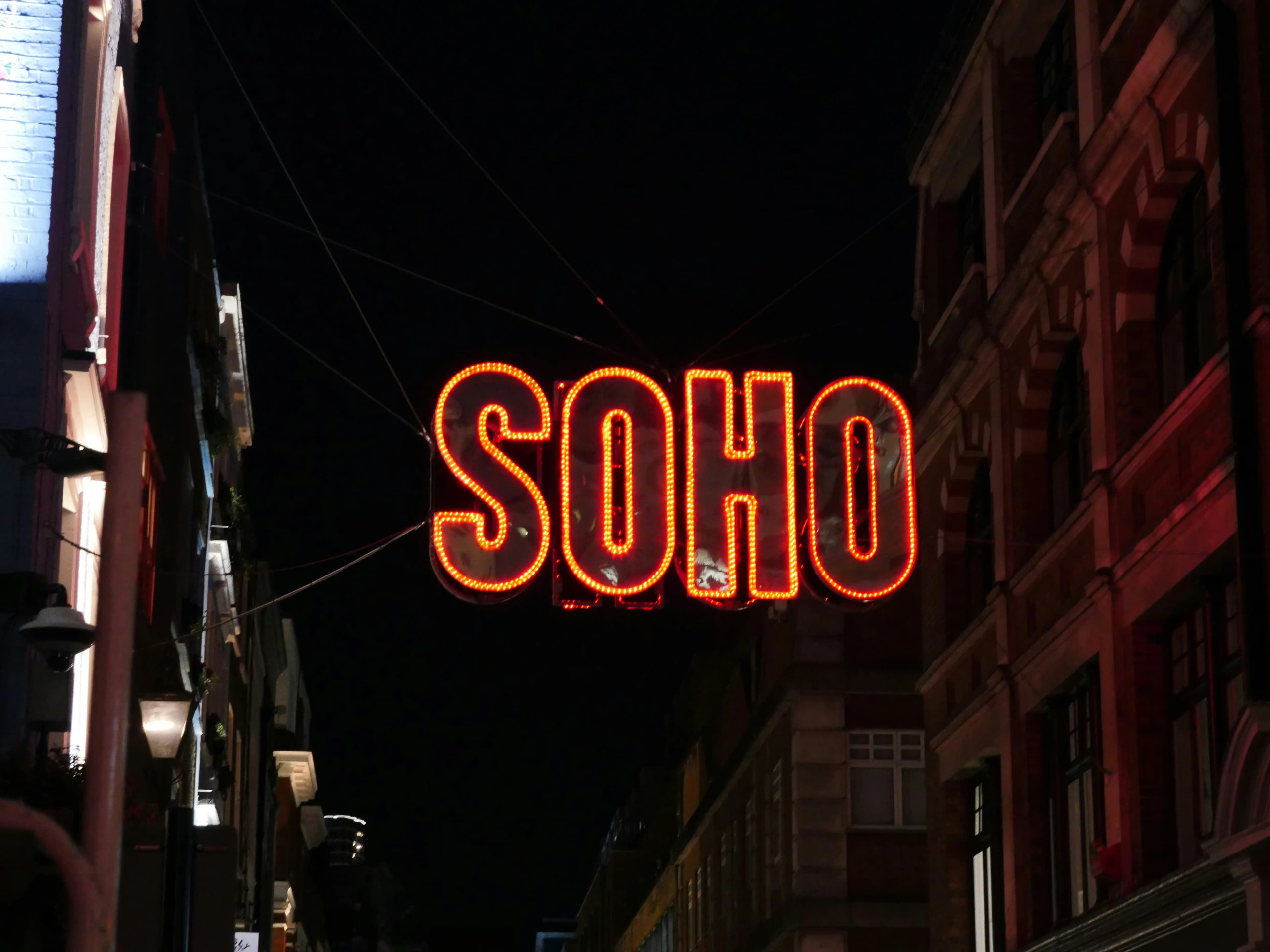
The immediate surroundings are dense with reference points. The Photographers' Gallery on Ramillies Street, the independent cinemas of Rupert Street, the tailoring houses of Carnaby and the record shops of Berwick Street all occupy the same compressed geography. A well-chosen suite here functions as an operational base for a programme that is cultural, gastronomic, and professional in equal measure.
The distinct character of Soho's sub-areas
The core of Old Compton Street and Dean Street
This is the historic social centre of Soho, with the highest density of restaurants, members' clubs, and late-night venues. Properties here tend to occupy converted Georgian or Victorian structures, where suite configurations are shaped by original floor plates. Ceiling heights vary, room dimensions are often unconventional, and the architectural character is irreducible. For travellers who prioritise location above all else, this corridor is the most direct expression of Soho's identity.
The western edge toward Regent Street and Carnaby
This zone carries more commercial polish. The proximity to the flagship retail addresses of Regent Street and the curated independents of Carnaby Street makes it a natural base for travellers whose itinerary includes fashion and design appointments. Properties here tend toward larger footprints and more contemporary interiors, with the trade-off being a slightly reduced sense of neighbourhood texture.
The northern reaches toward Oxford Street and Fitzrovia
The boundary between Soho and Fitzrovia is permeable in the best sense. Properties positioned along this edge benefit from quieter street-level conditions while maintaining proximity to both Soho's cultural density and the institutional addresses of Fitzrovia, including the Sanderson-era design legacy and the restaurant cluster around Charlotte Street. Suite travellers who prefer a lower ambient noise profile without sacrificing centrality often find this zone the most functional.
When to visit Soho for a suite stay
London does not have a single optimal season in the way that coastal or mountain destinations do, but Soho has its own annual rhythm that shapes the suite-travel calculus.
The period from late September through November represents the most productive window for the culturally-oriented traveller. The London Film Festival anchors October, bringing a concentration of industry figures and a demonstrably elevated atmosphere across the neighbourhood's screening venues and private clubs. Frieze week in mid-October operates across Regent's Park and a network of gallery openings that radiates through the West End, including several Soho addresses. Suite availability during this period tightens significantly, and advance planning is essential.
February through April offers a quieter, more considered version of the city. Post-Christmas, pre-summer, this window tends to produce better availability and more attentive service across the board. The cultural calendar remains active, with major productions running in the West End and exhibition programmes at full capacity.
Summer (June through August) brings peak tourist density to central London, which in Soho translates to elevated noise levels, compressed restaurant reservation windows, and reduced suite availability at the leading properties. Travellers who prioritise ease of access and a calmer operational environment should weight their visits toward the shoulder seasons.
London's luxury hotel standards and what they mean in Soho
The United Kingdom does not operate a formal palace hotel designation in the way France does through Atout France's classification system. London's luxury hotel market is instead self-regulating, with quality benchmarks established through the five-star grading of AA (Automobile Association) and the independent assessments of Forbes Travel Guide, which awards its Five Star designation based on anonymous inspection across service, facilities, and physical standards.
Within London, and Soho specifically, this creates a market where the designation of a property as a legitimate luxury address depends on the intersection of physical standards and service culture rather than a government-conferred label. Suite travellers should therefore apply a more granular lens: Forbes Five Star status, Condé Nast Traveller inclusion in editorial rankings, and consistent performance across independent review platforms provide more reliable signal than star ratings alone.
In Soho's compressed geography, true luxury suites are often found in smaller boutique properties rather than the large-format hotels of Park Lane or Knightsbridge. This produces suites with stronger design integrity and more individualised service, but potentially narrower on-site amenity sets. The calculation is explicit: character and location versus breadth of facility.
How to choose the right suite in Soho
Architectural context matters
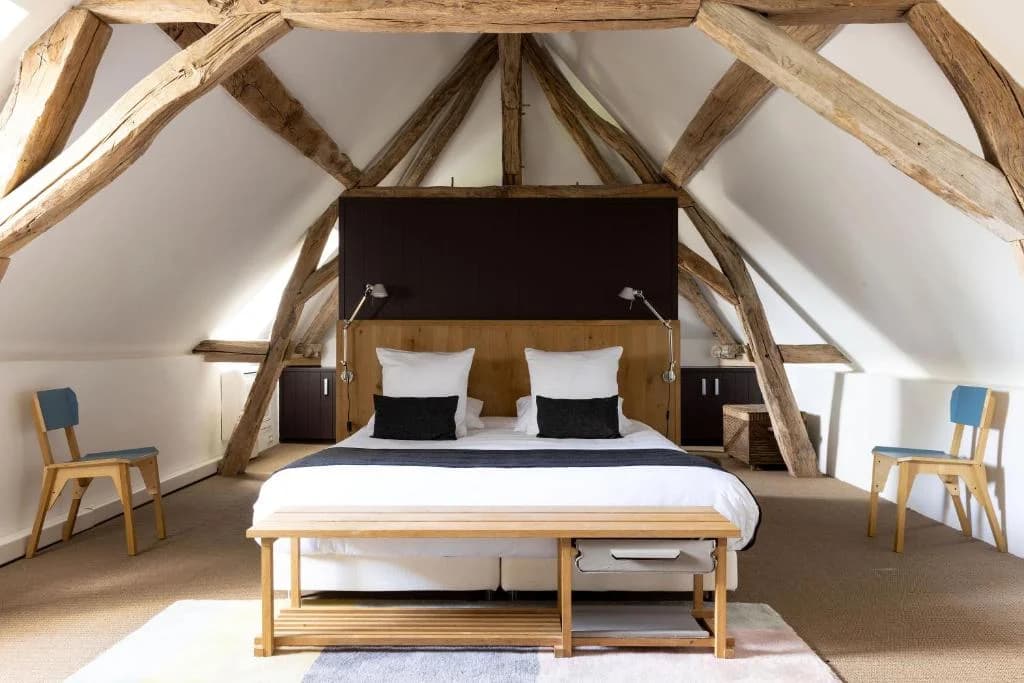
Soho's built environment is predominantly Georgian and Victorian, with floor plates and ceiling heights that differ substantially from purpose-built modern hotels. A suite on an upper floor of a converted townhouse will offer different spatial geometry than a contemporary-build property nearby. Travellers with specific requirements around accessibility, natural light orientation, or room dimensions should request architectural floor plans or detailed photography before confirming.
Noise profile and street position
Soho is active late into the evening, particularly along the Old Compton, Dean Street, and Wardour Street corridors. Suite selection should account for floor level, glazing specification, and whether the property has invested in acoustic treatment. Interior-facing rooms or upper-floor configurations in quieter side streets will produce measurably different conditions than street-facing lower floors.
Amenity set versus neighbourhood access
Given the concentration of exceptional restaurants, bars, and cultural institutions within a few minutes on foot, the argument for extensive on-site amenities weakens in Soho relative to more isolated luxury destinations. A suite with a strong design brief, a well-composed minibar, and a responsive concierge team will serve most travellers better than one embedded in a large-format hotel with a lesser location and stronger fitness infrastructure.
Why a curated selection by La Suite makes sense for Soho
Soho's supply of marketed suites is not large. The neighbourhood's geography limits hotel scale, and the genuine luxury tier within that constrained supply is narrower still. Without a structured filter, travellers risk conflating boutique design hotels with properties that meet the full suite standard: spatial generosity, architectural coherence, service depth, and a location that justifies the address.
La Suite applies a consistent editorial framework to this selection. Properties are assessed on the quality of the suite product specifically, not the hotel average. The result is a reference set that removes the decision friction and gives the traveller a clear view of what is actually available at the level they are seeking in Soho. No padding, no volume-driven inclusions. The selection reflects the neighbourhood as it is.