Located in Tel Aviv and with Charles Clore Beach reachable within a 16-minute walk, Albi Florentin - Traveler's Choice 2025 provides concierge services, non-smoking rooms, a shared lounge, free WiFi t

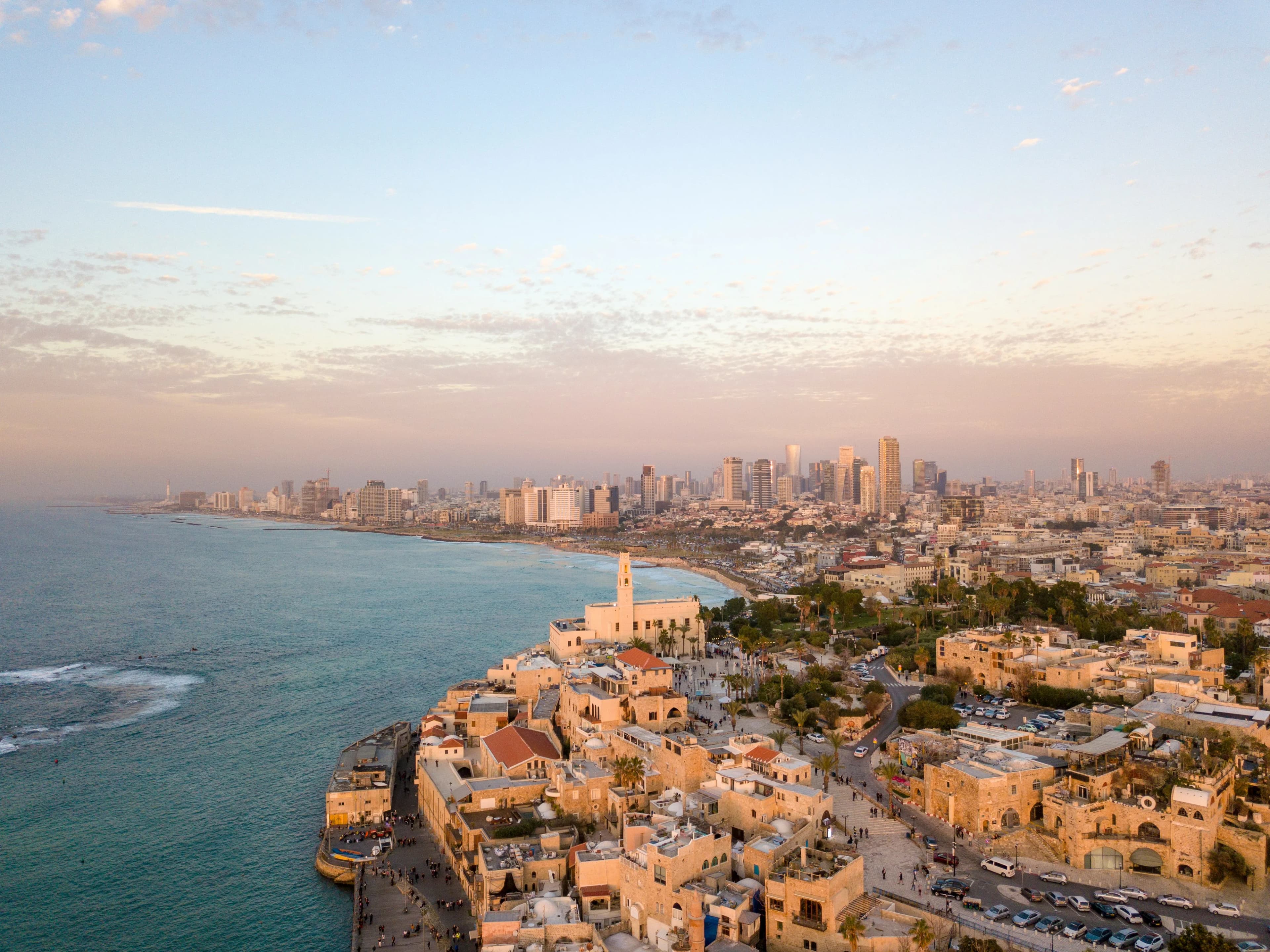
Tel Aviv is the only city in the world with a UNESCO-listed urban core built primarily in the International Style. The so-called White City, a concentration of over four thousand Bauhaus and Modernist buildings constructed during the 1930s and 1940s, gives the city an architectural coherence that is both scholarly and sensory. Light falls differently here. The sea is always present, even when you cannot see it. This is a city where materiality matters, and the best luxury hotels in Tel Aviv reflect that consciousness in their interior choices, their spatial logic, and their relationship to the street.
19 hotels available

Located in Tel Aviv and with Charles Clore Beach reachable within a 16-minute walk, Albi Florentin - Traveler's Choice 2025 provides concierge services, non-smoking rooms, a shared lounge, free WiFi t

Located in Tel Aviv, Assemblage Boutique features a terrace and free WiFi, 1640 feet from Jerusalem Beach and a walk from Banana Beach. Fitted with a balcony, the units offer air conditioning and feat

Set in Tel Aviv, 0.8 mi from Aviv Beach, Brown BoBo, a member of Brown Hotels offers accommodations with a restaurant, free bar and a terrace. parking not for free- 120 nis per night The property is l

Located in Tel Aviv and within a 3-minute walk of Alma Beach, Elmina Hotel Jaffa has a terrace, allergy-free rooms, and free WiFi throughout the property. The property is around a 12-minute walk from

Nestled in Independence Park with direct access to the beach and the vibrant Tel Aviv promenade, Hilton Tel Aviv features a spacious outdoor saltwater pool, five kosher dining options, an authentic Th

Just 328 feet from Tel Aviv’s fashionable Rothschild Boulevard, the Berdichevsky is a modern boutique hotel with free Wi-Fi. It offers elegant rooms with free Wi-Fi, a flat-screen TV and a laptop safe

Featuring a seasonal outdoor swimming pool, a restaurant as well as a bar, Hotel RECEPTION - FATTAL COLORS is located in the center of Tel Aviv, a 9-minute walk from Frishman Beach. The property is cl

Attractively located in the center of Tel Aviv, Loginn Nahalat Benyamin has air-conditioned rooms, a terrace, free WiFi and a restaurant. Featuring a bar, the hotel is close to several noted attractio

Well situated in the center of Tel Aviv, Nordoy Hotel - FATTAL COLORS is within a 10-minute walk of Aviv Beach and 200 yards of Nachalat Benyamin Crafts Fair. The property is around a 15-minute walk f

Located conveniently in Tel Aviv, R48 Hotel and Garden has air-conditioned rooms, a garden, free WiFi and a terrace. This 5-star hotel offers room service and a 24-hour front desk. Guests can enjoy Me

Ideally set in the center of Tel Aviv, Savanna - by Loginn Tel-Avivian hotels is within a 11-minute walk of Jerusalem Beach and 300 yards of Meir Park. The property is located a 17-minute walk from Th

Located on Tel Aviv's beachfront, the Sheraton Tel-Aviv Hotel offers panoramic Mediterranean Sea views and 3 restaurants. Its spacious rooms are air conditioned and feature sea views, satellite TV and

Soho House Tel Aviv in Tel Aviv provides adults only accommodations with a terrace, a restaurant and a bar. Featuring a seasonal outdoor swimming pool, the 5-star hotel has air-conditioned rooms with

Prime Location The David Kempinski Tel Aviv is located in Tel Aviv city center, offering easy access to Jerusalem Beach, a 3-minute walk away, and Dizengoff Center, 0.7 mi nearby. Exceptional

The Drisco is a heritage-landmark, 5 star superior hotel, established in 1866, and a proud member of Relais & Châteaux. The Drisco Hotel Tel - Aviv is located in the center of the picturesque and past

The George Tel Aviv has a fitness center, a garden and a sun terrace with swimming pool and à la carte breakfast in Tel Aviv. Offering a restaurant, the property also features a bar, as well as a saun

The Jaffa - Fattal Limited Edition provides the perfect blend of service, style and state-of-the-art luxury. The first hotel of its kind, The Jaffa is located in a restored 19th century Neo-Renaissan

The Norman Tel Aviv is a luxury hotel set in the center of Tel Aviv, near the Rothschild Boulevard. It features a rooftop pool, fitness center and a wellness area, Free WiFi access is available throug

Absorb and Unlock Exclusive Tel Aviv. Set high above the buzz of the city, on the top floors of the iconic Hilton Tel Aviv, The Vista at Hilton Tel Aviv gives an unrivaled perspective of the Mediterra
The luxury hotel market in Tel Aviv is relatively young by European standards, which paradoxically works in the traveler's favour. Properties here have not had to retrofit their offer around ageing infrastructure. Many have been designed from first principles, with suite-level accommodation conceived architecturally rather than as an afterthought.
The coastline running from the Hilton beach northward through the quieter residential district of Ramat Aviv defines one register of the city: open, horizontal, physically generous. Hotels positioned along or near this corridor offer suite guests direct access to the Mediterranean and a sense of the city's leisure culture, which is genuine rather than performed. Early mornings on the promenade are a particular discipline here, and a well-positioned suite makes that ritual effortless.
Rothschild Boulevard is the civic spine of central Tel Aviv, lined with Bauhaus buildings, fig trees, and a cycling path that functions as a social artery. Staying in this zone places you inside the architectural fabric that makes Tel Aviv distinctive. Suites in boutique properties here tend toward a considered minimalism that references the local heritage without becoming didactic about it.
Neve Tzedek is Tel Aviv's oldest neighbourhood, predating the main city by several years. Its narrow streets, low stone buildings, and high concentration of independent galleries and studios attract a culturally literate crowd. Sarona, immediately adjacent, is a restored Templer colony that now functions as a refined commercial and residential district. Both areas support a quieter, more residential form of luxury, suited to travelers who prefer proximity to culture over proximity to the sea.
The ancient port city of Jaffa, now administratively part of Tel Aviv, operates on an entirely different register. Its stone architecture, flea market, and Arab-Jewish cultural layering make it the most historically complex part of the urban area. A small number of luxury hotel projects have taken root here, converting Ottoman-era and British Mandate structures into suite-format accommodation with a particular sense of material depth. Staying in Jaffa is a deliberate choice, made by travelers who want history as a physical condition rather than a backdrop.
Tel Aviv has a Mediterranean climate with hot, dry summers and mild, occasionally wet winters. The most considered period for a suite stay is from October through to early December, when temperatures settle into the mid-twenties Celsius, the summer crowds have dissipated, and the cultural calendar reasserts itself. The spring months of March and April offer similar conditions, with the added energy of the city emerging from a quieter winter period.
July and August are intense. The heat is consistent, the city is busy with both local and international visitors, and hotel rates reflect that demand. Travelers who choose this period typically do so for the beach culture and the nightlife, both of which are genuine assets, but the experience of moving through the city on foot or by bicycle is less pleasurable than in the shoulder seasons.
Passover and the Jewish High Holidays in autumn bring particular rhythms to the city: quieter streets during some observances, followed by concentrated social energy. These periods require logistical awareness, particularly around restaurant availability and transport patterns.
Israel does not operate a state-level hotel classification equivalent to France's Palace designation. Quality differentiation happens through market positioning, international brand affiliation, and, increasingly, through design-led independent properties that have built reputations on the strength of their physical product and service culture.
At the top end, Tel Aviv's luxury hotel suites tend to share certain qualities: generous ceiling heights where the architecture permits, a strong relationship between interior and exterior through terraces or balconies, material choices that reference the local palette of limestone, concrete, and sea glass, and a service register that is warm but not performatively deferential. The city's culture is informal in a specific way: directness is valued, and the best properties have calibrated their hospitality accordingly.
Suite bathrooms in top-tier Tel Aviv properties frequently prioritise spatial generosity over decorative complexity, with freestanding bath fixtures, high-quality local stone, and natural light treated as primary amenities. Kitchenette provisions are common at suite level, reflecting a local culture that takes food seriously and expects flexibility.
The primary decision is positional: sea view suites on the northern seafront offer a specific sensory experience rooted in light and air, while suites in the White City or Neve Tzedek offer urban depth and walkable access to the cultural infrastructure that makes Tel Aviv intellectually interesting. These are not equivalent experiences, and the distinction matters.
A secondary consideration is architectural context. Tel Aviv's Modernist heritage means that some properties occupy buildings with genuine historical significance. In these cases, the suite itself becomes an argument about preservation and adaptive reuse, which appeals strongly to design-literate travelers. Newer properties, by contrast, often offer larger floor plates and more contemporary technical specifications.
Travelers with families should assess suite configuration carefully. Tel Aviv's better properties offer connecting layouts and extended living areas that function well for multi-generational groups, particularly given the city's strong culinary culture, which makes in-suite dining a credible option for evenings when the energy of the restaurants feels excessive.
Tel Aviv's luxury hotel market is concentrated but not immediately legible to the first-time visitor. International brand presence coexists with independent properties of considerable quality, and the distinctions between them are not always visible from standard booking interfaces. Rate parity rules mean that price alone does not differentiate; what differentiates is knowledge of what a specific suite actually delivers in spatial, sensory, and service terms.
La Suite applies a consistent editorial standard to every property it lists, evaluating suite-level accommodation on the basis of architectural quality, spatial generosity, service calibration, and the coherence of the overall experience. In a city as design-conscious as Tel Aviv, that curatorial precision is not supplementary. It is the point.

The seafront corridor in north Tel Aviv offers suites with direct Mediterranean access and generous horizontal views. Rothschild Boulevard and the White City place guests inside the city's Bauhaus architectural core, while Jaffa suits travelers seeking a more historically layered experience in Ottoman and British Mandate-era buildings.
October through early December and March through April are the optimal periods: temperatures are moderate, cultural programming is active, and the city is less congested than in high summer. July and August are the peak season for beach-oriented stays, but heat and demand make them less suited to the kind of deliberate, unhurried travel that a luxury suite is designed to support.
Yes. Several properties in Tel Aviv occupy Bauhaus-era or Mandate-period structures that have been adapted with considerable precision. Suites in these buildings combine the spatial logic of early Modernist architecture with contemporary finish levels, offering an experience that is specific to this city rather than generically international.
Tel Aviv's hospitality culture is directionally informal: warmth and competence are present, but the performative formality of, say, a Riviera palace hotel is largely absent. The best suites here reflect a city that values design intelligence and physical comfort over ceremony, which suits a particular kind of traveler very well.
Prioritise the relationship between interior and exterior: terraces or balconies facing the Mediterranean or a garden are a meaningful differentiator. Spatial generosity, quality of natural light, and material specification (particularly bathrooms and kitchen provisions) are the practical markers of suite quality in this market. Architectural context, whether a historic Modernist building or a purpose-built contemporary property, shapes the overall register of the experience.
Jaffa works very well for travelers who want historical depth and a quieter pace than central Tel Aviv. The number of top-tier suite properties there is small, but the quality is high, and the neighbourhood's stone architecture, market culture, and proximity to the sea create a distinct atmosphere that central Tel Aviv cannot replicate.
Many of Tel Aviv's luxury hotels offer kosher or kosher-style dining, which in practical terms affects menu composition and kitchen operations. Some properties maintain separate facilities for meat and dairy service. For suite guests, this is worth understanding in advance if in-suite dining or private dining arrangements are a priority, as options may vary between properties.
The International Style buildings of Tel Aviv's White City introduced specific spatial principles: horizontal windows, open ground floors, roof terraces, and an emphasis on light and air as primary architectural materials. The better luxury hotels in the area have absorbed these principles into their contemporary design, producing suites that feel architecturally coherent with their setting rather than imported from a generic luxury template.
Suite pricing in Tel Aviv's top hotels typically ranges from approximately 800 USD per night at entry-level suite configurations to several thousand USD per night for penthouse or signature suite formats, depending on the property, the season, and the view. The market does not reach the extreme upper limits of Paris or New York, but the gap between standard and suite-level accommodation is substantive and well justified at the top end.
Standard platforms present inventory without editorial differentiation. La Suite evaluates properties specifically at the suite level, assessing spatial quality, architectural character, service calibration, and the coherence of the overall experience. In a market like Tel Aviv, where genuine quality exists alongside properties that use luxury vocabulary without fully delivering the substance, that curatorial distinction is practically useful.