Four Points By Sheraton Kuwait, Koweït
Located in a central position in Kuwait’s commercial and financial center, this 4-star hotel is just over 0.6 mi from Kuwait National Museum. Free Wi-Fi throughout the property and chic, modern rooms.

Kuwait is frequently underestimated on the international luxury travel circuit, yet it offers a concentrated density of high-caliber hotel suites that match the expectations of travelers accustomed to the best addresses in Dubai, London, or Paris. The country's wealth is visible in its built environment: glass towers, sweeping corniche promenades, and hotel lobbies that function as social institutions. For the guest seeking privacy, spaciousness, and a genuine sense of place, Kuwait rewards close attention.
6 hotels available

Located in a central position in Kuwait’s commercial and financial center, this 4-star hotel is just over 0.6 mi from Kuwait National Museum. Free Wi-Fi throughout the property and chic, modern rooms.

With five restaurants and lounges, Four Seasons Hotel Kuwait at Burj Alshaya offers a complete experience where guests can sleep, dine and enjoy all the facilities on offer. There is an indoor and an

Welcome to JW Marriott Hotel Kuwait City. A Landmark of Mindful Luxury in the Heart of Kuwait City. An icon reimagined, JW Marriott Kuwait City marks a new chapter of luxury and distinction. The hotel

Located in Kuwait, 1.3 miles from Bnied Al-Gar Beach, One Sharq Boutique Hotel, Kuwait provides accommodations with an outdoor swimming pool, free private parking, a fitness center and a restaurant. T

Featuring an outdoor swimming pool, The St. Regis Kuwait is located in the center of Kuwait, 1.3 miles from Kuwait National Museum. Among the facilities of this property are a restaurant, room service

Located in Kuwait, 4.9 miles from Jaber Al Ahmad International Stadium, Waldorf Astoria Kuwait provides accommodations with an outdoor swimming pool, private parking, a fitness center and a shared lou
Hotels in the area, but in a neighbouring town.

Prime Beachfront Location Arabella Beach Hotel Kuwait in Kuwait offers a private beach area and beachfront access. Guests enjoy a rooftop swimming pool, sun terrace, and fitness center. Free WiFi

Located in Kuwait and with Kuwait International Fairground reachable within 6.4 miles, Grand Hyatt Kuwait provides concierge services, allergy-free rooms, a garden, free WiFi and a terrace. Providing

Located in the Messilah beach district, this 5-star hotel offers modern accommodations with free Wi-Fi in the heart of Kuwait. It features 5 dining outlets along with an outdoor pool, gym, and spa. Wi

Located in Kuwait, 16 miles from Kuwait International Fairground, Ray Hotel by Cloud 7 provides accommodations with an outdoor swimming pool, free private parking, a fitness center and a restaurant. W

Facing the beachfront, The House Hotel Al Khiran offers 4-star accommodations in Al Khīrān and has an outdoor swimming pool, fitness center and shared lounge. A hot tub and a car rental service are av

Well located in the center of Kuwait, The Regency Hotel Kuwait provides air-conditioned rooms with free WiFi, free private parking and room service. This 5-star resort offers a private beach area and
The hotel sector here has invested heavily in suite-level product over the past decade, responding to demand from Gulf nationals, international business executives, and a growing cohort of culturally motivated visitors drawn to the Kuwait National Museum, Sadu House, and the recently restored Souq Al-Mubarakiya. A well-chosen suite is not simply accommodation; it is the operational center of a trip shaped around access and discretion.
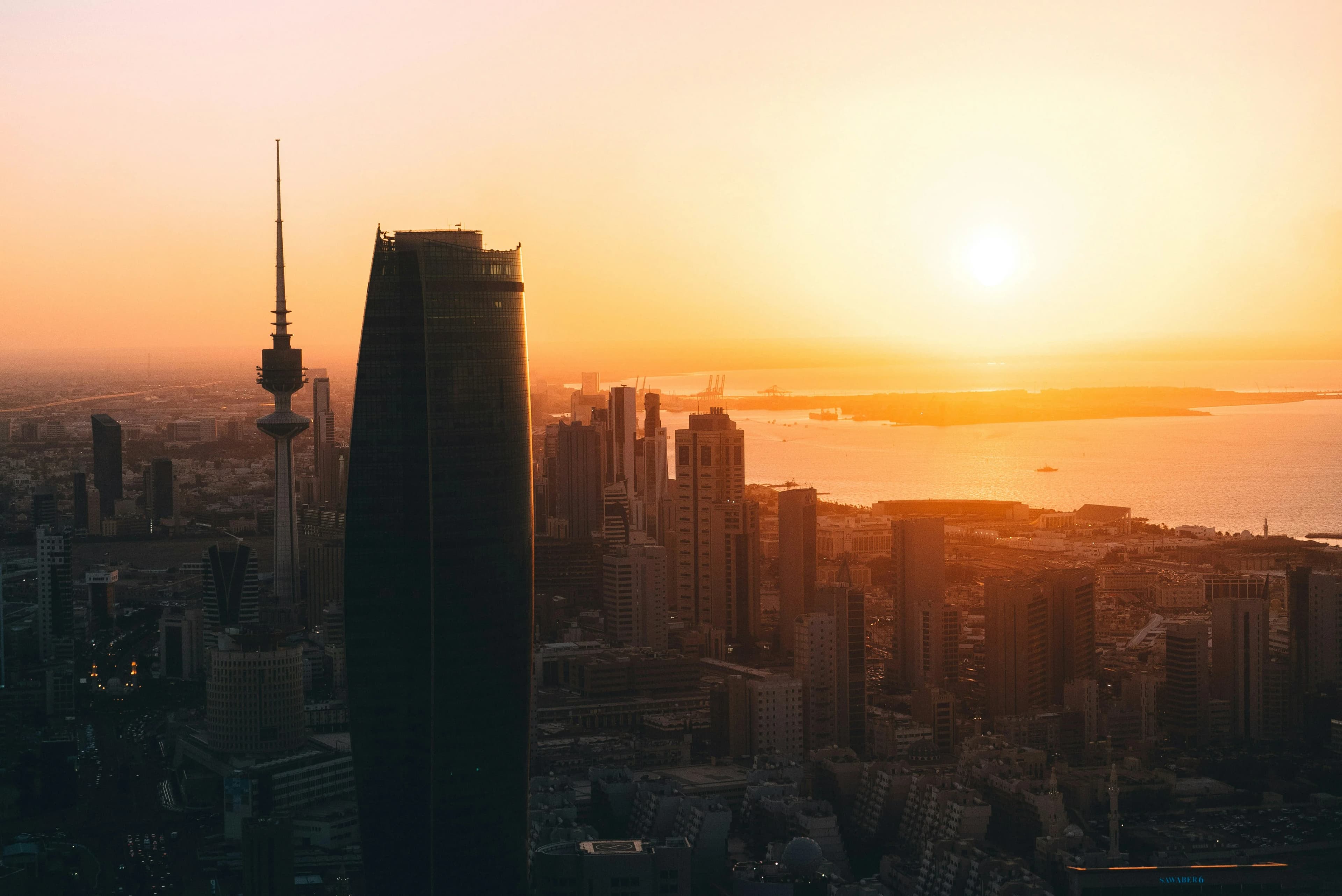
The coastal stretch along Arabian Gulf Street, extending through Salmiya, is the traditional address of choice for international visitors. Hotels here position guests within walking distance of the waterfront while offering views across to Kuwait Towers. The area carries a particular energy at dusk, when the corniche fills and the city's social life becomes visible from suite terraces. Properties in this corridor tend to offer larger suite footprints and more developed food and beverage programs, reflecting the expectations of their Gulf clientele.
The financial and governmental district of Sharq, adjacent to the old city center, is the preferred location for business travelers requiring proximity to ministries, banks, and the Kuwait Stock Exchange. Suites in this zone prioritize connectivity, concierge infrastructure, and meeting-room adjacency. The architectural language is more corporate, but the suite product at the leading properties remains rigorous, with floor-to-ceiling glazing and formal reception areas suited to private meetings.
For travelers seeking a quieter residential experience, the southern districts offer a different register of hospitality. Boutique-scale properties and serviced residences here cater to longer stays, with suite configurations designed around family use and extended occupancy. The pace is slower, the urban texture more domestic, and the proximity to private clubs and international schools reflects the clientele these addresses serve.
The climate in Kuwait is extreme by most standards. Summers, from June through September, bring temperatures that regularly exceed 45 degrees Celsius, making outdoor exploration impractical. The luxury hospitality sector compensates with exceptional interior environments: pools, spas, and suite living rooms designed for extended indoor time. Rates during this period are often lower, and availability at the most sought-after addresses is more flexible.
The optimal window for visiting runs from October through April. Temperatures are moderate, ranging from 15 to 28 degrees Celsius, and the cultural and social calendar is at its most active. The Kuwait International Book Fair, typically held in November, draws significant regional attention. The National Day celebrations in February transform the public spaces of the city and create a particular atmosphere of civic energy. Ramadan, which shifts annually according to the lunar calendar, offers a distinct experiential register: the city quiets by day and intensifies after dark, with hotel dining rooms and suite room-service programs adapting to the rhythm of iftar and suhoor.
Kuwait does not operate a formal national classification equivalent to France's Palace designation, but the market has developed its own hierarchy. The leading international brands operating in Kuwait, including properties under the Four Seasons, Jumeirah, and Radisson Collection banners, maintain suite programs that meet or exceed their global standards. Local ownership structures often mean that FF&E budgets are generous, and suite interiors reflect a preference for scale, formal seating arrangements, and hospitality-grade kitchenette facilities.
Service expectations in Kuwait are high and specific. Butler programs, 24-hour in-suite dining with full kitchen menus, and dedicated check-in and check-out protocols are standard at the upper end. Arabic coffee and dates on arrival, a cultural constant throughout the Gulf, carry particular meaning here and function as a genuine expression of hospitality rather than a performative gesture. Guests arriving with specific dietary requirements, prayer-time schedules, or privacy protocols will find that the leading properties have developed considerable institutional expertise in accommodating these needs without friction.
Several practical considerations shape suite selection in Kuwait beyond the conventional criteria of brand affiliation and price point. First, orientation matters: suites facing the Arabian Gulf offer natural light and a spatial relationship with the water that transforms the character of the stay. Inland-facing suites, while often quieter, miss this defining visual axis. Second, floor height has particular relevance in a flat urban landscape where the cityscape reward only emerges above the mid-rise threshold. Third, travelers attending business events or government meetings should assess transportation logistics carefully. Kuwait City's road infrastructure can be congested, and a suite positioned close to the primary meeting zone reduces friction significantly. Fourth, for families or groups, interconnecting suite configurations are more widely available here than in many European capitals, reflecting the regional cultural norm of multigenerational travel. Fifth, travelers with strong preferences around alcohol should note that Kuwait is a dry country; suite minibars and hotel restaurants operate without alcohol, and this shapes the room-service and in-suite dining experience accordingly.
The Kuwait hotel market presents a specific challenge for independent research: the volume of mid-tier properties operating under luxury-adjacent branding makes quality filtering time-consuming. Several addresses present well photographically but underperform on suite-level service depth, spatial quality, or location logic when assessed by travelers with high reference points.
La Suite applies a consistent editorial framework to its Kuwait selection, assessing properties against criteria that include suite footprint, butler service architecture, natural light, view quality, and the coherence of the in-suite experience from arrival to departure. The result is a curated selection that removes the research burden and surfaces only those addresses where a suite stay will meet the expectations of a traveler who has experienced the best the world offers. For Kuwait specifically, where the gap between the leading properties and the secondary tier is pronounced, this curation is particularly valuable.

Kuwait's financial district of Sharq and the Arabian Gulf Street corridor host the leading business-oriented suite properties, with dedicated butler programs, private check-in, and meeting-room access. Properties under internationally recognized management contracts in these zones consistently deliver the service infrastructure required for executive stays. La Suite's curated selection identifies those addresses where suite-level service genuinely supports a demanding business schedule.
Kuwait is a compelling destination for travelers who prioritize cultural depth, architectural interest, and a high standard of private hospitality over beach-resort convenience. The merchant heritage of the country is visible in its museums, souqs, and private collections, and the hotel sector has invested significantly in suite-level product. It rewards travelers who approach it with specific intent rather than a general leisure expectation.
October through April represents the most practical window, with moderate temperatures between 15 and 28 degrees Celsius and an active cultural and social calendar. November and February are particularly notable for the International Book Fair and National Day celebrations respectively. Suite availability is more constrained during these peak periods, so advance planning is advisable.
Suite rates at the leading Kuwait properties typically range from approximately 500 to 2,500 US dollars per night depending on the property tier, suite category, and season. Rates are generally lower during the summer months when demand from international leisure travelers is reduced. Premium suites at the top international-brand properties command the upper end of this range, particularly during high season.
Kuwait does not operate a formal Palace classification equivalent to the French system. The market hierarchy is determined largely by international brand affiliation, ownership investment levels, and sustained service reputation. The leading suite addresses in Kuwait operate under internationally recognized management agreements that apply global quality standards, providing a reliable proxy for travelers familiar with the Palace framework.
Top-tier suites in Kuwait typically include dedicated butler service, 24-hour full-menu in-suite dining, private arrival and departure protocols, and suite configurations with formal reception areas. The cultural standard of Arabic coffee and dates on arrival is observed as a genuine hospitality gesture. Properties have developed expertise in accommodating prayer schedules, dietary requirements, and privacy protocols without requiring guests to make specific requests.
Kuwait is a dry country; the sale and consumption of alcohol is prohibited throughout the territory, including in hotel restaurants and suite minibars. This shapes the in-suite dining and room-service program at all properties. Leading luxury hotels have developed sophisticated non-alcoholic beverage programs, including specialty teas, fresh juices, and mocktail menus, designed to maintain the quality of the suite hospitality experience within this framework.
The Arabian Gulf Street corridor and Salmiya offer the best combination of waterfront access, suite quality, and social proximity for leisure-oriented luxury travelers. Sharq is the preferred address for business-focused stays requiring proximity to Kuwait's financial and governmental institutions. The southern residential districts serve longer-stay guests and families seeking a quieter, more domestic register of hospitality.
Kuwait's suite product is more concentrated and less voluminous than Dubai's, with fewer properties operating at the highest tier but a consistency of cultural character and service depth that some travelers find more coherent. The absence of alcohol and the more formal social culture create a distinct experiential register. For travelers seeking a Gulf city with strong merchant history and a less resort-oriented identity, Kuwait offers a compelling alternative to its neighbors.
La Suite applies an editorial framework that evaluates suite footprint, natural light, view quality, butler service architecture, and the overall coherence of the in-suite experience from arrival to departure. The Kuwait selection is particularly carefully filtered given the gap between the leading properties and the broader mid-tier market. Only those addresses where a luxury suite stay consistently meets the expectations of high-reference travelers are included in the curated selection.