Where to stay in Lebanon for a luxury suite experience
The Beirut coast and urban core
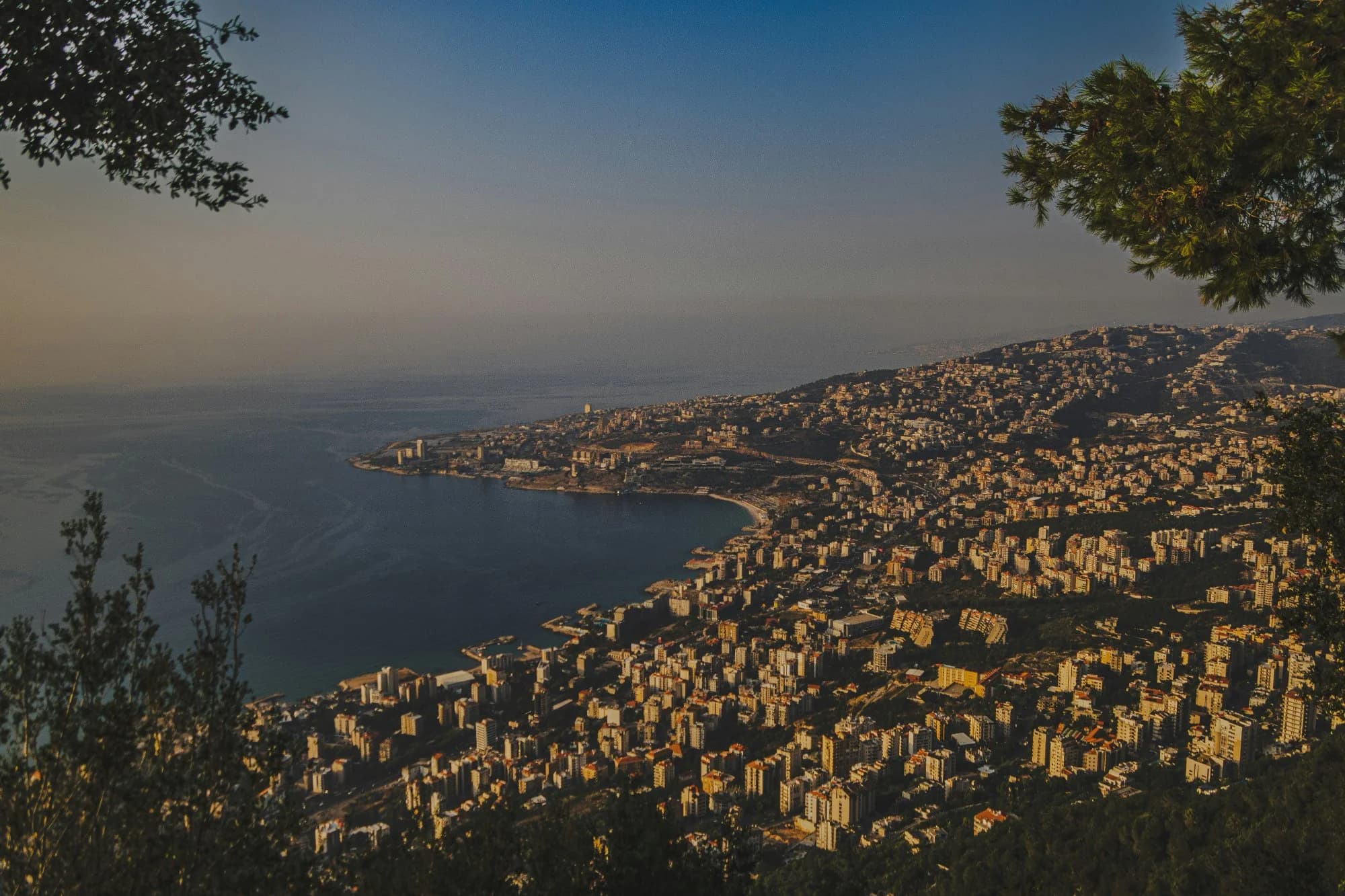
Beirut remains the country's primary address for luxury hotel suites. The city's pre-war architectural fabric, partly Haussmann-influenced, partly brutalist, partly Ottoman, gives its finest hotels a layered visual register that newer Gulf capitals lack entirely. Properties along the Corniche and in the rebuilt downtown district occupy buildings that carry historical weight alongside contemporary interior design. Suites here tend toward generous floor plans, city panoramas over the Mediterranean, and a proximity to the concentrated cultural, culinary, and commercial life that makes Beirut the region's most singular urban proposition.
The Metn and Kesrouane mountain districts
The districts rising immediately east of Beirut, particularly the Metn and Kesrouane areas, have long served as the seasonal retreat for Lebanese families seeking altitude, cooler temperatures, and the social culture of the mountain villages. Properties here typically occupy restored manor houses or purpose-built retreats with terrace access facing west toward the coast. The sensory register shifts entirely: pine and cedar fragrance, lower humidity, and a quality of stillness that coastal addresses cannot replicate. Suites in this zone are generally fewer in number but architecturally specific, calibrated for guests who prioritise landscape over urban density.
The Bekaa Valley
The Bekaa, Lebanon's broad interior plateau flanked by two mountain ranges, is the country's primary wine-producing region. Properties here are fewer and more deliberately secluded. The landscape is open, agricultural, and geologically compelling, with Roman-era ruins at Baalbek constituting one of the most significant ancient sites in the eastern Mediterranean. A suite stay in the Bekaa operates on a different logic: slower pace, proximity to vineyards, and access to a cultural heritage that few international travelers engage with directly.
The northern coast: Byblos, Batroun, and the Jbeil district
North of Beirut, the coastal strip includes some of the oldest continuously inhabited settlements on earth. Byblos, known in Arabic as Jbeil, was a Phoenician trading port and retains a walled old city of considerable integrity. The Batroun area, further north, has emerged as a quieter alternative to Beirut for travelers seeking the Mediterranean coastline without urban intensity. Boutique luxury hotels here tend to be smaller in scale, closely integrated with the local architectural vernacular, and oriented toward the sea.
When to visit Lebanon for a luxury suite stay
Lebanon operates across two primary seasons that shape suite availability and experience in distinct ways.
Spring, from late March through May, is broadly considered the optimal period. Temperatures are moderate along the coast (18 to 24 degrees Celsius), wildflowers appear across the mountain terraces, and the ski season at Mzaar and The Cedars is concluding. Properties in both coastal and mountain zones are accessible simultaneously, which matters given how quickly the landscape changes with altitude.
Summer, from June through September, draws the heaviest concentration of visitors, including a large Lebanese diaspora returning from Europe and the Americas. Beirut's social calendar peaks during this period, with significant demand for quality suites. Booking lead times extend considerably, and rates at upper-tier properties reflect the seasonal compression.
Autumn offers a more measured alternative. October and November bring cooler evenings, harvest activity in the Bekaa Valley, and a thinning of the summer crowds. The light in this period has a particular quality: lower angle, more amber, especially along the northern coast. For travelers whose priority is space and quiet, autumn represents the most efficient entry point.
Winter is specific in its appeal. The mountain resorts activate, and Beirut in January and February operates at a pace and price point more accessible than summer. Suite rates at mountain properties drop, and the visual drama of snow on the Lebanon range against a clear blue sky is a genuinely rare Mediterranean juxtaposition.
Understanding Lebanon's luxury hotel standards
Lebanon does not operate under the French Palace designation system or a direct equivalent. The country's top-tier properties are typically classified under international five-star frameworks, though the local hospitality culture adds dimensions that formal rating systems do not fully capture.
Lebanese hotel service has historically been characterised by a high degree of personalisation, a function of a hospitality tradition rooted in the culture of receiving guests (the Arabic concept of karam, or generosity, is structurally embedded in service expectations). At the best properties, this manifests as an attentiveness that feels intuitive rather than procedural.
Suites in Lebanon's finest hotels tend to offer generous square footage by regional standards, with particular attention to outdoor space: terraces, balconies, and plunge pools oriented toward either the Mediterranean or the mountain landscape. Interior design at the leading addresses tends to reference local craft traditions, including carved stone, hand-woven textiles, and cedar woodwork, positioned within contemporary frameworks rather than folkloric ones.
The culinary component of a suite stay is significant. Lebanese cuisine operates at a level of regional sophistication that positions it among the most complex in the Mediterranean basin. Properties at the higher end integrate access to serious food and beverage programming, from in-suite dining to proximity to restaurants with genuine culinary credibility.
How to choose the right luxury suite in Lebanon
The primary decision axis in Lebanon is the coastal-versus-mountain question, and it is not a minor one. The two environments offer fundamentally different sensory and social experiences, and the best approach for a longer stay is often to move between them deliberately rather than committing exclusively to one.
For travelers whose priorities are urban culture, dining, nightlife, and proximity to the sea, Beirut and the northern coast offer the highest concentration of luxury hotel suites within walking distance of meaningful cultural infrastructure. For those seeking privacy, landscape, and deceleration, the mountain districts and the Bekaa deliver an experience that coastal properties structurally cannot replicate.
Architecture matters in Lebanon more than in many destinations. The country's compressed history means that buildings carry layers: Ottoman-era stone, French Mandate-period facades, post-war reconstruction, and contemporary design interventions sit in close proximity. A suite within a restored historic structure offers a different kind of immersion than one in a purpose-built luxury tower, and both exist within the market. Clarifying which register aligns with a traveler's aesthetic priorities is the first practical question.
Suite size and outdoor access deserve specific attention. Given Lebanon's climate, terraces and balconies are not peripheral amenities but functional components of the daily experience. A suite without significant outdoor space in the summer months is a materially different proposition than one with a private terrace facing the sea or the mountains.
Why curated selection matters in Lebanon
Lebanon's hotel market is uneven in ways that are not always visible from standard booking platforms. Properties vary considerably in actual condition, service consistency, and the degree to which their public presentation aligns with the experience a guest encounters on arrival. This gap is wider here than in markets with more established luxury infrastructure.
La Suite applies a consistent editorial standard across every property in its selection: architecture, suite quality, service calibration, and location integrity are assessed against the expectations of a traveler for whom the suite is not an upgrade but the foundation of the trip. In a destination as historically and geographically complex as Lebanon, that curation function reduces the risk of misalignment and directs attention toward the addresses that genuinely deliver at the level the market claims.
The curated selection by La Suite for Lebanon reflects the country as it actually operates for high-end travelers: a compact, layered, and culturally dense destination where the right property transforms a visit into something with lasting reference value.