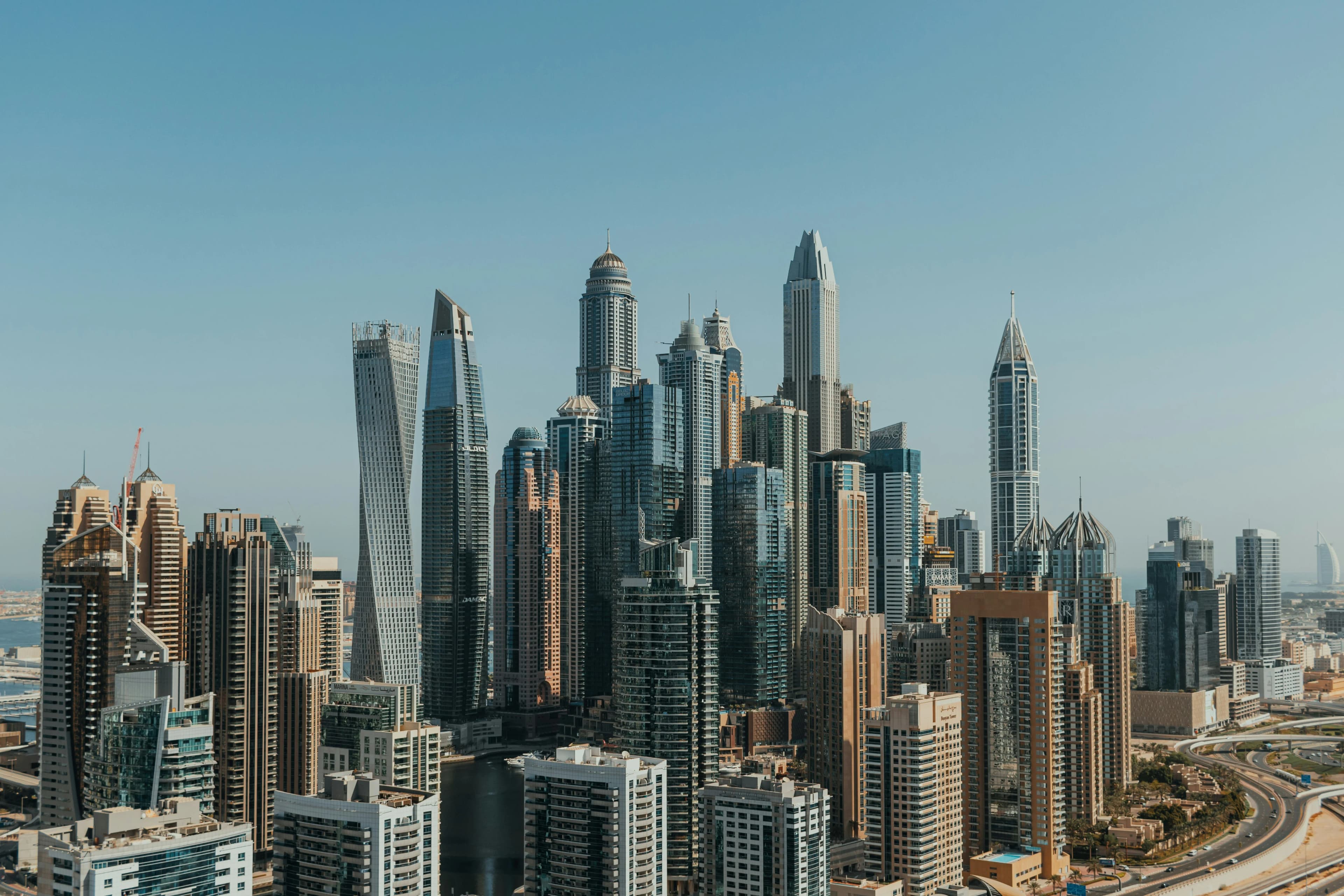
Located on the manmade Jumeira Bay, an island carved into the shape of a seahorse and adjoined by a 984 ft bridge to central Dubai coastline, Bulgari Hotel & Resorts, Dubai consists of a private Marin

Jumeirah is not a single street or a resort strip. It is a coastal district running roughly from the edge of Bur Dubai southward toward the Burj Al Arab and beyond to Umm Suqeim. This distinction matters when choosing a luxury hotel suite here, because location within the district determines the kind of experience you will have. The northern stretches offer proximity to the heritage quarters of Al Fahidi and the Dubai Frame. The central belt is dominated by private residential compounds, consulate residences, and low-profile luxury. The southern end, anchored by the silhouette of the Burj Al Arab, is where Dubai's most architecturally singular hotels are concentrated.
4 hotels available

Located on the manmade Jumeira Bay, an island carved into the shape of a seahorse and adjoined by a 984 ft bridge to central Dubai coastline, Bulgari Hotel & Resorts, Dubai consists of a private Marin

223 rooms
Occupying a beach front location, Four Seasons Resort Dubai at Jumeirah Beach is a luxurious 5-star resort featuring free WiFi in all areas, a private beach, 2 outdoor swimming pools and a lavish spa.

Boasting 5 outdoor swimming pools, a fitness center and a shared lounge, Mandarin Oriental Jumeira, Dubai is located in Dubai and offers direct beach access. Conveniently located in the Jumeirah distr

235 rooms
Located on the arterial Sheikh Zayed Road, the Al Habtoor Palace - Preferred Hotels & Resorts offers grand accommodations in Al Habtoor City, Dubai’s first-ever integrated urban resort. The hotel sits

Bur Dubai is the oldest continuously inhabited district of Dubai, situated on the western shore of Dubai Creek. Its identity is shaped by centuries of maritime trade, South Asian migration, and Emirati administrative history. The Al Fahidi Historical Neighbourhood, formerly called Bastakiya, preserves wind-tower architecture dating to the late nineteenth century. The Dubai Museum, housed in Al Fahidi Fort, occupies a structure built in 1787. These are not reconstructions. They are the actual sediment of a trading civilisation, and they give Bur Dubai a texture that no other part of the city replicates.

Downtown Dubai is not a neighbourhood that emerged organically. It was master-planned from the ground up by Emaar Properties and inaugurated in its current form in the mid-2000s, with the Burj Khalifa opening in 2010. The result is a district of unusual internal coherence: wide boulevards, pedestrian promenades, choreographed fountains, and towers that follow a consistent architectural grammar. For travelers accustomed to the layered historical texture of European capitals or the dense verticality of Manhattan, Downtown Dubai offers something categorically different. It is a city district as a total design object.

Palm Jumeirah is not a district that evolved organically. It was conceived, engineered, and constructed from reclaimed land between 2001 and 2006, forming a trunk, sixteen fronds, and a surrounding crescent that together constitute one of the most recognized artificial landmasses in the world. This origin shapes everything about the experience: the geometry is deliberate, the density is controlled, and the relationship between private property and the sea is the central organizing principle of life here.
The district has no souk, no metro stop, and no commercial centre in the conventional sense. That is precisely its appeal. Jumeirah functions on the logic of withdrawal: it rewards those who choose it deliberately and know what they are looking for. A Dubai luxury hotel suite in this area typically comes with direct or near-direct beach access, views over the Gulf, and a domestic scale that feels removed from the tower density of Downtown or DIFC.
The northern section of the district is the most residential in character. Hotels here tend toward the boutique end of the luxury spectrum, with lower plot ratios and more considered landscaping. Guests who stay here are generally interested in proximity to cultural sites and prefer a quieter operational pace. Beach access exists but often requires a short transfer. This area suits travellers who are visiting Dubai for business, family visits, or cultural exploration rather than resort-style stays.
The central stretch of Jumeirah Beach Road is where the district's most recognised luxury addresses are concentrated. Hotels here sit directly on or adjacent to the Gulf shoreline, and suites in this zone frequently offer unobstructed sea views, private pool terraces, and the kind of spatial generosity that defines top-tier suite design in the United Arab Emirates. This is the most sought-after corridor for travellers who want immediate beach access combined with proximity to the city's dining and retail infrastructure.
The southern edge of the Jumeirah district, technically overlapping with Umm Suqeim, is where Dubai's most internationally recognised hospitality icons sit. The density of high-specification luxury hotels in this zone is unmatched anywhere in the Middle East. Suites here are often designed as destination experiences in their own right, with dedicated butler services, private elevator access, and suite dimensions measured in hundreds of square metres. For travellers whose primary criterion is architectural distinction and maximum privacy, this sub-district is the decisive choice.
Dubai's climate divides the year into two clear periods. From October through April, temperatures sit between 20 and 30 degrees Celsius, outdoor dining and beach access are fully comfortable, and the city operates at its highest social intensity. The Dubai Shopping Festival (typically January to February) and Art Dubai (March) bring a concentration of cultural and commercial activity that fills the district's best suites quickly. Lead times of two to three months are standard for premium suite bookings during this window.
From May through September, the heat is considerable, with temperatures regularly exceeding 40 degrees Celsius and humidity levels that make outdoor activity uncomfortable for extended periods. Hotels respond with significant rate adjustments during summer, and travellers who can tolerate the heat gain access to suites at prices substantially below peak-season levels. The indoor infrastructure of Jumeirah's hotels, including spas, restaurants, and private pools, remains fully operational year-round.
Ramadan, which falls at a different point in the calendar each year, shapes the social and culinary landscape of the district in ways that some travellers find culturally enriching and others find operationally restrictive. Advance research into the calendar is advisable for any visit to United Arab Emirates properties during this period.
Dubai operates outside the French Palace classification system or the Italian Relais framework. The emirate's hotel market is governed by a national star-rating system administered by the Department of Economy and Tourism, with five-star designations covering a wide spectrum of quality. In practice, the most useful orientation is to look beyond star ratings and focus on suite typology, brand lineage, and the specific services attached to a booking.
Jumeirah-area luxury suites at the upper tier typically include: dedicated butler service available around the clock, in-suite check-in, private pool or plunge pool access on terraces or rooftops, chauffeur coordination, and F&B service drawn from multi-outlet hotel operations that frequently include one or more Michelin-recognised or internationally acclaimed restaurant teams. Spatial standards are high. A superior suite in this district will generally begin at 90 to 120 square metres of interior space, with the most significant suites extending well beyond 400 square metres.
The physical architecture of Jumeirah hotels ranges from contemporary coastal modernism to more elaborate interpretations of Arabian geometric and decorative traditions. Both idioms are executed at a high technical standard, and the choice between them is a matter of personal aesthetic preference rather than quality differential.
Several variables are worth examining before committing to a suite booking in this district. First, clarify whether direct beach access is a non-negotiable requirement. Some Jumeirah hotels sit on the beach side of the road; others require a crossing. Second, consider the view orientation. Gulf-facing suites command a premium and deliver a consistent visual experience. City-facing or garden-facing suites are quieter and sometimes significantly more spacious for the same price point.
Third, assess the service model. Some Jumeirah properties are designed around large-scale resort operations with significant guest volumes. Others are structured around a more contained guest count, with correspondingly higher staff-to-guest ratios. The latter model tends to suit travellers who prioritise discretion and personalised pacing.
Fourth, consider proximity to the things that matter to your specific trip. If access to the financial district or DIFC's gallery and restaurant scene is relevant, a hotel in the northern part of Jumeirah reduces transfer times considerably. If the priority is maximum immersion in the beachside experience, the central and southern zones are the correct choice.
Dubai's hotel market is large, competitive, and sometimes difficult to read from the outside. Marketing language in this sector is dense, and rate structures are complex, with a wide range of inclusions and exclusions that affect the real value of any booking. The curated selection by La Suite removes that friction.
For Jumeirah specifically, the question is rarely whether to stay in the district. It is which suite, in which property, and at which point in the year, delivers the precise combination of space, service, setting, and access that your trip requires. That is a filtering exercise that benefits from contextual knowledge rather than search algorithm logic. La Suite's approach to this district is built on direct property familiarity and a consistent editorial standard applied across every listing. For travellers who have decided that Jumeirah is the correct address in Dubai, the curated selection by La Suite is the most efficient route to the right suite.

Jumeirah combines direct Gulf coastline access, low-rise residential character, and proximity to both heritage Dubai and the modern business districts. Its concentration of internationally recognised luxury hotels with private beach frontage and high-specification suite design makes it the benchmark address for high-end stays in the emirate. The district's spatial logic, favouring width and access over vertical density, produces a hospitality environment distinct from Downtown or Marina.
The optimal window is October through April, when temperatures are comfortable for outdoor activity and the city's cultural and social calendar is most active. Art Dubai in March and the Dubai Shopping Festival in January and February are particularly significant periods. Advance bookings of two to three months are advisable for top-tier suites during this period, as availability at the finest properties is limited.
Upper-tier suites in Jumeirah generally begin at around 90 to 120 square metres of interior living space. The most significant suites in the district, particularly those in the Umm Suqeim vicinity, can exceed 400 square metres and include private terraces, plunge pools, and dedicated staff entrances. Spatial generosity is one of the defining characteristics of luxury hotel suite design in this part of Dubai.
Beach access arrangements vary by property and location within the district. Hotels situated on the Gulf side of Jumeirah Beach Road typically offer direct or very short-path beach access, sometimes including private beach sections reserved for suite guests. Properties on the inland side of the road may provide shuttle access or designated crossings. Confirming this detail before booking is advisable if beach access is a primary requirement.
At the upper tier of the Jumeirah market, suite bookings commonly include around-the-clock butler service, in-suite check-in and check-out, private pool or plunge pool access, chauffeur coordination for transfers, and priority access to the hotel's restaurant and spa facilities. Some properties include a dedicated suite host who manages the entirety of the guest's stay from a single contact point.
Compared to Downtown Dubai, which centres on tower-density and landmark proximity, Jumeirah offers a more horizontal, coastal, and residentially scaled environment. DIFC suits business-focused stays with a strong dining and gallery scene but lacks beach access. The Palm Jumeirah delivers an island format with extensive resort infrastructure. Jumeirah's distinctive value is its combination of cultural proximity, beach access, and a more measured pace that suits longer stays and privacy-focused travellers.
During Ramadan, food and beverage service in public areas of Dubai hotels is modified, with some outlets operating on restricted hours and outdoor consumption of food and drink being subject to local regulations. Hotels catering to international guests maintain in-suite dining throughout the day. Ramadan also brings a specific evening social rhythm, with Iftar and Suhoor gatherings that can be a genuinely interesting cultural experience for guests who approach them with awareness and respect.
Jumeirah's hotel architecture spans two primary idioms. The first is contemporary coastal modernism, characterised by clean horizontal lines, glass frontages, and interiors oriented toward sea views. The second draws on Arabian geometric and decorative traditions, using mashrabiya screens, courtyard formats, and material palettes rooted in regional craft. Both approaches are executed at a high technical standard, and the choice between them reflects personal aesthetic preference rather than any difference in service or spatial quality.
Jumeirah is viable for business travellers, particularly those whose meetings are concentrated in the financial and professional services districts of DIFC and Dubai International Financial Centre, which are reachable in 15 to 25 minutes by car depending on traffic. The district's quieter residential character and beach proximity make it preferable to staying within the business cores for travellers who value a clear separation between work and recovery environments. Suite-level facilities, including private meeting space and dedicated communication infrastructure, are standard in the district's flagship properties.
La Suite applies a consistent editorial standard across every property it lists, focusing on suite-specific criteria: spatial quality, service model, privacy architecture, and the coherence of the overall guest experience. In a market like Jumeirah, where marketing language can obscure meaningful differences between properties, this filtering process identifies the suites that genuinely deliver on their positioning. The curated selection by La Suite reflects direct property knowledge rather than aggregated review data.